
 Japanese
  English
  Arabic
  French
  Italian
  German
  Spanish (Spain)
  Thai
Thai  Turkish
  Indonesian
  Vietnamese
  Polish
  Portuguese
  Malay
Malay  Swedish
  Spanish (Mexico)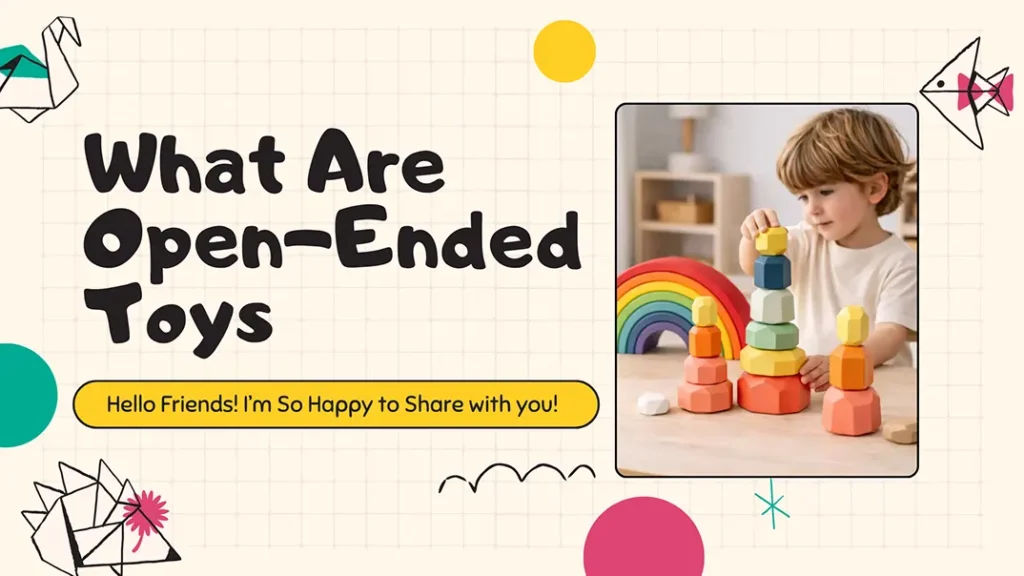
Open-ended toys are playthings with no definite ending, no fixed rules, and no single intended outcome. There is no “right” or “wrong” way to use them. There are no flashing lights telling your child what to do next, and there is no completion point where the game is “over.” Instead of the toy dictating the play, the child dictates the play.
Child development experts and educators often refer to the “90/10 Rule”: a truly great toy should be 10% toy and 90% child.
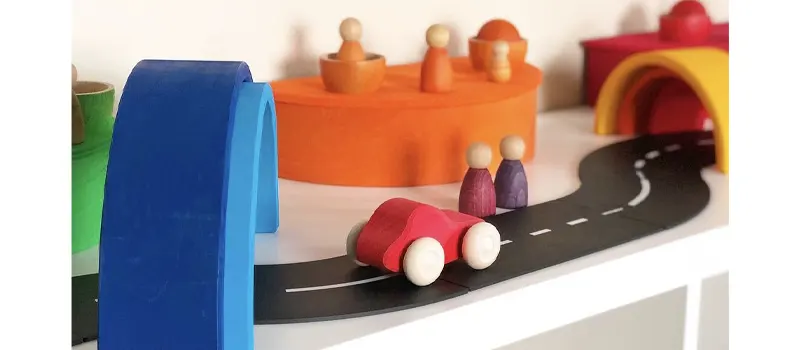
Think of a closed-ended toy as a specific tool – it has one purpose, and once the child masters that purpose, the challenge is gone. An open-ended toy, on the other hand, is like a blank canvas. A simple set of wooden blocks can be a towering castle today, a busy highway for toy cars tomorrow, and a pretend bakery the day after that.
They don’t just entertain; they invite your child to become an active creator rather than a passive consumer.
Open-Ended Toys Are Not a Category, They Are a Play Design
Most guides treat open-ended toys like a fixed product category, as if some toys are open-ended and everything else is not. But open-ended is not a shelf label. It is a design approach that can be applied to many kinds of toys and classroom materials. The key question is not what the toy is, but what the toy allows the child to do.
A toy is truly open-ended when it creates a wide playground of possibilities while keeping the child in charge. You can think of “open-endedness” as a mix of five design qualities:
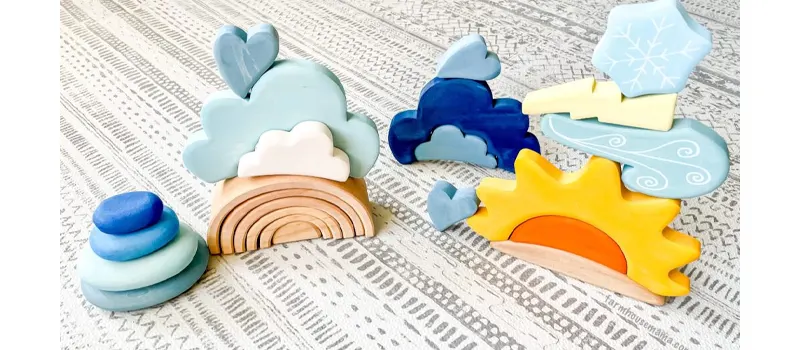
Child Agency (the child decides the goal)
Open-ended toys do not assign a mission. The child chooses what they want to make, pretend, test, or explore. That sense of ownership is why children often stay engaged longer. They are not following a script. They are writing one.
Multiple Outcomes (no single right answer)
With open-ended play, success is not “finishing correctly.” A child can build a bridge, then tear it down and build a tower, then turn the same pieces into a pretend bakery. The toy supports many valid results, which encourages flexible thinking and reduces performance pressure.
High Replay Value (new uses over time)
A closed toy is exciting once, maybe twice, because it always does the same thing. Open-ended toys stay interesting because children keep discovering new ways to use them as their imagination and skills grow. This is one reason open-ended toys often feel like a better long-term investment for classrooms.
Scalable Complexity (works across ages and skill levels)
A two-year-old may explore by stacking, carrying, and sorting. A four-year-old may build a story scene. A six-year-old may plan a complex structure with rules and roles. Open-ended materials scale naturally without needing a new “level” or upgrade. The same toy can meet children where they are.
Loose Rules, Rich Affordances (suggest possibilities, not instructions)
The best open-ended toys quietly invite actions. They might be easy to stack, connect, sort, roll, or arrange. They hint at possibilities through shape, texture, and proportion, but they never force a single pathway. In design terms, they offer rich affordances with minimal rules, which is exactly what supports child-led play.
What Are the Benefits of Open-ended Toys?
Open-ended toys are powerful for one simple reason: they make children do the thinking. Instead of rewarding kids for pressing the “right” button or finishing a single preset task, they invite children to set a goal, try an idea, notice what happens, and change the plan. That loop looks like play, but it is also how young brains build lasting skills.
Encourage Longer Attention Spans
Because open-ended play is self-directed, children often stay engaged for longer periods. There is no flashing light telling them when they are done. They continue because they want to see their idea come to life. This kind of sustained concentration helps develop patience and focus, which are essential for classroom readiness.
Boost Cognitive Flexibility and Problem-Solving
With open-ended toys, there is no instruction manual to follow, so children have to create a strategy. A block tower that keeps collapsing is not “a failure.” It becomes a mini experiment in balance, stability, and cause-and-effect. Children naturally test ideas, like making the base wider or switching the order of pieces, and they learn that adjusting the plan is part of the process. Over time, this builds cognitive flexibility.
Strengthen Language and Social Skills
Open-ended materials naturally invite collaboration. When children build together or create pretend scenarios, they explain ideas, negotiate roles, and listen to each other’s perspectives. These interactions help develop vocabulary, communication skills, and the ability to cooperate. Social learning happens organically through shared play.
自立を育む
With open-ended toys, adults do not need to constantly direct the activity. Children make their own decisions and manage their own play. This builds autonomy and intrinsic motivation. Instead of playing for praise or programmed rewards, children play because they are curious and invested in their own ideas.
What is the Difference Between Open-ended and Closed-ended toys?
オープンエンドのおもちゃ: Open-ended toys give children control. They do not come with a single script or a correct final result. The child decides what the toy becomes, how long the play lasts, and what the “goal” is. A set of blocks might be a tower today, a road tomorrow, and a zoo next week. The toy stays the same, but the child’s ideas keep changing, which is exactly why open-ended play stays engaging.
Closed-Ended Toys: Closed-ended toys guide children toward a preset outcome. They often have a clear “right way” to play, a fixed sequence, or a limited set of responses. Think of toys where the main action is pressing a button for a predictable result, completing one specific puzzle, or following a single build pattern. These toys can still be enjoyable and useful, especially for teaching a specific concept or providing short, structured play, but they usually have less replay value because the pathway is limited.
| 特徴 | オープンエンドのおもちゃ | Closed-Ended Toys |
|---|---|---|
| The Goal | No specific outcome. The journey は the play. | A clear, predefined goal or finishing point. |
| Play Pattern | Child-directed. The child actively decides what happens next. | Toy-directed. The child follows instructions, rules, or buttons. |
| Brain Activity | Active creation. Fosters imagination and out-of-the-box thinking. | Jigsaw puzzles, shape sorters, board games, and electronic pop-up toys. |
| Lifespan | Years. They adapt to and grow with your child’s developmental stages. | Months. Often outgrown as soon as the child masters the required skill. |
| Classic Examples | Wooden blocks, magnetic tiles, loose parts, play silks. | Jigsaw puzzles, shape sorters, board games, electronic pop-up toys. |
10 Best Open-Ended Toys That Promote Creativity and Learning
Not all open-ended toys look “creative” at first glance. The best ones are often simple, because simplicity leaves space for children to add their own ideas. Instead of guiding play toward one correct result, these toys act like flexible materials children can build with, pretend with, and reinvent over and over. Below are the most popular categories of open-ended toys for preschool settings, each chosen for high replay value and real learning through play.
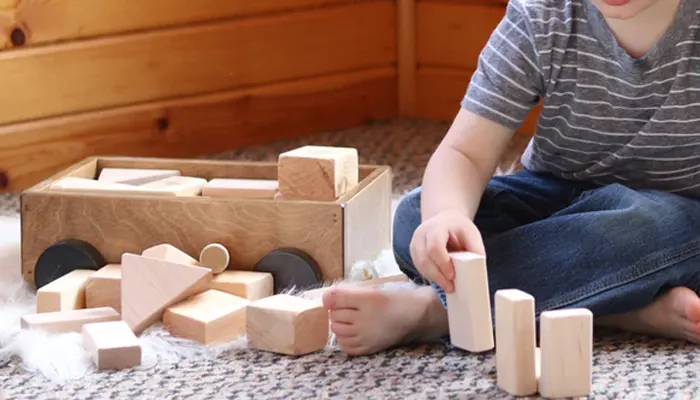
1. 木製の積み木
Simple wooden blocks remain one of the most timeless open-ended materials. They allow children to explore balance, height, symmetry, and storytelling without any fixed outcome. Blocks grow with the child, from basic stacking to complex architectural builds.
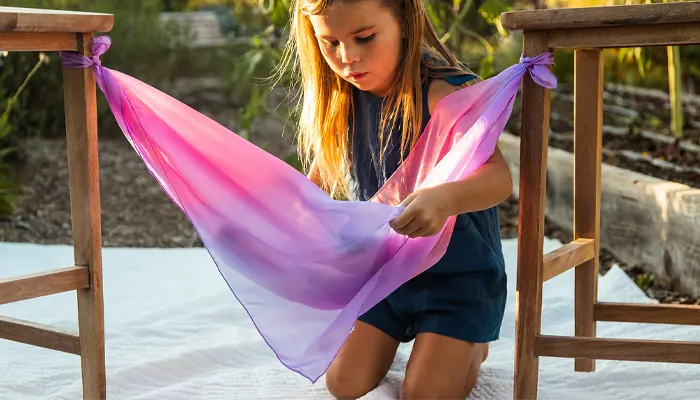
2. Play Silks and Fabric Scarves
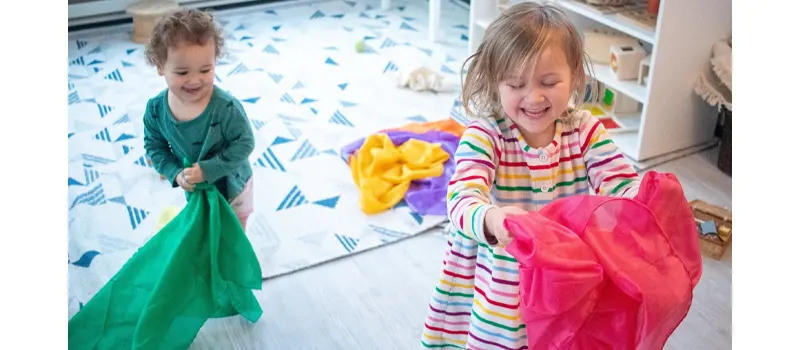
Lightweight scarves and silks can become capes, rivers, picnic blankets, or backdrops for dramatic play. Because they have no defined structure, children assign their own meaning, which strengthens imagination and symbolic thinking.
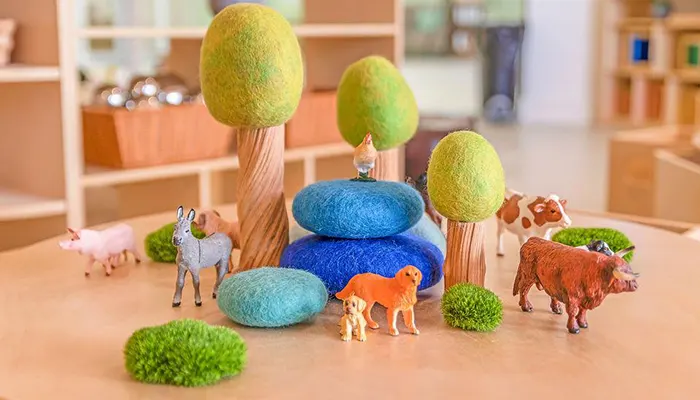
3. Animal Figures
Unbranded people figures and realistic animals support small-world play. Children create ecosystems, communities, and stories, developing language skills and emotional understanding through role creation.
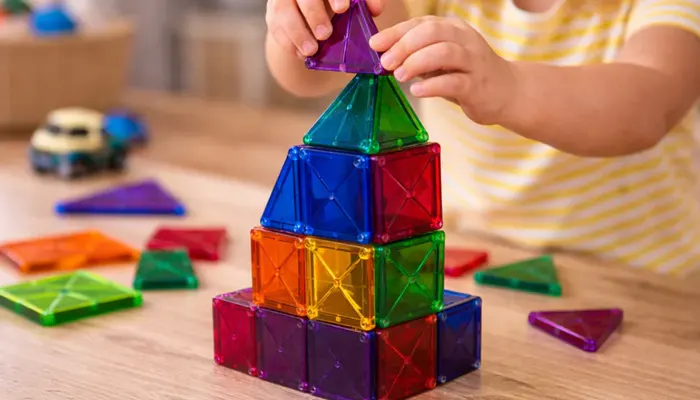
4. Magnetic Tiles
Magnetic construction tiles combine creativity with early math and engineering concepts. Children experiment with shapes, patterns, and structural stability while designing original builds instead of following instructions.
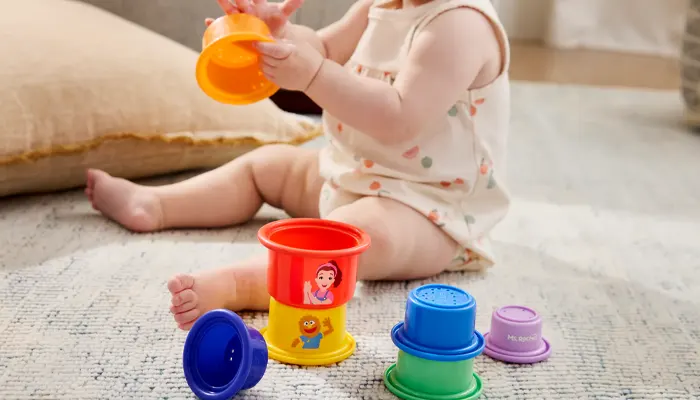
5. Stacking Cups
Stacking cups may seem simple, but they can be used for building towers, water play, sorting activities, pretend cooking, or even sand molds. Their versatility makes them surprisingly powerful for early learning.
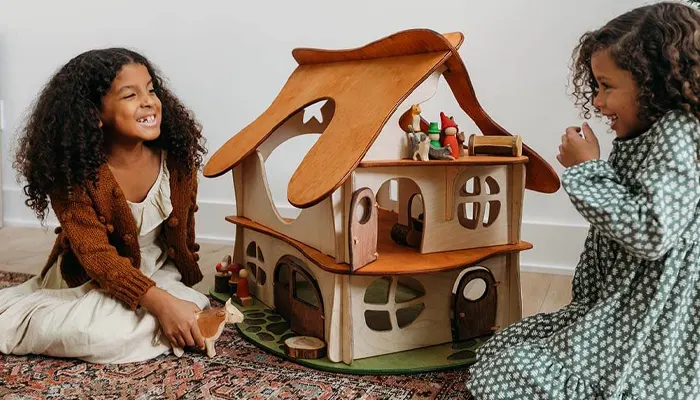
6. Dolls and Dollhouses
Open-ended doll play encourages narrative development and social exploration. When dollhouses are not overly scripted, children invent family stories, community roles, and real-life scenarios that build empathy and communication skills.
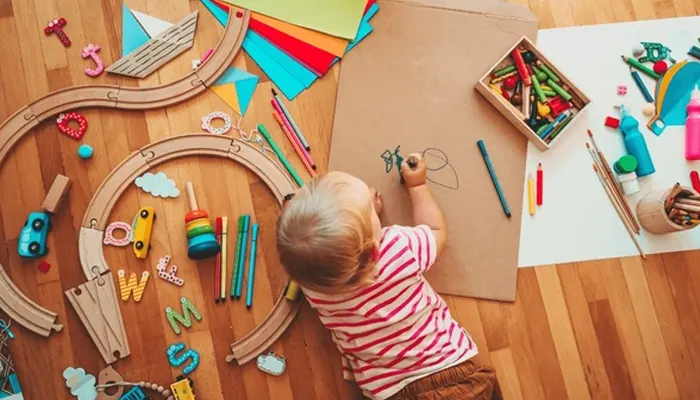
7. Art Supplies
Open-ended art materials such as watercolor paints, clay, markers, and collage elements allow children to create freely without templates. The focus shifts from copying a finished product to exploring process and expression.
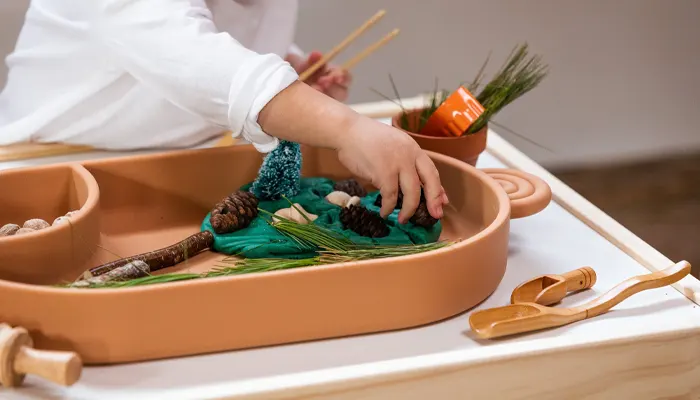
8. Sensory Play Materials
Sand, water, rice, dough, and other tactile materials invite experimentation. Sensory play strengthens fine motor skills, supports regulation, and encourages early scientific thinking through cause and effect exploration.
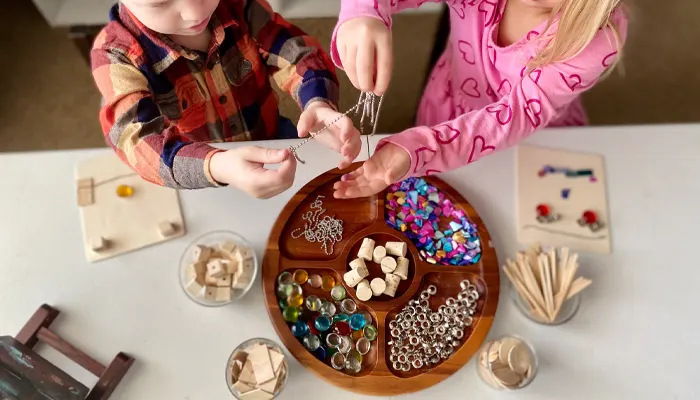
9. Loose Parts
Loose parts include natural and recycled materials such as wooden rings, stones, shells, corks, and fabric scraps. Because these items have no predefined purpose, children transform them into patterns, inventions, and story elements, building creativity at a foundational level.
10. Pretend Play Furniture and Props
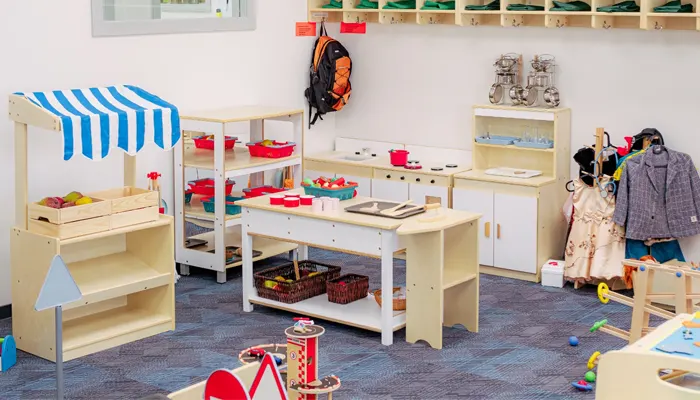
単純 ごっこ遊び environments, such as play kitchens, market stands, or role-play setups, invite children to recreate real-life experiences in their own way. Children develop storytelling skills, social negotiation abilities, and emotional understanding through collaborative scenarios.
How to Choose High-Quality Open-Ended Toys?
In real life, kids drop, drag, mouth, stack, dump, and reuse materials in ways no product photo can fully show. So “high-quality” is not about looking pretty on a shelf. It is about safety, durability, and play value that hold up over time, especially if you are buying for a daycare or preschool classroom.
1. Material Quality and Durability
Open-ended toys are meant to be reused in many different ways. That means they should withstand repeated handling, stacking, building, and sometimes rough play. Solid wood, high-grade plywood, thick fabrics, and durable food-grade plastics tend to last longer than lightweight or brittle materials. In classroom or daycare settings, durability is not optional; it directly affects safety and long-term cost efficiency.
2. Safety Standards and Finishes
Look for toys that meet recognized safety standards in your region, such as ASTM or CPSIA compliance in the United States, or EN71 standards in Europe. Finishes should be non-toxic and free from harmful chemicals. Edges should be smooth, and small parts should be appropriate for the intended age group. High-quality open-ended materials are designed with safety built in, not added as an afterthought.
3. Simplicity Over Excess Detail
The more defined and decorative a toy becomes, the less room it leaves for imagination. High-quality open-ended toys are often simple in form and neutral in color. This allows children to project their own ideas onto the material rather than being guided by overly specific designs or branded characters.
4. Age Flexibility
A well-designed open-ended toy should grow with the child. Ask whether the material can be used differently at ages two, four, and six. If the answer is yes, the toy has long-term developmental value. Toys that only match one narrow stage tend to lose interest quickly.
5. Adaptability to Different Learning Areas
In early childhood environments, the best open-ended materials can support multiple domains of learning. For example, blocks may be used for math concepts, storytelling, cooperative play, or even science exploration. The broader the application, the higher the educational value.
6. Storage and Classroom Practicality
For preschools and daycare centers, quality also includes practicality. Materials should be easy to organize, accessible to children, and simple to maintain. Open shelving, stackable elements, and clearly sized components help create an environment that supports independence rather than clutter.
7. Long-Term Investment Value
High-quality open-ended toys are rarely the cheapest option upfront, but they often last for years. Because they can be used across age groups and subject areas, they reduce the need for constant replacement. When evaluating cost, consider lifespan and versatility rather than price alone.
よくある質問
- Are LEGO sets considered open-ended toys?
Basic LEGO bricks can be open-ended because children can build anything they imagine. However, highly themed sets that are designed to follow specific instructions are more closed-ended. The difference depends on whether the child is creating freely or primarily assembling a predetermined model. - What is an example of an open-ended toy?
A simple set of wooden building blocks is one of the best examples. Children can stack them, build cities, create bridges, or use them as pretend food. There is no single correct way to use the blocks, and the play can evolve depending on the child’s age and imagination. - At what age should children start using open-ended toys?
Open-ended toys can be introduced in infancy in simple forms, such as stacking cups or soft fabric pieces. As children grow, materials like blocks, loose parts, art supplies, and dramatic play props become more complex. The key is choosing materials that match developmental abilities while still leaving room for exploration. - Are open-ended toys suitable for classrooms and daycare centers?
Open-ended toys are especially valuable in group learning environments. They support collaborative play, adapt to different learning themes, and can be used across multiple age groups. Their flexibility makes them practical for both structured lessons and free play periods. - Are open-ended toys better than electronic toys?
Open-ended toys and electronic toys serve different purposes. Electronic toys often provide immediate feedback and structured interaction, while open-ended toys require imagination and self-direction. Many educators suggest limiting highly stimulating electronic toys and prioritizing materials that encourage deeper engagement and longer play periods.
Final Thoughts
Open-ended toys remind us that learning is not a race toward the right answer. It is a process of exploration. When children are given materials that do not limit their imagination, they begin to test ideas, revise plans, and build confidence in their own thinking.
The most powerful learning environments are not the ones filled with the most toys, but the ones filled with possibility. Open-ended materials create that possibility. They leave space for creativity, collaboration, and growth over time.