 Japanese
  English
  Arabic
  French
  Italian
  German
  Spanish (Spain)
  Thai
Thai  Turkish
  Indonesian
  Vietnamese
  Polish
  Portuguese
  Malay
Malay  Swedish
  Spanish (Mexico)
In early childhood education, nurturing curiosity and focus is essential but often difficult to sustain. This is where light tables offer more than just a glowing surface. Their illuminated design captures children’s attention naturally, drawing them into focused, hands-on exploration without overstimulation.
As children place transparent or textured objects onto the table, the subtle light reveals hidden details and sparks questions. This type of sensory-rich, self-directed play encourages them to observe more closely, stay engaged longer, and explore concepts at their own pace. It builds both attention span and intellectual curiosity.
By transforming ordinary materials into captivating visual experiences, light tables help teachers create learning spaces that invite calm, focus and deeper engagement. These are the foundations for meaningful early learning.
What Light Tables Do in an Early Learning Classroom
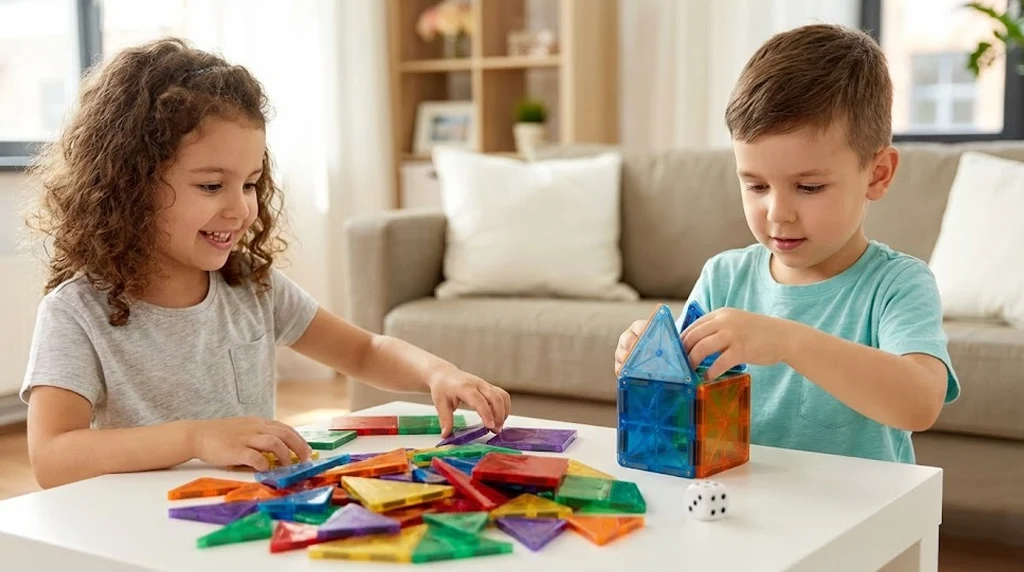
Light tables change the way children see, touch, and think. Unlike ordinary surfaces, they use gentle, even light to turn everyday materials like transparent shapes, letters, or leaves into vivid invitations to explore. Children slow down, observe carefully, and engage with details they would normally overlook.
In a well-designed classroom, light tables become more than a novelty. They serve as centers for open-ended discovery, drawing children into quiet focus and hands-on experimentation. Whether sorting colors, tracing patterns, or layering materials, children naturally begin to ask questions, test ideas, and repeat actions with intent.
Because the light itself guides attention without noise or distraction, teachers do not need to push. Light tables support calm, sustained engagement. They create a physical and mental space where learning can unfold at a child’s own pace.
The Hidden Power Behind Light Table Learning
The light table draws children in with its soft glow, but what happens next goes far beyond what we see. As soon as a child begins to explore the surface by tracing shapes, stacking colored blocks or layering materials, they are activating more than just their hands. The gentle contrast of light and shadow heightens sensory input, allowing children to notice, compare and remember in ways that traditional materials often cannot provide. This kind of experience connects directly to how young minds build understanding through sight, touch and movement working together.
What begins as play often develops into deeper learning through subtle guidance. A child who starts by placing objects by color might soon be creating sequences, comparing sizes or building patterns. Here, the teacher’s role is quiet but powerful, offering just enough support to help the child move one step further. The light table supports this growth naturally. Its visual clarity helps children stay focused, and its open-ended format offers gentle challenges without pressure.
Over time, the light table becomes more than a place to play. It becomes a place to think. Without a single correct answer, children return again and again to test new ideas, combine familiar materials in new ways and express their thinking through design. In classrooms that view the environment as an active part of learning, the light table serves as a silent co-teacher, supporting creativity, reflection and discovery through presence rather than instruction.
3 Smart Ways to Use Light Tables in Your Daily Classroom Routine
Light tables are most effective when they serve a purpose beyond play. Below are three clear ways to use them during different parts of the day to support emotional readiness, hands-on collaboration, and creative thinking.
1. Calm Starts: Begin the Day With Gentle Focus
When to use: First 10–15 minutes of the day, during arrival
Purpose: Help children transition from home to school with calm and focus
How to set it up:
- Dim the room lights and turn on the light table to create a warm, inviting space
- Place only one or two types of materials, such as translucent color blocks or smooth pebbles
- Avoid complex instructions—let children explore quietly at their own pace
What to say:
“See how the colors change on the table?”
“You can make a little pattern or just look and feel.”
This short, quiet interaction helps children settle, regulate their energy, and prepare mentally for group time.
2. Group Work: Build and Think Together
When to use: During center rotations or small group instruction
Purpose: Encourage teamwork, language development, and problem solving
How to set it up:
- Invite 2–3 children at a time
- Choose open-ended materials like magnetic tiles, see-through shapes, or tracing objects
- Introduce a simple challenge: “Can you build a bridge?” or “Can you copy your friend’s shape?”
What to say:
“How did you decide to use those pieces together?”
“Can you explain your idea to your partner?”
Children stay focused longer because the light table makes their work feel special. It also gives teachers a clear visual of how each child approaches the task, making it easier to offer support when needed.
3. Storytelling: Turn Designs Into Meaning
When to use: End of day or during creative time
Purpose: Support language, memory, and expression
How to set it up:
- Provide small figures, transparent scenes, color cutouts, or photos
- Ask children to arrange items into a “scene” or retell something that happened
- Add drawing tools or tracing paper for children who want to capture their story
What to say:
“Can you tell me what’s happening in your picture?”
“Who’s in your story? What are they doing?”
This encourages children to reflect on their day and express their thinking. It turns the light table into a quiet stage for their imagination.
Ready to Start? Choosing the Right Light Table for Your Classroom
Bringing a light table into your classroom can feel like a big step, but with a few smart choices, it becomes one of the most flexible and rewarding tools you’ll have.
Before you decide what to buy, consider how you want children to interact with it. Will it be a quiet space for morning arrival? A rotating center for small group projects? A spot for open-ended creation and storytelling? Your goals will help you choose the right size, height and accessories.
Here’s what to look for in a classroom-ready light table:
- Consistent, soft lighting that supports extended use without overstimulation
- Durable, child-safe materials that hold up to daily use and frequent cleaning
- An accessible surface height for seated or standing children
- Compatibility with translucent shapes, letters, natural objects and tracing tools
- A manageable footprint that fits your classroom layout and allows easy supervision
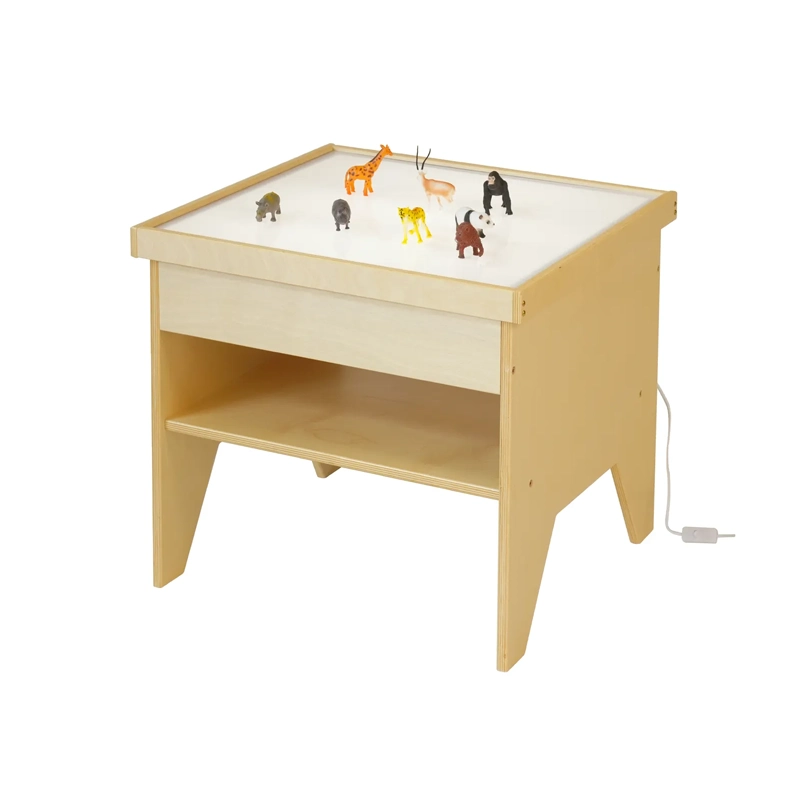
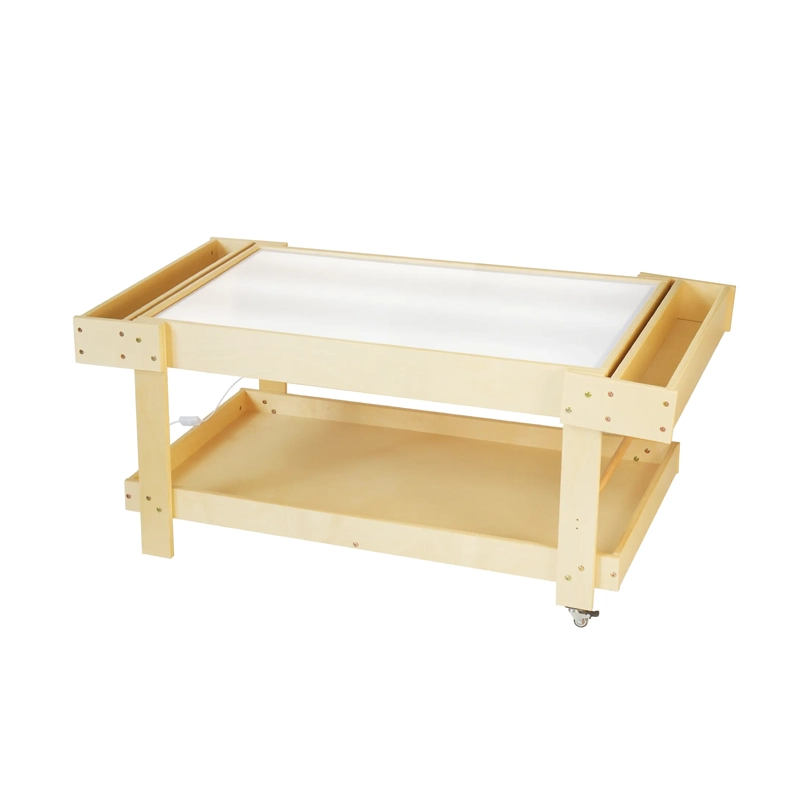
If you’re just getting started, our XiAir World Light Tables are designed for real classrooms. They offer low-heat LED lighting, smooth acrylic tops, and adjustable brightness settings that make them ideal for both calm exploration and focused group work. We also offer curated starter kits with shape sets, letter tiles, and themed materials to support literacy, math and science.
You don’t need to redesign your classroom to make space for discovery. Even one light table, used with intention, can spark creativity, focus and meaningful learning every day.
Light Table Activities That Work in Real Classrooms
You don’t need complex materials or elaborate prep to make light table time meaningful. These simple, classroom-tested activities keep children engaged while reinforcing key learning goals through visual play.
Build a Rainbow Path
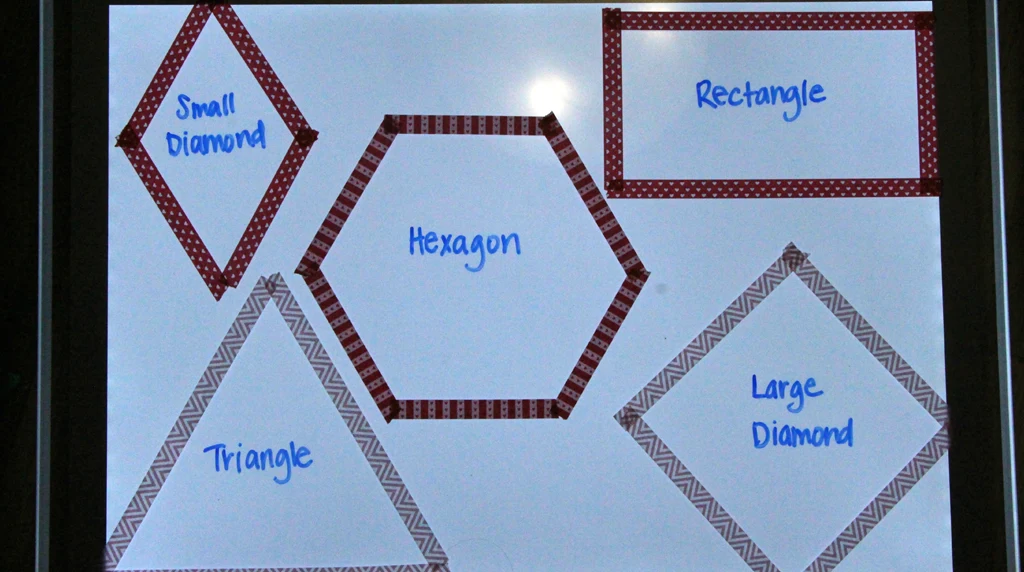
Children use transparent colored tiles to create a path in rainbow order across the light table. As they arrange colors in sequence, they naturally practice color recognition, order, and symmetry. This is an easy way to introduce patterning through play, especially during center time.
Shadow Match Challenge
Place silhouette cards or printed black shapes next to matching transparent items like tools, animals, or letters. Children match the item to its shadow on the light table, encouraging visual discrimination and vocabulary building in a simple, focused way.
Leaf Layering Lab
Provide leaves of different shapes and sizes. On the light table, children stack them to compare patterns and vein structures. The light reveals fine details, turning a simple science observation into a moment of wonder and comparison.
Trace Your Name With Light
Give each child a printed version of their name on tracing paper. They place it on the light table and use translucent counters or beads to trace the shape of each letter. It builds name recognition and fine motor control in a highly engaging format.
Feelings Color Sort
Set out clear containers labeled with different emotions and a pile of translucent chips. Children choose a color that matches how they feel and sort it into the matching cup. It’s a quick SEL check-in that links emotions to visual symbols.
These activities can be rotated weekly or adapted by age group, giving your light table a lasting role in literacy, math, science, and emotional learning.

Common Questions About Light Tables in Early Childhood Education
What age group benefits most from using a light table?
Light tables are especially effective for children aged 3 to 6, but can be adapted for toddlers with supervision or extended for early elementary learners with more complex materials.
Do I need special materials to use a light table?
Not necessarily. You can start with items you already have—like plastic counters, leaves, paper shapes or transparent blocks. Over time, adding curated translucent materials can expand learning opportunities.
How much time should children spend at a light table each day?
There’s no fixed rule. Many teachers use it during free play, morning arrival, or in small group work for 10–30 minutes at a time, depending on the activity and children’s interest.
Conclusion: Lighting the Way Toward Meaningful Learning
When used with purpose, light tables become more than just glowing surfaces in the classroom. They help children slow down, observe carefully, and explore concepts with curiosity and focus. From emotional check-ins to early literacy and collaborative problem-solving, these illuminated spaces support a kind of learning that feels natural yet goes deep.
The real power of light tables lies in how they make thinking visible. Whether a child is layering leaves, tracing a name, or telling a story with shapes, they are not just playing. They are processing, connecting, and expressing ideas in ways that matter.
Start simple. Stay intentional. And let the light guide the learning.