
 French
  English
  Arabic
  Italian
  German
  Spanish (Spain)
  Thai
Thai  Japanese
  Turkish
  Indonesian
  Vietnamese
  Polish
  Portuguese
  Malay
Malay  Swedish
  Spanish (Mexico)
Annual update note Before you use this guide again, check the latest National Child Protection Week date, theme and official guidance. This edition is written for 2026 and is meant to be refreshed each year.
National Child Protection Week 2026 runs from 6 to 12 September. The theme is “Every Conversation Matters: Shifting Conversation to Action.” The week is about more than putting up a poster or running one activity. It gives you a reason to listen carefully, check what happens in daily practice and make a change that children can feel.
This article starts with child protection work itself. You will look at children’s voices, staff response, family communication and your current procedures first. You will only reach furniture and room layout after you understand what is working and what is getting in the way. That order keeps the subject honest and gives you a useful reason to consider a room change or a furniture project.
What the 2026 theme means in practice
NAPCAN says that conversations should lead to practical steps that create safer environments and stronger support for children and families. It also describes National Child Protection Week as a year-round campaign. You can check the date and wording on the official NAPCAN 2026 theme page.
You can turn the theme into a real question for your service: What will you do differently after you listen?
Your answer may be a clearer way for a child to ask for help. You may need to refresh the first step for a staff member who notices a concern. You may need to explain the complaints path to families in plain language. You may also find that a busy route, a hidden corner or hard-to-use storage makes good practice more difficult. Each answer needs a different response. A furniture purchase is only one possible response.
NAPCAN also makes the point that conversation alone is not enough. If you ask for children’s views, you need to show what you did with what you heard. That follow-up is where the week becomes useful.
Let children take part in a safe way
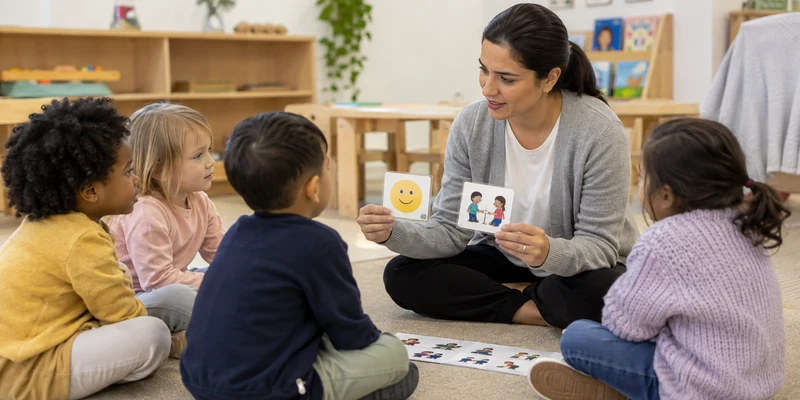
You do not need formal safeguarding language to hear from young children. Use short prompts during play, drawing, a calm group talk or a one-to-one conversation:
- Who can you talk to when you need help?
- Which places help you feel calm and comfortable?
- What makes it easier or harder to join an activity?
- What would you change so everyone can play and learn well?
- Would you rather tell, draw or show us?
Use pictures, gestures, role-play or a choice board when words are not enough. Give children different ways to take part, especially when age, language, disability or communication style affects how they answer.
Keep the conversation safe. Do not ask a child to share a private concern in front of a group. If a child tells you something worrying, stay calm, listen, avoid leading questions and follow your approved child protection process. Do not promise secrecy or start your own investigation.
You can use the NAPCAN 2026 activities and resources to help children join the week. Treat the activities as a way to start useful conversations, not as proof that your child protection work is complete.
Check the parts children cannot see
Children experience the result of your systems, even when they never see the policy behind them. Use the week to check four parts of your daily work.
Staff response Ask each person where they would go first if they noticed a concern, what they would record and who they would contact if the usual person was unavailable. If answers are unclear, you have found a training or process gap.
Family communication Make sure families know how to raise a concern, ask for help or request a private conversation. Use plain language and offer another format when language, access or timing makes the usual method difficult.
Complaints and follow-up Check that your current procedure is easy to find and that the next step is clear. You should know who owns the response, how you record it and when you review it.
Digital routines Review how you use phones, photographs, learning records, messaging apps and online storage. Check consent, access and the steps you would take if an image or message went to the wrong person. ACECQA’s current child safety guidance includes information about training, supervision and safe device use.
For Australian services, ACECQA states that mandatory national child safety training applies from 27 February 2026 to people with management or control, nominated supervisors, people in day-to-day charge, staff, volunteers and students in the ECEC sector. You still need to check the requirements and reporting rules that apply in your state or territory.
Make it easy for families to speak up
A family may raise a concern during a rushed arrival or collection. You can make that moment easier by showing who can help, where a private conversation can happen and what happens next. You do not need a large event. A short message, a clear notice and a calm conversation can be enough to make the process less confusing.
Ask families how they prefer to receive important information. Offer written, spoken, translated or visual options when needed. Do not ask anyone to share sensitive details in a public group chat or at the busiest part of the day.
The Australian Human Rights Commission’s National Principles for Child Safe Organisations place children’s participation, family involvement, suitable and supported staff, child-focused complaints, safe physical and online environments, and regular improvement in the same wider framework. You can use the official child-safe organisation tools to support your review.

Look at the room after you review the people and processes
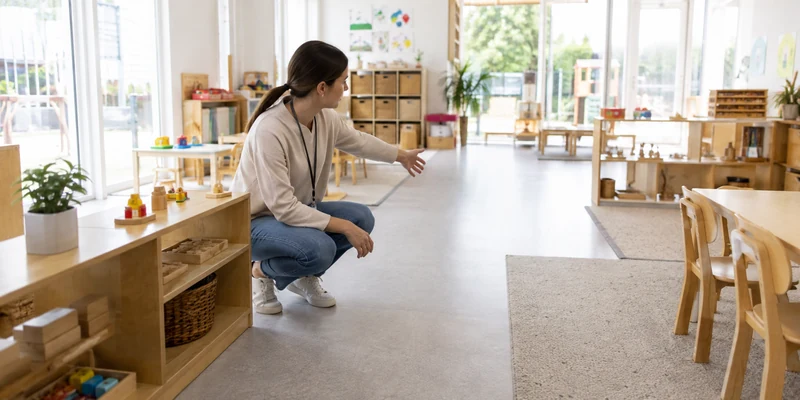
The physical environment belongs in the review, but it should not lead the review. Once you understand the concerns and daily routines, walk through the room while it is being used.
Check the places where children arrive, move, wait, play, rest, eat, use the bathroom and go outside. Look at the parts of the day when several groups cross or when an educator has to manage more than one activity.
Ask yourself:
- Can you see and hear children from the places where you normally work?
- Do tall items or deep storage create a hidden corner?
- Can children move without crossing a crowded route?
- Can children reach suitable resources without climbing or leaving the supervised area?
- Are adult-only items, records and cleaning products kept secure?
- Can you clean, inspect and repair the items that children use every day?
- Can a child or family member ask for help without being pushed into an isolated space?
Use a floor plan and a few notes. Mark the exact place where the problem happens and the routine affected by it. A clear location is more useful than a general statement such as “the room feels unsafe.”
Let the problem decide whether you need furniture
This is where furniture can become part of the solution without taking over the article. First name the problem. Then decide whether you need a change in practice, a move, a repair, a new product or a wider layout project.
If you cannot see across an activity area, you may need to move an item, reduce its height or choose storage that gives you a clearer view. If children cannot reach the resources you want them to use, you may need a child-level storage solution. If a transition becomes crowded, you may need to change the zone or route before you buy another shelf.
If furniture is damaged, difficult to clean or no longer fits the way you use the room, replacement may make sense. If you are planning a new room or refurbishment, the review can help you decide where storage, tables, seating and activity areas should sit before you order products.
You can compare sample classroom spaces to think about zones, routes and visibility. You can also review Xiair Word’s mobilier de classe range after you have identified the room need. A product page should help you compare options; your own floor plan and daily routine should make the final decision.
Do not describe one item as a universal child-safety answer. The right height, depth, position and fixing method depend on your room, age group, building and use.
Write the brief before you ask for prices
A short furniture brief helps you keep the purchase connected to the reason you started the review. Include:
- the room and routine affected;
- the result you want, such as a clearer view or easier access;
- the space available and the route that must stay clear;
- the people who will use the item and the items that must stay restricted;
- the information you need about size, materials, cleaning, stability and installation;
- the delivery, assembly, repair and warranty questions you need answered;
- the date, budget range and approval process for your project.
This gives you a fair way to compare suppliers. It also helps you avoid choosing a product because it looks attractive while missing the problem you need to solve.
If you need help connecting a floor plan with product choices, you can ask Xiair Word about classroom layout planning, product selection or customization. Share the room size, age group, daily use and main concern before you discuss a product list. You can also review the available classroom solutions from Xiair Word.
Make one change and check it in use
Do not wait for a large refurbishment before you act. If you find an urgent issue, follow your child protection and risk procedures first. You may then make a small change, such as moving storage, changing an educator’s position or clearing a route.
For a planned furniture project, agree on the result before installation. After the change, watch the same routine again. Check whether you can see more clearly, whether children can reach resources more easily, whether movement is calmer and whether cleaning or maintenance has become easier.
If the change does not work, adjust it. A completed delivery is not the same as a completed improvement.

Keep the work going after 12 September
When the week ends, keep one short record. Write down what you heard, what you changed, what still needs approval and when you will check it again. Add the result to your normal self-assessment or improvement process.
When you update this article next year, refresh the official date and theme, current child safety guidance, NAPCAN resources and the examples that match your service. Do not copy last year’s findings into a new date. Keep the structure if it helps you, but use new evidence from your children, families, team and rooms.
That approach keeps National Child Protection Week at the centre of the article. Furniture stays in its proper place: it becomes relevant when your review shows that the physical environment is part of the problem or part of the next improvement.
FAQ
- What is the main purpose of National Child Protection Week? It gives you a national focus for listening to children, talking about safety and turning those conversations into practical steps that support children and families.
- Do you need to buy furniture for National Child Protection Week? No. You should buy only when your review shows that a product or layout change will solve a clear room problem.
- Can furniture replace child protection procedures? No. You still need trained people, supervision, reporting pathways, family communication, suitable policies and regular review.
- What information should you prepare before asking for layout help? Prepare your floor plan, room size, age group, daily routines, current furniture, main concern, budget range and timeline.
- How should you update this article each year? Check the new official theme and guidance, then replace old examples with current observations and actions from your own service.
Start with one clear step
Use National Child Protection Week 2026 to ask one useful question: what will become better for children because you listened this week?
Start with children’s voices, check how adults respond, make it easier for families to speak up and review the routines that shape the day. If that work points to a room or furniture problem, you can then plan the right change with evidence behind it.
Do not start with a product list. Start with the child-safe practice you want to improve.