
 German
  English
  Arabic
  French
  Italian
  Spanish (Spain)
  Thai
Thai  Japanese
  Turkish
  Indonesian
  Vietnamese
  Polish
  Portuguese
  Malay
Malay  Swedish
  Spanish (Mexico)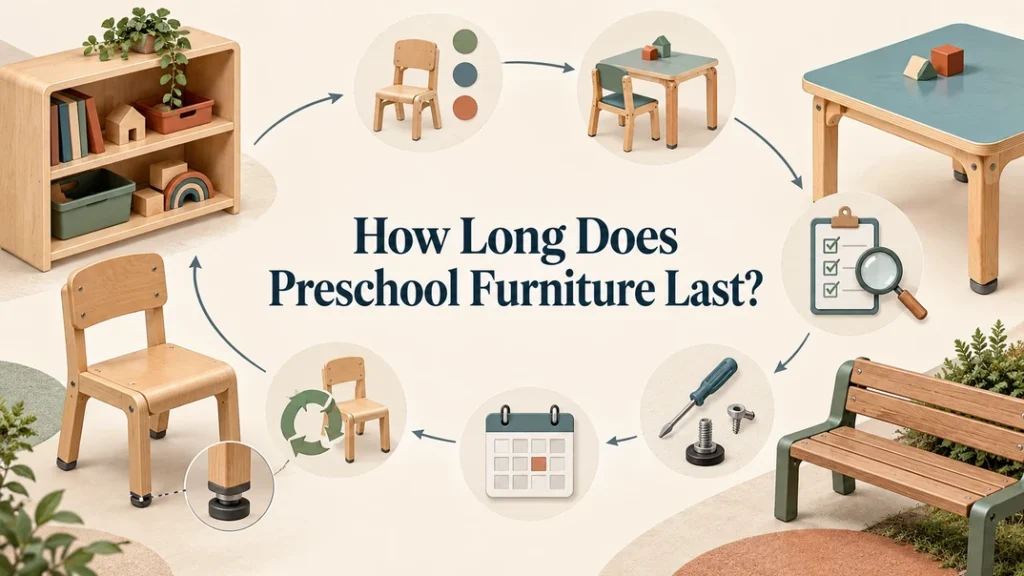
When you ask, “How long does preschool furniture last?”, you usually need more than a replacement date. You need to know whether a chair will remain stable, whether a table will stay easy to clean, whether storage will still support the classroom, and whether the furniture will continue to fit the children using it.
There is no single lifespan for every preschool chair, table, shelf, soft seat, or outdoor item. You can make a reliable plan by checking three things together: whether the furniture is safe, whether it still works for the age group and activity, and whether you can maintain or repair it properly.
What “Lasts” Means in a Preschool Classroom
Use these three tests when you review a product or an existing classroom set:
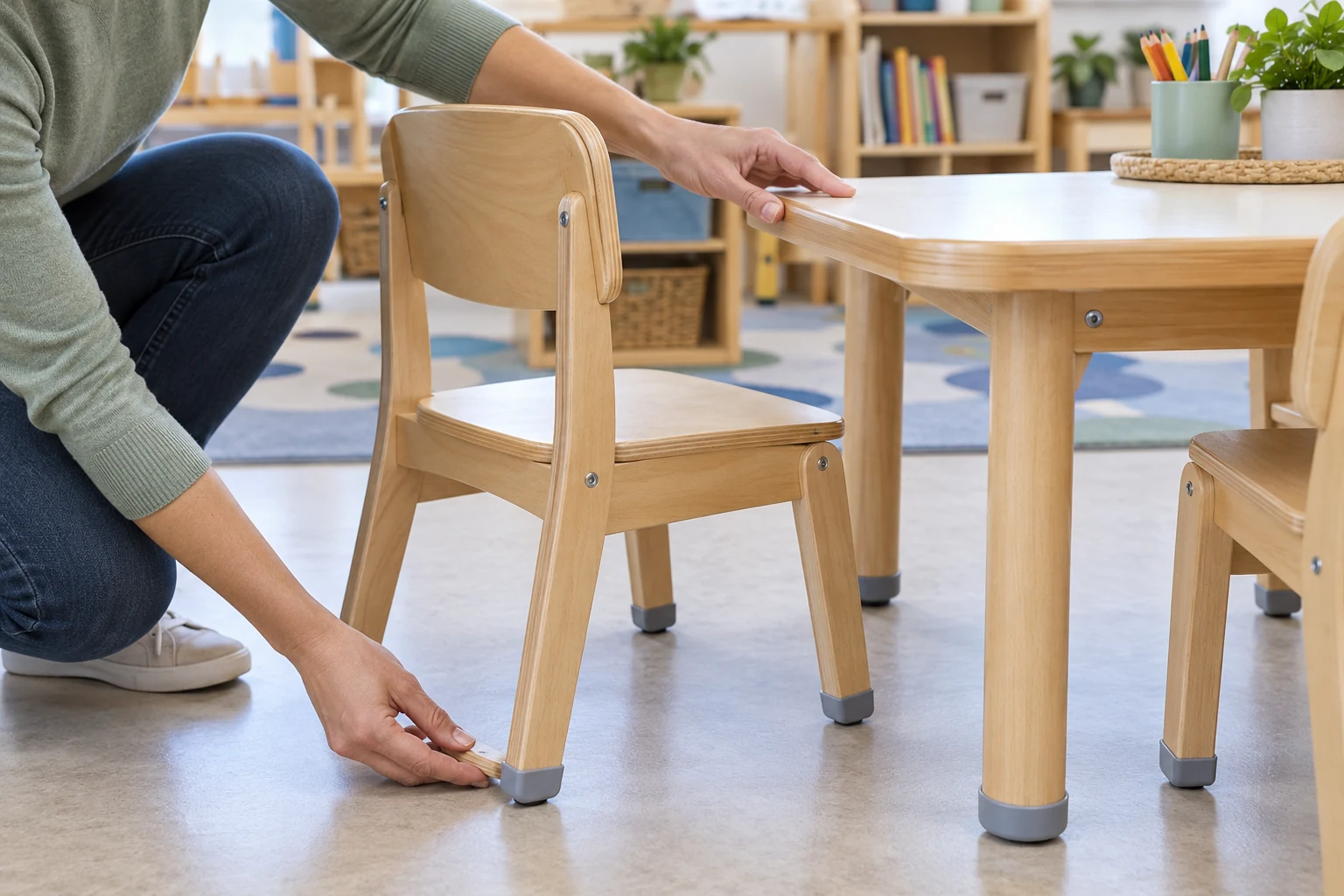
- Safe: the frame, joints, fasteners, edges, glides, and fittings remain stable and free from hazards.
- Usable: the furniture still supports the children’s size, posture, reach, movement, activity, and storage access.
- Maintainable: you can clean the surfaces, follow the care instructions, and replace ordinary wear parts without improvised repairs.
Furniture can pass one test and fail another. A table may remain structurally strong but stop working when a new age group needs more knee space. A soft seat may still look attractive but no longer be hygienic if the cover cannot be cleaned thoroughly. For that reason, age alone should never be the only reason to keep or remove a product.
Practical Planning Ranges
The ranges below are planning references for a busy preschool setting. They are not legal deadlines, warranties, or promises for every product. You should confirm the construction, materials, use conditions, maintenance requirements, and replacement-part support for the furniture you specify.
| Furniture type | Planning range | First point to review |
|---|---|---|
| Preschool chairs | 5–10 years | Joints, glides, seat and back connections, cracks, and continued fit for the children |
| Preschool tables | 7–12 years | Surface and edge condition, frame stability, moisture damage, and underside clearance |
| Storage shelves and cubbies | 8–15 years | Base moisture, shelf support, tipping resistance, hardware, and child access |
| Art and utility furniture | 5–10 years | Cleanability, wet-area damage, drawers, casters, and repeated movement |
| Reading and soft seating | 3–7 years | Cover condition, seams, foam support, odor, and thorough cleanability |
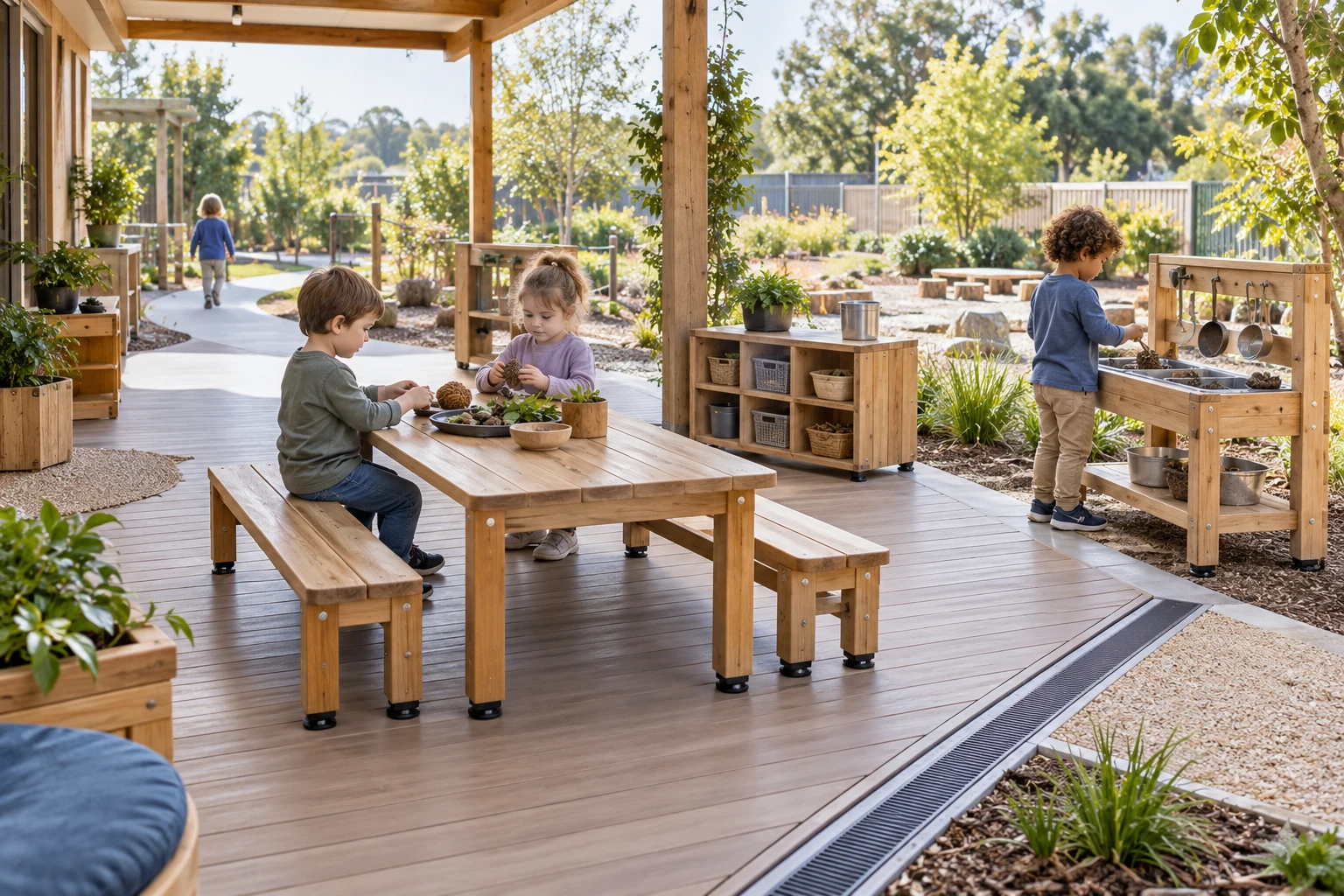
| Outdoor preschool furniture | 5–10 years | Sun, rain, ground contact, drainage, coatings, connectors, and seasonal storage |
Treat these ranges as inspection and replacement-planning prompts. A well-constructed product in a workable room may remain useful beyond the range; a poorly matched product may need attention much earlier.
What Shortens Preschool Furniture Life
Most early failures come from five causes. Check the cause before you decide that the product itself has reached the end of its life.
| Cause | What you may notice | What to check first |
|---|---|---|
| Loose joints or unavailable hardware | Wobble, movement, uneven legs, broken glides, or a door that will not stay aligned | Whether the joint can be tightened and the correct part can be replaced |
| Moisture and unsuitable cleaning | Swollen edges, peeling finish, sticky surfaces, stains, odor, or corrosion | Sealed edges, standing water, cleaning products, and access to damp areas |
| Crowded layout and repeated dragging | Scraped legs, damaged corners, bent glides, and impact marks | Clear routes, chair pull-out space, teacher access, and storage position |
| Age or size mismatch | Children lean, slide, hit their knees, avoid storage, or push furniture into position | Seat height, tabletop height, knee clearance, reach, and foot movement |
| Outdoor exposure | Fading, cracked coatings, rust, soft timber, or water held around the feet | Sun, rain, drainage, ground contact, connectors, and seasonal storage |
The practical lesson is simple: a product can be well made and still wear out early when the room, cleaning routine, or age group is wrong. Review preschool classroom layout mistakes, daycare floor plan planning, and the Kaufratgeber für Vorschulstühle before replacing furniture because of repeated damage.
Treat the Classroom as a Furniture System
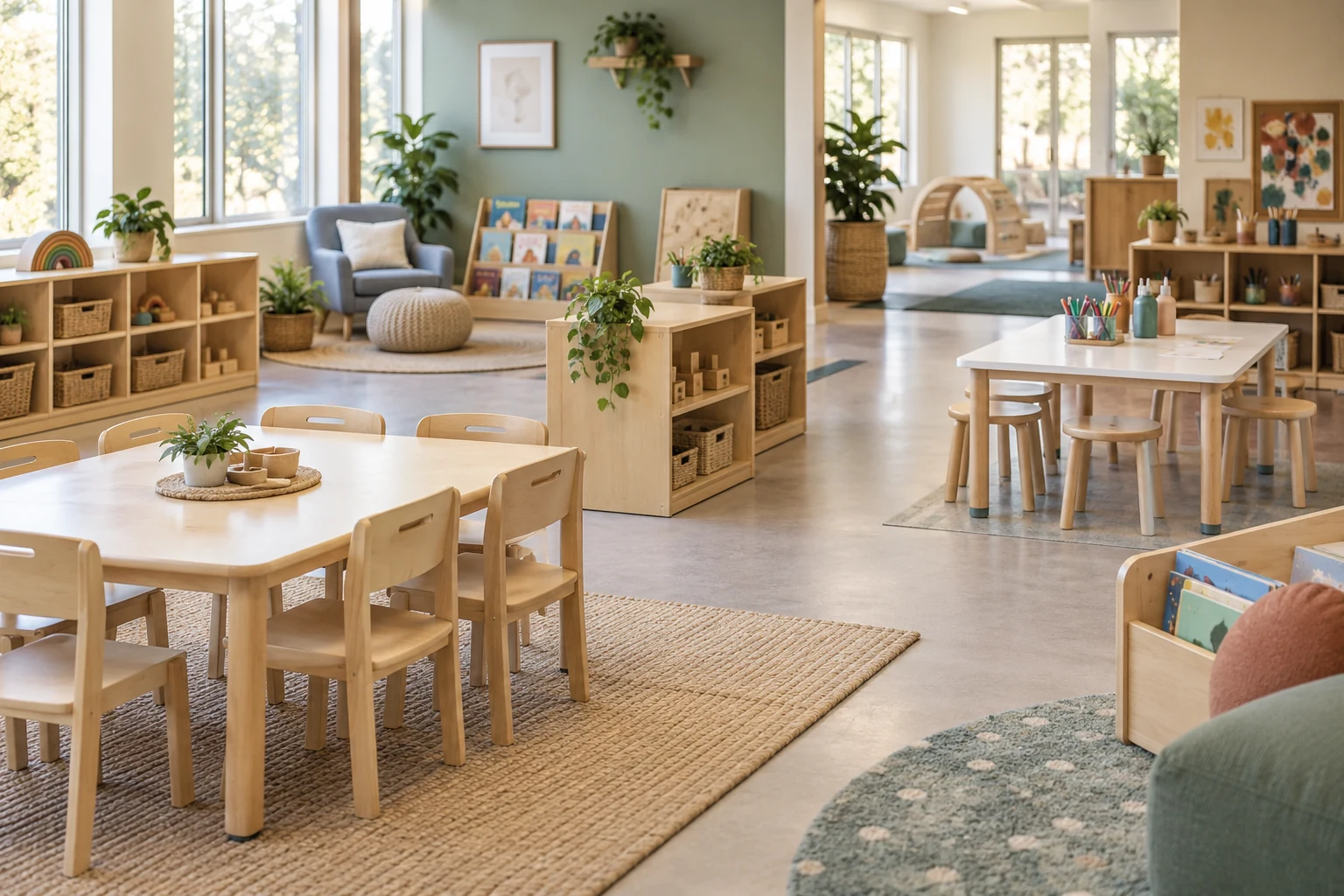
Furniture lasts longer when the pieces around it support the way you use it.
- Chair and table: check seat height, tabletop height, underside clearance, and foot movement together. Changing the chairs can make the existing tables unsuitable even when both products are individually sound.
- Storage and activity area: keep materials accessible without placing shelves in a busy route. The position of a shelf affects how children pull, load, and return materials.
- Art, reading, and movement zones: connect the work surface, cleaning access, storage, supervision, and circulation. Review classroom reading corner planning when you plan seating and book storage.
This is why replacement should be planned by classroom zone, not only by product age.
Where Fixed Service-Life Requirements Apply
Most target markets do not set one universal replacement date. The practical difference is whether you need to meet a stated life-expectancy benchmark or keep furniture safe and fit for use.
| Market | What the cited requirements mean for you |
|---|---|
| United Kingdom — England | School-based nursery design guidance uses a 10-year life-expectancy benchmark. See the official guidance. |
| Australien | No general fixed furniture lifespan appears in the cited national childcare requirements. See ACECQA guidance. Furniture must remain safe, clean, and in good repair. |
| New Zealand | No general fixed lifespan appears in the cited licensing criteria. See PF302 guidance. Furniture must be safe, suitable, and age-appropriate. |
| Ireland | No general fixed lifespan appears in the cited regulations. See Ireland’s statutory regulations. Furniture must be suitable, non-toxic, clean, hygienic, and in proper repair. |
| Kanada | Rules vary by province. The cited British Columbia regulation focuses on sturdy, safe, cleanable furniture in good repair. |
| Vereinigte Staaten | Rules vary by state. The cited Oregon rules focus on manufacturer instructions, stability, cleanability, and safe construction. |
For a specific project, always check the local licensing rule, tender document, product standard, and manufacturer instructions that apply to your site.
How to Decide Whether Existing Furniture Still Has Life Left
Use a short decision review for each item:
- Remove it from use immediately if you find structural movement, a crack in a load-bearing area, an exposed sharp edge, a loose part a child can access, unstable tipping, severe swelling, or damage that prevents proper cleaning.
- Repair it and keep it in service when the fault is localized, the main structure is stable, the product still fits the children and activity, and the correct replacement part or repair method is available.
- Plan replacement when the same fault returns, parts are unavailable, the surface cannot be cleaned to the required standard, or the item no longer fits the room even after a workable layout change.
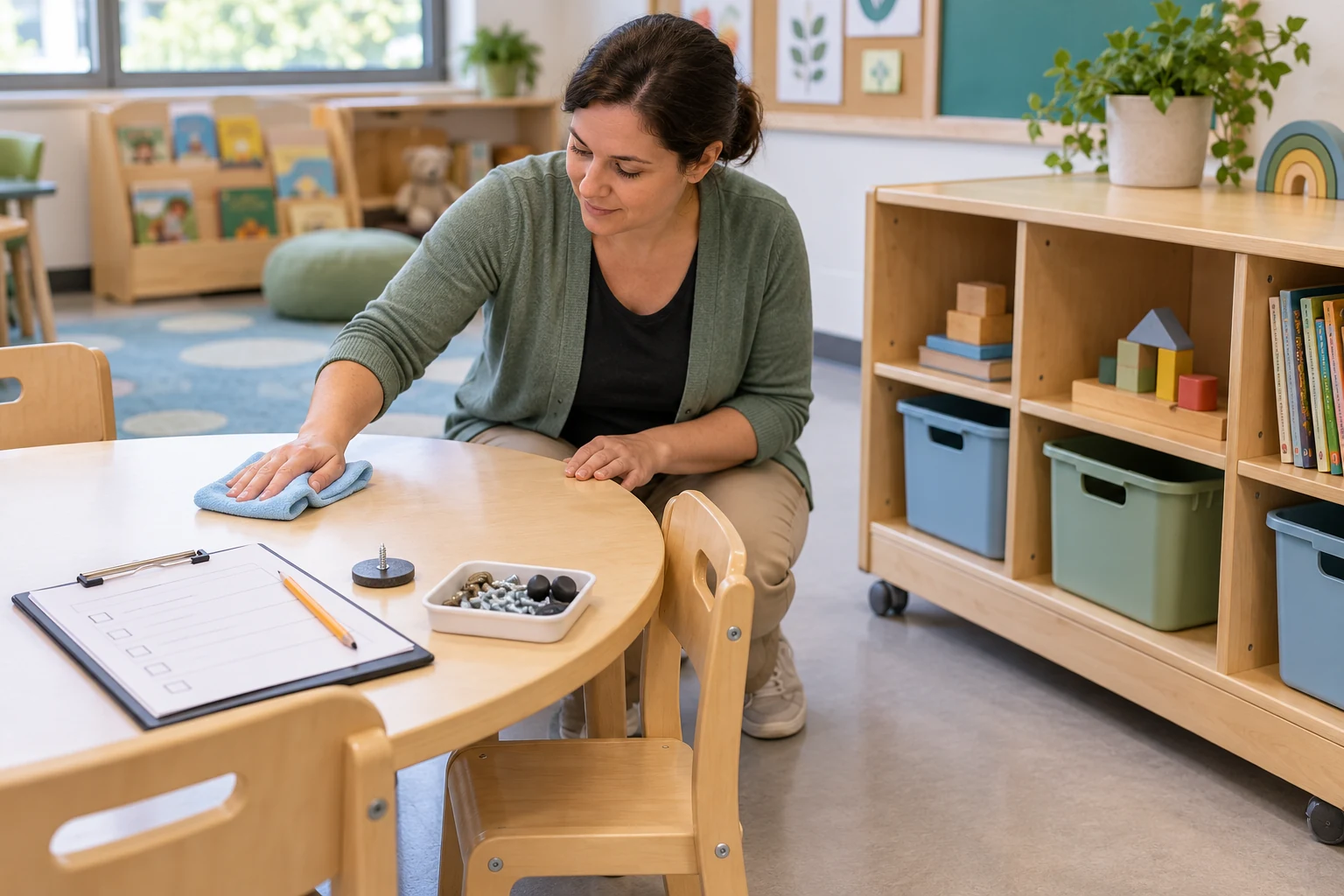
Do not approve an improvised repair just to extend the calendar age of a product. The repair needs to restore safe function and remain consistent with the manufacturer’s instructions and your local requirements.
Keep a Furniture Record That Supports Better Decisions
You can prevent repeated replacement mistakes by recording the information you will need later:
- product name or reference and furniture category;
- dimensions, material, finish, age range, and intended activity;
- room and location;
- cleaning and maintenance instructions;
- inspection date, fault, action taken, and replacement part;
- reason for removal when the product leaves service.
This record lets you compare repeated failures. If the same edge, caster, fastener, or surface fails across a room, you can correct the specification or layout instead of replacing items one by one without learning from the problem.
Häufig gestellte Fragen
- What does a supplier’s lifespan claim need to include? You should receive the assumptions behind the claim: age group, daily-use level, indoor or outdoor environment, cleaning routine, maintenance method, and exact material and finish. You should also ask whether the claim applies to the configuration you are ordering and whether replacement parts, care instructions, and compliance documents are available.
- How should you compare furniture from different batches or ages? Check the dimensions that affect the furniture relationship first, especially chair height, table clearance, storage access, and connector positions. Then compare edge treatment, finish, hardware, and replacement-part compatibility; two products that look similar may not work safely together.
- How should you plan a replacement when only one classroom zone is failing? Replace the failing zone first, then check its connection to adjacent zones. For example, changing tables may require a chair review, while changing storage may affect circulation and supervision. Record the reason for the change so the next purchase corrects the original problem instead of repeating it.
Abschluss
Your most reliable lifespan plan combines construction, maintenance, room layout, furniture relationships, age-group changes, and local requirements. Use the planning ranges to schedule reviews, use condition checks to decide what stays in service, and use official local rules to set the compliance baseline.
If you want help connecting your age range, classroom layout, activity zones, furniture specifications, and future expansion plan, visit Xiair Welt.