
 German
  English
  Arabic
  French
  Italian
  Spanish (Spain)
  Thai
Thai  Japanese
  Turkish
  Indonesian
  Vietnamese
  Polish
  Portuguese
  Malay
Malay  Swedish
  Spanish (Mexico)
When you organize your preschool classroom well, you can follow the day more easily. You should be able to see what belongs in each area, find daily materials without a long search, and reset the room without moving everything from one corner to another.
This article focuses on how you use and maintain an organized classroom. Decide how the room works first, then choose storage that supports those routines instead of filling the room with more units.
If you are choosing the units themselves, see the guide to the best storage solutions for a daycare classroom after you decide how your room works.
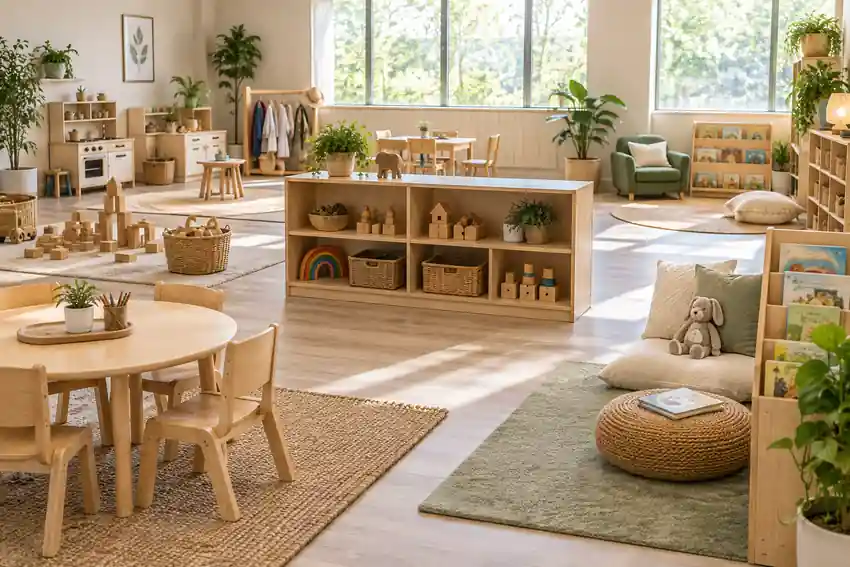
Make Each Area Easy To Understand
You can manage the room more easily when each area has a clear purpose. You do not need a large classroom to create useful zones. You need to make the purpose of each part of the room easy to understand.
Keep Active And Quiet Areas Apart
Place blocks, movement, and pretend play where children have room to spread out. Keep books, puzzles, and calm activities away from the busiest route when the room allows it. Put messy work close to the surface and cleaning point you already use.
You do not need to build a wall between every area. A rug, a low shelf, a table, or a small change in direction can show where one activity ends and another begins.
Keep The Main Paths Open
Leave clear routes between the entry, activity areas, handwashing point, and any other place used throughout the day. Check that you can see across the room while helping one child.
If a table, shelf, or display keeps creating a narrow spot, move the item before adding another rule. A room that is hard to move through will be hard to keep organized.
Der Texas Education Agency guidance on classroom arrangement is useful here because it connects clear paths, supervision, low shelves, and labeled storage instead of treating them as separate choices.
Give Every Material A Place
An organized room does not mean that every item stays on display. It means that you know where each item belongs and can return it without creating another pile.
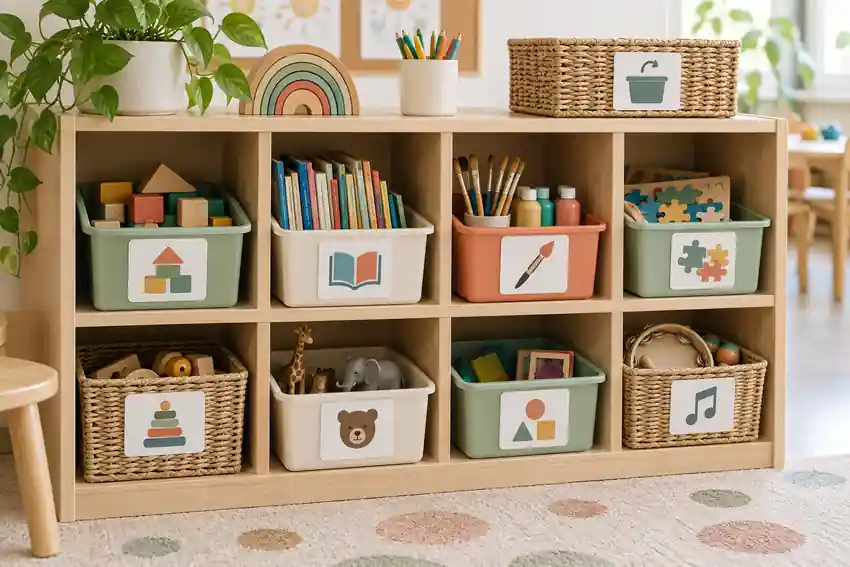
Use Simple Labels
Use short words, clear pictures, or both. A picture of blocks, paintbrushes, or books can help a child match an item to its place before reading the label.
Keep the same label on the shelf, basket, or tray and on any clean-up guide you use. If you change the material in a container, change the label at the same time. An old label creates more confusion than no label.
Group Materials By Use
Keep books, blocks, art materials, sensory items, and pretend-play resources in clear groups. Use the same group names on your labels, clean-up guides, and storage list so that you can find a missing item without checking every shelf.
Keep materials for one activity close to that activity. This shortens setup and clean-up, and it makes it easier to notice when an item has been left in the wrong place.
Keep The Working Set Small
You do not need every toy, book, or activity resource in the room at the same time. Keep a useful amount available, then rotate the rest when your children’s interests or the learning plan changes.
A smaller working set gives you room to see what is being used. It also makes it easier for children to choose, carry, and return materials without emptying an entire shelf.
Build Routines Into The Day
You can keep preschool classroom organization in place for longer when the room supports the routine instead of relying on constant reminders.
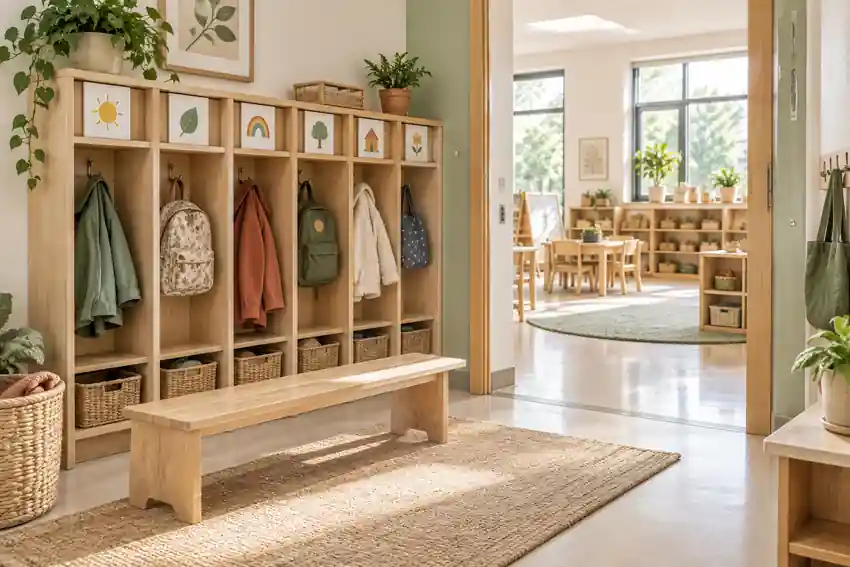
Make Arrival Easy
Give personal items a clear place near the entry. Use picture labels where needed, and keep bags, coats, shoes, and spare clothes from spreading into play areas.
Keep the arrival area separate from learning-material storage. A cubby area should not become the place where unfinished artwork, blocks, and staff paperwork collect during the day.
Clean Up After Each Activity
Let children see where materials go before the activity starts. Use a short clean-up step after block play, art, book time, and small-group work instead of waiting until the whole room is full.
You can use a simple picture sequence for younger children: choose, use, sort, and return. Keep the instruction close to the area it describes so that you do not need to repeat a long list from across the room.
Finish The Day In The Same Order
At the end of the day, check the floor, activity areas, personal-item area, and staff surfaces in the same order. If the reset takes too long, look for the part of the room that has no clear home rather than simply asking for a faster clean-up.
Keep Extra And Staff Materials Separate
Give different materials different levels of access. If you mix these materials together, you make the room harder to use and can create avoidable safety problems.
Rotate Materials When Your Group Moves On
Keep daily materials close to the area where you use each item. Store seasonal items, spare stock, and materials for future themes separately so that these stored materials do not crowd the working shelves.
Rotate materials when your group moves on, when a theme changes, or when the shelves become too full. Do not rotate simply to make the room look different. Keep the items that support the current work.
Keep Restricted Items Secure
Keep adult-only supplies in secure storage that follows your local requirements. Give staff a separate place for lesson files, personal items, and equipment that should not be handled during free play.
If your current storage does not give you this separation, first decide what should stay open, what can be stored away, and what needs a lock. The product choice should follow that decision.
If you need to compare open units, cubbies, cabinets, and mobile pieces, see the classroom storage collection after you make that decision.
Keep Common Materials Easy To Find
The materials used every day often create the most clutter. Give each group a clear place and keep the system easy enough to use when the room is busy.
Kunstmaterialien
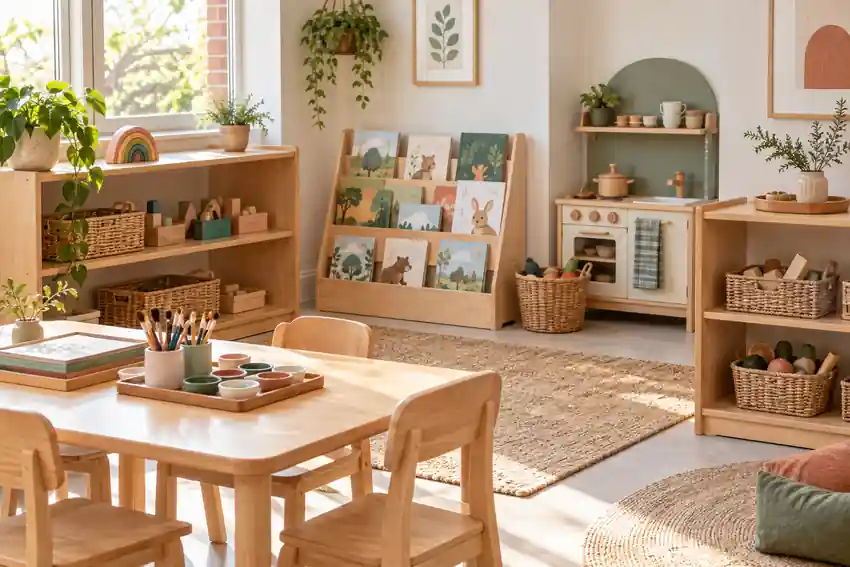
Keep everyday paper, crayons, pencils, and brushes together near the art area. Keep paint, glue, sharp tools, and other materials that need adult help separate from the materials children can choose freely.
Check the art area after an activity. If paper keeps ending up on another table or brushes keep collecting near the sink, change the place or label before adding another reminder.
Books And Learning Games
Keep books where you want children to read each book, not in a box across the room. Use a simple return place so that books stay separate from blocks and loose learning materials.
Keep puzzles, counting tools, and other learning games in clear groups. If you change the group, update the label and the clean-up instruction at the same time.
If books are difficult to display or return, the classroom bookshelf collection can help you compare book-specific storage options.
Toys And Play Materials
Keep pretend play, building, sensory, and movement materials in separate groups. You do not need to put every toy out. A smaller set makes the area easier to use and makes clean-up more realistic.
Check What Is Not Working
Keep checking your preschool classroom organization throughout the year because your children, activities, and materials change.
Once a week, look at the places where items collect. Check whether a basket is too heavy, a label is unclear, a shelf is hard to reach, or a material is no longer being used. Remove broken items and move materials that no longer fit the current group.
Watch how children use the room. If you see children carry the same materials to one area again and again, that area may need a better home for those materials. If you see children avoid a shelf, check its height, depth, visibility, and the number of items on it before adding another rule.
FAQs
- Why does a preschool classroom become messy again so quickly? The problem is often a missing decision rather than a lack of effort. If an item has no clear home, if the home is too far away, or if the container is difficult to use, the same pile will return.
- Should you keep all learning materials available? Keep enough for the current activities and interests. Store the rest separately and rotate it when it becomes useful. This keeps choices clear and leaves more room for movement.
- How can you make labels work for younger children? Use one simple word with a clear picture, place it where the child can see it, and teach the return step while the material is still new.
- How often should you review the room? Use a short weekly check for clutter and damaged materials, then do a deeper review when you change themes, age groups, furniture, or the daily schedule.
- What should you do when the room has too little storage? Start by reducing unused materials and separating daily items from stored items. Then review the room plan before adding a unit, because extra storage can take away the movement and supervision space you need.
Abschluss
You can build good preschool classroom organization with clear areas, simple labels, realistic routines, and regular checks. When every material has a usable home and the room still gives you clear paths, you can help children take part in keeping the space ready for the next activity.