
 German
  English
  Arabic
  French
  Italian
  Spanish (Spain)
  Thai
Thai  Japanese
  Turkish
  Indonesian
  Vietnamese
  Polish
  Portuguese
  Malay
Malay  Swedish
  Spanish (Mexico)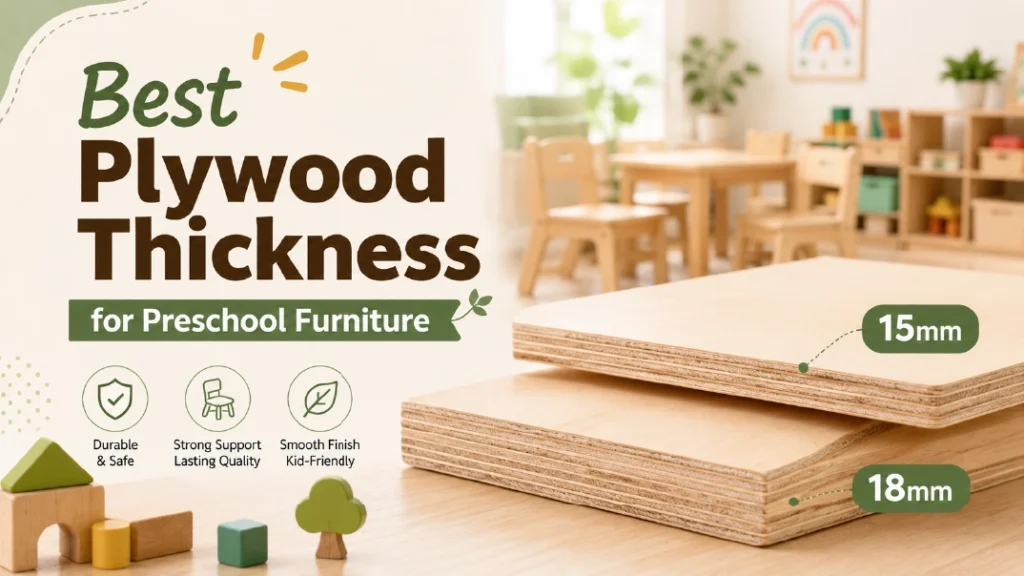
When choosing preschool furniture, many buyers focus first on color, shape, size, or price. These details matter, but they do not tell the full story. One of the most important factors behind furniture quality is often less visible: plywood thickness.
For preschool classrooms, daycare centers, Montessori schools, and childcare projects, plywood thickness affects much more than appearance. It influences strength, stability, safety, weight, service life, and long-term value.
In many preschool furniture projects, 18mm plywood is one of the most commonly used thicknesses because it offers stronger structural performance for daily classroom use. However, not every part of every product needs the same thickness. For some projects with tighter budgets, 15mm and 18mm plywood can be used together in a reasonable way to balance durability and cost.
This guide explains how plywood thickness works, what different thicknesses are used for, and how to choose the right plywood thickness for preschool furniture.
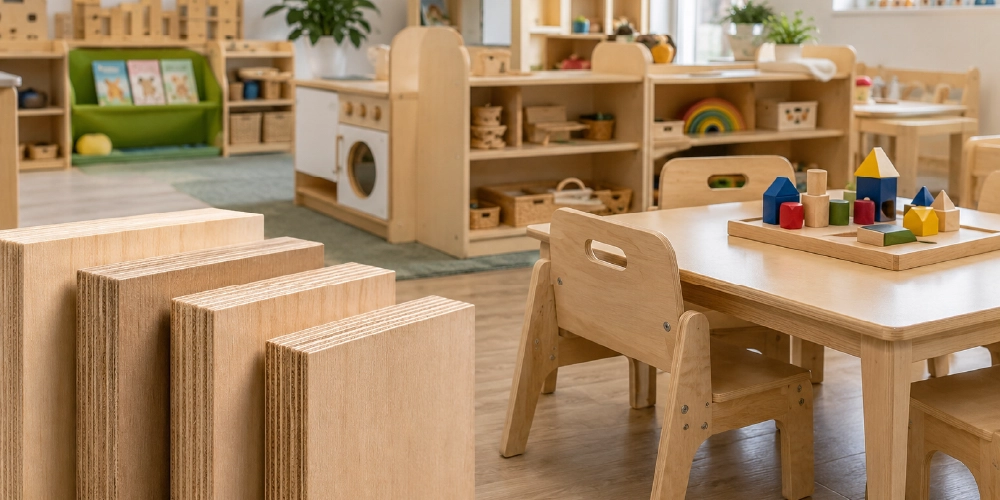
What Is Plywood Thickness?
Plywood thickness refers to the measured thickness of a plywood board. It is usually shown in millimeters, such as 12mm, 15mm, 18mm, or 25mm, or in inches, such as 1/2 inch or 3/4 inch.
For furniture buyers, plywood thickness is not just a technical number. It directly affects how the furniture performs during daily use.
A thicker plywood panel usually offers better:
- Structural strength
- Load-bearing ability
- Resistance to bending
- Long-term stability
- Screw holding performance
- Durability in high-use areas
However, thicker does not always mean better for every furniture part. A well-designed preschool furniture product often uses different thicknesses in different areas. The key is to match the plywood thickness with the furniture function, classroom use, and project budget.
Why Plywood Thickness Matters in Preschool Furniture
Preschool furniture is different from ordinary home furniture. It is used by many children every day. Children climb, pull, lean, move, sit, store materials, and use furniture in ways that are not always gentle.
This means Vorschulmöbel must handle:
- Frequent daily use
- Repeated movement
- Group activities
- Lagerung of toys, books, and learning materials
- Teacher cleaning and classroom rearrangement
- Long-term use across multiple school years
If the plywood is too thin for the structure, the furniture may look fine at first but develop problems later. Shelves may bend. Cabinets may shake. Tabletops may feel unstable. Screws may loosen. Edges may become weak after repeated use.
For schools and distributors, these issues create more than inconvenience. They can lead to repair costs, replacement costs, customer complaints, and loss of trust.
That is why plywood thickness should be considered at the beginning of the purchasing process, not after problems appear.
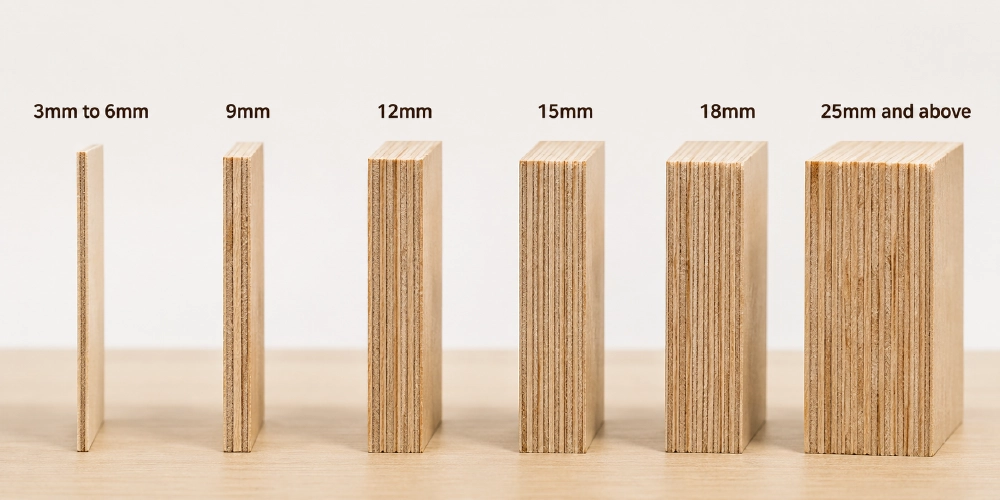
Common Plywood Thickness Sizes and Their Uses
Different plywood thicknesses serve different purposes. There is no single thickness that works best for everything.
| Plywood Thickness | Approx. Inch Size | Common Uses | Hinweise |
|---|---|---|---|
| 3mm to 6mm | 1/8 inch to 1/4 inch | Back panels, drawer bottoms, decorative surfaces | Suitable for light support, not main structure |
| 9mm | 3/8 inch | Light partitions, cabinet backs, small panels | Often used where heavy load is not required |
| 12mm | 1/2 inch | Small furniture parts, light-duty panels | Better for low-load use, not ideal for heavy classroom furniture |
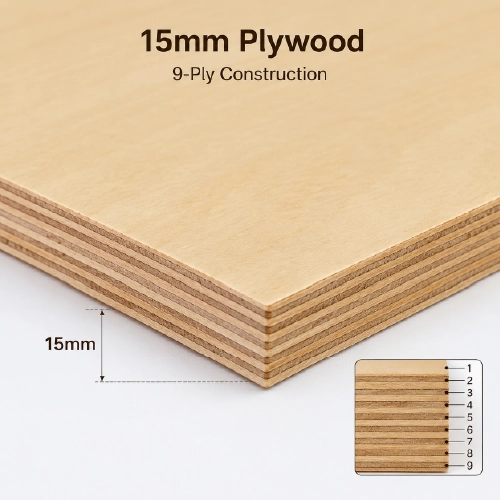
| 15mm | 5/8 inch | Standard furniture parts, lighter shelves, some side panels | Useful when budget control is important |
| 18mm | 3/4 inch | Preschool tables, storage cabinets, classroom shelves, cubbies, Montessori furniture | Stronger and more stable for daily classroom use |
| 25mm and above | 1 inch and above | Heavy worktops, special structural projects | Usually used only when extra strength or design thickness is required |
* Inch sizes are approximate equivalents. Actual plywood thickness may vary slightly depending on manufacturing standards, sanding, and supplier specifications.
For preschool furniture, 18mm plywood is often preferred for key structural parts because it gives the furniture a stronger and more reliable feel.
15mm vs 18mm Plywood: What Is the Real Difference?
Many buyers compare 15mm(5/8 inch) and 18mm(3/4 inch) plywood because the difference seems small. In reality, that 3mm difference can matter a lot in preschool furniture.
15mm Plywood(5/8 inch)
15mm plywood can be used in many furniture projects, especially when the furniture is smaller, lighter, or designed for moderate use.
It may be suitable for:
- Smaller shelves
- Light storage units
- Some side panels
- Low-load furniture parts
- Budget-sensitive projects
- Parts that do not carry major weight
The advantage of 15mm plywood is that it can reduce material cost and furniture weight. This can be helpful for projects where budget is limited or where the product does not need heavy-duty performance.
However, 15mm plywood may not be the best choice for every preschool furniture part. When used for large tabletops, wide shelves, cubby cabinets, or high-frequency classroom storage, it may not provide the same level of stability as 18mm plywood.
18mm Plywood(3/4 inch)
18mm plywood is commonly used for stronger preschool furniture because it offers better structural performance.
It is often suitable for:
- Preschool tables
- Classroom storage cabinets
- Cubby lockers
- Montessori shelves
- Bücherregale
- Activity tables
- Heavier-duty classroom furniture
- High-use daycare furniture
The main advantage of 18mm plywood is stability. It helps furniture feel stronger, more solid, and more suitable for long-term daily classroom use.
For B2B buyers, this is especially important. A product made with 18mm plywood may cost more than a thinner option, but it can reduce future problems related to bending, looseness, instability, and early replacement.
Why We Use 18mm Plywood Most Often
For preschool furniture, we use 18mm plywood, close to 3/4 inch plywood, most often because it matches the way classroom furniture is actually used in daycare centers, preschools, Montessori classrooms, and early learning projects.
In a home setting, a shelf or table may only be used by one or two children. In a preschool classroom, the same furniture may be used by dozens of children every day. Tables are moved for different activities. Shelves are loaded with trays, books, toys, and learning materials. Cubbies are opened and used repeatedly throughout the day. This daily use puts much more pressure on the furniture structure.
For this reason, 18mm plywood is not only a material choice. It is a way to reduce long-term problems for schools, distributors, and project buyers.
| B2B Buyer Concern | Why 18mm Plywood Matters |
|---|---|
| Furniture becomes loose after several months | 18mm plywood gives screws and connectors better holding strength, especially in tables, cabinets, shelves, and cubbies. |
| Shelves bend under classroom materials | Wider or heavily loaded shelves need stronger panels. 18mm plywood helps reduce sagging over long-term use. |
| Products look similar but quality is different | Many furniture pieces look good in photos, but board thickness affects structure, weight, and durability after daily classroom use. |
| Customers compare only price | 18mm plywood helps explain why one product costs more but performs better in a real preschool environment. |
| Bulk orders need consistency | For distributors and preschool chains, using 18mm plywood in main structures helps keep product quality more stable across different classrooms and repeat orders. |
| Replacement cost is higher than initial savings | Cheaper thin-board furniture may reduce the first purchase cost, but early damage, repairs, and replacements can increase total cost. |
Can 15mm and 18mm Plywood Be Used Together?
Yes. For some projects, 15mm and 18mm plywood can be used together.
This is a practical solution for customers who want reliable preschool furniture but also need to control the project budget.
The key is not to reduce thickness everywhere. The key is to use the right thickness in the right place.
For example, 18mm plywood can be used for important structural parts, while 15mm plywood can be used for lighter-load areas. This helps control cost without sacrificing the parts that matter most for stability and safety.
| Furniture Part | Recommended Approach |
|---|---|
| Tabletops | 18mm is usually better for strength and stability |
| Shelf panels | 18mm is better for wider shelves or heavier materials |
| Cabinet side panels | 18mm is preferred for strong structure |
| Back panels | Can often use thinner plywood depending on design |
| Light partitions | 15mm may be enough |
| Smaller non-load-bearing parts | 15mm can be considered |
| Decorative or support panels | Thickness can be adjusted based on function |
This kind of combination is especially useful for large projects, where small material changes can affect the total budget.
When Should You Choose 18mm Plywood?
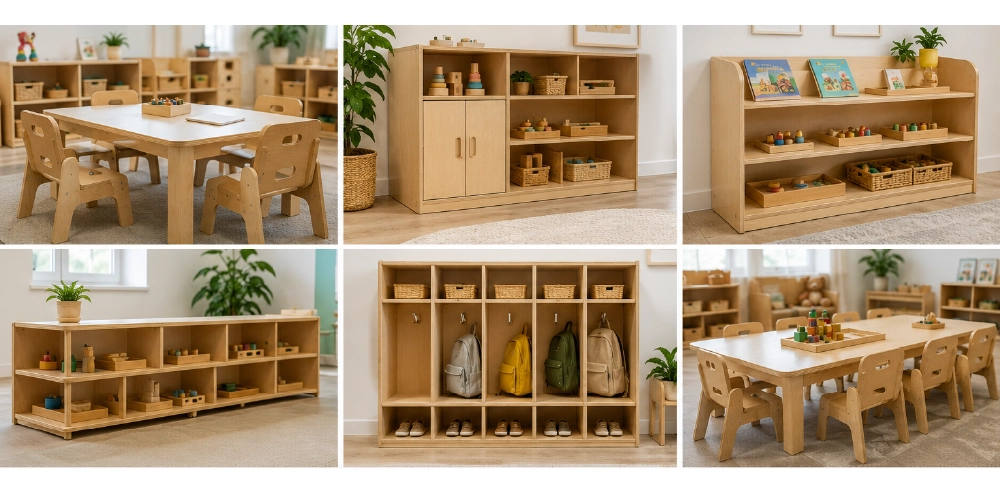
18mm plywood is a strong choice when the furniture will be used frequently, needs to support weight, or must last for many years.
You should consider 18mm plywood for:
- Preschool tables used every day
- Classroom storage cabinets
- Open shelves for books and toys
- Montessori shelves
- Cubby lockers
- Large activity tables
- Furniture for daycare centers
- Furniture for preschool chains
- Products sold through distributors or wholesalers
- Projects where long-term durability matters more than the lowest price
For customers who care about quality and long-term use, 18mm plywood is usually the safer choice.
When Can 15mm Plywood Be Used?
15mm plywood can still be a reasonable option in the right situation.
It may be used when:
- The furniture is small
- The part does not carry heavy weight
- The shelf span is short
- The project budget is limited
- The product is designed for lighter use
- The structure includes enough support
- The part is not a main load-bearing component
For example, some lighter side panels, small storage pieces, or internal parts may use 15mm plywood if the overall structure is properly designed.
However, using 15mm plywood only to reduce cost can create risk if the furniture is expected to handle heavy classroom use. The decision should always be based on furniture function, not only price.
Is Thicker Plywood Always Better?
Not always.
This is a common misunderstanding. Many buyers think thicker plywood automatically means better furniture. In some cases, thicker plywood does improve strength. But furniture quality depends on more than thickness.
A good preschool furniture product also depends on:
- Plywood grade
- Core material quality
- Layer bonding
- Surface finish
- Edge sanding
- Rounded corners
- Hardware quality
- Structure design
- Assembly method
- Coating safety
- Production consistency
For example, a poorly designed product made from thick plywood may still shake or loosen. A well-designed product using the right thickness in the right position can perform much better.
The goal is not to use the thickest plywood everywhere. The goal is to create furniture that is safe, stable, durable, and suitable for the classroom environment.
Best Plywood Thickness for Different Preschool Furniture
Different preschool furniture pieces have different structural needs. Some products require stronger panels because they carry more weight or are used more often. Others can use a mix of 15mm and 18mm plywood when the design and budget allow.
| Preschool Furniture Type | Recommended Thickness | Warum es wichtig ist | Budgetfreundliche Option |
|---|---|---|---|
| Preschool Tables | 18mm(3/4 inch) | Tabletops need good stability because children lean, write, eat, paint, and play on them every day. 18mm plywood helps reduce bending and gives the table a stronger feel. | For smaller tables, 15mm may be used if the frame and leg structure provide enough support. |
| Preschool Chairs | 18mm(3/4 inch) for key structural parts | Chairs need strong support, stable balance, and reliable joints. 18mm plywood improves strength in weight-bearing areas. | 15mm can be used for selected non-critical parts, but the seat, legs, and joints should remain strong. |
| Classroom Shelves | 18mm(3/4 inch) | Shelves hold books, toys, trays, blocks, and Montessori materials. 18mm plywood helps prevent sagging, especially on wider shelves. | 15mm can work for small shelves or short spans with proper support. |
| Storage Cabinets | 18mm(3/4 inch) | Cabinets are opened, loaded, and used throughout the day. Thicker plywood helps the structure stay stable over time. | 15mm may be used for internal dividers or lighter panels, but main side panels and shelves are better with 18mm. |
| Cubby Lockers | 18mm(3/4 inch) | Cubbies need to handle bags, shoes, lunch boxes, and daily child use. 18mm plywood gives better strength and reduces shaking. | 15mm can be used in some internal sections if the overall structure is reinforced. |
| Montessori Shelves | 18mm(3/4 inch) | Low open shelves must stay stable because children use them independently. 18mm plywood supports better balance and durability. | Small Montessori shelves may use a 15mm and 18mm combination depending on size and load. |
| Art and Activity Tables | 18mm(3/4 inch) | These tables face frequent cleaning, group activities, and active use. 18mm plywood keeps the tabletop more stable during daily classroom work. | Smaller activity tables may use 15mm when the structure is well supported. |
| Back Panels and Decorative Panels | 6mm to 9mm, or based on design | These parts usually do not carry major weight, so they do not always need 18mm plywood. | Using thinner panels here can help control cost without affecting main structure quality. |
What Else Matters Besides Plywood Thickness?
Plywood thickness is important, but it does not tell the whole story.
For preschool furniture buyers, one of the most common problems is that two products may both be described as 18mm plywood, or close to 3/4 inch plywood, but the price and quality can be very different.
The reason is simple: thickness only shows the outside measurement. It does not show what is inside the board.
A low-cost supplier may still offer “18mm plywood,” but the board may use lower-grade core material, fewer layers, uneven inner veneers, soft filler, or weak bonding. These problems are not easy to see in product photos, but they can affect the furniture after real classroom use.
For B2B buyers, this is especially important. If the core material is poor, the furniture may look acceptable at first, but problems can appear later during bulk use, repeat orders, or customer feedback.
Plywood Core Quality
The plywood core is the inside structure of the board. It directly affects strength, screw holding, edge quality, and long-term stability.
This is also where many low-cost products reduce cost.
From the outside, two boards may both look like 18mm plywood. But once they are cut, drilled, sanded, or used in furniture production, the difference becomes clear.
Poor plywood core quality may cause:
| Core Issue | What It Means for Preschool Furniture |
|---|---|
| Uneven inner layers | The board may bend, twist, or feel less stable |
| Soft core material | Screws and connectors may loosen more easily |
| Gaps inside the board | Edges may chip, break, or expose hollow areas |
| Weak bonding | Layers may separate under long-term use |
| Low-grade filler | The board may look thick but lack real strength |
| Inconsistent core quality | Bulk orders may have unstable product quality |
This is why buyers should not only ask, “Is it 18mm?”
A better question is:
What kind of 18mm plywood is being used?
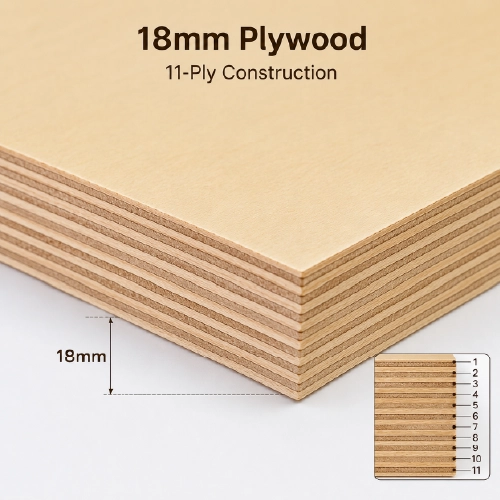
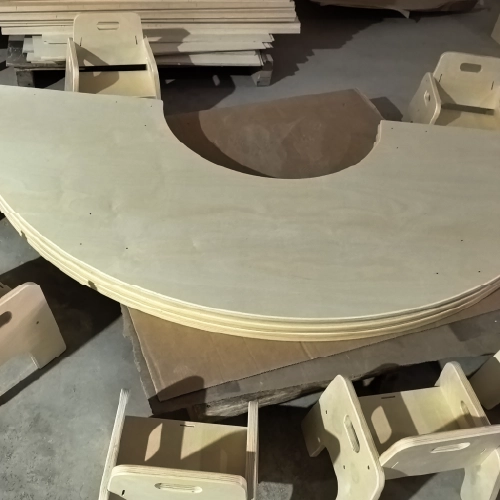
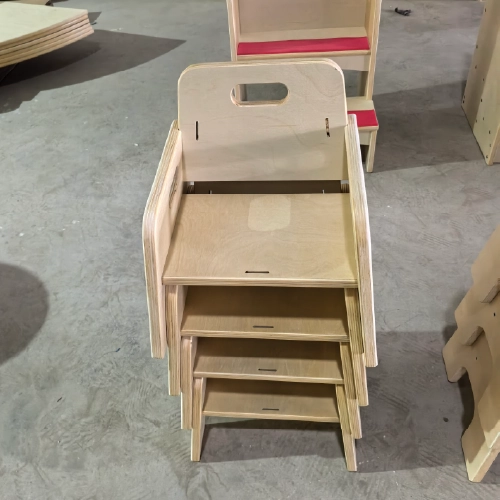
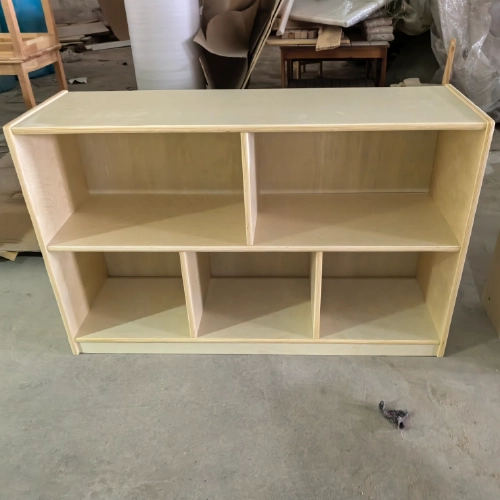
Bei Xiair Welt, our commonly used 18mm plywood is made with 11 layers of the entire board. This gives the board a stronger and more solid internal structure, instead of only looking thick from the outside.
For preschool furniture, this matters because the boards need to hold screws, support shelves, form stable cabinets, and keep edges clean after cutting and rounding.
Number of Layers
The number of layers is a useful way to understand plywood quality.
In general, a better plywood board has more even and consistent layers. These layers help spread force across the board and improve stability.
For example, 18mm plywood with 11 layers usually gives better structural support than cheaper 18mm plywood with fewer or uneven layers.
For preschool furniture, this affects:
- Shelf strength
- Tabletop stability
- Cabinet structure
- Screw holding
- Edge quality
- Bulk order consistency
This is why the layer count is important in B2B purchasing.
Two suppliers may both write 18mm plywood in the quotation, but if one uses a stronger 11-layer structure and another uses a cheaper core, the final furniture quality will not be the same.
Bonding Quality
Plywood is made by bonding layers of wood together. If the bonding is weak, the board may lose strength over time.
Good bonding helps prevent:
- Layer separation
- Edge splitting
- Panel deformation
- Weak screw areas
- Shorter furniture life
This is especially important when plywood is used for cabinets, cubbies, shelves, and tables. These furniture pieces are cut, drilled, assembled, and used repeatedly. If the board bonding is poor, problems may appear at the joints, edges, or screw positions.
For buyers, bonding quality is not always visible in photos. This is why it is important to work with a supplier that controls material quality before production, not only checks the finished appearance.
Edge Quality After Cutting
Edge quality is one of the easiest ways to see whether plywood is truly good.
High-quality plywood usually has cleaner and more solid edges after cutting, sanding, and rounding. Low-quality plywood often exposes gaps, uneven layers, soft filler, or broken edges.
For preschool furniture, edge quality is not only about appearance. It also affects:
- Child safety
- Touch comfort
- Product durability
- Surface finishing quality
- Long-term wear resistance
If the core is poor, even a thick board may have weak edges. This can make the furniture look rough, reduce product value, and create more quality concerns for schools and distributors.
Surface Finish and Coating
Surface finish still matters, but it should not be used to hide poor material.
A good preschool furniture board should have both:
| Inside Quality | Outside Quality |
|---|---|
| Solid plywood core | Smooth surface |
| Consistent layers | Safe coating |
| Strong bonding | Clean edge finish |
| Good screw holding | Easy-to-clean surface |
Some low-cost products may look nice because the surface is covered or painted, but the inner board quality may still be weak. For long-term preschool use, both the inside and outside need to be reliable.
Batch Consistency for B2B Orders
For B2B customers, one good sample is not enough.
Distributors, preschool chains, and project buyers need the same material quality across the full order. If the sample uses one material but bulk production uses another, the final products may have different strength, weight, edge quality, and assembly performance.
This can create problems such as:
- Unstable product quality
- Different product feel between batches
- More assembly issues
- More customer complaints
- Higher after-sales pressure
- Lower trust in repeat orders
That is why material consistency is a serious part of preschool furniture production.
Bei Xiair Welt, we pay attention to real material use and production consistency. Our commonly used 18mm, 11-layer plywood helps support stronger classroom furniture and gives B2B buyers more confidence when purchasing in bulk.
Buyer Tip
When comparing preschool furniture suppliers, do not stop at the word 18mm plywood.
Ask these questions:
| Question | Warum es wichtig ist |
|---|---|
| How many layers does the 18mm plywood have? | Helps judge real board structure |
| What core material is used? | Affects strength and screw holding |
| Are there gaps or filler inside the board? | Affects edge quality and durability |
| Is the same material used for bulk production? | Protects order consistency |
| How does the edge look after cutting and rounding? | Shows both safety and material quality |
| Can the supplier explain where 18mm and 15mm should be used? | Shows real manufacturing experience展 |
For preschool furniture, true quality is not only about thickness.
It is about whether the board is solid inside, stable in production, and reliable after years of classroom use.
How Xiair World Supports Preschool Furniture Projects
Choosing plywood thickness is only one part of a preschool furniture project. For many buyers, the harder part is knowing where to use 18mm plywood, where 15mm plywood may be acceptable, and how to control the total project cost without reducing furniture quality in the wrong places.
This is especially important for daycare centers, preschool chains, distributors, wholesalers, and project buyers who need more than one or two products. A full classroom or full school project may include tables, chairs, cubbies, shelves, cabinets, activity areas, Montessori furniture, nap furniture, storage systems, and learning materials. If every product is sourced from a different supplier, the buyer has to spend a lot of time comparing materials, checking thickness, confirming quality, arranging samples, controlling colors, managing production, and following up on shipment.
Bei Xiair Welt, we help customers simplify this process through one-stop early learning furniture supply and project support.
Material Planning Based on Real Classroom Use
Not every furniture part needs the same plywood thickness. Using 18mm plywood everywhere may increase cost unnecessarily, while using 15mm plywood in the wrong place may create durability problems later.
We help customers choose plywood thickness based on:
- Furniture type
- Load-bearing needs
- Classroom use frequency
- Product size
- Shelf span
- Age group
- Budget level
- Target market positioning
For most key preschool furniture structures, we commonly use 18mm plywood, close to 3/4 inch plywood. For some budget-controlled projects, 15mm plywood, close to 5/8 inch plywood, can be used in selected lighter-load parts when the structure allows it.
This helps customers control cost without weakening the areas that matter most.
Budget Control Without Sacrificing Key Quality
Many customers have a fixed budget, especially when furnishing several classrooms or purchasing for a new daycare center. The goal is not simply to choose the cheapest material. The goal is to spend the budget in the right places.
We can help customers create a balanced material plan.
| Project Need | Recommended Approach |
|---|---|
| Stronger daily-use furniture | Use 18mm plywood for tabletops, shelves, cubbies, cabinets, and main structures |
| Lower total project cost | Use 15mm plywood only in selected lighter-load or non-critical parts |
| Premium product line | Use 18mm plywood more widely for stronger positioning and longer service life |
| Distributor product range | Offer different thickness options for different market levels |
| Full classroom project | Match material thickness with product function instead of using one standard blindly |
This approach is more practical than simply saying “use thicker plywood” or “choose the lowest price.” It helps buyers protect long-term quality while keeping the project budget under control.
If you are planning a preschool, daycare, Montessori classroom, or full early learning project, Xiair World can help you choose the right plywood thickness, match suitable furniture, control the project budget, and manage sourcing through one supplier.
Instead of spending time comparing many suppliers one by one, you can work with Xiair World for a more organized, reliable, and efficient preschool furniture sourcing solution.
Abschluss
Do not choose plywood thickness only by price. Choose it by furniture function, classroom use, load requirements, structure design, and long-term value.
For preschools, daycare centers, Montessori classrooms, distributors, and project buyers, the right plywood thickness can help reduce future problems and create furniture that performs better in real classroom environments.
FAQs About Preschool Furniture Materials
What is the best material for preschool furniture?
For most classroom furniture, plywood is a good choice. It is strong, stable, and suitable for tables, shelves, cubbies, and storage cabinets. For some products, solid wood, plastic, or metal can also be used.
Is plywood better than MDF?
For main preschool furniture structures, yes, plywood is usually better. It holds screws better, has stronger edges, and performs better in daily classroom use. MDF is more suitable for smooth painted panels or low-load parts.
Is birch plywood better than regular plywood?
Ja, birch plywood is usually better. It has cleaner layers, stronger edges, and better stability. Regular plywood can still work, but the quality depends on the core, bonding, and production standard.
Is solid wood better than plywood?
Not always. Solid wood looks natural and strong, but it can be more expensive and may move with humidity. Plywood is often more stable for shelves, cabinets, and classroom furniture panels.
Is particle board suitable for daycare furniture?
Only for light-use or low-budget furniture. For daily daycare use, particle board is usually not the best choice because it has weaker screw holding and lower impact resistance than good plywood.
What surface finish is best for preschool furniture?
A smooth, easy-clean, low-odor finish is best. Common choices include water-based paint, melamine, laminate, or sealed wood veneer, depending on the furniture use.
Is melamine board good for preschool furniture?
It can be. Melamine is easy to clean and comes in many colors. But the inside board still matters. A good surface cannot make up for a weak core.
Why do preschool furniture prices vary so much?
Because the inside materials are often different. Thickness, plywood core, layer count, surface finish, hardware, edge work, and quality control all affect the final price.
How can I tell if preschool furniture is good quality?
Check the board thickness, core quality, edge finish, hardware, surface coating, and product stability. For bulk orders, also check whether the supplier can keep the same quality in mass production.
Are eco-friendly materials important for preschool furniture?
Yes. Preschool furniture should use safe, low-odor, and child-friendly materials. FSC options, water-based finishes, and formaldehyde control can also help buyers make safer choices.