
 Thai
Thai  English
  Arabic
  French
  Italian
  German
  Spanish (Spain)
  Japanese
  Turkish
  Indonesian
  Vietnamese
  Polish
  Portuguese
  Malay
Malay  Swedish
  Spanish (Mexico)
A dramatic play area should be planned before you choose the furniture. Otherwise, you may buy a kitchen that is too tall, combine too many large units, or leave no space for children to move.
Start with the room, the age group, and the main type of play. Then choose the furniture that fits those needs.
When planning the whole classroom, read our guide on how to set up learning centers first. It will help you place the dramatic play area without affecting your reading, block, art, and science centers.
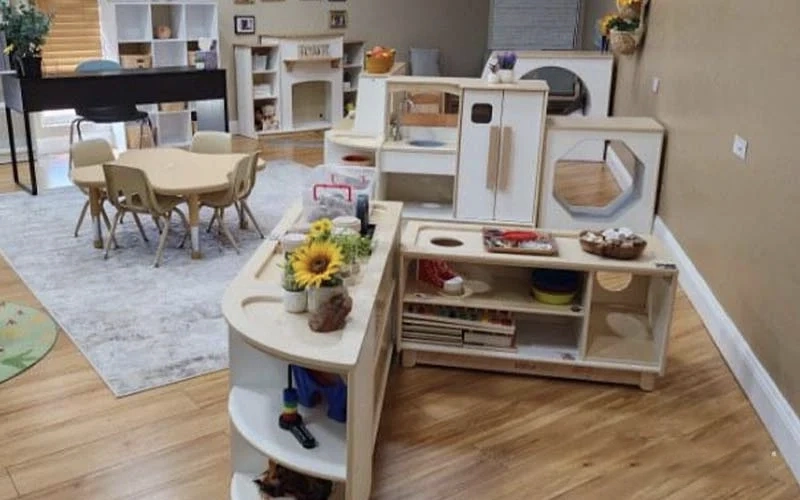
How to Set Up a Dramatic Play Area
Measure the Available Space
Measure the floor area and each usable wall. Mark doors, windows, built-in cabinets, outlets, and main walkways on the floor plan.
Do not use the full area for furniture. Children need open space to enter, carry props, open cabinet doors, and play together.
A small corner may only fit one main play unit and one storage shelf. A standard area can usually hold two or three furniture pieces. A larger area can include several play stations, but the center should stay open.
| Area Size | Approximate Size | Suitable Setup |
|---|---|---|
| มุมเล็ก ๆ | 4′ × 5′ to 5′ × 6′ | One combined unit, low storage, and a wall panel or mirror |
| Standard Area | 6′ × 8′ to 8′ × 8′ | Two or three main units with separate prop storage |
| Large Area | 8′ × 10′ or larger | Several related stations with open play space between them |
These dimensions are only a starting point. The final setup should leave enough open space for children to play.
Before ordering, place the furniture dimensions on the floor plan. Product photos do not show how much room the units will take when placed together.
Choose the Best Location
A classroom corner or wall-side area is usually best. It gives you a clear boundary without using tall divider. The area should:
- Stay clear of doors and main walkways
- Remain visible from the teacher’s usual position
- Avoid blocking access to sinks, bathrooms, or cubbies
- Be separated from quiet areas such as reading and calm corner
- Have enough space for furniture or toys
The space beside the reading area may look suitable, but a busy market or workbench can disturb children who are reading. A low shelf or rug can separate the two areas.
Wall-mounted features can also save floor space. A pegboard, magnetic panel, mirror, or busy board may be more useful than another large cabinet.
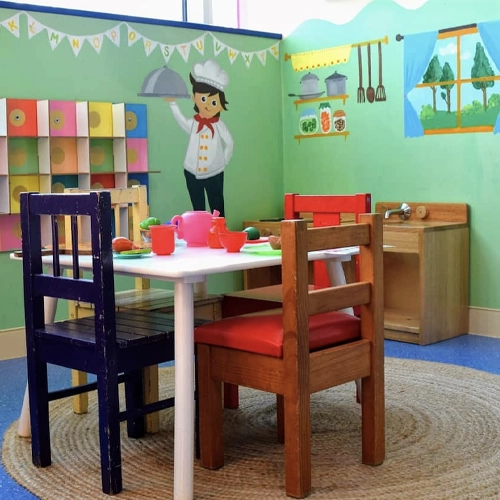
Match the Area to the Children’s Age
For toddlers, use low furniture with simple functions. A compact kitchen, a small market, a doll-care unit, or a busy board is usually enough. Keep props large and easy to store.
Do not judge a product by its total height alone. A kitchen may have a tall back panel but a suitable worktop, or it may look small while the counter is still too high for toddlers.
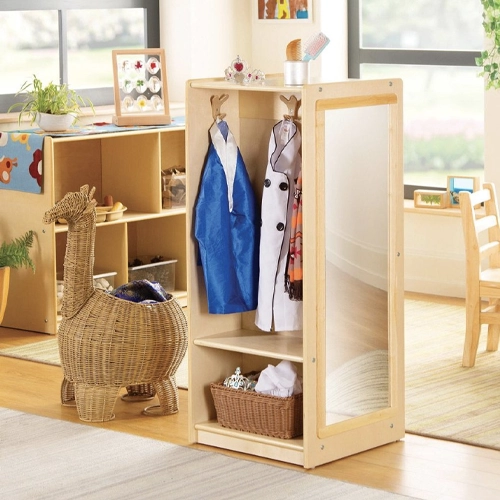
Preschool children can use kitchens, markets, cafés, workbenches, doll-care furniture, and dress-up storage. Choose a clear theme rather than filling the area with many elements.
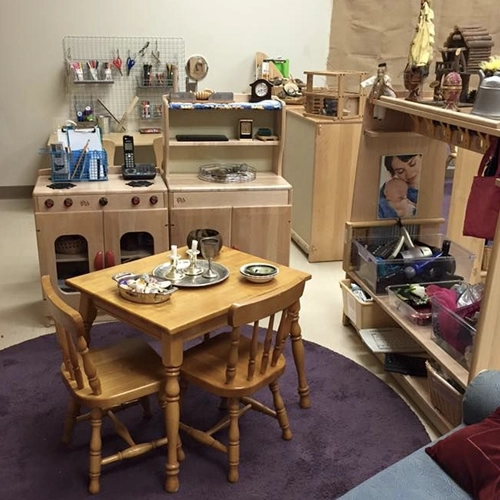
Older children may prefer a market, gift shop, restaurant counter, or workbench over a basic home kitchen. You do not need to place the same kitchen set in every classroom.
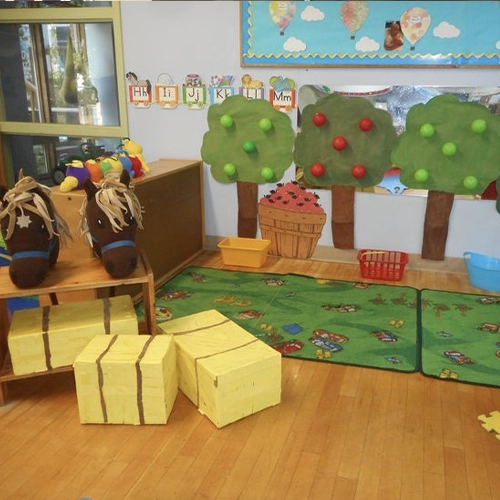
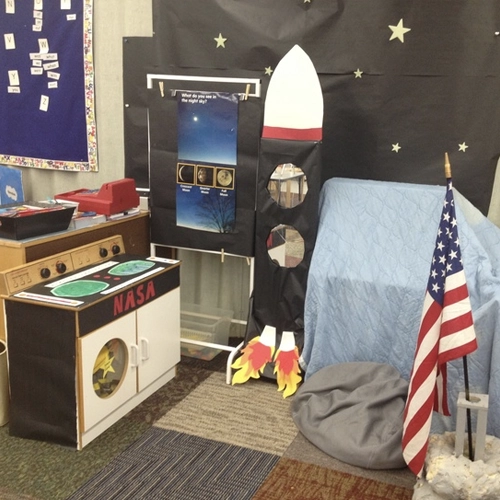
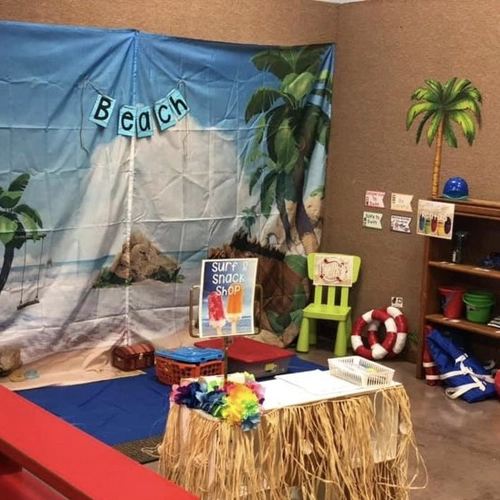
Define the Main Play Theme
Decide what children will do in the area before selecting products.
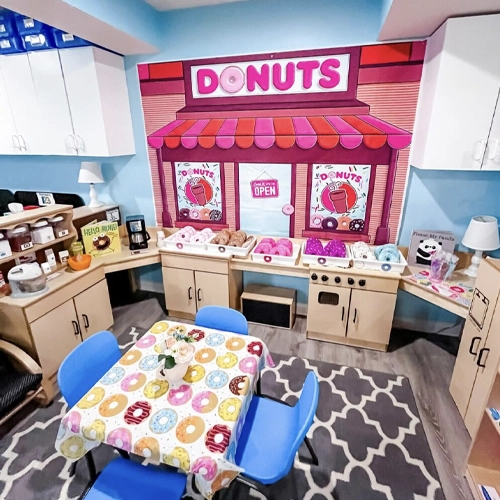
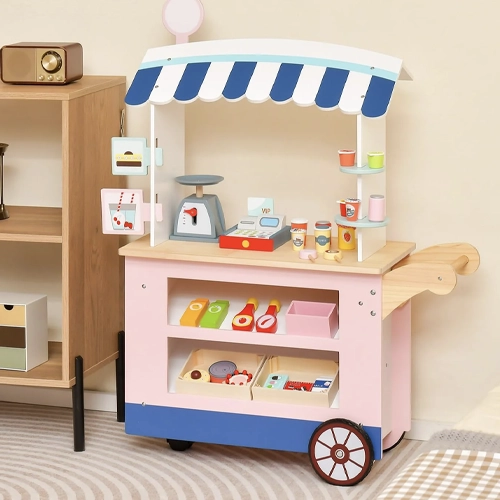
A kitchen is familiar, but it is not always the best choice. A market can provide several roles, including seller, customer, cashier, and shelf stocker. A workbench may suit older children because it offers more hands-on activity. Use the room and age group to guide the decision:
| Main Setup | Suggested Age | Best Used For |
|---|---|---|
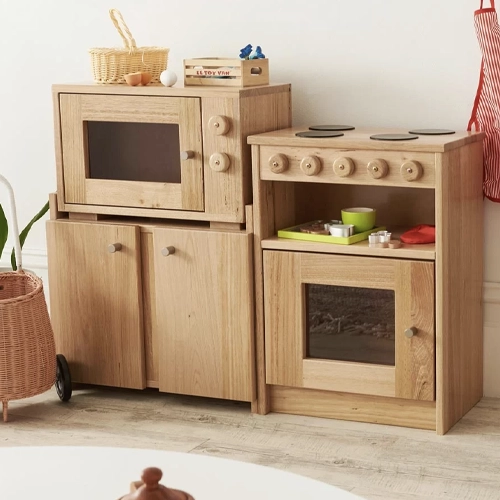
| Kitchen | 2–6 years | Familiar home-living play for toddlers and preschoolers |
| Marketplace | 2–8 years | Group play with several roles, such as seller, customer, and cashier |
| Workbench | 4–12 years | Hands-on role play for older preschool and school-age children |
| Café or Pizzeria | 3–8 years | Social play using a counter, table, menus, and pretend food |
| Gift Shop | 3–8 years | Small or medium spaces with display shelves and a checkout counter |
You can combine two areas. A market and workbench can use different walls. A kitchen and café can share a counter. Avoid combining several themes because the room has space.
Choose Indoor or Outdoor Products
Indoor and outdoor dramatic play furniture differ in materials.
Indoor products should have stable construction, easy-clean surfaces, safe hardware, and a height that fits the children. Their colors may also need to match the rest of the classroom.
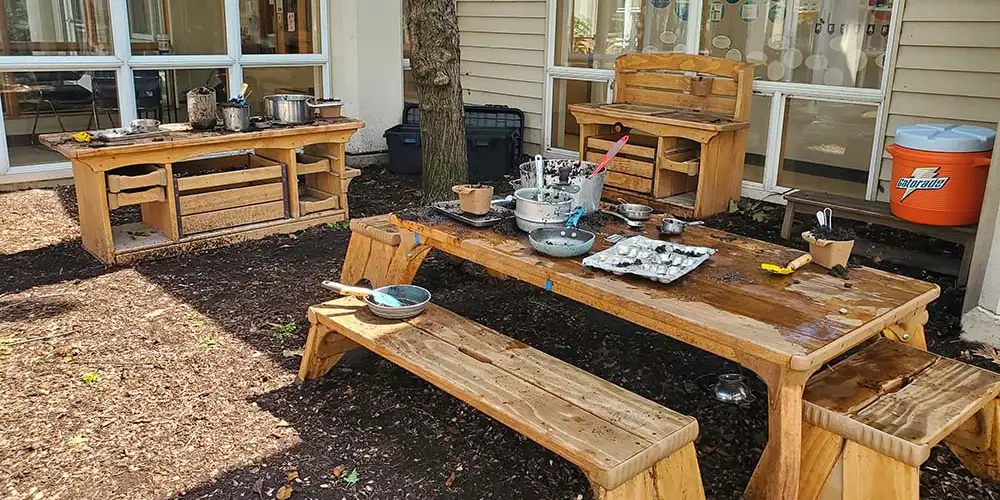
Outdoor kitchens and mud kitchens need weather-resistant materials, outdoor hardware, and surfaces that do not hold water. Check whether the unit needs to be fixed to the ground.户。
You should also confirm how the tap works. Some mud kitchens have a decorative tap only. Others can connect to a water tank, pump, or hose. Do not assume that running water is included because it appears in the photo.
How To Select the Right Furniture
Choose the main play unit first. Then add storage and one supporting feature.
A small area may use a combined kitchen, compact market, or workbench with one low shelf. Separate stove, sink, refrigerator, and washing machine units can quickly fill a small corner. A standard area may include:
- A sink-and-stove unit, refrigerator, and prop shelf
- A market stand, display shelf, and basket storage
- A market on one wall, a workbench on another, and a pegboard between them
A larger area can support more than one station, but the products should still work together. A kitchen, café counter, and dining table form one clear setup. A market, product display, and checkout counter form another.
Choose at least one flexible item. A simple counter can later become a café counter, reception desk, post office, gift shop, or ticket booth.
Confirm Product Dimensions
Dimensions should be clearly marked as W × D × H. Three numbers without labels are not enough.
For several units, confirm the total width after they are placed together. Also check the space needed to open doors and drawers.
A product may be available in a custom height without being adjustable after delivery. Ask the supplier whether the height is changed during production or adjusted by the user.
When ordering several pieces, request a front view or layout drawing. This helps you check whether the worktops align and whether one product is much taller than the others.
Confirm Props and Accessories
The toys shown in a product photo may not be included.
A kitchen may be displayed with food, pots, plates, and utensils while the price covers only the wooden furniture. The same applies to baskets and products shown with markets, or tools shown with workbenches.
Ask the supplier to separate the quotation into:
- เฟอร์นิเจอร์
- Included accessories
- Free accessories
- Optional prop sets
Quantities and materials should also be clear. For example, write “one stainless steel pot set” rather than “some kitchen toys.”
Buy props that have a storage place. Extra toys will be messy when there is no shelf, basket, or labeled bin for them.
Decide What Needs Customization
Customization should solve a real problem, such as fitting a wall, matching existing furniture, or making the product suitable for the age group. Common changes include:
- สี
- Width, depth, or height
- Shelf arrangement
- Open storage instead of doors
- Pegboards or wall panels
- Chalkboard, marker, or magnetic surfaces
- Fabric or sliding doors
- Logos or simple graphics
Do not confirm a color using a general word such as “green.” Use an approved color code. Also confirm which parts will be painted and which parts will keep natural wood.
A black writing panel may be made for chalk, markers, magnets, or a combination of these. State the required function in the order.
The final production drawing should show the approved size, color, structure, writing surface, and shelf arrangement.
Confirm Assembly and Delivery
Ask whether each product will arrive assembled, partly assembled, or flat-packed.
Simple shelves are usually easy to assemble on site. A kitchen with several doors and connected units may be better assembled at the factory. Factory assembly reduces installation work but increases the shipping volume.
Also confirm what tools are needed, whether wall fixing is required, and how missing or damaged parts will be replaced.
Set Purchasing Based on Budget
When the budget is limited, keep the furniture that creates the main play furniture.
Start with:
- One main play unit
- One flexible counter, table, or shelf
- Enough storage for the active props
Mirrors, extra shelves, dress-up units, decorative panels, rugs, and large prop collections can be added later.
A neutral counter may offer better long-term value than a highly themed product. You can turn it into a market, café, gift shop, or reception desk by changing the signs and props.
When ordering for several classrooms, ask for pricing based on the full quantity. Using the same base furniture in different rooms may also reduce the cost while allowing each room to have a different theme.
Do not compare products by price alone. Check the size, worktop height, material, color, included accessories, assembly requirements, and delivery cost.
คำถามที่พบบ่อย
- Are toys included with dramatic play furniture?
Not always. Food, cookware, baskets, tools, and costumes shown in product photos may be display items. Ask for a separate accessory list before ordering. - Can the height of a play kitchen be adjusted?
Some kitchens can be made in a different height during production. This does not mean the height can be adjusted after delivery. Confirm which option the supplier offers. - Should every classroom have a play kitchen?
No. Toddlers may enjoy a kitchen or small market, while older children may prefer a workbench, shop, café, or service counter. - How many furniture pieces does a dramatic play area need?
A small corner may need only one main unit and storage. A standard area usually uses two or three related pieces. Add more when there is enough open play space. - Can indoor dramatic play furniture be used outdoors?
No. It is not recommended. Indoor boards, finishes, and hardware may not withstand rain, sunlight, and standing water. - Should dramatic play furniture arrive assembled?
Complex kitchens and markets may be easier to use when factory assembled. Flat-packed furniture takes less shipping space but requires installation after delivery. - Can the color be customized?
Yes. Confirm the exact color, painted areas, natural wood areas, and final rendering before production. - What should you remove first when the budget is limited?
Remove extra decoration, duplicate furniture, and theme-specific props first. Keep the main play unit, flexible furniture, and storage. - How can you make sure the delivered product matches the design?
Approve a final drawing with the correct dimensions, colors, structure, and accessories. Ask for photos of the finished products before shipment.
บทสรุป
A useful dramatic play area starts with clear measurements and a simple plan. Choose one main play set, select furniture that fits the children and the room, and confirm dimensions, accessories, and assembly before ordering.
เซียแอร์เวิลด์ can help you plan the layout, choose the furniture combination, and adjust the size and colors for your classroom or outdoor play area.