
 Thai
 English
 Arabic
 French
 Italian
 German
 Spanish (Spain)
 Japanese
 Turkish
 Indonesian
 Vietnamese
 Polish
 Portuguese
 Malay
 Swedish
 Spanish (Mexico)
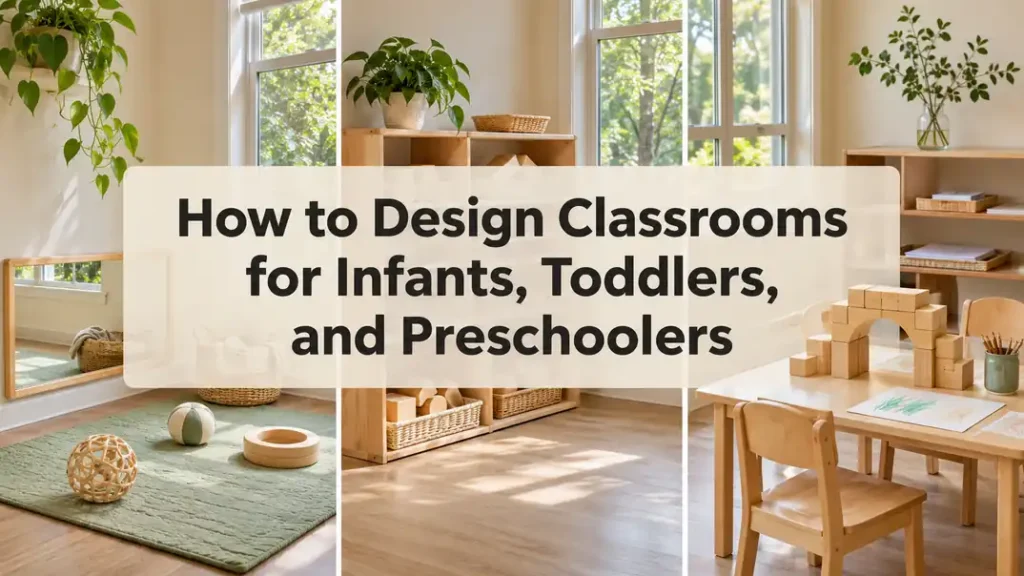
A classroom can look well equipped and still be hard to use. You may see children waiting for help, leaving an activity quickly, or getting in each other’s way. Before adding anything, check whether the room suits what your group is ready to do.
This guide to classroom design by age shows what to change from infancy through preschool, with practical ideas for play spaces, materials, and everyday routines.
Different Needs Within The Same Age Group
A child may be confident with puzzles but still need your help to join a group game. Use the sections below as options for your room, rather than milestones every child must meet. You can choose ideas from more than one stage. NAEYC’s guidance on developmentally appropriate practice also considers each child’s experience and background alongside age.
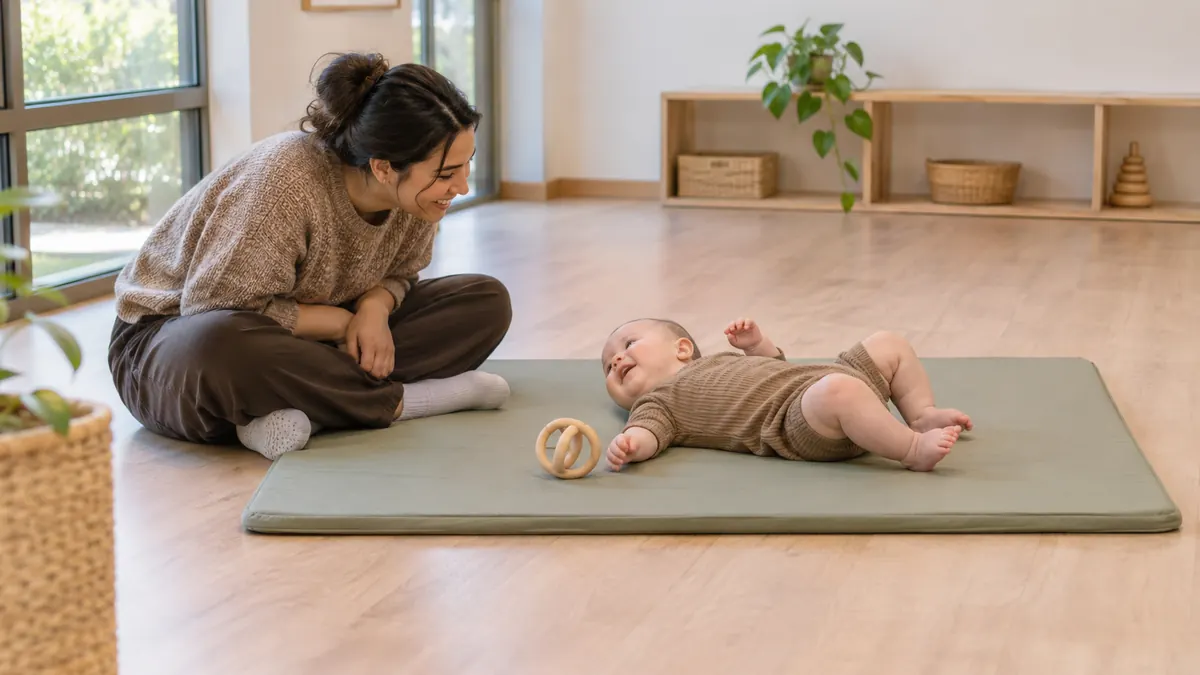
Infants Need Room To Move And Explore
In an infant room, plan the play area from floor level. Kneel beside the mat and check what you can see and reach from there. A busy display on a high wall may add very little to play.
- Leave clear space around the play mat. Keep the main walking route away from awake floor play. Allow room for reaching, rolling, and later crawling; avoid surrounding the mat with equipment that leaves nowhere to move.
- Keep the choice small and easy to reach. Place a few age-suitable objects nearby. Use a low shelf at the edge of the play area for the next selection, rather than spreading everything across the floor.
- Leave a place for you to sit beside the infant. You need room to look, talk, and respond without leaning over furniture. The Virtual Lab School’s infant room guidance connects the physical setup with close, responsive care.
Feeding, changing, and sleep need their own arrangements alongside play. Use the infant room furniture and activity checklist to cover those daily care needs.
Toddlers Need To Try Things For Themselves
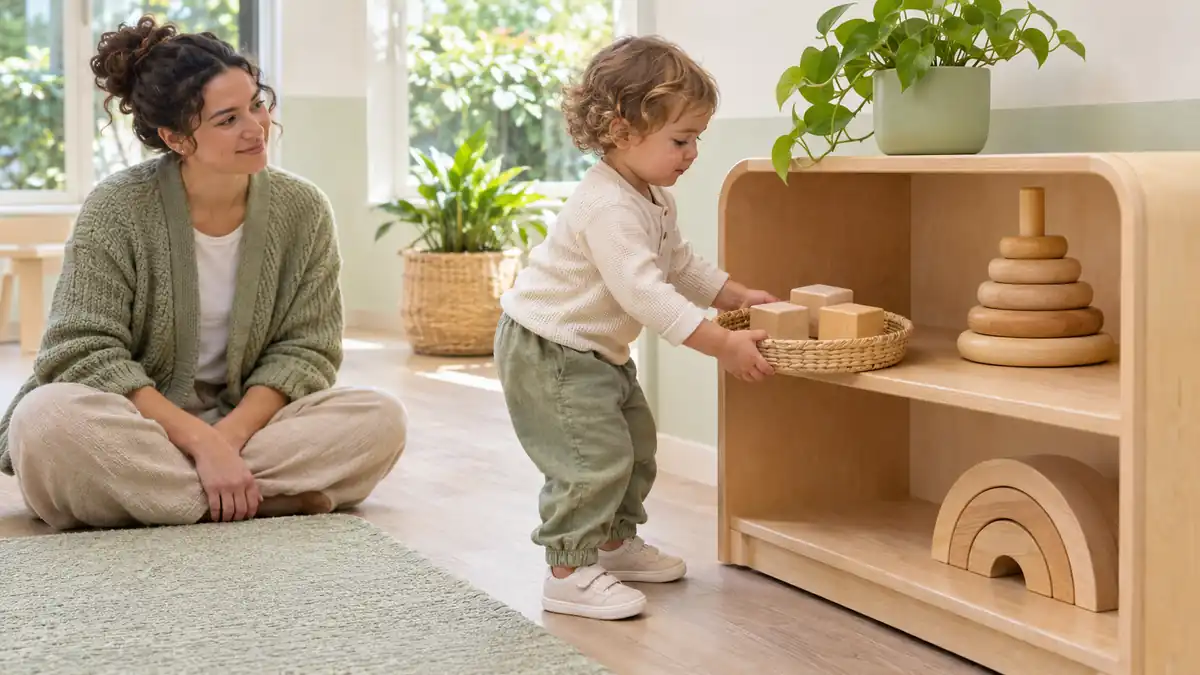
As walking and carrying become part of the day, look beyond whether a shelf is low enough. You need a setup that lets a toddler choose something, take it to a place to play, and put it back.
- Check the basket with the materials inside. A basket that is light when empty may be too heavy when full. Choose a manageable size, leave space to grip both sides, and keep the route to the play area clear.
- Give each item an easy-to-find home. Leave a clear space on the shelf and add a simple photo label if needed. Avoid stacking baskets on top of each other, which can turn putting one thing away into a job that needs your help.
- Allow play side by side. Leave room for two separate piles of blocks or two similar activities. Provide enough of popular materials so you do not have to interrupt every few moments to manage turns.
- Make room for a pause. Keep a small book or comfort area where you can still see and respond to the child. You should be able to offer a break from busy play without using a hidden corner.
For the rest of the room’s equipment and activities, use the toddler room checklist.
Younger Preschoolers Need Space To Play Together
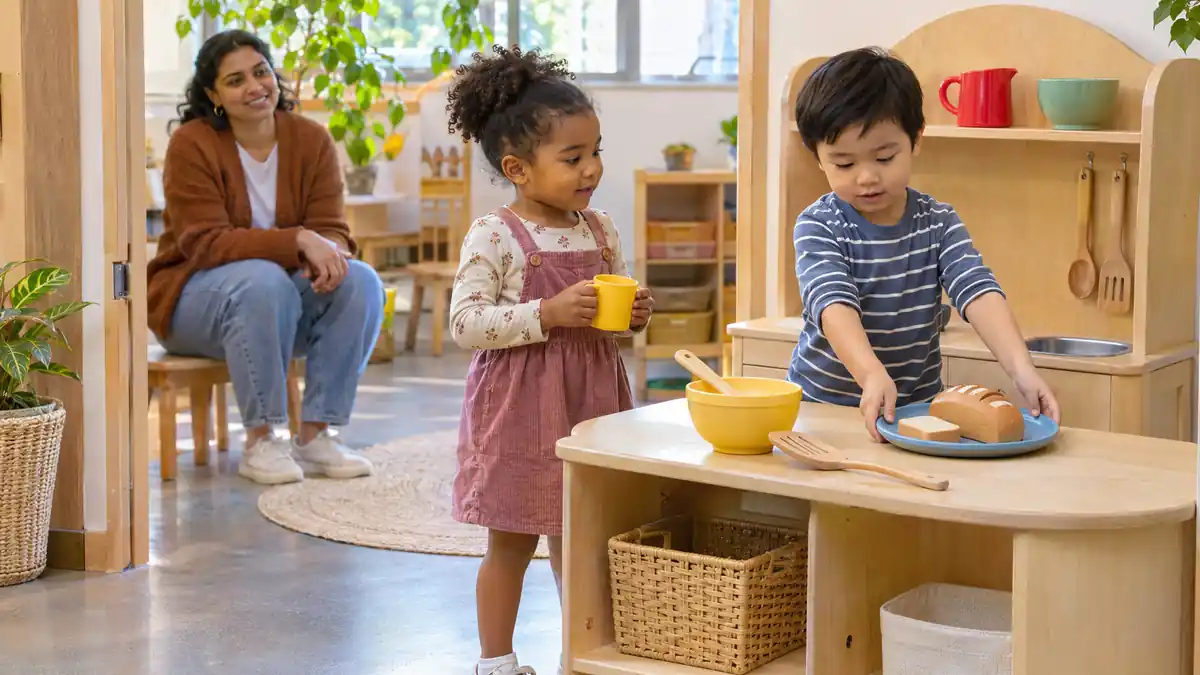
When you notice more shared stories and pretend roles, check how another child can join the play. For many groups around ages three to four, the next useful change is room to do something together.
- Make space for a second role. In a pretend kitchen, one child might prepare food while another serves it. Choose dramatic play furniture with usable space for both actions. A large-looking set can still be difficult to share if there is only one place to stand and work.
- Check the room while an activity is in use. Pull out the chairs and put the play materials on the floor. Can another child approach without stepping over a game or moving someone else’s chair? An empty room can hide this problem.
- Give talking and listening some space. Arrange small-group seating so you can see faces and hear ordinary voices. Keep loud movement play from taking over a nearby story or conversation area.
Older Preschoolers Need Space To Keep An Idea Going
When children begin to plan together, you need a way to carry work into the next day. England’s Development Matters guidance includes this kind of ongoing project. The ideas below may suit a group around ages four to five.
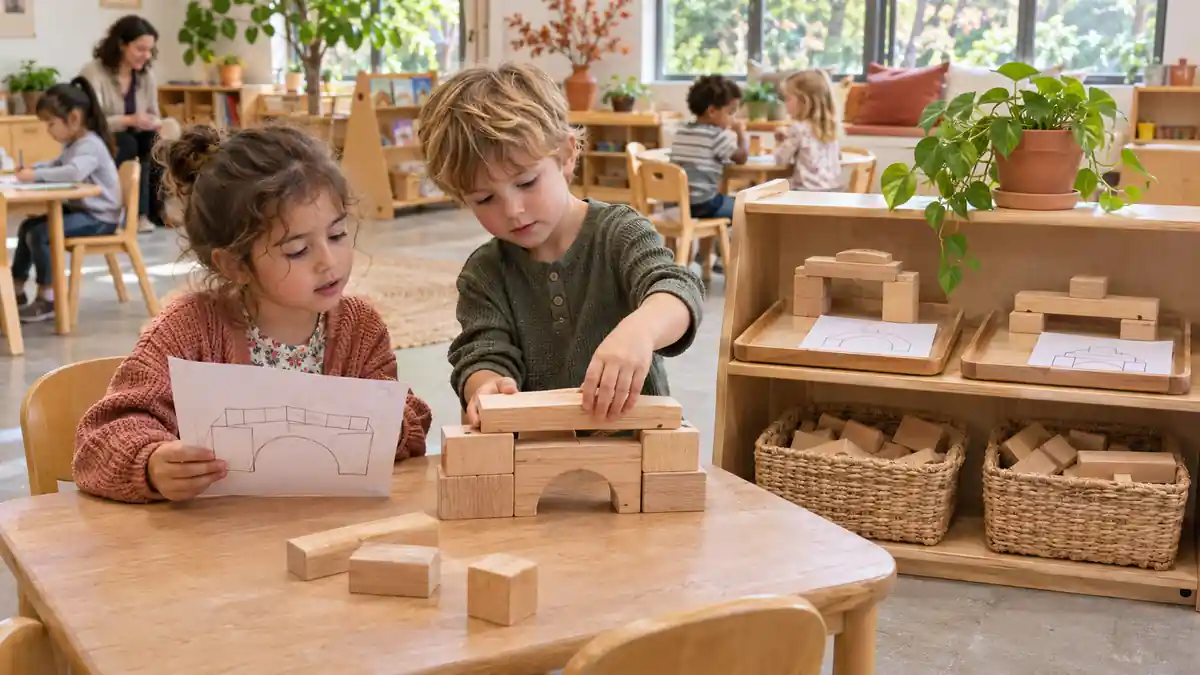
- Separate finished play from work to keep. Set aside a shelf, tray, or protected surface for a block model or other project. Mark that space clearly so tidying the room does not mean taking everything apart.
- Keep drawing materials near the project. Add paper and drawing tools so a plan can be sketched or a change recorded. You can write down a child’s explanation too; independent writing does not need to come first.
- Keep shared supplies available. If a project uses tools or materials from another activity, agree which items can stay with the work and which need to go back. Saving one project should not leave the rest of the room short of things to use.
- Allow work alone and with a partner. Leave space to make one part of a project separately, then bring it back to the group. You do not need everyone gathered around one table for the whole activity.
What Should You Change First?
Once you have spotted a problem, choose the smallest change that could solve it. You may be able to keep the furniture you already have.
- If the task is too easy, change the activity. Offer a new building challenge or a different way to use the materials before adding another piece of furniture.
- If sitting or reaching is awkward, check the fit. Look at the actual seated position and working height. Use the preschool and daycare furniture size guide for the measurements to check.
- If you are unsure, try one area first. Watch the same routine after the change. Check whether the original difficulty has eased before changing the rest of the room.
If you move furniture, follow its installation instructions, including any anchoring requirements, before putting it back into use.
คำถามที่พบบ่อย
- How do you plan for several ages in one room? Decide which materials can be freely available and which need controlled access. Items used by older children may be unsuitable for younger children, so plan both where to use those items and where to put them afterwards. The multi-age classroom design guide explains the room and storage choices involved.
- What if a child needs extra help to move or communicate? Use the child’s existing support plan, where available, and agree any changes with the family and relevant support professionals. Make room for the equipment or communication tools already in use. Keep access to the group’s activities as the aim, as explained in the ECTA Center’s guidance on inclusive environments.
- Do you need different colors or wall themes for each age group? No. You can keep the same background colors and choose displays that mean something to the current group. Put up recent work, familiar photos, or pictures connected to a current interest. You do not need to redecorate the whole room each time a new group arrives.
- Should an older preschool room look like a primary school classroom? You do not need rows of desks or a formal classroom look to help children get ready for school. Keep room for play while introducing familiar routines such as gathering for a story and getting ready to go outside. Match the room to your current group rather than copying the next school setting.
- How can you help a child get used to a new room? Arrange short visits with a familiar adult before the move, where possible. Have the same adult welcome the child during the first few visits, and pass on useful information about comfort and communication. This gives you a chance to help with the change before expecting a full day in the new room.
บทสรุป
Before putting the finished plan into use, walk through it with the adults who will share the room. Agree on any changes to daily routines and make a brief note of why you chose them. You can then explain the setup to someone covering for you, including how the room should be left for the next person. That helps keep the design useful beyond the day you arrange the furniture.
For help with the layout and furniture, share the room dimensions, age range, daily schedule, and pieces you want to keep with เซียแอร์เวิลด์. Include the parts of the day that are hardest to manage, so you can discuss how the room will be used as well as what will fit.