
 Thai
 English
 Arabic
 French
 Italian
 German
 Spanish (Spain)
 Japanese
 Turkish
 Indonesian
 Vietnamese
 Polish
 Portuguese
 Malay
 Swedish
 Spanish (Mexico)
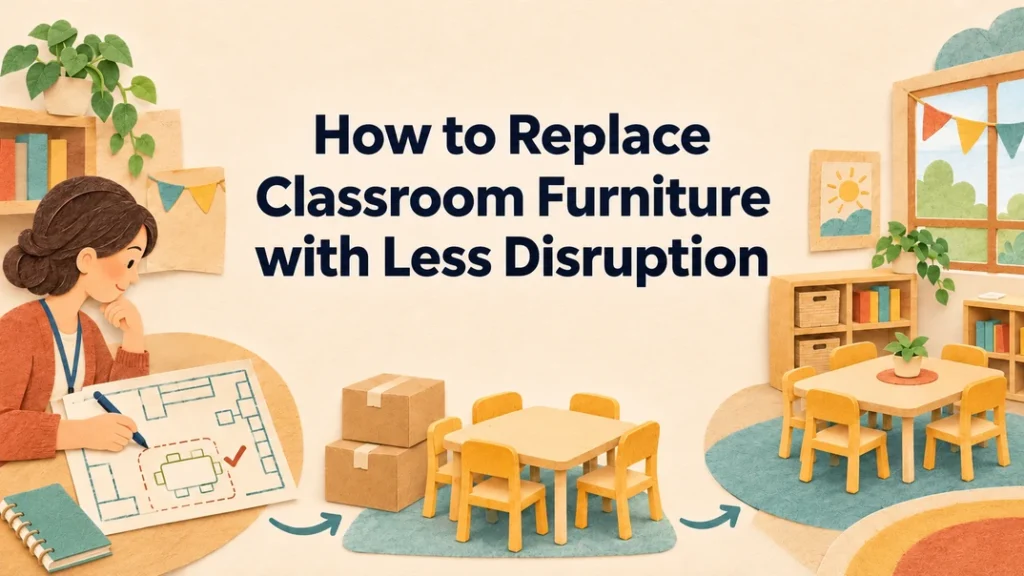
You need a few new chairs or a replacement shelf, but your classroom is busy every day. Where do you start, and how do you make the change without leaving the room short of furniture?
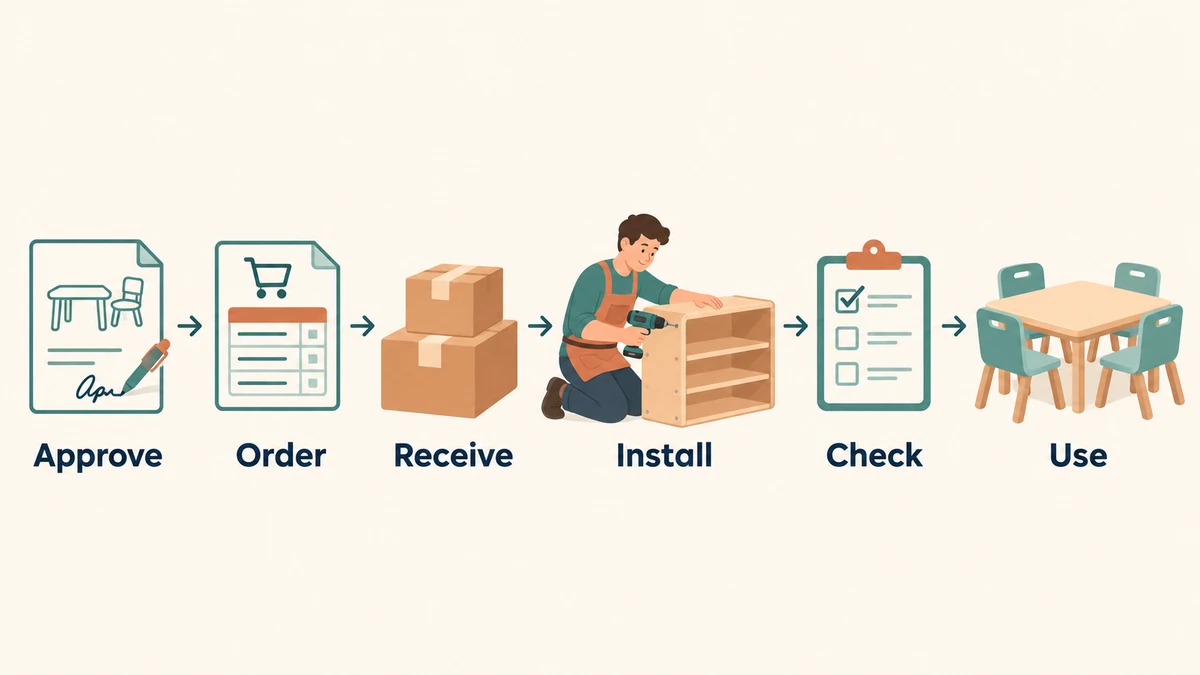
A classroom furniture replacement plan can be a short list with a few agreed dates. Follow these five steps to choose what to change first, order pieces that fit, and have the room ready when children return.
1. Decide what needs replacing first
Walk through the room and write down three things for each item: what it is, how many you need, and the problem you want to solve. “Four chairs are too small for the group” is enough to start. Take a photo so you can show the supplier what you have.
Put the most urgent needs first. Remove unsafe furniture from use straight away. Among the remaining items, prioritize anything that prevents you from providing meals, care, or daily activities properly. Changes made mainly for a new color or style can wait.
If you are unsure whether to repair or replace an item, use the preschool furniture lifespan guide to make that decision. Once your list is clear, choose a small group of items you can change at one time, such as the seating around one activity table.

2. Check what needs to fit together
Before you choose a replacement, look at the furniture and supplies you will keep. You may only need a new table, while the existing chairs can stay. The important check is whether they will still work together.
| If you are keeping… | Check this before ordering |
|---|---|
| Your current chairs | Confirm the new table height and the space beneath it for knees and legs. |
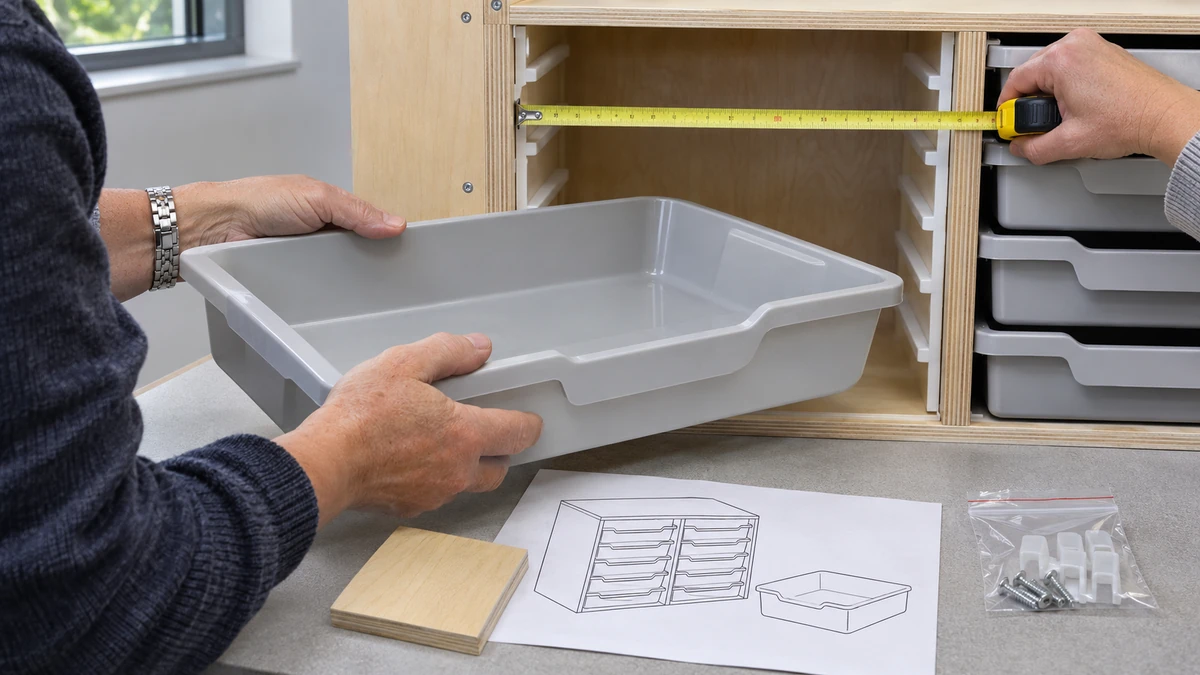
| Your storage trays or baskets | Measure them and compare them with the usable shelf openings, including any runners. |
| Chairs that you stack together | Ask whether the new model is designed to stack with the old one. |
For seating measurements, follow the table and chair size guide. For storage, ask for the inside measurements as well as the overall size: thicker sides or different shelf supports can leave less space for the same trays.
Send the supplier your photos, measurements, and quantities. Ask for the exact model and dimensions in the order confirmation, along with the documents relevant to your local furniture safety requirements. Resolve any mismatch before placing the order.
3. Agree on delivery and installation dates
Choose a time when the room will be empty long enough for the work. A weekend or closure day may suit a larger change. An after-hours appointment may be enough for a small one, if you can complete assembly, cleanup, and checks before children return.
Before booking that time, ask the supplier:
- When will the furniture reach your building? A dispatch date tells you when it leaves the supplier, not when it arrives at your door.
- What does delivery include? Confirm unloading, carrying the items inside, and any stairs or access limits.
- Who will assemble and install it? Ask whether the furniture arrives assembled and whether any required wall fixing is included.
Allow time between delivery and installation to check for missing parts or transport damage. Ask the supplier how quickly those problems can be resolved; do not arrange to use the furniture as soon as the delivery vehicle arrives.
Include any ventilation needed after installation in the schedule. The EPA’s school indoor-air guidance explains why new furnishings and the timing of work deserve attention. Follow the product instructions and agree suitable arrangements with whoever manages your building. If you are also changing walls, floors, or plumbing, use the daycare renovation checklist for that wider work.
4. Get the room ready
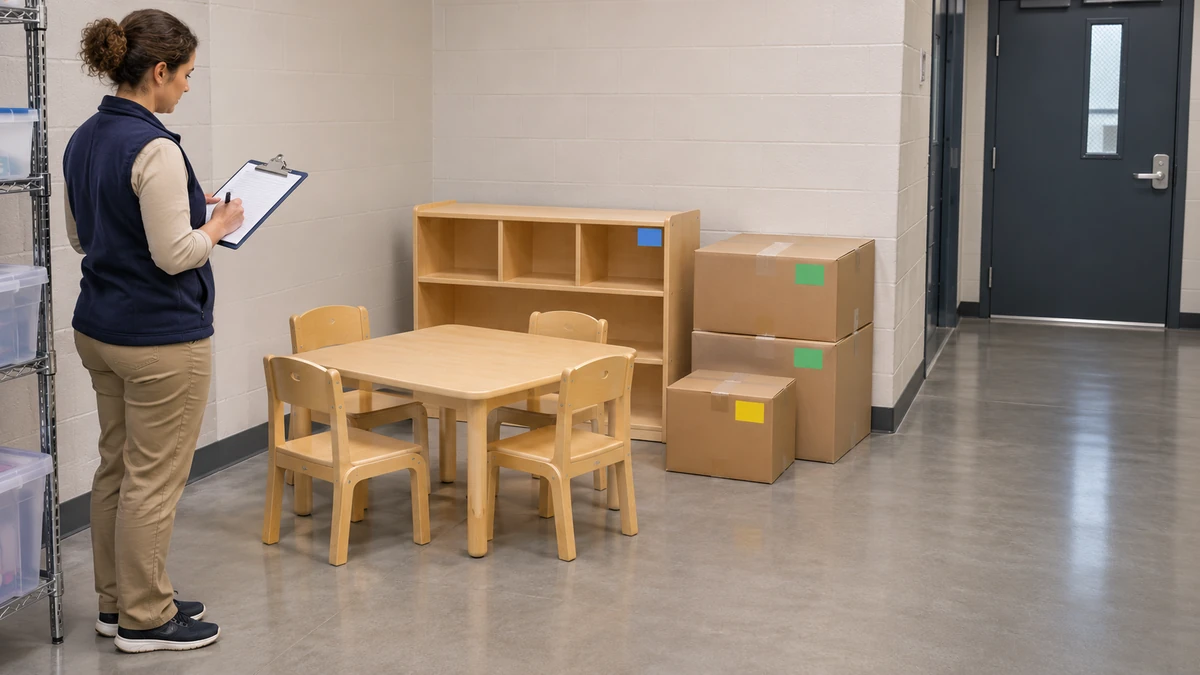
Decide where the new furniture and its packaging will go on arrival. Choose a secure space away from children and keep exits and everyday routes clear. Tell the person receiving the delivery which room each item belongs in.
Empty the furniture you are replacing before the installer arrives. Put books, toys, or art supplies in labeled containers so you can return them to the right place afterward. Keep small loose fittings and tools away from child-accessible storage.
Avoid removing furniture you still need before the replacement is ready. If delivery is delayed, you may be able to keep using suitable existing pieces or postpone the change. If an item is already out of use, arrange suitable temporary furniture or another approved way to provide the activity. Check any proposed secondhand substitute with the new versus used furniture guide.
5. Check the furniture before children use it
Have a named person check the finished work. Before you return the room to use:
- Compare the delivered models and quantities with your order.
- Confirm that assembly and any required anchoring are complete, following the manufacturer’s instructions.
- Open drawers and doors, test locks or adjustment controls, and check for damage or loose parts.
- Remove packaging and tools, clean as instructed, and make sure the teaching team knows how to use and care for the new pieces.
Keep anything with an unresolved problem out of use and contact the supplier. After a normal day with the new furniture, ask your team whether it has solved the original problem. Make any needed changes before ordering the same setup for another room.
คำถามที่พบบ่อย
- What if your old furniture model is no longer available? Ask the supplier for the closest current option and a clear explanation of what has changed. Compare a sample or detailed drawing with the pieces you own. If you cannot make a suitable match, consider replacing a complete small group while keeping the other furniture in use elsewhere, where it remains appropriate.
- Will new wooden furniture match the color of your existing pieces? You may notice a difference even when you order the same finish. Natural grain varies, and older surfaces can change color with light and use. Compare a current finish sample in your room and agree with the supplier on the difference you can accept. Online photographs cannot confirm an exact color match.
- What if the furniture you are replacing is still under warranty? Contact the supplier before disposing of it. Keep the model details, proof of purchase, and photographs of the problem, and ask what repair or replacement is covered. If you need to buy another item while the claim is reviewed, confirm the terms first; a warranty does not automatically cover a separate purchase.
- Can you donate the furniture you remove? You can consider donation when the item is safe, complete, and suitable for its next use. Pass on its identification and instructions, and check recalls and local requirements. Health Canada’s secondhand-product guidance, for example, explains that safety responsibilities also apply when you give products away for free. Do not pass an unresolved safety problem to someone else.
- Do you need to tell families about the change? Send a short note if the work changes drop-off, collection, room access, or the children’s usual routine. Give the affected dates and any temporary arrangements. For a simple furniture swap with no effect on access or care, you can explain the improvement in your normal classroom update.
บทสรุป
Start with one room and a short replacement list. If you need help choosing new pieces around furniture you already own, send that list, photos, and your preferred timing to เซียแอร์เวิลด์.