
 Arabic
 English
 French
 Italian
 German
 Spanish (Spain)
 Thai
 Japanese
 Turkish
 Indonesian
 Vietnamese
 Polish
 Portuguese
 Malay
 Swedish
 Spanish (Mexico)
Classroom Bookshelves & Preschool Book Displays
You can source front-facing book displays, low bookshelves, upright bookcases and larger library runs from Xiair World. Each unit is planned for books, not adapted from a general storage cabinet. Send the types of books you stock, the space available and the side that must face the reading area; you can then review a drawing that shows the actual openings, shelf direction and finish before production.
Classroom Bookshelf Range
You can order a single book-focused format or use several across the same project. The range below covers how books are displayed and accessed; toy storage, cubbies and general shelving are separate products.

Front-Facing Book Displays
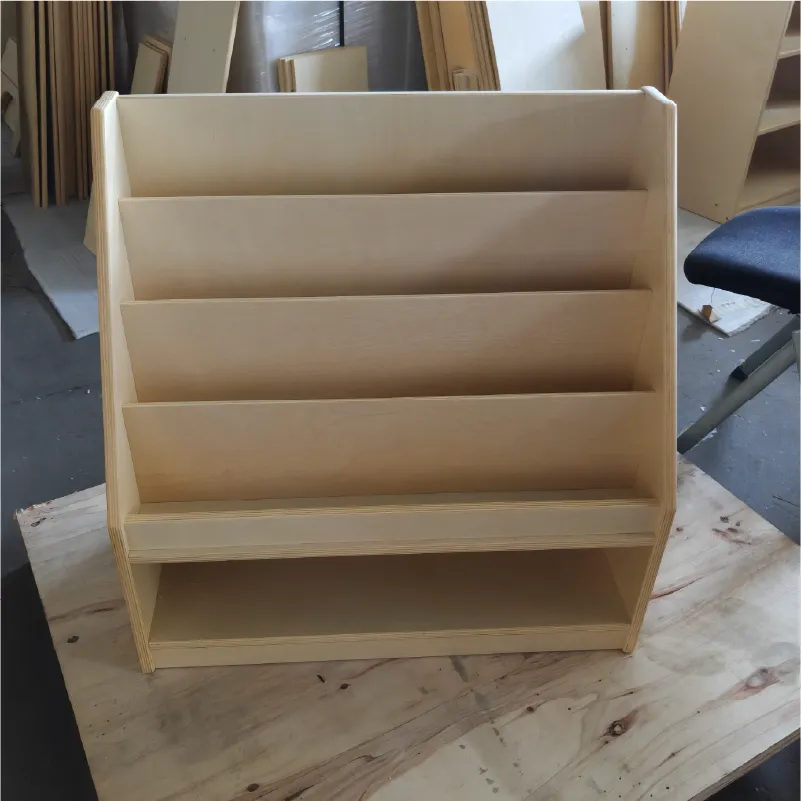
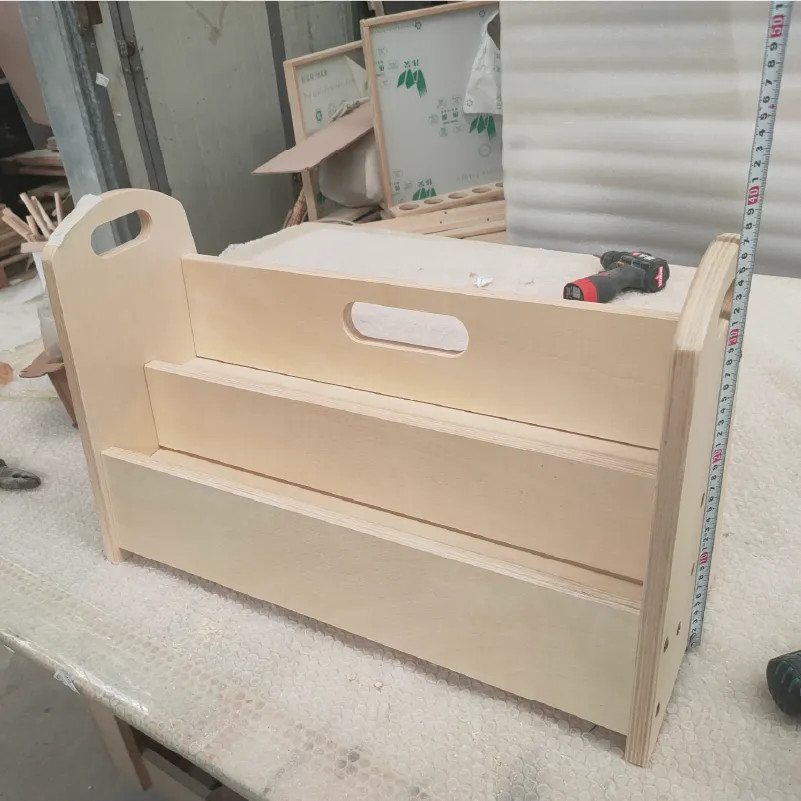
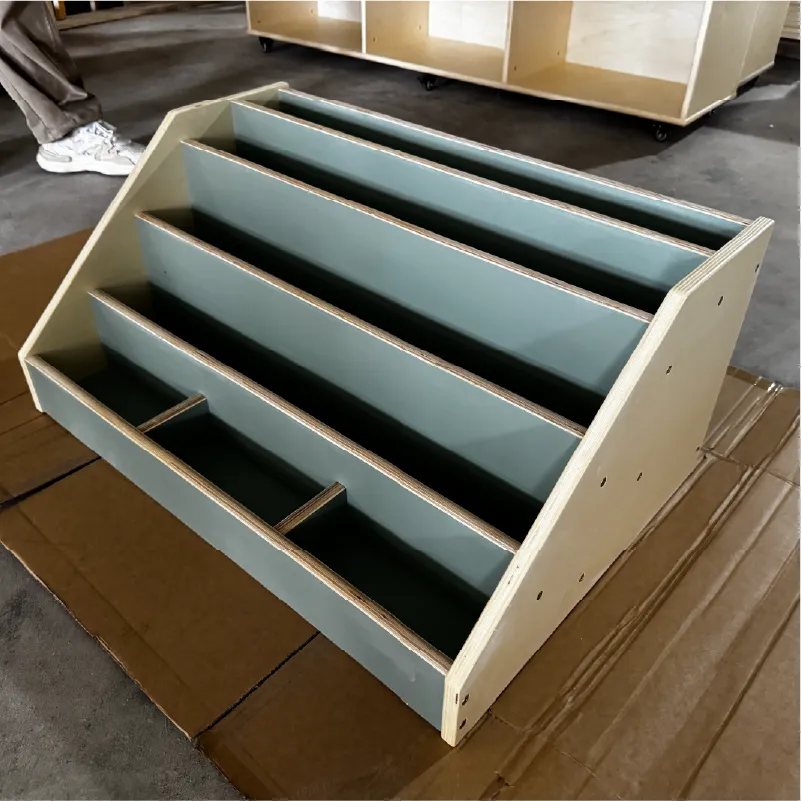
Tiered pockets put the covers in view. You can set pocket depth, front-lip height and tier angle around the picture books you plan to stock, so the back row is not hidden and the books stay upright.
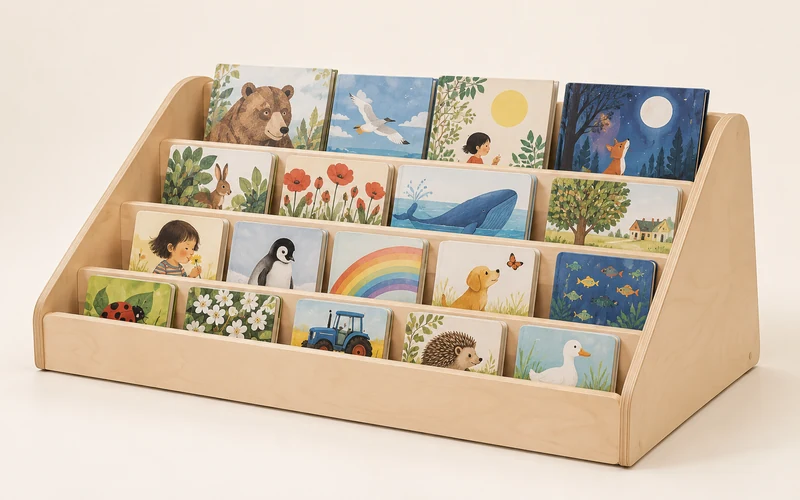
Low Picture-Book Shelves
Open, book-sized shelves keep a smaller collection within the reach range you specify. A lower unit can sit along a reading-area wall without borrowing its layout from a toy cabinet or cubby.

Upright Classroom Bookcases
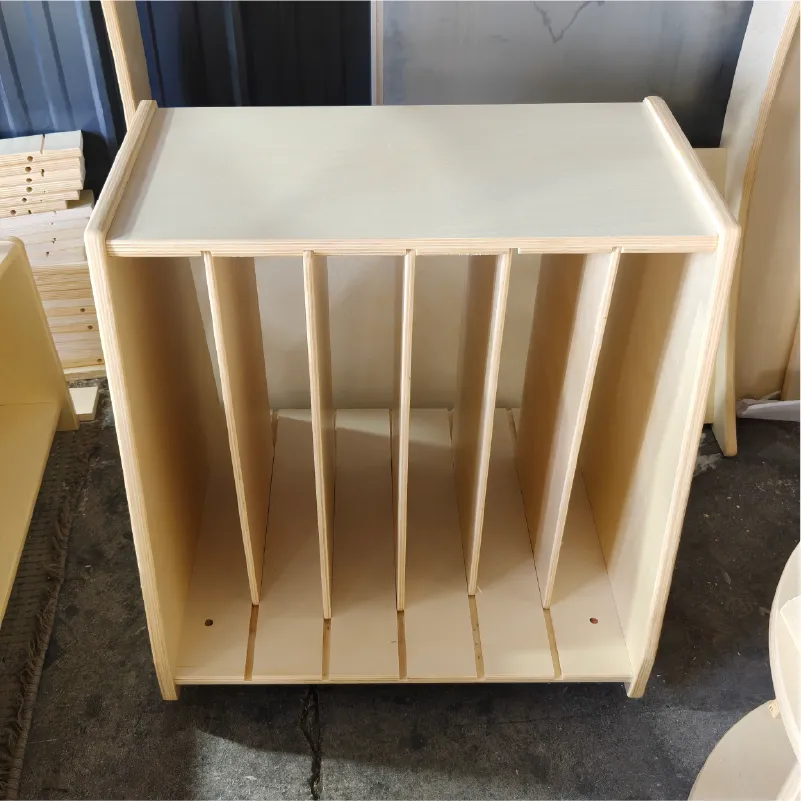
Spine-out shelves give you more book space on a limited wall. You can mix opening heights for early readers and oversized picture books rather than leave every row identical.
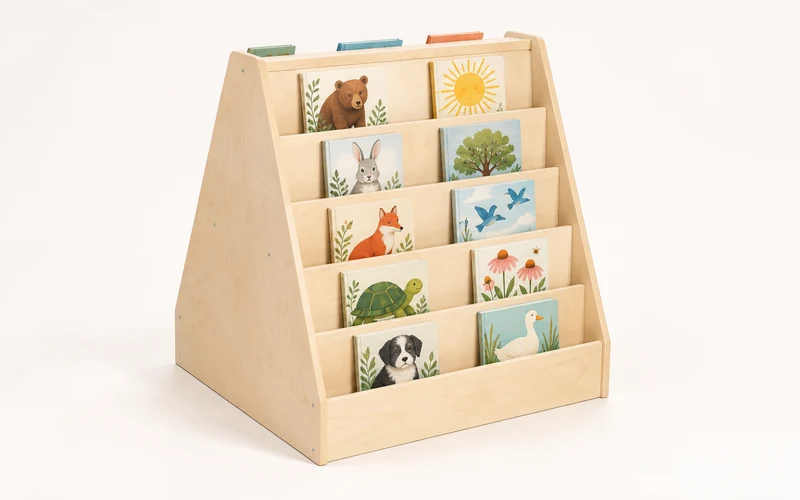
Double-Sided Bookshelves
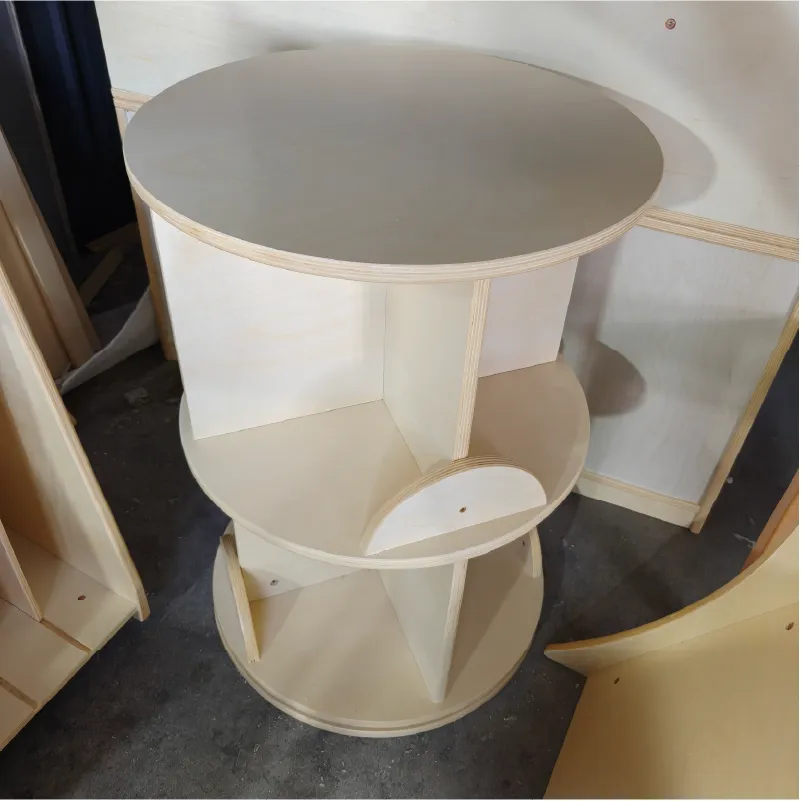
Books can be presented on both faces of a freestanding unit. You can choose cover-facing, spine-out or a combination; the drawing shows which way each shelf opens and how the center panel is finished.
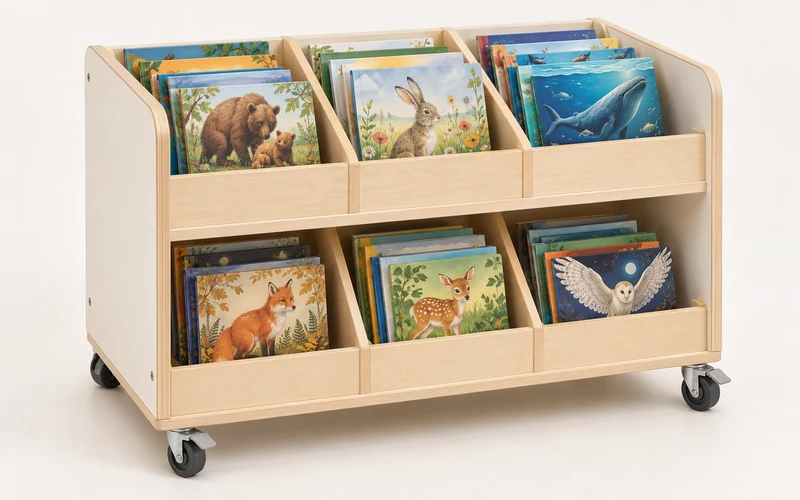
Mobile Book Displays
A mobile display lets you reposition the collection without emptying the unit. You can specify the shelf layout together with the base width, outward caster position and reachable brakes.
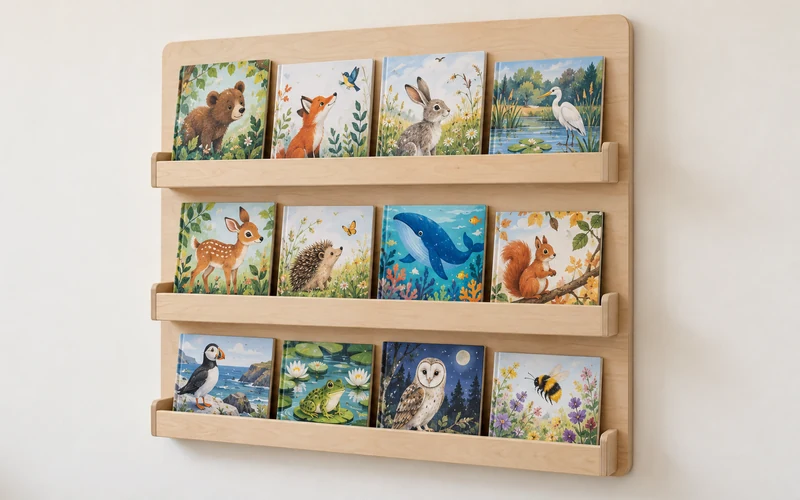
Wall-Mounted Book Shelves
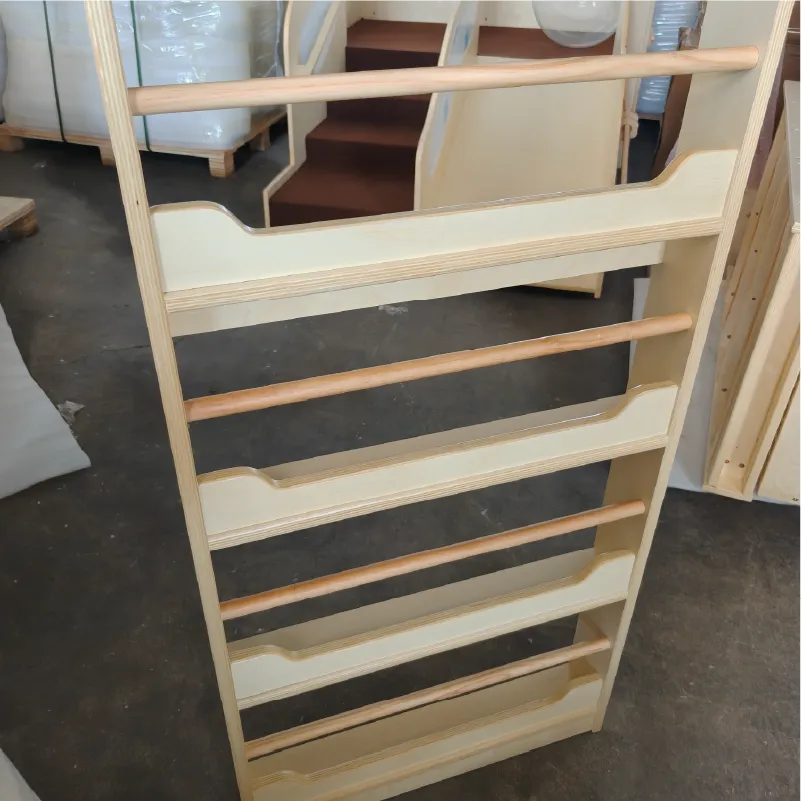
Wall-fixed book ledges display selected covers while keeping the floor clear. You can set the ledge run and vertical gap; the final fixing method must suit the installation wall and loaded shelf.
Book Displays That Show the Books
A cover-facing display only works if the covers remain visible after it is filled. You can specify the book sizes and approximate number of titles per tier. That lets the drawing show the usable pocket depth, the front lip and the clear space above each row—not just the outside height of the unit.
For spine-out shelves, you can mix lower openings for standard titles with taller, deeper openings for large picture books. The inside measurements matter here: a generous outside width can still leave awkward shelf space once panel thickness and dividers are allowed for.


A Bookcase That Faces the Right Way
Where the bookcase sits changes the build. A unit against a wall may need one finished display face; a divider between two reading areas needs the shelf openings and visible finish considered on both sides. You can specify which side faces into the room, whether a back panel is needed and where the books must be reached from.
Those directions are marked on the approval drawing along with width, height, depth and clear shelf openings. For taller or wall-fixed units, the fixing details also need to suit your site. This is easier to settle before production than to discover that the finished bookcase opens toward the wrong area.
Custom Large and Feature Bookcases
You can send a room plan, a sketch or a reference for a long wall bookcase, an unusual height or a feature shape such as a tree or animal-themed display. A custom drawing can adjust the shelf count, reading height, display direction, back-panel layout and decoration without turning the unit into a general-purpose cabinet.
On a large bookcase, the question is not only whether it fits the wall. You need a build that can be made accurately, moved through the site and installed as intended. Where one long run is better divided into sections, the joint positions and finish transitions can be shown on the drawing before cutting starts.


Material and Finish Choices That Hold Together
You can compare a bookcase in plywood, solid wood or MDF when the design allows it. The choice changes the shelf span, joint construction, edge treatment and painted or natural finish. Instead of naming a board and assuming the same construction will work, you can review the proposed material against the actual shelf width and expected book load.
Natural wood with white accents is one option, but the finish layout needs to be specific. You can mark the side panels, dividers, shelf fronts, back and exposed edges on a rendering or sample. That matters when several bookcases must match and when both sides of a unit remain visible in the room.
Mobile Book Displays Built for Daily Use
A wheeled book display can look stable while empty and feel different once the shelves are loaded. You can review the wheelbase, caster position and brake access together with the book layout. Casters set too far inside the base reduce its support footprint; a brake hidden beneath the cabinet is difficult to use.
For a new mobile design, you can request a pre-production sample to check loaded balance and how the brakes work before a larger batch is approved. The confirmed caster locations and hardware then stay on the production drawing so later units follow the same arrangement.

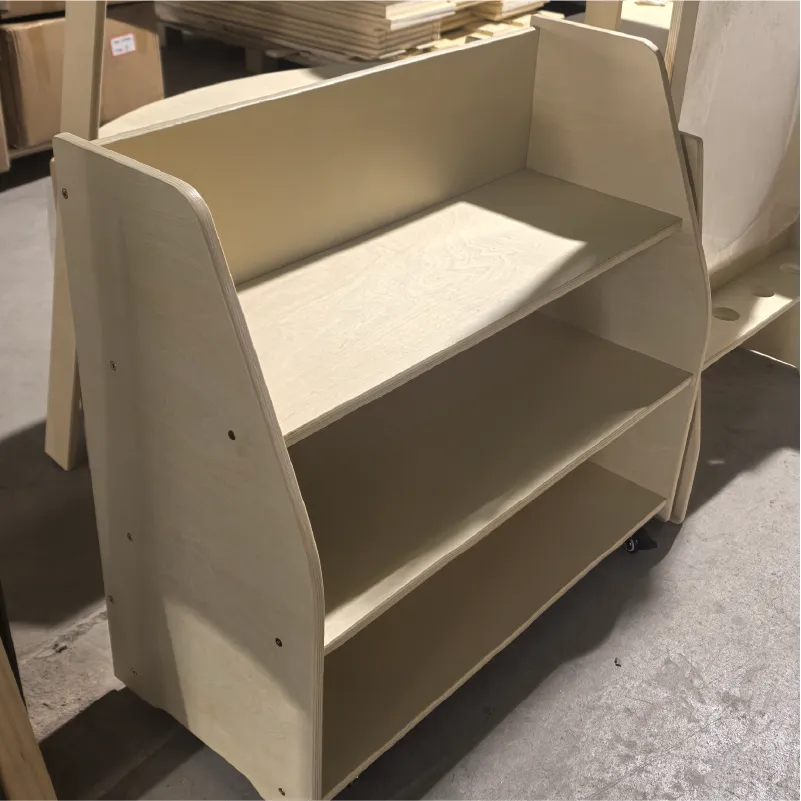
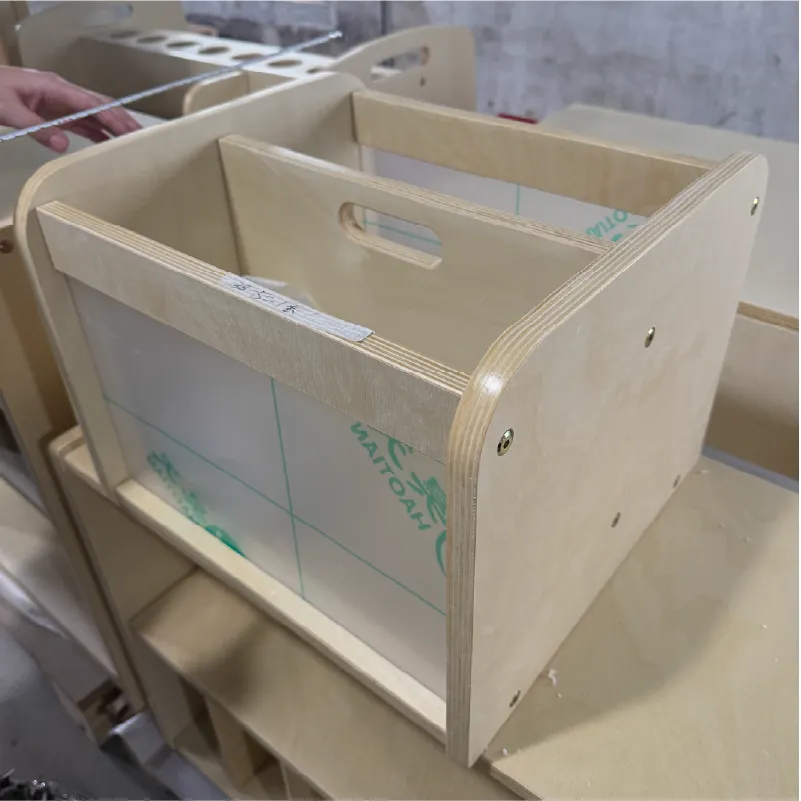
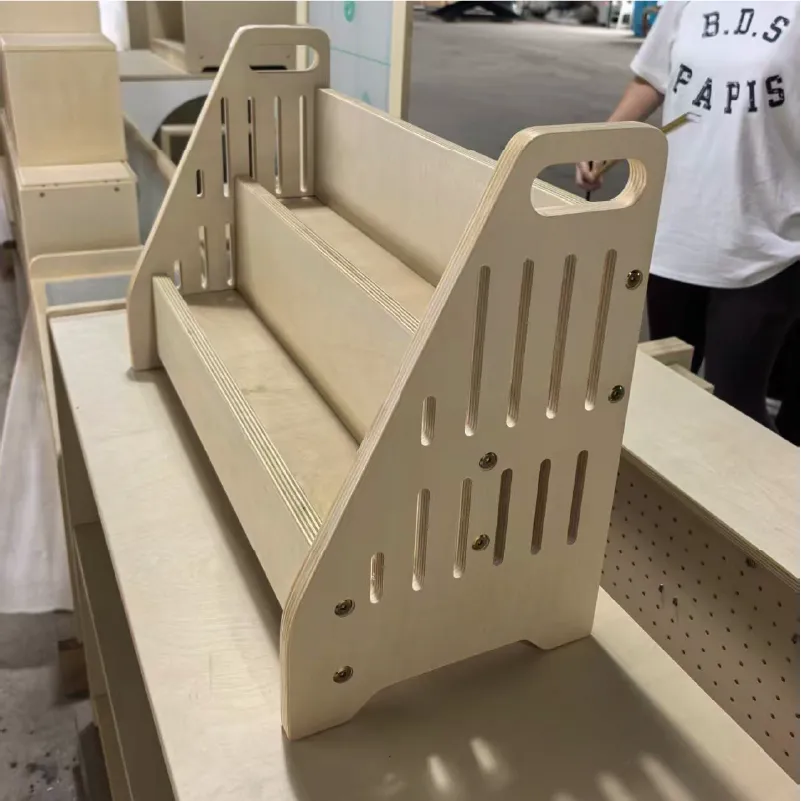
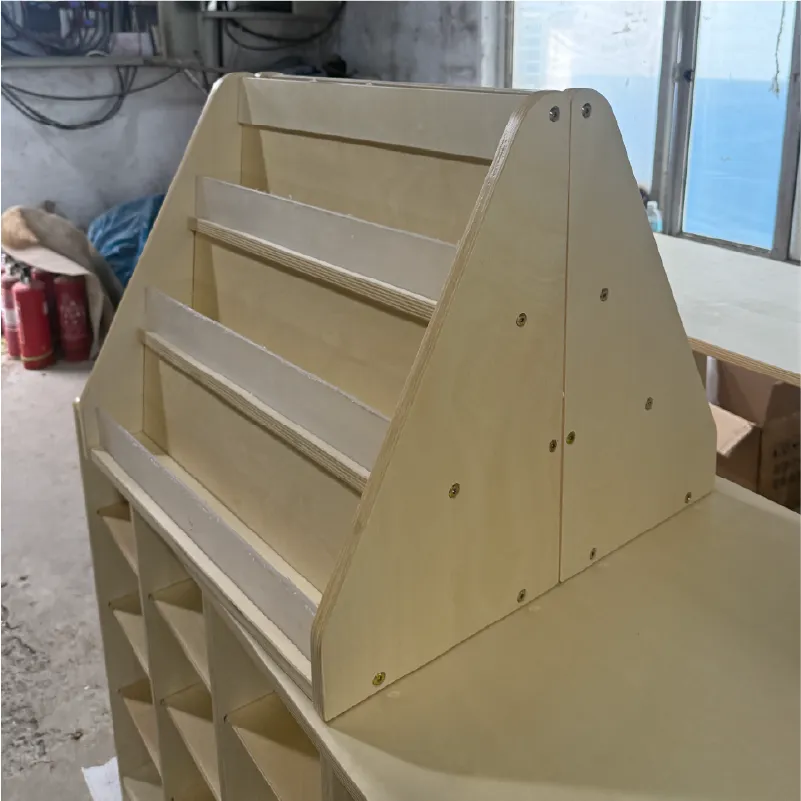
Bookshelves Made in Our Factory
You can review more than a finished product photo. For a bookshelf run, the approved drawing gives the production team a reference for panel dimensions, clear shelf openings, shelf direction, back-panel position and finish placement. Those are the details that make a book display usable after it leaves the factory.
At the production stage, you can ask for real photos of cut and finished parts, shelf joints, exposed edges and the assembled unit. On a mobile model, the caster and brake positions can be shown as well. For a custom design, an agreed sample or marked-up drawing becomes the reference before the batch proceeds; you can confirm what to inspect before packing.
One Bookshelf Order, Several Room Layouts
You can keep one approved material and finish while ordering different widths, heights or book-display directions. Give each room or area its own unit count and configuration. You can then review one clear schedule of bookshelf variants, visible finishes and packing labels, instead of leaving those differences to be worked out when cartons arrive.
Send Your Bookshelf Brief
A photo or sketch is enough to start. Add the target quantity, book sizes or formats, outside dimensions if known, preferred display direction, fixed or mobile placement, material or color reference and delivery destination. You can receive a bookshelf-specific drawing or product proposal with the open points called out before quotation.