
 Arabic
  English
  French
  Italian
  German
  Spanish (Spain)
  Thai
Thai  Japanese
  Turkish
  Indonesian
  Vietnamese
  Polish
  Portuguese
  Malay
Malay  Swedish
  Spanish (Mexico)
If you are furnishing a daycare room, you may be deciding between new furniture, used furniture, or a mix of both. New furniture gives you more control over the room. Used furniture can be a sensible choice when the condition, history, and fit are clear.
New and used furniture can belong in the same plan. You may choose new pieces for the main activity area and suitable used pieces for a reading corner, storage area, or temporary room.
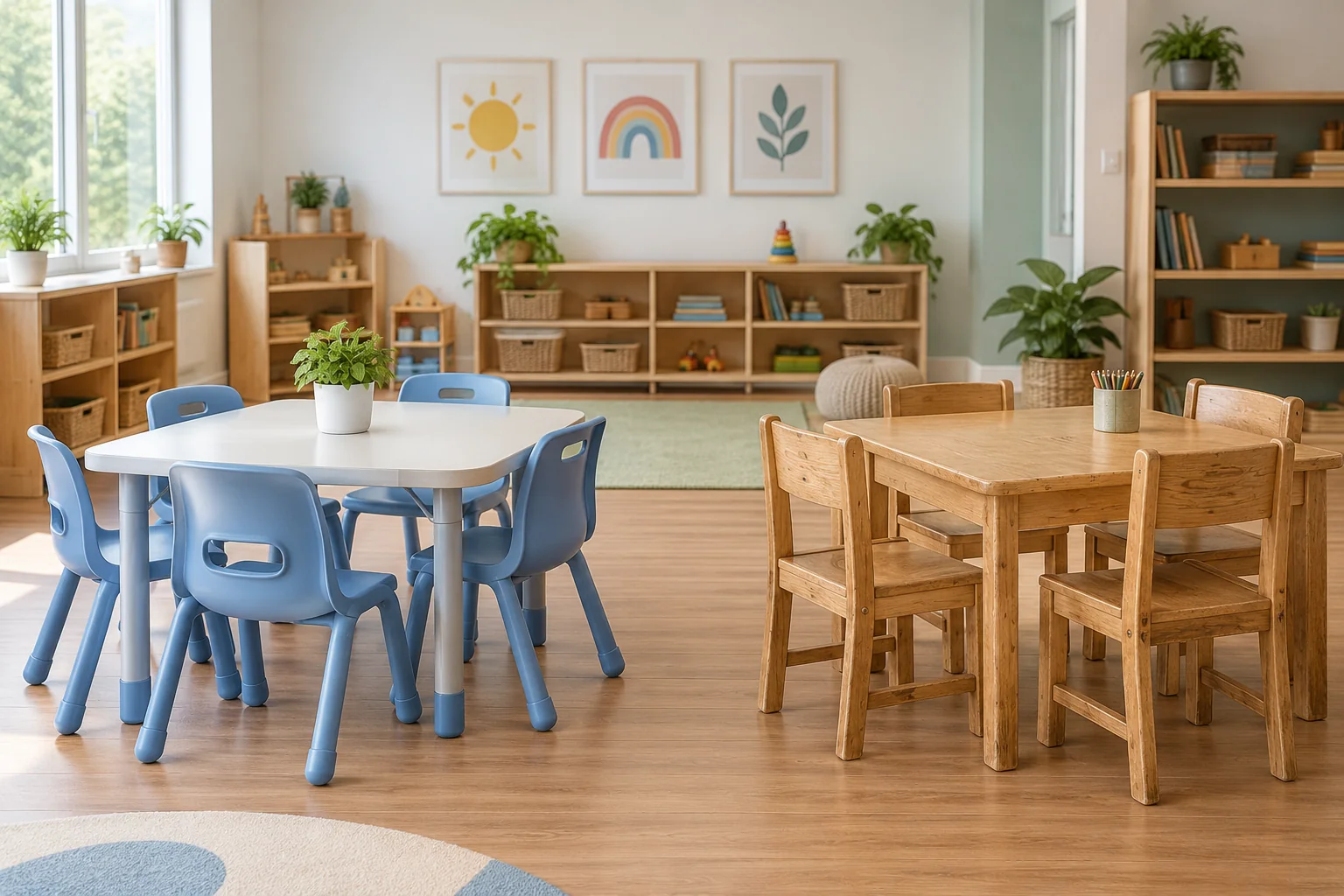
New and used solve different problems
New daycare furniture lets you choose the material, finish, quantity, age range, and layout before production. You can order tables, chairs, storage, and shelving as one coordinated set.
Used furniture gives you a chance to reuse pieces that still have useful life. You may find a good fit for a small addition, a reading area, a temporary room, or a classroom that already has matching furniture.
Neither option should be judged by appearance alone. A new table with the wrong finish can create daily problems. A used chair with a sound frame and a cleanable surface can work well in the right area.
What new daycare furniture gives you
New furniture gives you a known starting point. You can confirm the material, surface finish, edge treatment, age suitability, quantity, color, and care instructions before the furniture reaches the classroom.
You can also plan the entire room at once. Tables, chairs, storage, and activity furniture can follow the same layout and the same classroom standard. That matters when you are opening several rooms or want future additions to look and work the same way.
New furniture also gives you more room for adjustment. You can discuss changes to dimensions, materials, and finishes when a standard product does not fit the planned room. You can review the confirmed specification, quality-control process, packaging, and delivery plan before production.
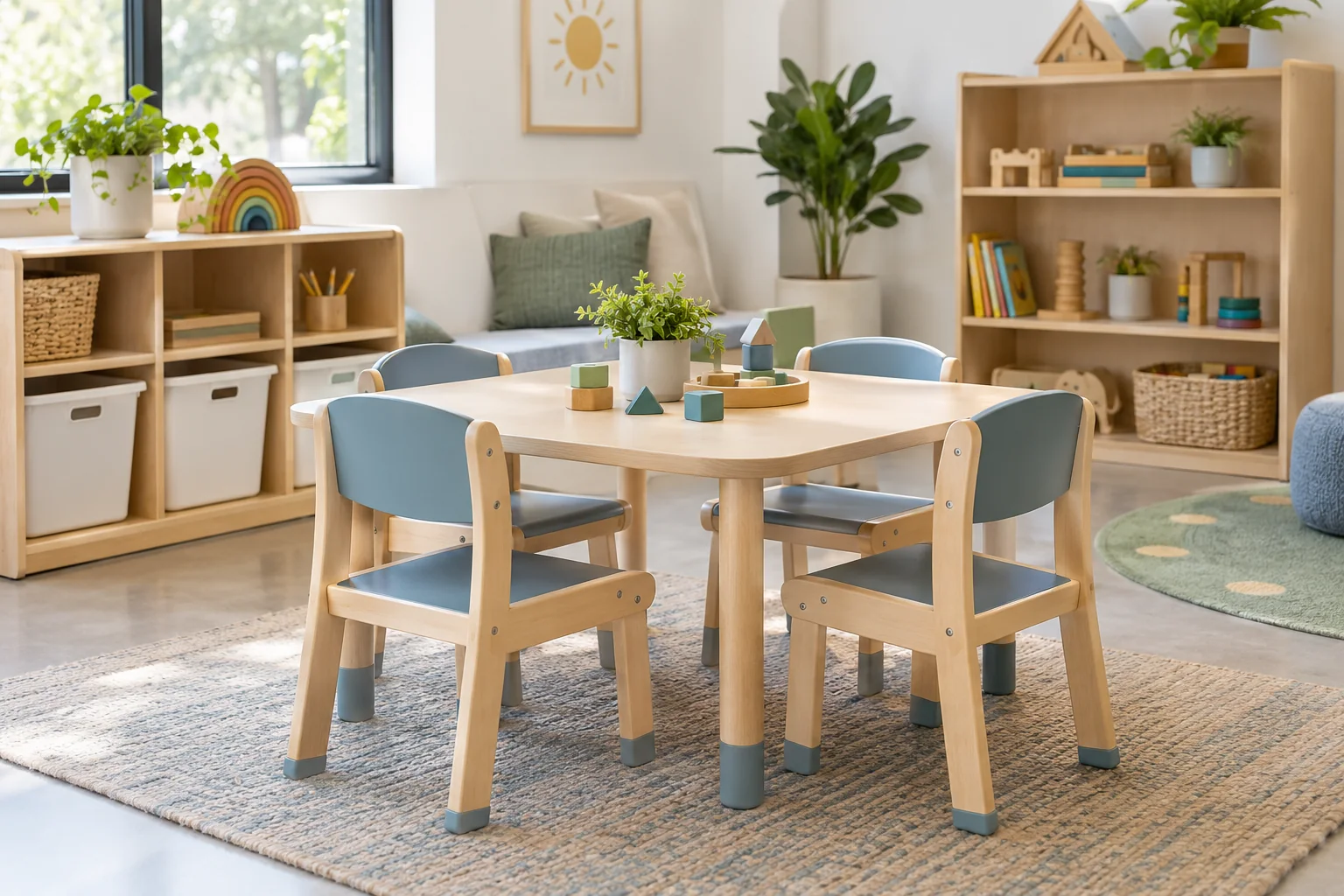
For example, you can compare preschool tables و preschool chairs as part of one classroom plan instead of trying to match separate used pieces after purchase.
What used daycare furniture can do well
Used furniture can be a responsible and practical choice when you want to keep usable products in service. Good used furniture can work in a quiet area, a staff-supervised activity space, or a room that needs a few extra pieces.
Used furniture can also help you keep an existing classroom consistent. If you already have a group of matching tables or chairs, adding pieces from the same set may make more sense than replacing everything.
The main requirement is clear information. You need to know how the furniture was used, how the surfaces were cleaned, whether repairs were made, and whether the material still meets the needs of the room.
New and used furniture side by side
| Point | New furniture | Used furniture |
|---|---|---|
| Room planning | You choose the set around the room and the activities. | You adapt the room around the available pieces. |
| Material information | You can confirm the material and finish before ordering. | Material and finish information may be incomplete. |
| تناسق | You can order matching pieces for one room or several rooms. | Matching pieces may depend on what you can find. |
| Condition | You check the delivered furniture against the approved specification. | You check wear, repairs, moisture marks, loose parts, and missing pieces. |
| Cleaning history | You receive care guidance for the selected finish. | Previous cleaners and moisture exposure may be unknown. |
| Future use | You can keep product records for later additions or replacements. | Future matching may be difficult without product records. |
The table matters because product age alone does not tell you whether a piece fits your room. You need to compare the condition, classroom use, and information available for each option.
Where used furniture needs closer attention
Check the areas that receive the most contact:
- Table edges with chips, swelling, lifted laminate, or sharp points.
- Table surfaces with deep scratches, stains, peeling finish, or moisture marks.
- Chair joints with loose screws, cracks, movement, or uneven legs.
- Plastic parts with stress marks, brittleness, discoloration, or damaged edges.
- Feet and glides with missing pieces, exposed metal, or signs of floor damage.
- Storage units with damaged shelves, loose handles, unstable doors, or tipping concerns.
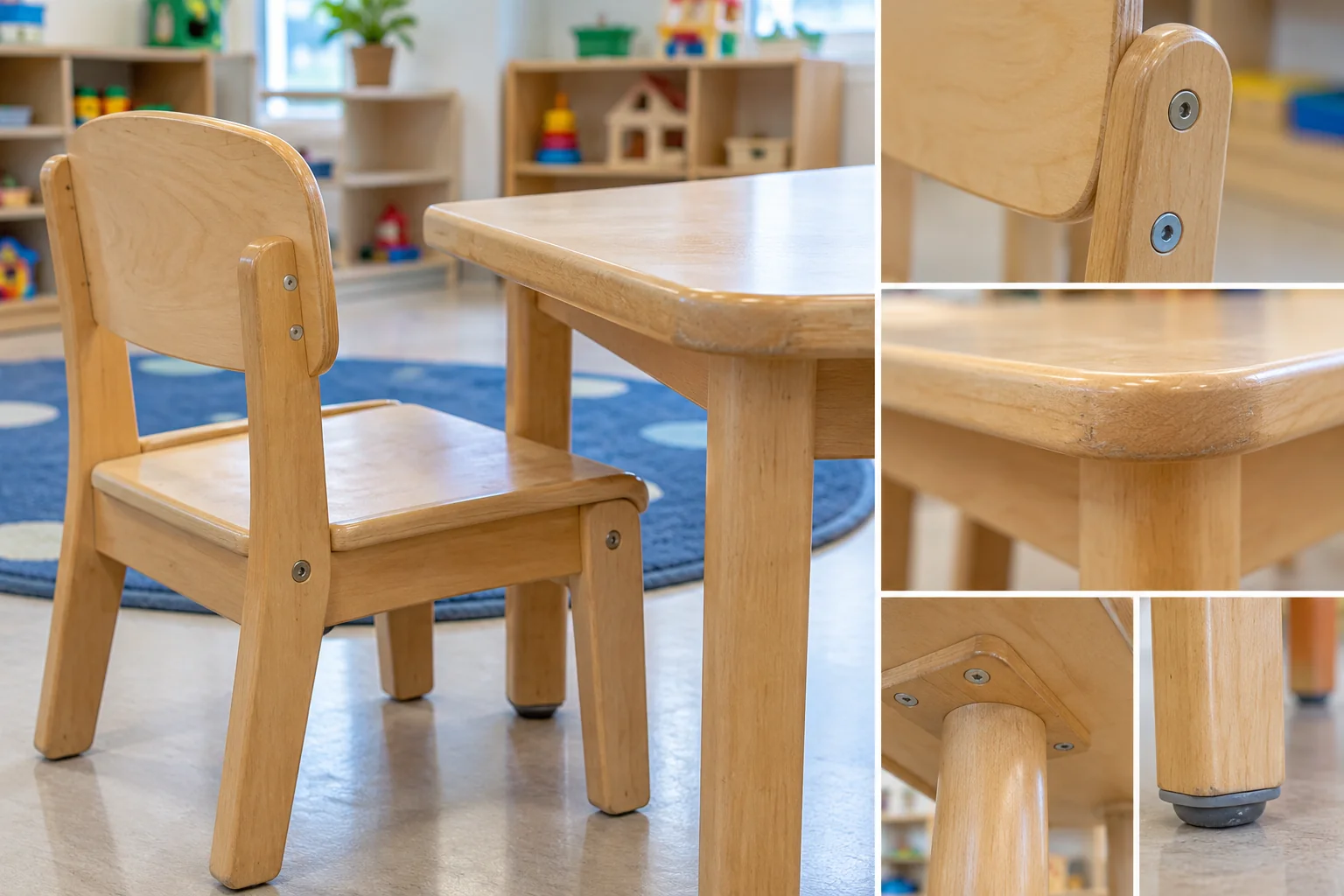
If you cannot inspect used furniture in person, request close photos of the edges, undersides, joints, feet, and repaired areas. A front photo cannot show the full condition.
Cleaning history also matters. Repeated moisture can weaken wood-based panels. Strong chemicals can change a finish. Rough scrubbing can leave a surface difficult to clean even when the furniture still looks usable. For one external reference when reviewing cleaning products, you can visit the U.S. EPA Safer Choice program, then confirm compatibility with the actual finish.
When new furniture is the stronger choice
New furniture is often the better route when you are opening a classroom, renovating a room, furnishing several rooms, or building a standard for future orders.
You gain control over:
- The material and finish used in each classroom area.
- The match between tables, chairs, storage, and shelving.
- The quantity and sequence of delivery.
- The layout of reading, small-group, art, food, water, and sensory areas.
- The product records needed for maintenance and future additions.
New furniture does not mean choosing the same product for every area. Wood can give a quiet area a warm, solid feel. Plastic can make an art or water area easier to clean and reset. A planned room can use both materials when the activities call for different surfaces.
When used furniture is a reasonable choice
Used furniture may be the right choice when you are adding a few matching pieces, setting up a temporary room, furnishing a lower-use area, or reusing a set that already fits your classroom.
Keep the decision based on evidence. Confirm the original use, material, finish, cleaning history, repairs, structural condition, and fit with the planned activity. If those points remain unclear, the furniture needs more inspection before use.
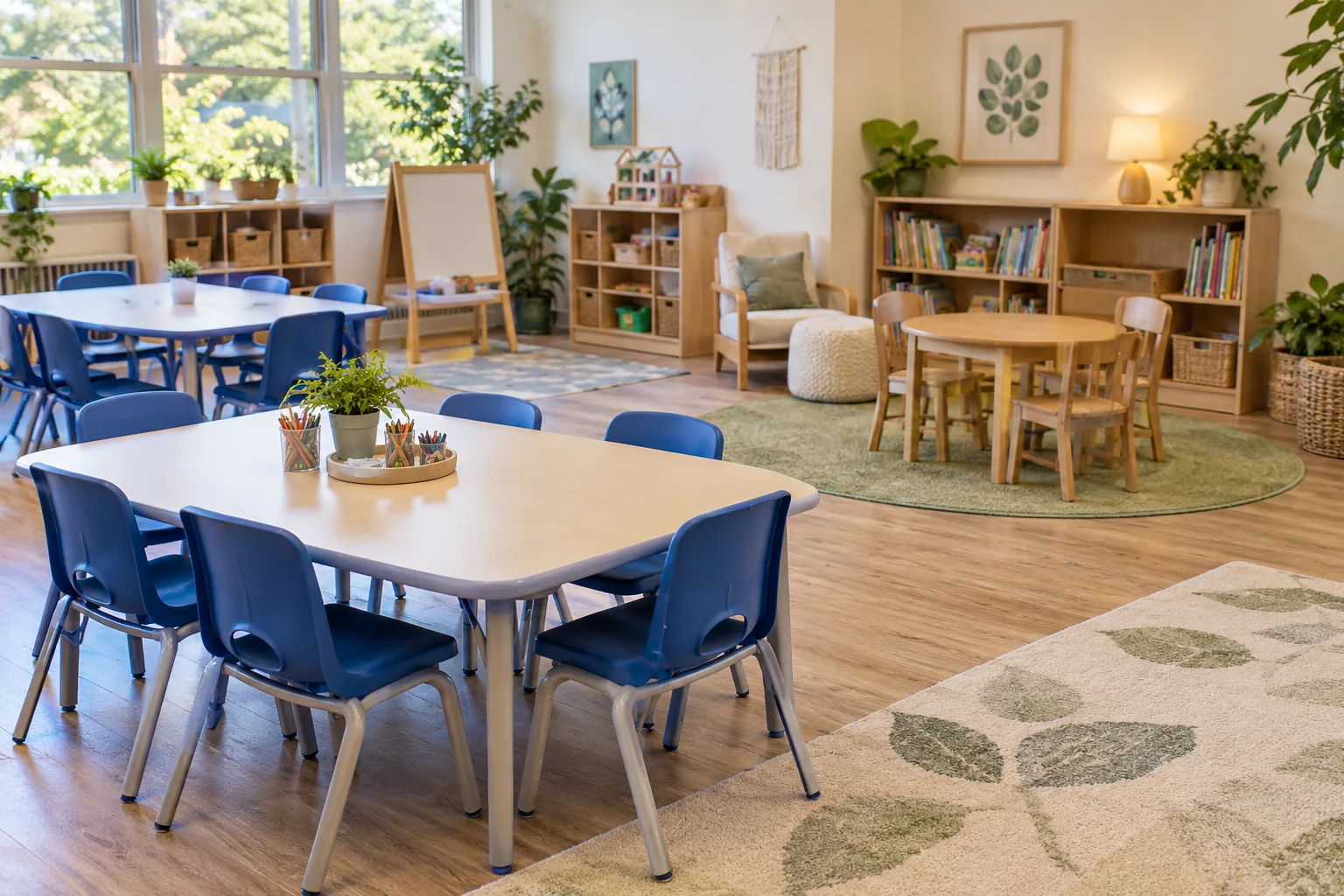
A mixed plan can also work. You can use new furniture in the main learning area and suitable used pieces in a reading corner, storage area, or secondary activity zone. Keep the pieces stable, cleanable, and suitable for the work in each area.
التعليمات
- Is new daycare furniture always a better choice than used furniture? No. New furniture gives you more control, but a sound used piece can be the better fit when it matches an existing set or fills a smaller classroom need.
- Can you use a used table for daily daycare activities? Yes, when the table stays stable, has a cleanable surface, suits the children using it, and has no exposed damage that affects daily work.
- Should you compare the age of the furniture first? No. Compare its remaining useful life, structural condition, surface condition, and suitability for the activity. A calendar date does not show the whole story.
- Do all pieces in one daycare room need to come from the same set? No. You can use different sets, but keep the furniture within each activity group consistent in height, seating, and use.
- When should you stop considering a used piece? Stop when you cannot confirm its structural condition, material, repair history, or ability to meet the cleaning needs of the room.
Build the right mix for your room
New furniture suits a planned room or a future classroom standard. Used furniture suits a sound existing piece that matches the activity. A mixed plan works when you keep each area consistent and judge every piece by condition and use.
For a daycare furniture plan, you can visit the عالم شياير and share your classroom layout, activity areas, age group, and furniture requirements.