
 Arabic
 English
 French
 Italian
 German
 Spanish (Spain)
 Thai
 Japanese
 Turkish
 Indonesian
 Vietnamese
 Polish
 Portuguese
 Malay
 Swedish
 Spanish (Mexico)
If you want to open a daycare or preschool, you need to solve several decisions in the right order. First define the service, check that the business can work, find a site that can be approved, start the application, prepare your staff and policies, finish the premises, and then open.
Furniture is only one small part of the last stage. The main work is making sure that your service, money, building, approval documents, people, and opening date all agree with each other.
Decide What You Will Open
Start with a clear description of the service. This gives you something to check when you compare sites, costs, staff, and local rules.
Choose The Service Type
Decide whether you will run a daycare, a preschool, a long-day service, a sessional programme, or another local service type. Then check the rules for that exact type.
Do not assume that daycare and preschool mean the same thing in every country. Your local authority may use different names, age ranges, and approval routes. Use the local definition when you begin your research.
Set The Age Groups, Places, And Hours
Write down the youngest and oldest children you plan to accept, the number of places you want at the start, and the days and hours you will open.
These choices affect your staff numbers, rooms, sleep arrangements, nappy changing, meals, outdoor time, and daily routine. If you want to serve more than one age group, decide whether you will use separate rooms or a mixed-age model before you plan the site.
Check The Need In Your Area
Speak with families, local employers, schools, community groups, and nearby services. Ask which age groups need places, which opening hours are useful, and what families can realistically pay.
Record the days, hours, and start date each family needs. Ten enquiries for two mornings a week give you a different starting point from ten enquiries for full-day care.
Then compare that demand with the staffing you would need. The examples below show how age and service type can change the number of places you can afford to offer. In the US and Canada, use the rule for your state or province; the examples here are not national standards.
| Where You Plan To Open | Standard For An Early Estimate | How To Use It |
|---|---|---|
| US — California example | For a preschool centre, the basic rule is one teacher for no more than 12 children. Other arrangements have separate conditions. See California section 101216.3. | Check which teacher and aide arrangement applies before you price the places you hope to fill. Use your own state’s rule if you plan to open elsewhere. |
| Canada — Ontario example | For a standard preschool group aged 30 months to under six years, use one staff member per eight children and a maximum group size of 24. See Ontario’s staff ratios. | For 24 preschool children, allow for at least three staff working with the group under the standard ratio. Check other provinces separately. |
| أستراليا | For children over 24 months and under 36 months, use one educator per five children outside Victoria, or one per four in Victoria. See ACECQA’s ratio table. | Cost your toddler places using the rule where you will open. For 20 children in this age band, the minimum ratio calculation gives you four educators outside Victoria and five in Victoria. |
| New Zealand | For an all-day centre with 20 children aged two or older and no younger children, the minimum ratio requires two eligible adults. See the Ministry’s adult-to-child ratio guidance and its linked Schedule 2. | Keep enquiries for under-twos separate when you estimate staffing. Use the full age-group table if you plan a mixed-age service. |
| Ireland | For ages three to six, use one adult per eight children in full-day or part-time care. For sessional preschool, the ratio is one per 11 children aged two-and-a-half to six. See Tusla’s ratio examples. | Find out whether families need a short preschool session or a longer care day before you compare staffing costs. You cannot use the sessional ratio for an entire full-care day. |
Use these minimum staffing examples for a first estimate, not as your total payroll or approved capacity. You still need to meet qualification, supervision, and any mixed-age rules. Compare the demand you have recorded with the staff you can recruit before you decide how many places to plan.
Set Up The Business Plan
Once you know what you want to open, turn the idea into a short working plan. Keep it practical: show what you need to pay, what you can earn, and what must happen before opening.
Choose The Business And Funding Setup
Decide how you will register and run the business, who will own it, how you will fund the start-up, and who can approve spending. Check local tax, insurance, employment, and reporting requirements before you commit to a site.
If you plan to use a loan, grant, partner investment, or personal funds, write down when the money will be available. A site cannot move forward just because the business plan looks good on paper.
List The Costs And Cash Buffer
List the site, professional advice, licences, building work, fire and safety work, insurance, staff recruitment, training, technology, learning materials, cleaning, food, utilities, and marketing.
Add the costs that continue before you reach full enrolment. Include staff leave, repairs, empty places, holidays, and the time between paying for the site and receiving approval. If the project only works at full capacity from the first month, review the plan again.
Set Responsibilities And Dates
Write down who will handle the lease, planning, licensing, building work, staff recruitment, policies, purchasing, and opening checks. Give every task an owner, a date, and a clear next action.
Bring in an architect, building professional, fire adviser, accountant, or childcare adviser when the project needs specialist input. Arrange that review before you spend heavily, not after a problem appears.
Find And Check The Site
Do not choose a building because the whole floor area looks large. You need to know whether the proposed use is allowed and whether the finished site can support your age groups, capacity, staff, and daily routine.
Check The Use Before You Sign
Ask your local authority whether the proposed childcare use is allowed. Check planning, building approval, fire safety, accessibility, ventilation, toilets, outdoor access, food areas, and any local requirements for childcare premises.
Ask for important answers in writing when possible. A landlord’s statement that a unit is “suitable for childcare” is not approval for your service.
Calculate The Space You Can Use
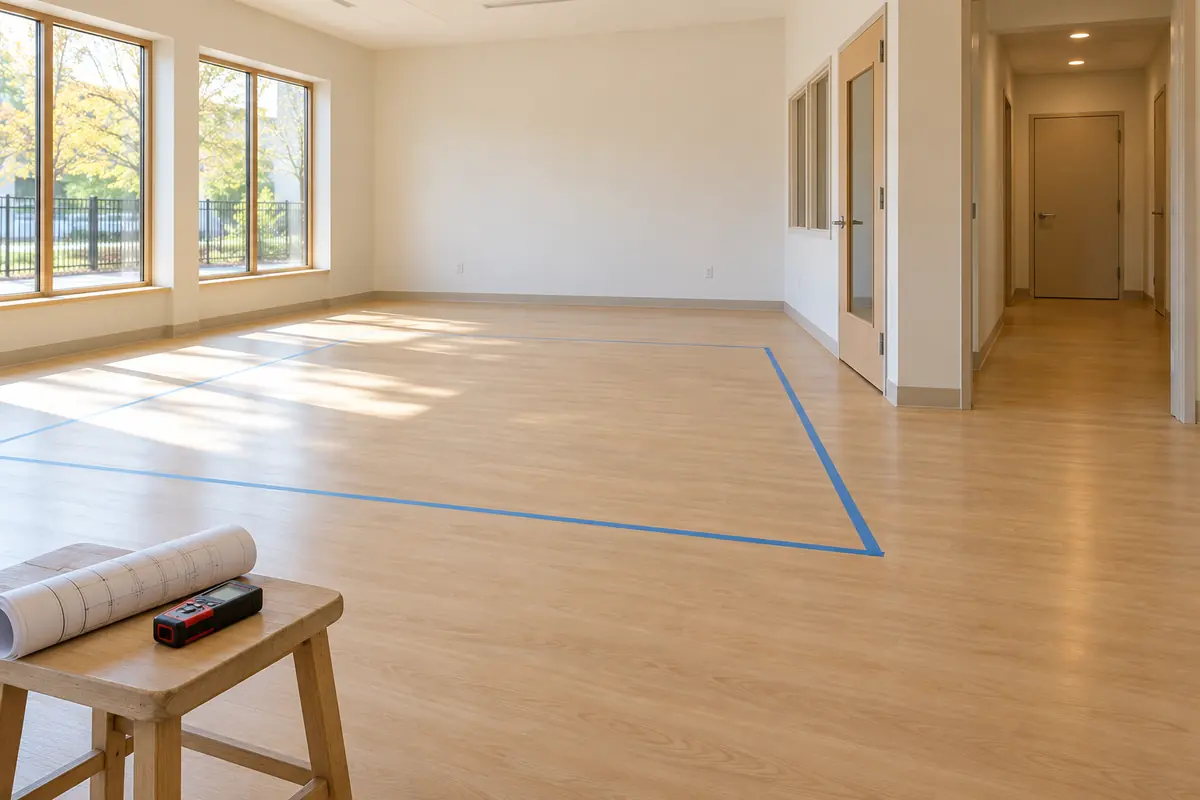
Measure inside the finished walls. Mark columns, door swings, toilets, sinks, fixed cabinets, kitchen areas, staff spaces, storage, and passageways. Your lease may describe the whole floor area, while the licensing calculation may use only clear activity space.
For planning context on indoor and outdoor space, see daycare space requirements per child. Use the current local rule for your final calculation.
Check Access And Support Areas
Look beyond the main activity room. Check the entrance, buggy or stroller storage, toilets, handwashing, nappy changing, staff areas, food preparation, sleeping areas, outdoor access, and emergency routes.
Walk from the entrance to each room, from the room to the toilet, and from the room to the outdoor area. If a normal route depends on crossing a busy play area or moving equipment every morning, change the plan before you commit to the building.
Start Approval Before Building Work
Do not wait until the rooms are almost finished before you contact the approval body. Confirm the route first, then design the application, work, and inspection dates around it.
| Market | What To Confirm First | Official Starting Point |
|---|---|---|
| US | Which state or territory licence applies? What rules cover background checks, training, health, emergency plans, building safety, and monitoring? | ChildCare.gov licensing guidance |
| Canada | Which provincial or territorial rules cover your age groups, ratios, space, outdoor play, building approval, and inspections? | Government of Canada ECEC background |
| أستراليا | Do you need provider approval, service approval, local planning approval, Working with Children checks, health and food checks, or CCS approval? | ACECQA opening a new service |
| New Zealand | How will the Resource Management Act, Building Act, education regulations, licensing criteria, space, supervision, and facilities affect your site? | Ministry of Education premises guidance |
| Ireland | What do you need for Tusla registration, planning, fire advice, room ratios, clear floor space, staffing, and service facilities? | Government of Ireland setup guidance |
These links help you find the right route. They do not replace the current instructions from your local authority. Rules can change, and your site may have extra planning or building conditions.
Prepare The Application File
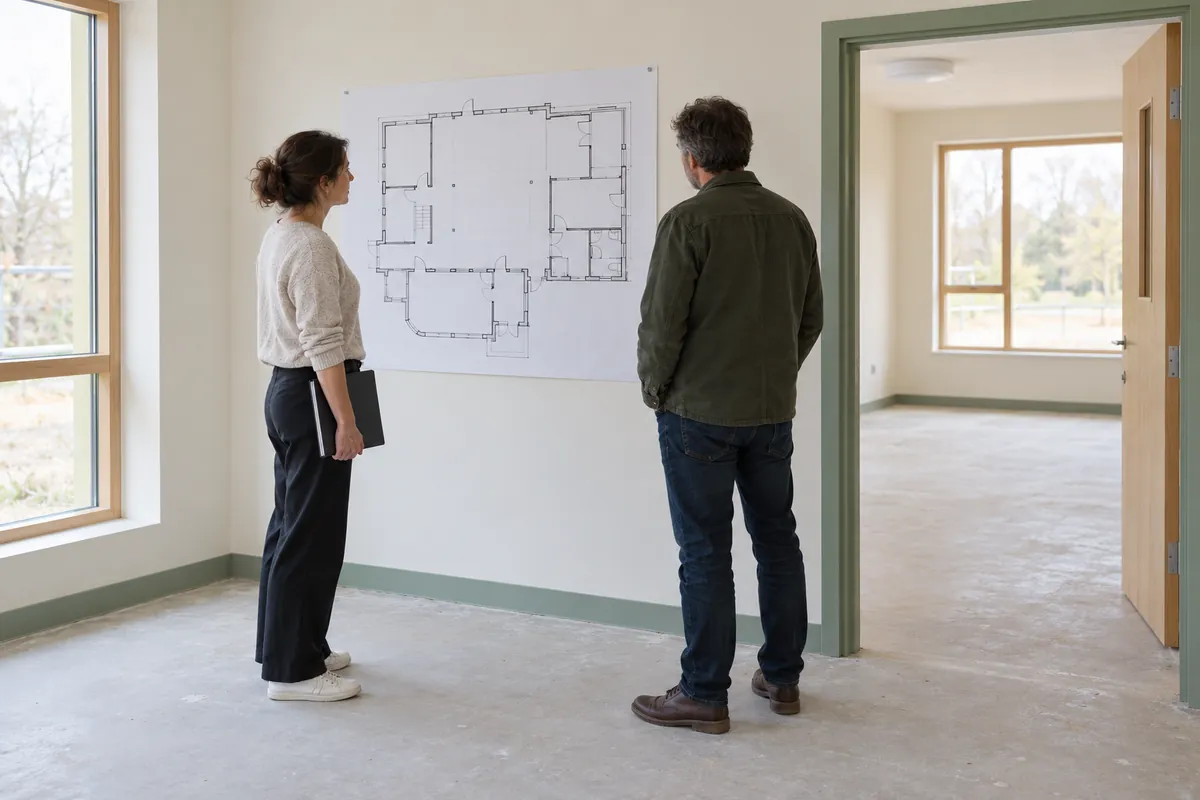
Keep the documents for your service in one place. You may need business details, site information, floor plans, room measurements, policies, emergency plans, staff checks, training records, insurance, food information, and evidence of building or fire work.
Use the same service name, capacity, age groups, room names, and opening hours across the documents. If those details change, update the application and the project plan together.
Plan For Review And Inspection
Ask how long each part normally takes and which steps can run at the same time. Put the application date, building work, staff start date, inspection date, and planned opening date on one calendar.
Keep a backup opening date. Do not enrol children for a date that depends on an approval or inspection you have not received.
Prepare People And Daily Operations
You cannot open safely with a finished building alone. Your staff need the right checks, training, policies, and daily plan before children arrive.
Recruit And Check Your Staff
Check the required qualifications, ratios, background checks, first aid, child protection training, food handling, and other local requirements. Plan cover for breaks, illness, meetings, opening, and closing.
Give staff time to learn the rooms, records, emergency equipment, cleaning process, and handover routine. Show them who makes decisions when a child is ill, an incident happens, or a family raises a concern.
Write The Policies You Will Use
Prepare the policies required by your local rules. Your list may include child protection, illness, medication, allergies, sleep, food, accidents, emergencies, arrivals and collections, behaviour, inclusion, complaints, privacy, and incident reporting.
Write the action, the person responsible, and the record you will keep. A policy should tell staff what to do at the moment a problem happens.
Plan The Day And Family Communication
Set out the daily rhythm for arrival, play, meals, rest, outdoor time, toileting, small-group work, and collection. Leave enough time for transitions and cleaning.
Prepare the information families need before enrolment: opening hours, settling-in arrangements, fees, meals, illness rules, collection rules, emergency contacts, and the way you will share updates.
Finish The Site And Prepare For Inspection
Now finish the premises against the approved plan. The aim is not to make the rooms look full. The aim is to make the service safe, usable, and ready for a normal day.
Complete The Approved Work
Finish the building, fire, access, hygiene, storage, sleep, and outdoor work required for your approval. Choose tables, chairs, storage, sleep equipment, and learning materials only after you know the age groups, capacity, and daily routine.
Check stability, edges, cleaning instructions, reach, mounting, and clear routes. Keep the finished layout consistent with the plan in your application.
Run A Full Staff Rehearsal
Walk through arrival, meals, sleep, outdoor play, toileting, accidents, medication, emergency movement, collection, cleaning, and closing. Use the real rooms and follow the real routes.
Ask staff to point out what is slow, unclear, hard to reach, or difficult to supervise. Fix those problems before children use the service.
Put The Records And Supplies In Place
Keep the approved plan, room measurements, installation notes, cleaning information, staff records, training records, emergency contacts, first-aid supplies, and local approval documents in one project file.
Check that the supplies needed for the first weeks are on site, labelled, and easy for staff to find. Do not leave emergency or cleaning items until the last delivery.
Enrol And Open
Opening is the first real test of your plan. Start at a size your team can manage, then use the first few weeks to correct practical problems.
Set The Enrolment Process
Prepare the forms you need before you accept places. Decide how you collect medical and emergency information, how settling-in visits work, and who families should contact with questions.
Start With A Manageable Intake
Use the number of children your approved rooms and staff can support well. A smaller first intake gives you time to practise routines, support children as they settle, and respond to family questions.
Review The First Month
After opening, review the timetable, room flow, noise, cleaning time, staff workload, attendance, and family feedback. Record each problem, decide who will fix it, and set a date to check the result.
Keep your approved capacity and safety requirements in view as you make changes. A convenient change is not useful if it creates a new supervision or access problem.
الأسئلة الشائعة
- What should you do if the site passes a first check but fails the childcare inspection? Ask for the findings in writing, separate urgent corrections from optional improvements, and update the budget and opening date. Do not open until the required items are accepted.
- Can you open with fewer places than you first planned? You may be able to, but you need to check whether your approval covers the reduced capacity and whether your staffing, rooms, and documents need an update before you enrol.
- When should you tell families that the opening date may change? Tell families as soon as an approval, building, or staffing delay makes the date uncertain. Give them the next confirmed date instead of promising a date that still depends on an inspection.
خاتمة
Opening a daycare or preschool is easier to manage when you treat it as a sequence of decisions. Define the service, check the demand, plan the money, test the site, start approval, prepare the people and policies, finish the premises, and open at a manageable size.
Keep one project plan with the same age groups, capacity, hours, room names, documents, and dates. That single habit can prevent many avoidable changes before opening. For help with classroom layouts and furniture, you can speak with عالم شياير.