
 Spanish (Mexico)
  English
  Arabic
  French
  Italian
  German
  Spanish (Spain)
  Thai
Thai  Japanese
  Turkish
  Indonesian
  Vietnamese
  Polish
  Portuguese
  Malay
Malay  Swedish
A Montessori Nido is a specialized, meticulously prepared infant care environment designed for babies from roughly 2 to 18 months of age, or until they are walking confidently. Unlike traditional daycare infant rooms that rely heavily on restrictive “container care”—such as bouncers, high chairs, swings, and playpens—a true Nido is an open, floor-based environment.
For a childcare center, this means engineering a space that prioritizes the infant’s freedom of movement, visual exploration, and physical autonomy, utilizing purpose-built, child-scaled furnishings that allow babies to develop at their own natural pace.
In this guide, we explain the Montessori Nido clearly and practically. You will learn how to select appropriate furniture, arrange the space, and create an infant environment that supports both child development and daily care routines.
The Meaning and Origin of the Montessori Nido
The word Nido means “nest” in Italian. In Montessori education, it is used to describe the first prepared environment for infants, a place that should feel safe, calm, nurturing, and supportive of very early development. The name itself reflects the purpose of the space. Just as a nest protects and supports new life, a Montessori Nido is designed to welcome babies into an environment where they can begin exploring the world with security and confidence.
The idea of the Nido comes from the broader Montessori approach developed by Dr. Maria Montessori, who believed that even the youngest children are active participants in their own development. Rather than viewing infants as passive or unable to learn, Montessori saw them as deeply absorbent, sensitive to their surroundings, and naturally driven to move, connect, and understand. This is why the Nido is not arranged like a conventional baby room filled mainly for adult convenience. Instead, it is prepared with the child’s development in mind from the very beginning.
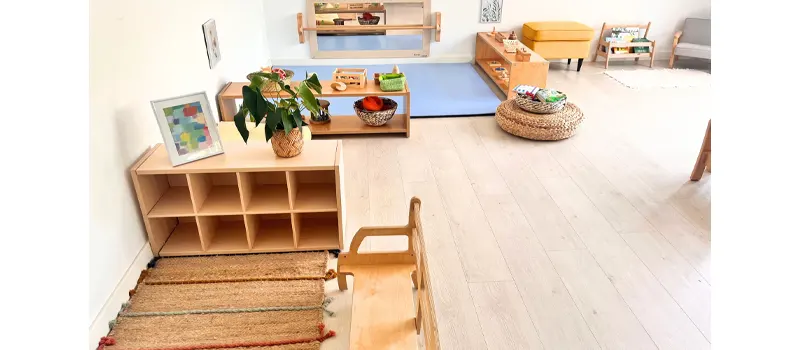
Over time, the Montessori Nido became recognized as the infant stage of the Montessori environment, usually serving children from birth to around 12 to 18 months, depending on the school or center. Today, the term is widely used by Montessori schools, infant communities, and childcare centers that want to create a more respectful and developmentally appropriate start for babies.
While modern Nido spaces may differ in layout or materials, the original idea remains the same: to offer infants a carefully prepared “nest” that supports movement, trust, independence, and early learning through everyday experience.
Key Characteristics of the Nido Environment
An effective Montessori nido environment is built on a few clear principles: freedom of movement, respect for the child, a carefully prepared space, order, independence, and consistent caregiving. They shape how infants move, explore, rest, and build trust every day. A good Nido works because every part of the environment supports early development in a calm, intentional, and child-centered way.
Freedom of Movement
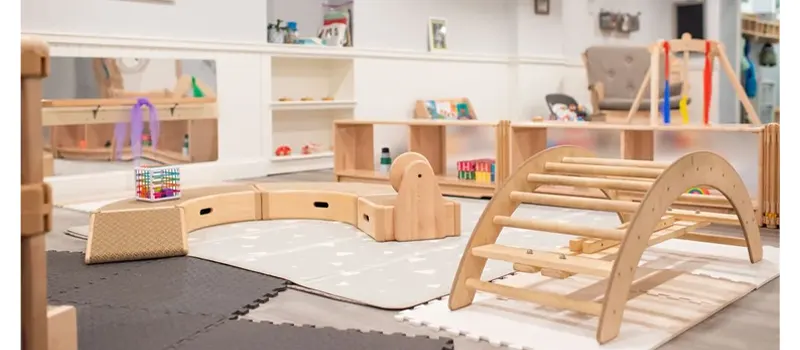
If I had to point out the principle that changes an infant’s room most dramatically, it would be freedom of movement. In many traditional settings, babies spend too much time in equipment that limits natural movement. In a Montessori nido, the goal is different. Infants are given safe opportunities to stretch, roll, reach, crawl, and pull themselves up at their own pace.
This principle affects both room planning and equipment choices. Floor space becomes more important than containment gear. Movement mats, low mirrors, and pull-up bars are not decorative additions. They are tools that support physical confidence and body awareness from the beginning.
Respect for the Child
Respect for the child is the principle that holds the whole environment together. In practice, this means adults do not treat infants as passive recipients of care. They observe carefully, speak calmly, move slowly, and involve the child in daily routines as much as possible.
In my view, this is what makes a Montessori infant environment feel so different. Feeding, diapering, dressing, and settling for sleep are not just tasks to finish efficiently. They are moments of communication and trust. When respect is consistent, infants feel secure, and that security supports everything else in the room.
A Prepared Environment
A Montessori nido works best when the environment is prepared with real intention. That means the room is arranged for the infant, not for adult convenience alone. Materials are placed within reach, furniture is sized appropriately, and the layout allows children to move and explore without unnecessary barriers.
In childcare centers, this principle is especially important because it helps the room function more smoothly. A ambiente preparado reduces confusion, supports independence, and makes it easier for teachers to respond with purpose rather than constantly managing disorder.
Order and Simplicity
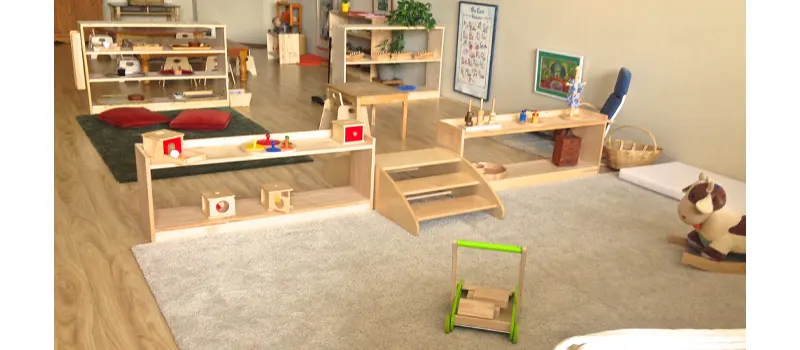
Infants do better in spaces that are calm, clear, and easy to read. That is why order and simplicity are such important Montessori principles. A nido does not need to be empty, but it should never feel chaotic. Too many toys, too many colors, and too much visual noise can make the environment less useful rather than more stimulating.
From experience, simple environments usually lead to better concentration. When materials are displayed neatly, and only a manageable number of choices are available, infants engage more deeply, and adults can observe more clearly.
Support for Independence
Independence in the Nido does not mean expecting babies to do too much too soon. It means giving them appropriate chances to participate in their own development. A child who can move freely to a mirror, choose from a low shelf, or begin to anticipate a daily routine is already building independence.
This principle is often misunderstood. Montessori does not push independence as performance. It creates conditions where independence can emerge naturally. In infant care, that usually starts with freedom, repetition, and trust in the child’s abilities.
Real and Purposeful Materials
An effective Montessori Nido environment uses materials with purpose. Instead of filling the room with overstimulating plastic toys, the space offers a small number of developmentally appropriate materials that invite grasping, tracking, listening, mouthing, and early problem solving.
The best materials are not always the most complicated ones. In fact, the most effective infant materials are often simple, beautiful, and easy to understand. They allow repetition, and that repetition is what helps infants build coordination, concentration, and confidence.
Consistent and Responsive Caregiving
Even the best classroom setup will not work well without consistent caregiving. A Montessori nido depends on adults who respond predictably, follow respectful routines, and create emotional stability throughout the day. Infants need to know that the environment is safe, but they also need to feel that the people in it are trustworthy.
This is especially relevant in childcare centers, where more than one adult may care for the same child. Consistency in tone, handling, pacing, and routine helps infants settle more easily and explore with greater confidence.
Observation Before Intervention
One of the most valuable Montessori habits is learning to observe before stepping in. In a nido, adults need to notice what the child is trying to do, what holds their attention, and when help is actually needed. Too much adult interference can interrupt concentration or replace the child’s own effort.
In real classrooms, this principle improves both caregiving and teaching decisions. Observation helps staff choose better materials, adjust the environment more effectively, and respond to each infant with greater sensitivity.
The Environment Should Serve Development
At the center of all these principles is one simple idea: the environment should serve the child’s development. Furniture, layout, routines, and materials should all have a reason for being there. A Montessori nido is effective when the room actively supports movement, sensory discovery, emotional security, and early independence.
That is why a strong Montessori nido environment feels so intentional. It is not built around decoration trends or adult preferences. It is built around what infants actually need in order to develop well.
Benefits of the Montessori Nido Environment
Dr. Montessori famously wrote in The Absorbent Mind that “the first two years of life are the most important,” because this is the period when the child’s mind is being formed through constant interaction with the environment. That is exactly why the nido matters. When the space is calm, orderly, and designed for movement, security, and independence, it helps babies build trust, coordination, focus, and confidence through everyday experience.

Supports Freedom of Movement
A Montessori nido gives infants room to move instead of keeping them contained for long periods. That matters because babies learn with their whole body before they learn with words. When they can stretch, roll, crawl, and pull up more naturally, their desarrollo físico is not being interrupted by the environment itself.
Encourages Early Independence
The nido helps infants do more for themselves within their own stage of development. They can see materials clearly, reach what is meant for them, and move toward what interests them. In my experience, this changes the atmosphere of the room. Babies are not just being placed from one spot to another. They begin to participate in their own day.
Builds Confidence Through Repetition
Infants gain confidence by doing the same useful action again and again. Reaching for a familiar object, turning toward a mirror, or moving across the floor without constant interference may look simple to adults, but these moments are how self-trust begins. A good nido leaves space for that process.
Creates a More Peaceful Emotional Climate
A Montessori nido is usually calmer than a typical infant room because the space and the caregiving style work together. The environment is simpler, routines are more predictable, and adults are encouraged to slow down. Babies tend to settle more easily when the room does not constantly compete for their attention.
Supports More Meaningful Sensory Development
Infants need sensory experiences, but they do not need endless stimulation. A nido works well because it offers clearer, more grounded sensory input through texture, sound, movement, light, and real materials. That gives babies more time to notice, explore, and process what they are experiencing.
Helps Infants Concentrate
Even very young children can focus deeply when the environment is not too busy. In a Montessori nido, there are usually fewer materials out at one time, and each one has a clearer purpose. That makes it easier for infants to stay with one experience a little longer instead of being constantly redirected by noise or clutter.
Respects Individual Developmental Pace
One of the most valuable benefits of the Montessori Nido is that it leaves room for different timelines. Not every baby is ready for the same movement, the same material, or the same rhythm on the same day. In group care, this is especially important. The environment supports observation instead of pushing every child through one uniform pattern.
Strengthens Caregiver and Child Connection
The Nido also improves the quality of daily care. Feeding, diapering, dressing, and settling to sleep are treated as relationship-based moments, not chores to rush through. That creates more trust between adult and child, and that trust affects everything else in the room.
Makes the Infant Room More Purposeful
A Montessori nido tends to feel more intentional because each part of the room has a job to do. The movement area supports motor growth. The sleeping area supports rest. The materials support exploration. The care routines support security. When these pieces are thoughtfully connected, the room works better for both infants and educators.
Montessori Nido vs. Traditional Daycare
The real difference between a Montessori nido and a traditional daycare infant room is the philosophy behind the environment. A Montessori nido is arranged to support the infant’s independence, movement, and natural development from the beginning. A traditional daycare is often more adult-led, with routines and room design built mainly around group management, convenience, and caregiving efficiency.
| Aspecto | Montessori Nido | Traditional Daycare |
|---|---|---|
| View of the Infant | Sees the infant as an active learner from birth, capable of absorbing the environment and participating in daily life. | Often sees the infant more as a child who needs to be cared for, soothed, supervised, and managed. |
| Approach to Movement | Encourages free movement on the floor, with space to roll, crawl, and pull up naturally. | More likely to use swings, bouncers, seats, or other equipment that limit movement. |
| Room Setup | Designed at the child’s level with floor beds, low mirrors, movement mats, and accessible materials. | Usually arranged for adult convenience, supervision, and caregiving routines. |
| Role of the teacher | The teacher prepares the environment, observes, and steps in only when needed. | The teacher usually leads the routine, moves infants between activities, and manages the flow of the room more directly. |
| Daily Rhythm | More individualized and calm, with greater respect for each child’s pace. | More likely to follow a fixed schedule based on group care needs. |
| Materiales | Uses simple, purposeful materials that support sensory development, coordination, and concentration. | Often includes a wider mix of general infant toys, bright colors, and entertainment-based items. |
| Sleep Approach | Often uses floor beds where possible to support freedom and independence. | Usually uses cribs based on standard daycare practice and licensing requirements. |
| Caregiving Style | Feeding, diapering, and dressing are handled slowly and respectfully as relationship-building moments. | Care routines are often more task-focused because staff are balancing several children at once. |
| Focus of the Environment | Built around the child’s development and early independence. | Built more around safety, supervision, and efficient group care. |
How to Design a Montessori Nido Environment?
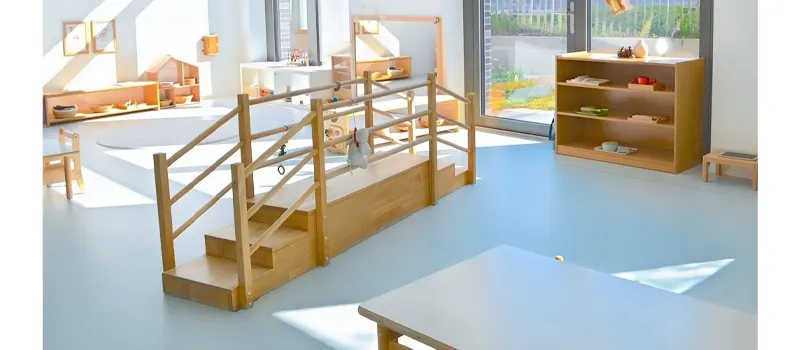
Designing a Montessori Nido environment starts with understanding what the room needs to do well every day. In my experience, a strong Nido is planned around how infants actually move, rest, feed, explore, and receive care, while still working smoothly for staff in a real childcare setting.
1. Start With the Daily Flow of the Room
Before choosing furniture, it helps to look at how the room will function from morning to evening. Infants will not all be doing the same thing at the same time, so the layout needs to support overlapping routines such as movement, sleep, feeding, diaper changing, and quiet interaction. A well-designed Nido usually feels calm, not because the room is empty, but because the flow has been thought through in advance.
2. Plan the Space by Area
A common mistake is to start with a list of products instead of a list of needs. In a Nido, the room works better when it is first divided into practical areas such as movement, sleep, feeding, caregiving, and exploration. Once those zones are clear, it becomes much easier to decide what furniture is actually necessary and where it should go. This also helps prevent the room from becoming crowded with equipment that takes up space but adds little value.
3. Keep Movement Space Open and Protected
Infants need real floor space, not just a mat placed wherever there is room left. The movement area should be large enough for rolling, crawling, turning, and early standing practice, while also being protected from constant foot traffic and routine disruption. In many childcare rooms, this is where the design either works or fails. If movement space is too small, blocked by furniture, or constantly interrupted, the room quickly starts working against the child’s development instead of supporting it.
4. Prepare the Environment at the Infant’s Level
The room should be arranged from the child’s point of view as much as possible. That means low mirrors, open shelves, visible materials, and furniture that does not make the infant feel surrounded by oversized equipment. Even before babies can use everything independently, a child-level environment helps them connect more naturally with the space and builds a stronger sense of familiarity and confidence over time.
5. Reduce Clutter and Limit What Is on Display
A Montessori Nido does not need many items, but the items it includes should be chosen carefully. Too much furniture, too many toys, or too many visual elements can make the room feel busy and harder for both infants and staff to use well. In real childcare settings, simpler rooms are often easier to maintain, easier to supervise, and more effective for daily routines. Keeping materials limited and rotating them intentionally usually works better than trying to offer everything at once.
6. Design Caregiving Areas for Both Respect and Efficiency
The caregiving side of the room needs just as much attention as the activity side. Changing, feeding, cleaning, dressing, and soothing happen repeatedly throughout the day, so these areas should be easy for staff to use without making the infant feel rushed or mechanical. Good placement of storage, clear access to supplies, easy-clean surfaces, and smooth transitions between zones can make a major difference in how the room functions.
7. Use Furniture and Materials That Support the Philosophy
In a well-designed Nido, furniture is not just there to fill the room. It shapes how the space is used. Low shelving supports visibility and order. Stable feeding furniture supports participation. Movement mats, mirrors, and pull-up bars support physical development. Natural materials and simple finishes help the room feel calmer and more balanced. The right furniture choices make Montessori principles easier to apply in daily practice.
8. Balance Montessori Principles With Real Childcare Requirements
A Nido in a childcare center must do more than reflect Montessori ideas. It also has to meet supervision needs, licensing requirements, cleaning standards, and the realities of group care. The most successful designs are the ones that balance both sides well. They stay true to the child-centered purpose of the Nido while still being durable, safe, practical, and manageable for staff every day.
9. Design for Consistency, Not Just First Impressions
A room may look beautiful on the first day, but a real Nido has to work well every day after that. The layout should be easy to reset, the materials should be easy to maintain, and the environment should stay calm even when the room is fully in use. In professional childcare settings, good design is not just about appearance. It is about whether the room can keep supporting babies and caregivers consistently over time.
Essential Areas in a Montessori Nido Environment
The essential areas in a Montessori Nido environment usually include a movement area, a sleeping area, a feeding area, a caregiving area, and a simple space for language and early exploration. Each area has a clear purpose, but together they create one connected environment that supports the infant’s daily development in a calm, practical, and respectful way.
Movement Area
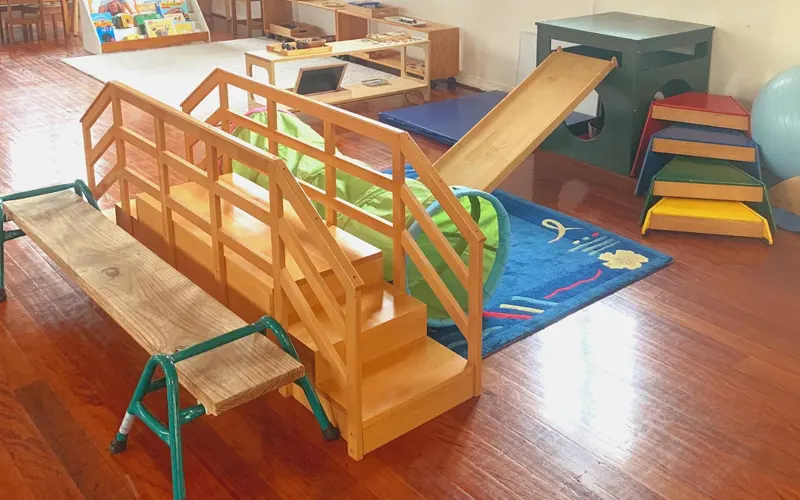
The activity area is a space where babies stretch, roll, crawl, and gradually develop body control. In Montessori education, movement is not separate from learning, but rather one of the main ways babies begin to understand themselves and the world around them. A good activity area typically includes a soft floor, a low mirror, and some simple assistive devices to promote the baby’s natural physical development.
Sleeping Area
The sleeping area should feel quiet, secure, and separate enough from active parts of the room to support rest. In a childcare setting, this area also needs to work within local licensing and safe sleep requirements. A well-prepared sleeping space is not only about where babies sleep, but also about creating a calm rhythm in the room and making rest feel like a natural part of the day.

Área de alimentación
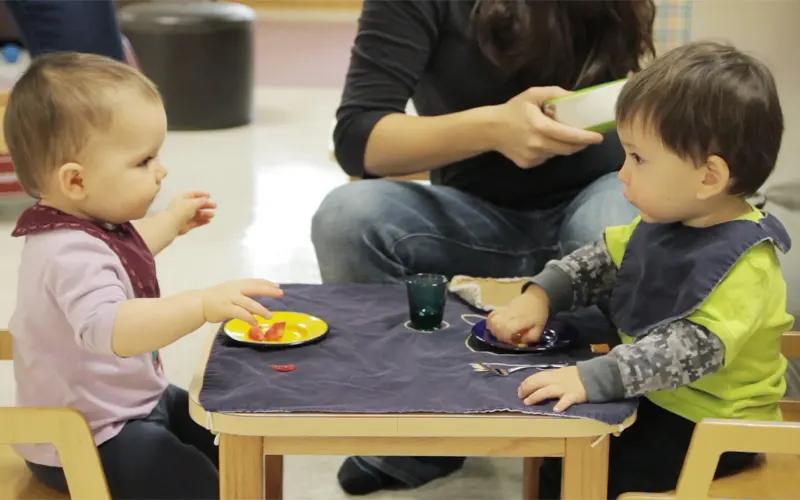
The feeding area supports both nutrition and early independence. In the Nido, feeding is not seen as a routine to rush through, but as a meaningful caregiving moment. For younger infants, this may still center on close adult support. As babies grow, the space can begin to support more active participation through stable, child-appropriate feeding furniture. The goal is to make feeding feel connected, respectful, and developmentally appropriate.
Care Area
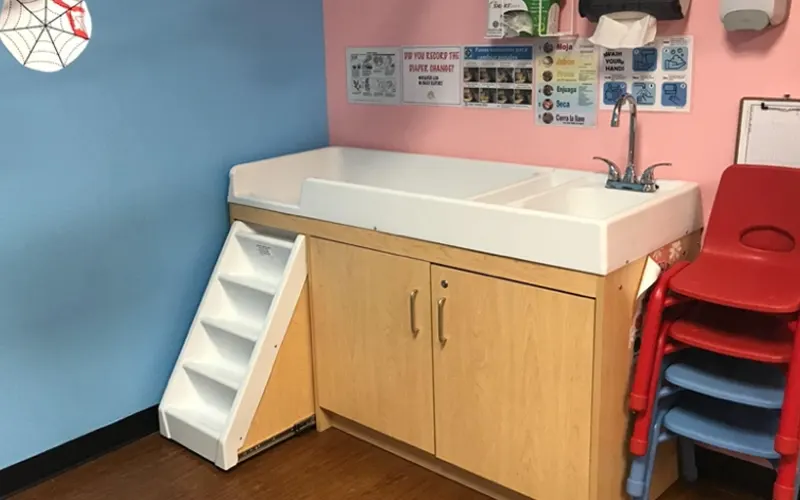
The care area is used for diaper changing, dressing, and other daily care. In the Montessori approach, these moments are treated with as much care and intention as play or exploration. The area should be organized, efficient for staff, and comfortable for the child. Good layout and storage are especially important here because they help daily routines feel smoother, more predictable, and less rushed for everyone involved.
Language and Connection Area
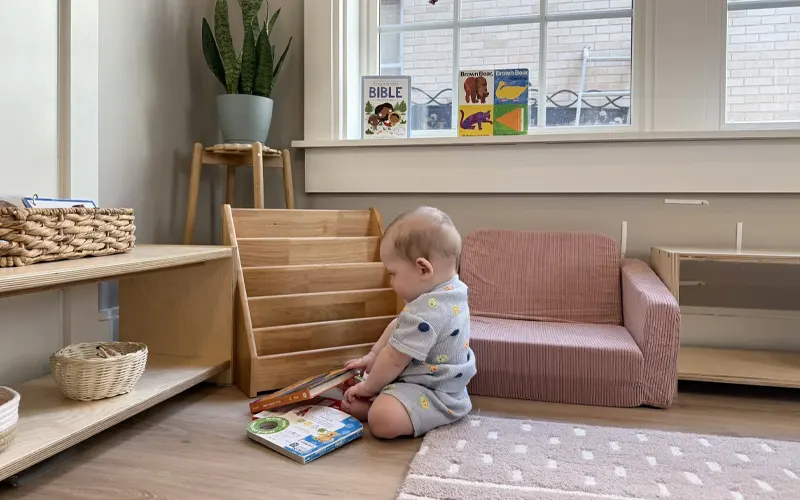
Infants need more than physical care. They also need warm human connection, language exposure, and moments of shared attention. A simple area for books, songs, naming objects, and face-to-face interaction helps support this side of development. In many Nido spaces, this area is not highly decorated or separated by strict boundaries. It is simply a quiet part of the environment where communication and connection can happen naturally throughout the day.
Early Exploration Area
A Montessori nido also needs a small, orderly space for quiet exploration. This typically includes a limited number of simple, developmentally appropriate materials arranged in an orderly manner. The purpose is to give infants a chance to observe, reach, grasp, and explore with focus. Low shelves and thoughtful material rotation often make this area more effective and easier for caregivers to maintain.
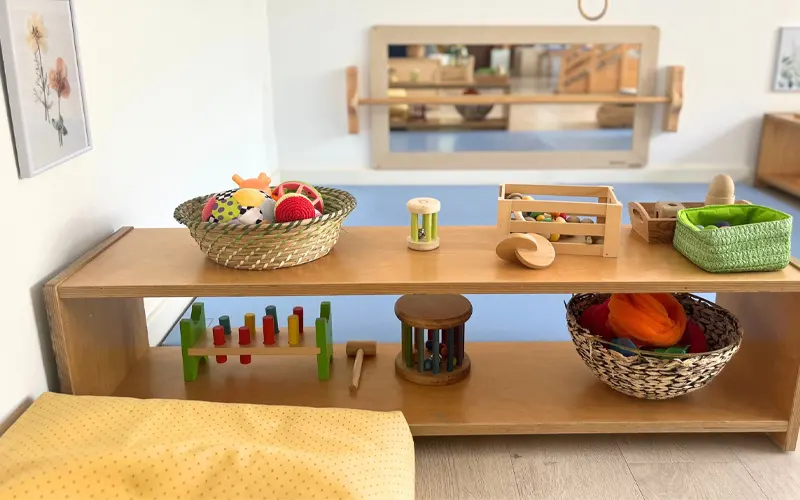
Furniture and Materials Commonly Used in a Montessori Nido Environment
The most suitable furniture and materials for a Montessori nido are the ones that support movement, independence, sensory development, and calm daily care. That means choosing simple, low, safe, and purposeful items instead of filling the room with too much equipment or too many toys. A good Nido needs the right products, placed with clear developmental intent.
Furniture for a Montessori Nido
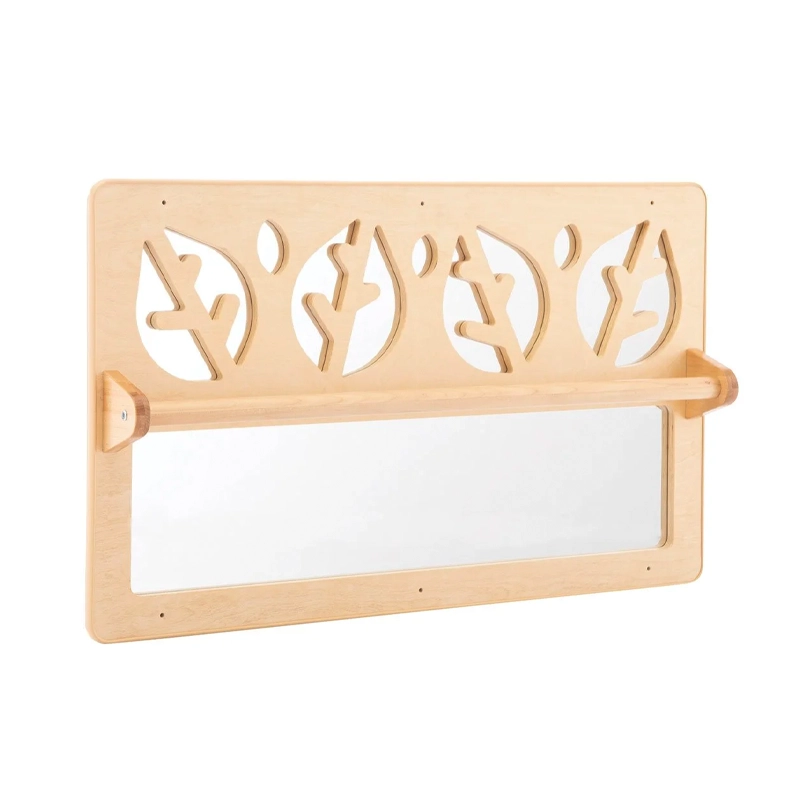
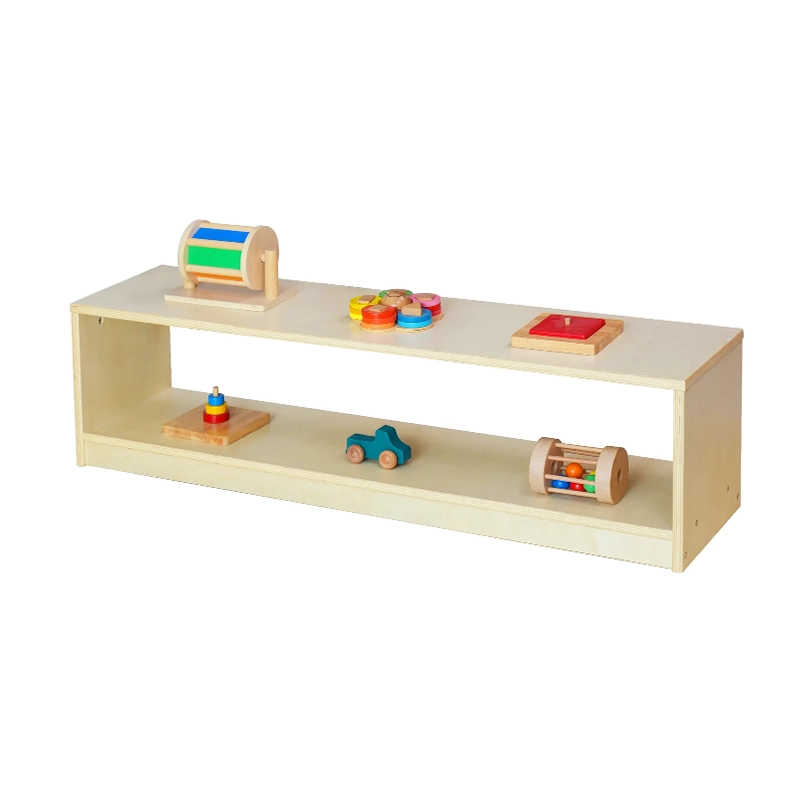
- Low open shelves: Low shelves help keep materials visible, organized, and easy to rotate. They also make the room feel more orderly than deep toy bins or crowded storage units.
- Movement mats: A Nido needs comfortable floor space where infants can stretch, roll, crawl, and practice body control. Good mats help define this area and make it safer for daily use.
- Low mirrors: Wall mirrors placed at infant level support body awareness and movement observation. They are especially useful in the movement area.
- Pull-up bars: For babies preparing to stand, a secure pull-up bar can support balance, strength, and confidence during this stage of development.
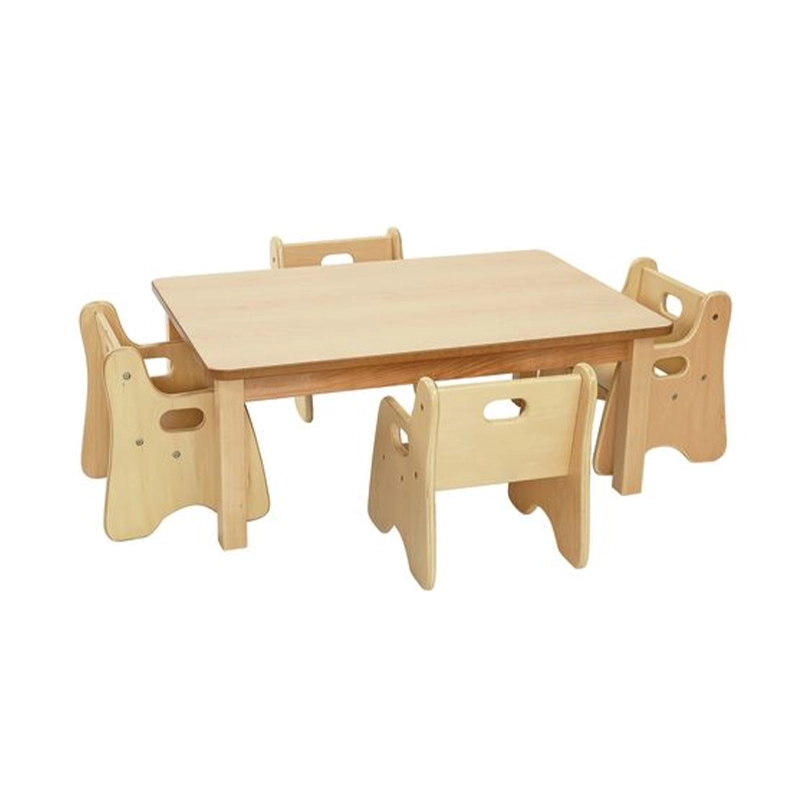
- Weaning tables and small chairs: For older infants beginning self-feeding, child-sized tables and chairs can support better posture and more active participation during meals.
- Low sleep setups or approved infant sleep furniture: Depending on local regulations, the sleeping area should include furniture that supports safe, calm, and consistent rest routines.
- Changing tables and organized care storage: The caregiving area needs to function smoothly every day, so stable changing furniture and well-placed storage for diapers, wipes, and extra clothing are essential.
Toys and Learning Materials for a Montessori Nido
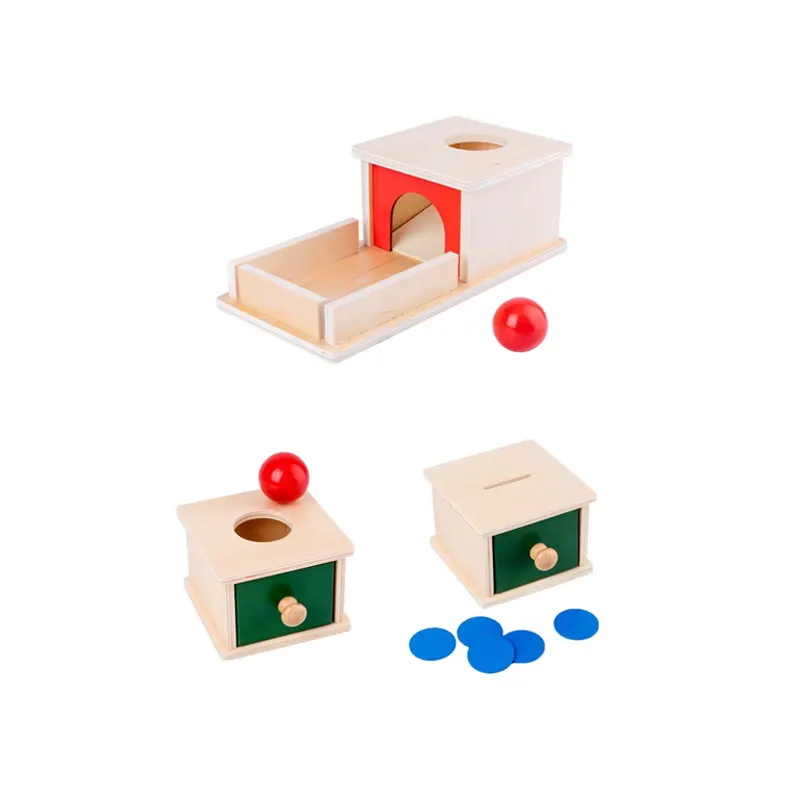
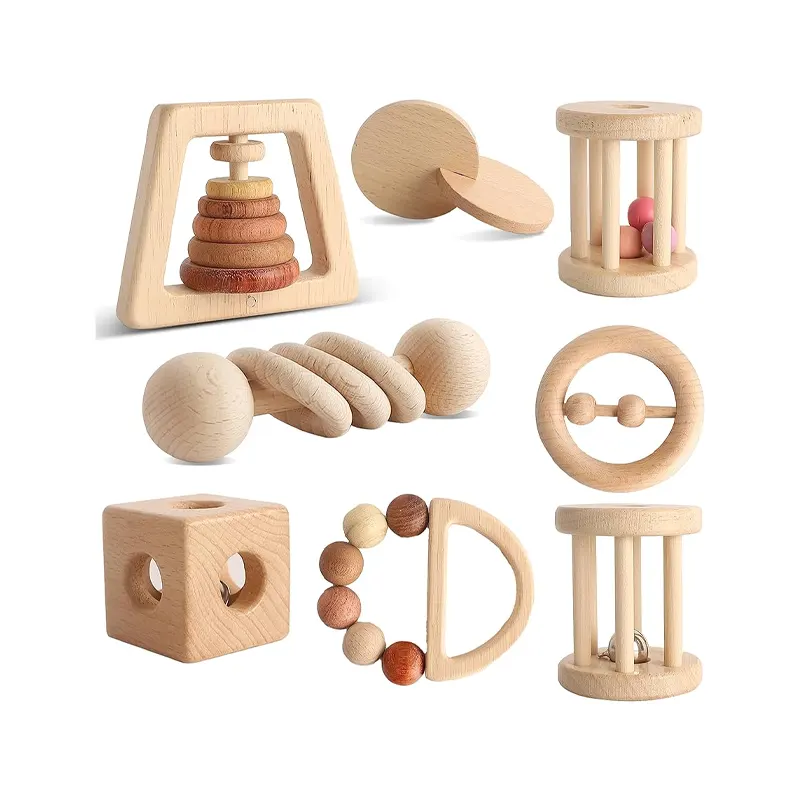
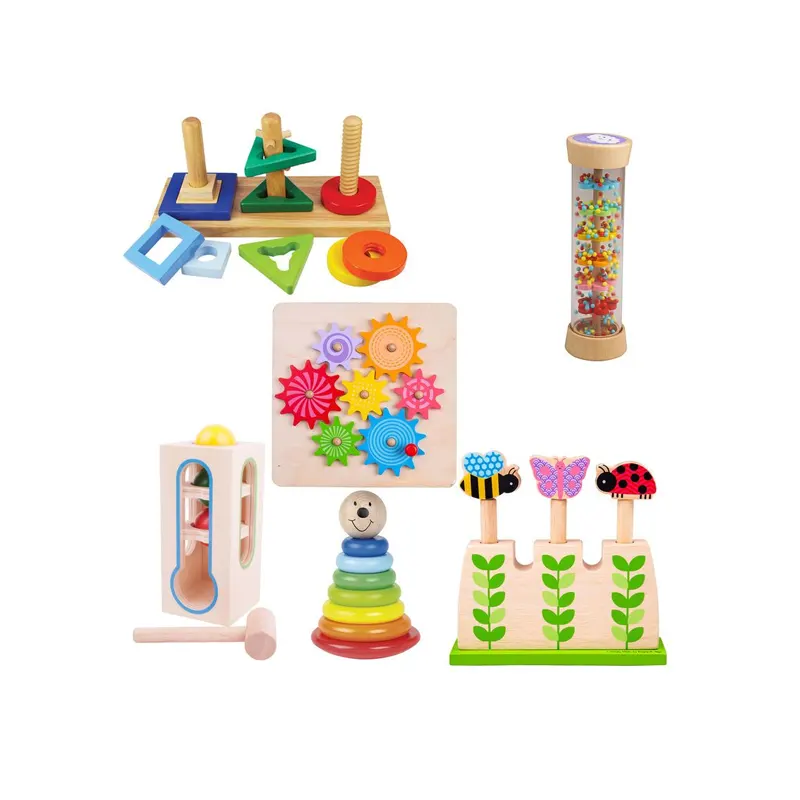
- Grasping toys: Wooden rings, rattles, interlocking discs, and other simple hand-held materials help infants develop grip strength and coordination.
- Tactile materials: Soft balls, textured balls, fabric items, and other sensory materials support touch exploration in a simple and manageable way.
- Object permanence materials: As infants grow, simple object permanence boxes and similar materials help them begin understanding that objects still exist even when out of sight.
- Juguetes de causa y efecto: Very simple materials that respond to pushing, dropping, posting, or releasing can help infants explore action and result.
- Simple books: Board books with real images, simple language, and clear layouts work well in a Nido, especially for quieter moments and one-to-one interaction.
- Language cards or object-picture materials: A small number of simple visual materials can support early vocabulary and naming activities with caregivers.
What to Look for When Choosing Nido Furniture and Materials?
- Child-appropriate scale: Furniture and materials should match the infant’s size and stage of development.
- Safety and stability: Items should be secure, well-made, and suitable for daily childcare use.
- Simple and uncluttered design: The best Nido materials are usually clear in purpose and not visually overwhelming.
- Natural or calm-looking materials: Wood, soft textures, and simple finishes often work better than bright plastic and overly busy designs.
- Easy maintenance: In childcare settings, furniture and materials should also be practical to clean, organize, and use every day.
Conclusión
A Montessori Nido is a carefully prepared environment that respects how babies grow in the earliest stage of life. When the space is calm, orderly, scaled to the child, and designed around movement, care, and exploration, infants are given better conditions to build trust, coordination, independence, and early understanding of the world around them.
For nursery and childcare centers, building a successful Montessori Nido requires more than good intentions. It takes the right classroom planning, the right furniture, the right materials, and a practical understanding of how the space will actually function each day. That is where an experienced partner can make a real difference.
At Xiair, we help childcare centers create infant classrooms that are beautiful, practical, safe, and developmentally appropriate. From classroom planning and furniture selection to customized solutions for different room sizes and program needs, we support centers in building Montessori-inspired environments that work in real daily operation.
Preguntas frecuentes
What is Nido in Montessori?
In Montessori, nido means “nest” in Italian and refers to the environment prepared for infants from birth to around 12 to 15 months. It is designed to be calm, safe, and developmentally appropriate, with a strong focus on freedom of movement, respectful caregiving, simple materials, and early independence. Rather than treating the infant room as a place only for care and supervision, the Montessori nido is prepared as the child’s first learning environment.
Can a childcare center create a Montessori nido without following Montessori in every classroom?
Yes. A childcare center can apply Montessori Nido principles in the infant room even if the entire school is not fully Montessori. Many centers begin by improving movement space, simplifying the environment, using child-level furniture, and adopting a more respectful caregiving approach.
Is a floor bed required in a Montessori Nido?
A floor bed is a well-known Montessori feature, but it is not always possible in childcare centers because of local licensing and safety regulations. If a floor bed cannot be used, the room can still follow Montessori nido principles through layout, movement space, low-level design, and respectful routines.
Does a Montessori Nido need all wooden furniture?
No. Wood is often preferred because it feels warm, stable, and visually calm, but the most important thing is that the furniture is safe, durable, appropriately scaled, and suitable for daily childcare use. A well-prepared Nido is defined more by how the environment functions than by using one specific material everywhere.
Can Xiair help design and furnish a Montessori nido classroom?
Yes. Xiair can help childcare centers build a Montessori Nido classroom through one-stop support that includes classroom planning, furniture customization, product selection, manufacturing, quality control, and delivery. This makes it easier to create a Nido environment that is both developmentally appropriate and practical for real childcare use.