
 Indonesian
  English
  Arabic
  French
  Italian
  German
  Spanish (Spain)
  Thai
Thai  Japanese
  Turkish
  Vietnamese
  Polish
  Portuguese
  Malay
Malay  Swedish
  Spanish (Mexico)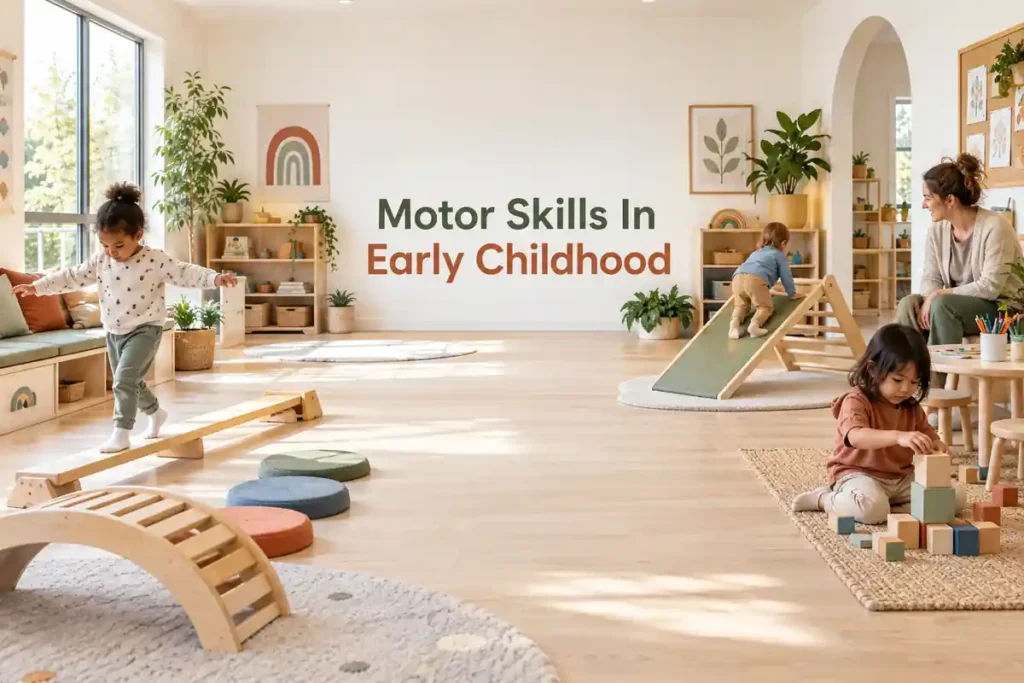
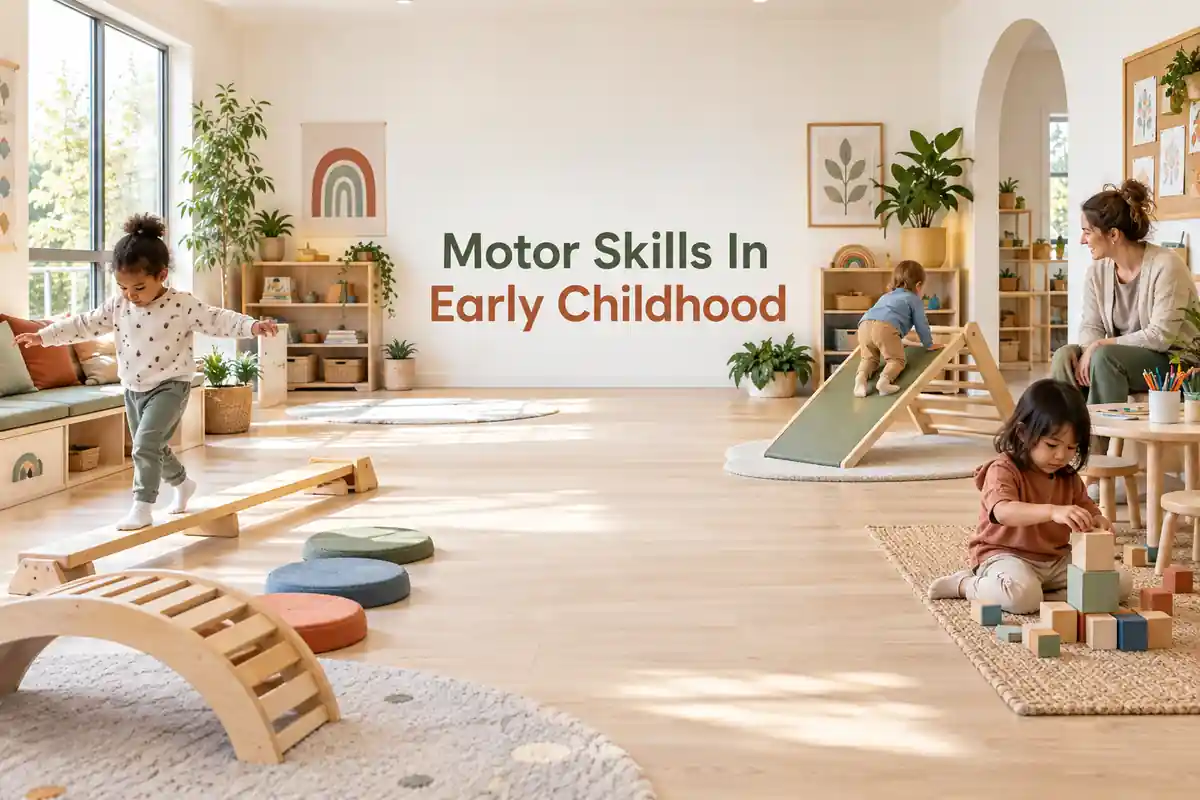
Motor skills in early childhood are the movements children use to control the body and the hands. Walking to the sink, climbing over a low step, carrying a basket, opening a box and drawing at a table all belong to motor development.
There are two main parts to understand. Gross motor skills use the large muscles for whole-body movement. Fine motor skills use the hands and fingers for careful work. You need both when you look at how children use a classroom.
This article gives you the full picture. For a closer look at each part, read gross motor skills in early childhood Dan fine motor skills in early childhood.
What Motor Skills Mean In Early Childhood
Motor development is not limited to an exercise or a planned activity. Children build control when they move through the room, handle materials, take care of personal tasks and join everyday routines.
Keterampilan Motorik Kasar
Gross motor skills use the large muscles in the legs, arms, back and body. Crawling, walking, running, jumping, climbing, pushing, pulling, throwing, catching and balancing all use this type of control.
You can see gross motor work when a child carries blocks to another area, steps over a low piece, pushes a safe cart or changes direction on the way outside. The child is learning how to judge space and control movement.
If you need the full discussion about movement routes, low challenges, supervision and equipment, continue with the gross motor skills article.
Keterampilan Motorik Halus
Fine motor skills use the hands and fingers with the eyes, arms and body. Grasping, turning, pinching, pouring, drawing, cutting, building, opening and fastening all use fine motor control.
You can see it when a child holds paper with one hand and draws with the other, fits a piece into a puzzle, uses a brush or opens a container. The task gives the hand a reason to work carefully.
For a closer look at tables, storage, reach and hand-work materials, read the fine motor skills article.
Both Skills Appear In The Same Routine
A child can carry a tray to a table, sit down, hold a bowl steady and pour water. That one routine uses walking, balance, reach, grip and hand control.
This is why you do not need to divide the classroom into a gross motor room and a fine motor room. You need to notice where the two kinds of movement meet and make that part of the day easy to repeat.
Why The Difference Matters
Gross and fine motor skills are connected, but they are not the same problem. Knowing the difference helps you choose a better response when a child or a room is struggling.
Whole-Body Control Comes First In Many Tasks
A child needs a steady body to sit, stand, reach and use both hands. Balance, shoulder control and the ability to stay in position can affect what happens at a table.
This does not mean that gross motor work must come before every fine motor activity. It means you should look at the whole working position instead of blaming the tool when the task feels difficult.
Hand Control Grows Through Real Use
Children learn more when the hand action has a clear purpose. Pouring, building, opening, fastening, mixing, drawing and putting materials away give the fingers different jobs to practise.
You can offer a useful challenge without turning it into a worksheet. The material, the work surface and the amount of help all change how the task feels.
One Label Does Not Describe Every Child
“Toddler” or “preschool” does not tell you everything about reach, body size, confidence or the amount of adult help a child needs. Use the age range as a starting point, then look at the children and the room in front of you.
You See Both In The Same Day
A good motor skills plan follows the daily routine. You are looking for repeated chances to move, handle, carry and take part, not one piece of equipment that has to do all the work.
During Transitions
Children walk between areas, carry personal items, move chairs, collect materials and line up for outdoor play. These moments can include useful movement when the route is clear and the objects are easy to manage.
You do not need to turn every transition into a lesson. Give children enough time to move safely and avoid making the route so narrow that everyone has to wait.
During Table Work
Building, drawing, cutting, sorting, pouring and practical tasks need a stable surface and materials that children can reach. A table that is too high, a shelf that is too far away or a crowded worktop can make a simple task harder.
Keep the choice manageable. Children should be able to see what they need, carry it to the work surface and return it without waiting for an adult each time.
During Practical Tasks
Washing, gardening, cooking, dressing play, tidying and caring for classroom materials bring both types of motor work together. Children may carry an item, hold it steady, use a tool and put it away.
These tasks are valuable because the movement has a purpose. You can see what is working and where the room is making the task harder than it needs to be.
Give Both Skills A Place In The Room
Your classroom does not need to look like a gym or a workshop. It needs a few areas that work together and can still be used for meals, rest, group time and storage.
Leave Space For Larger Movement
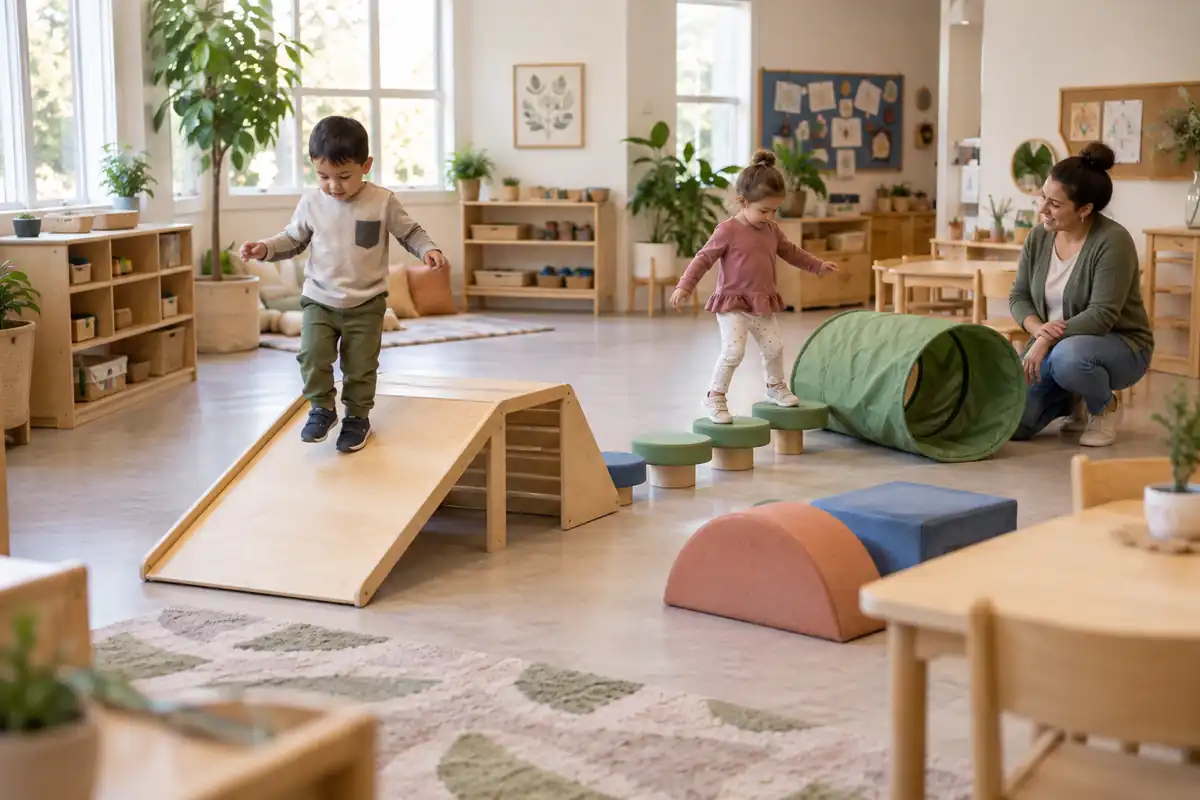
Protect an area where children can walk, crawl, step, carry and change direction. Low ramps, steps, tunnels or soft pieces may help, but choose them after you understand the space around them.
You should be able to see the area from the places where adults usually work. A large product that blocks the view or takes over the main route may create a new problem.
Make Hand Work Easy To Start
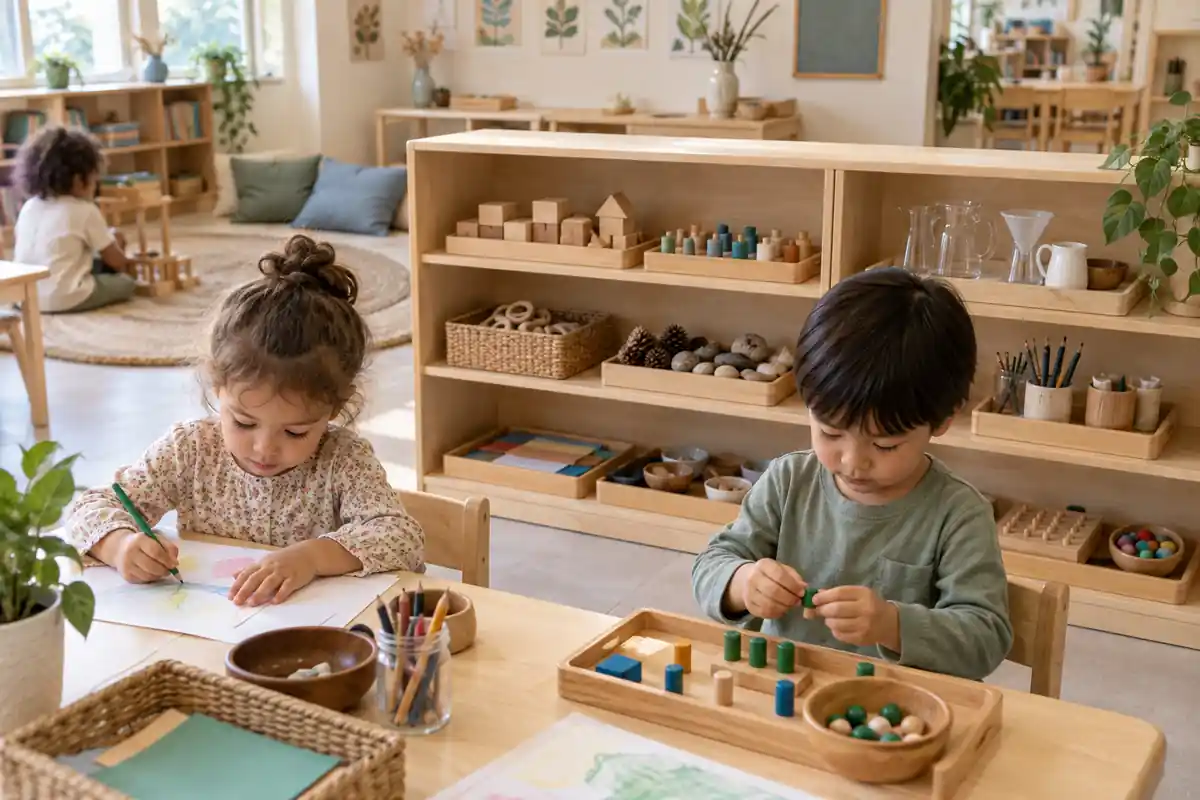
Give children a stable surface for building, drawing, pouring and sorting. Keep low storage, shallow trays and useful materials close to the work surface.
A table or shelf should fit the children who use it, not only carry a general age label. Check reach, body position, space for two hands and the cleaning routine.
Keep The Areas From Fighting Each Other
Children need space to approach an activity, wait, finish and leave. A table beside a doorway or a shelf beside a movement route can make both areas harder to use.
Use the position of furniture and storage to show where an activity starts and ends. You do not need high barriers that hide children from view.
Use Walls And Mirrors Carefully
Wall play materials and mirrors can add reaching, turning, matching and body awareness without taking much floor space. They can be useful when the room is small or when you want to add another way to use the same area.
Check the height, fixing, reflected view, cleaning access and adult sightline before installation. The wall still forms part of the room plan.
Plan The Environment Around The Group
The same classroom may serve more than one group or more than one part of the day. Room planning becomes clearer when you write down how the space is actually used.
Start With The Room Information
Prepare the room dimensions, a floor plan, clear photos, doors, windows, sinks, columns, fixed storage and the furniture you plan to keep. Add the age range, number of children and any split shifts.
These details help you decide whether the main need is open floor space, better access to materials, a different work surface, wall play or storage that children can use.
Look At More Than The Product Name
Check the exact dimensions, material, finish, cleaning method and fixing requirements. A product can look right in a catalogue and still be wrong for the room or the way children will use it.
If several parts need to fit together, ask for a sample or assembly drawing. Check that the parts line up and that the approved finish and dimensions match what arrives.
Review What Children Actually Use
Watch what children choose, where a queue forms and when an adult has to step in. Notice what stays untouched and what takes too long to reset or clean.
Change one part of the setup and watch again. A small test gives you a better basis for the next decision than adding several new products at once.
Sources
These sources support the main points about motor development, physical activity, learning environments and supervision.
- World Health Organization guidelines on physical activity for children under five
- Research on motor competence and the preschool environment
- Department for Education guidance on gross motor skills
- Department for Education guidance on fine motor skills
- Head Start guidance on responsive learning environments
- ACECQA active supervision guidance
Tanya Jawab Umum
- Is gross motor development more important than fine motor development? No. They involve different actions, and children use both across the day. Your room should give each one a suitable place.
- Can one activity use both types of motor skills? Yes. Carrying a tray, building with large pieces, gardening or preparing food can involve whole-body movement and hand control in the same task.
- Does every classroom need a separate motor skills area? No. You can use part of an existing route, a work table, low storage or a wall area when the placement is clear and easy to supervise.
- What if you are worried about one child’s development? Use the room to offer suitable chances to take part, but ask a qualified professional about an individual concern. A classroom layout cannot replace an assessment.
Kesimpulan
Motor skills cover the way children move, work with their hands and take part in the classroom. Gross motor and fine motor skills are different, but both belong in the same daily plan.
Start with the children, the routine and the room you have. Then choose the furniture, materials and movement options that make those actions easier to repeat. If you need to bring the layout and product choices together, Xiair Word can help you review them as one practical plan.