
 Portuguese
  English
  Arabic
  French
  Italian
  German
  Spanish (Spain)
  Thai
Thai  Japanese
  Turkish
  Indonesian
  Vietnamese
  Polish
  Malay
Malay  Swedish
  Spanish (Mexico)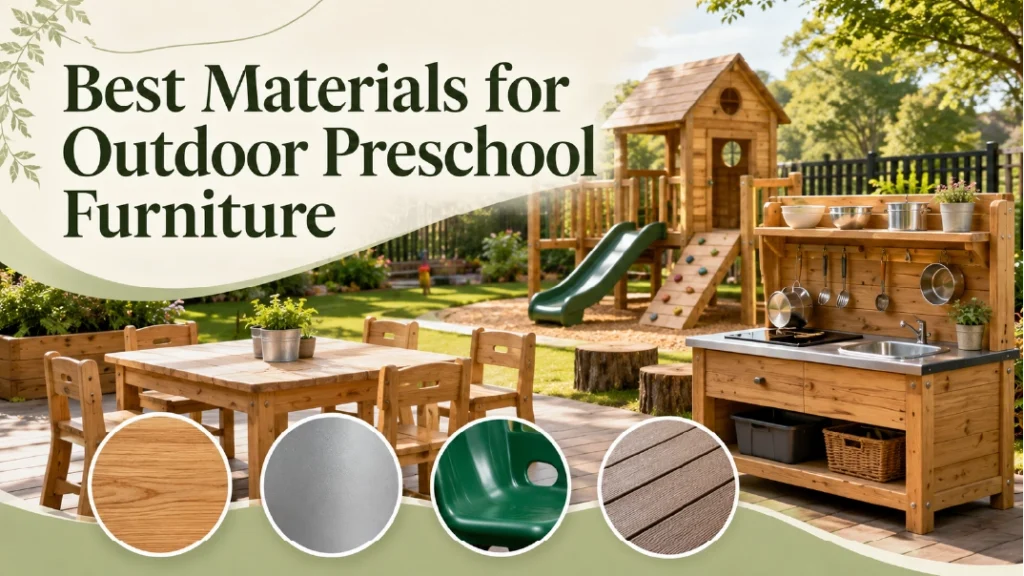
Choosing the best materials for outdoor preschool furniture is not only about appearance. Outdoor furniture for young children must handle sunlight, rain, moisture, temperature changes, frequent cleaning, and daily active use. A material that works well indoors may crack, rust, fade, swell, or become unsafe when placed outdoors for a long time.
For preschools, daycare, childcare centers, and early learning environments, outdoor furniture materials should be evaluated from several angles: durability, weather resistance, child safety, maintenance needs, long-term cost, and outdoor climate conditions.
There is no single material that is best for every project. Wood, metal, plastic, and composite materials all have their own advantages. The right choice depends on your budget, local weather, product structure, design style, and how often the furniture will be used by children.
Why Material Choice Matters for Preschool Outdoor Furniture
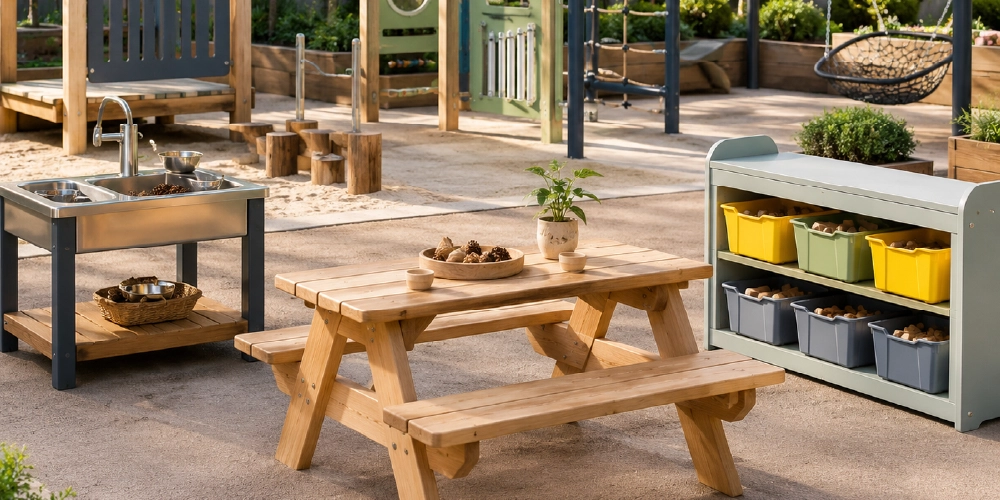
Outdoor preschool furniture faces much harsher conditions than indoor classroom furniture. Indoor furniture is mainly affected by daily use, cleaning, and normal wear. Outdoor furniture must also deal with rain, sunlight, humidity, insects, temperature changes, and long-term exposure.
This is why material choice directly affects the safety, durability, maintenance cost, appearance, and service life of outdoor preschool furniture.
A poor material choice may lead to problems such as splintered wood, swollen panels, rusted metal, faded plastic, unstable structures, or rough surfaces that children should not touch. In a preschool environment, these are not only quality issues. They can also become safety concerns.
Good outdoor furniture materials should be able to:
- resist moisture, sunlight, and weather exposure
- stay stable under frequent daily use
- keep smooth surfaces and child-safe edges
- be easy to clean and maintain
- match the local climate and outdoor exposure level
- provide long-term value instead of only a low initial price
For preschool buyers, the best material is not always the most expensive one. It is the material that matches the product structure, children’s age group, outdoor environment, and maintenance plan.
Common Materials Used in Outdoor Preschool Furniture
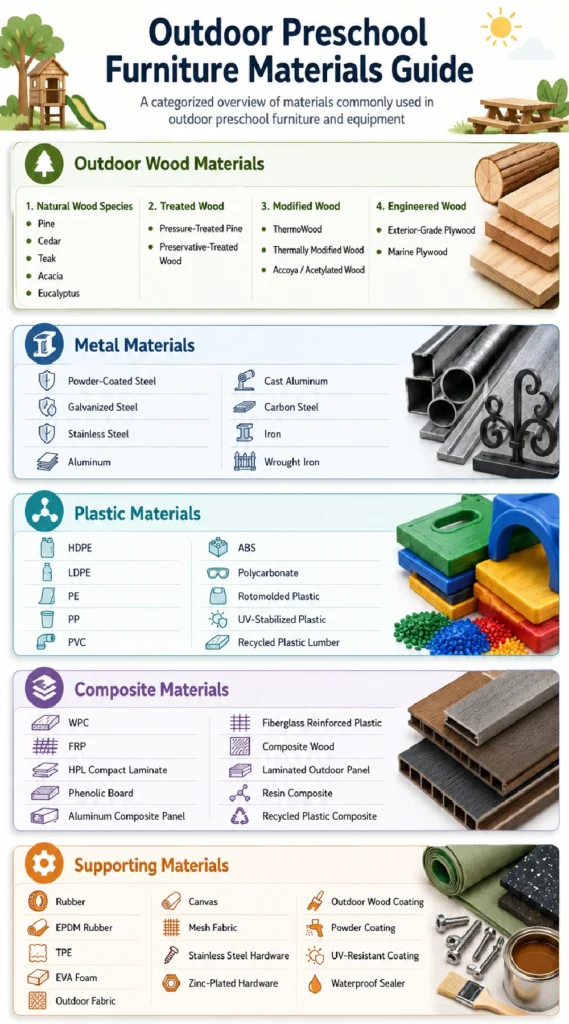
Most outdoor preschool furniture and equipment use four main material categories:
- Wood Materials
- Metal Materials
- Plastic Materials
- Composite Materials
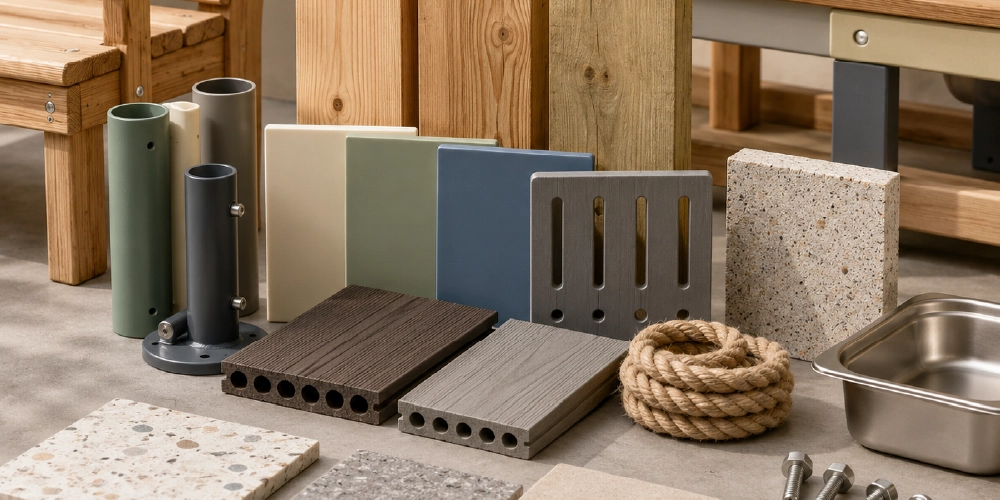
Some outdoor products use only one material, while many better-designed products use mixed materials. For example, a piece of outdoor furniture may use wood panels with a metal frame, HDPE panels with stainless steel hardware, or composite boards with aluminum support.
Understanding these material categories helps buyers compare options more clearly.
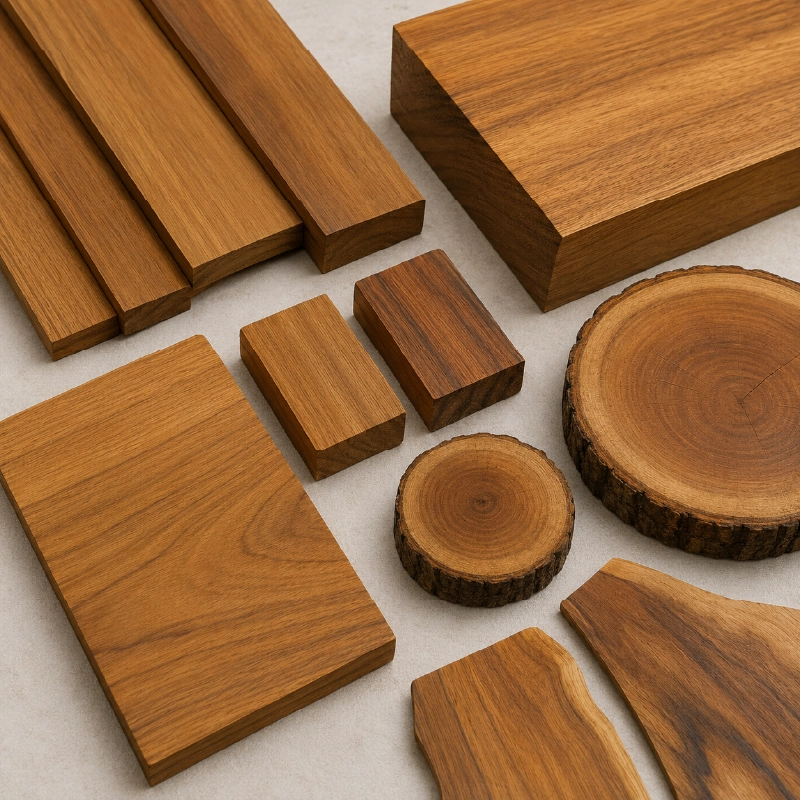
Wood Materials
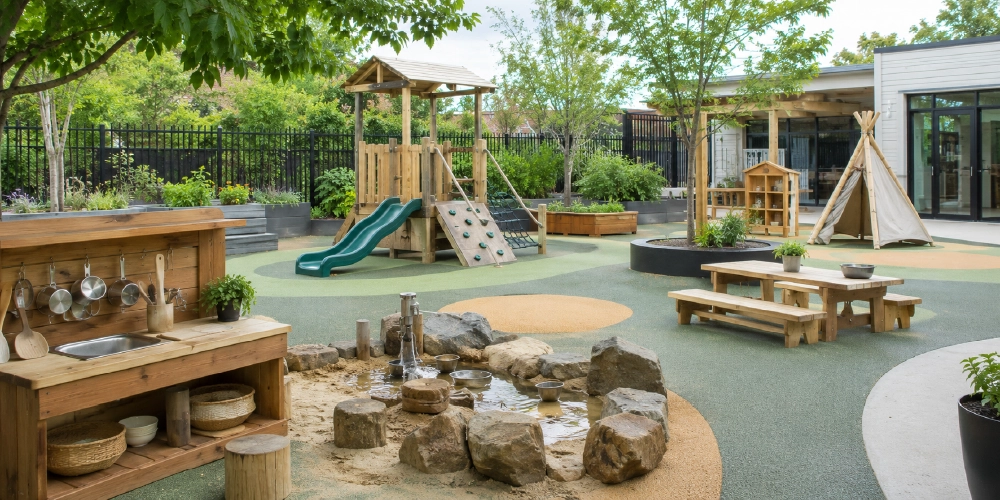
Wood is one of the most popular materials for outdoor preschool furniture because it creates a natural, warm, and child-friendly look. It works well in outdoor learning spaces, nature-inspired play areas, mud kitchen areas, garden corners, and calm outdoor environments.
Common uses for outdoor tables, benches, mud kitchens, playhouses, garden furniture, outdoor storage, and natural-style play equipment.
However, outdoor wood is different from indoor wood. For outdoor preschool furniture, buyers should not only ask what wood is used. They should also ask whether the wood is naturally durable, pressure-treated, thermally modified, properly dried, sealed, coated, and maintained.
Outdoor wood selection should consider:
- wood species
- natural decay resistance
- preservative treatment
- surface coating
- edge sealing
- moisture exposure
- maintenance requirements
Pressure-Treated Pine
Pressure-treated pine is one of the most practical wood options for outdoor preschool furniture. Pine itself is cost-effective and easy to process, but untreated pine is not ideal for long-term outdoor use. It can absorb moisture, decay, crack, or become damaged by insects if it is not properly protected.
Pressure-treated pine means the pine has been treated with preservatives under pressure to improve resistance to decay, moisture, fungi, and insects. This makes it more suitable for outdoor preschool furniture than ordinary untreated pine.
In business communication, you may also see terms such as treated pine or preservative-treated pine. These terms are related, but pressure-treated pine is more specific because it describes the treatment method. If the wood has not gone through pressure treatment, it is safer to use the broader term treated pine.
Finnish pine is still pine. Its outdoor performance depends on whether it has been properly dried, treated, coated, or thermally modified. The origin of the wood alone does not make it fully suitable for outdoor preschool furniture. Finnish pine or Nordic pine is often used in furniture and outdoor wood products because of its clean appearance, fine texture, and stable quality. In many markets, “Finnish wood” is a common commercial name, but it should not be misunderstood as a treatment method.
Cedar
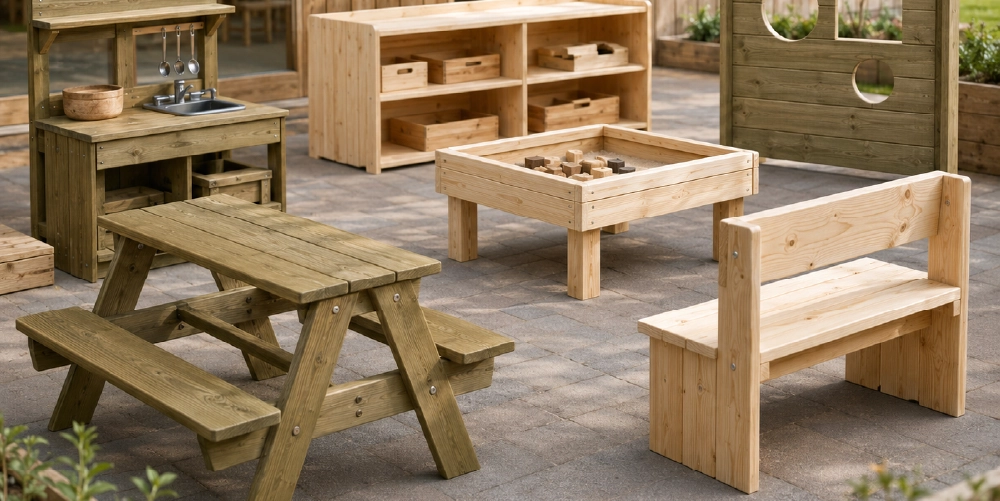
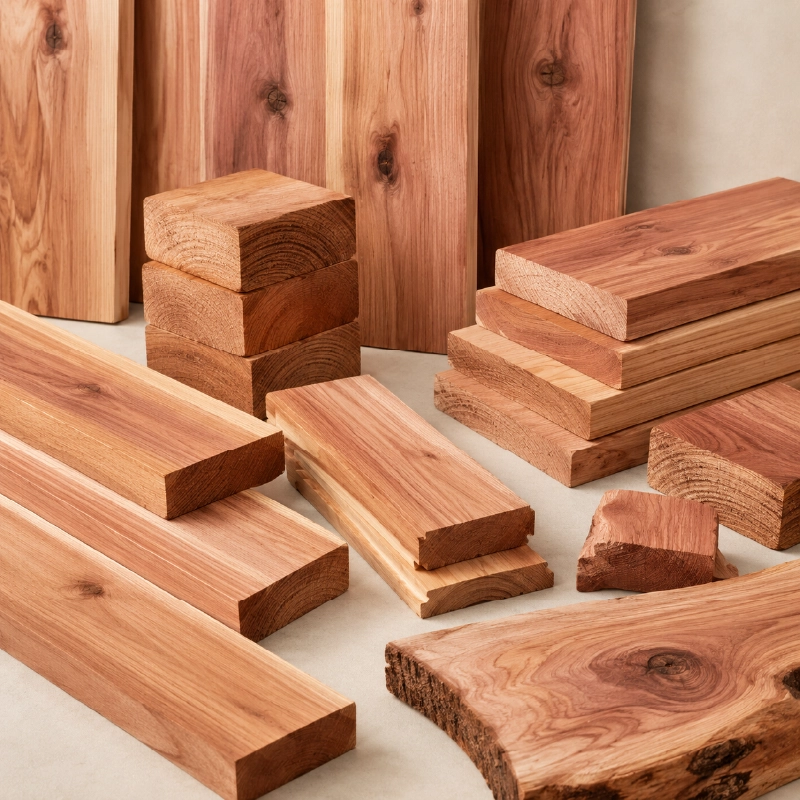
Cedar is known for its natural resistance to decay and insects. It has a pleasant natural appearance and is often used in outdoor furniture, garden structures, and child-friendly outdoor spaces.
Compared with untreated pine, cedar usually performs better outdoors because of its natural durability. However, it still needs proper surface finishing and maintenance, especially in preschool environments where children touch and use the furniture frequently.
Acacia
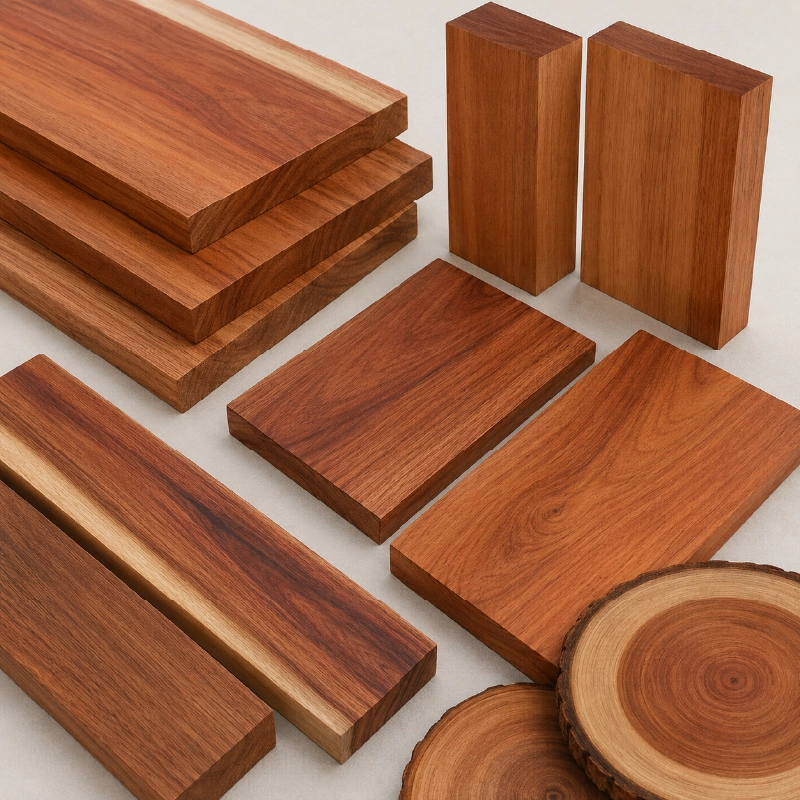
Acacia is a dense hardwood commonly used in outdoor furniture. It offers a good balance of strength, natural appearance, and cost. Compared with some premium hardwoods, acacia is usually more affordable while still providing better durability than many softwoods.
Acacia is a good choice when buyers want a natural wood look with better strength. However, it should still be protected with outdoor oil, stain, coating, or sealer. Without maintenance, acacia may fade, crack, or lose its original appearance over time.
Eucalyptus
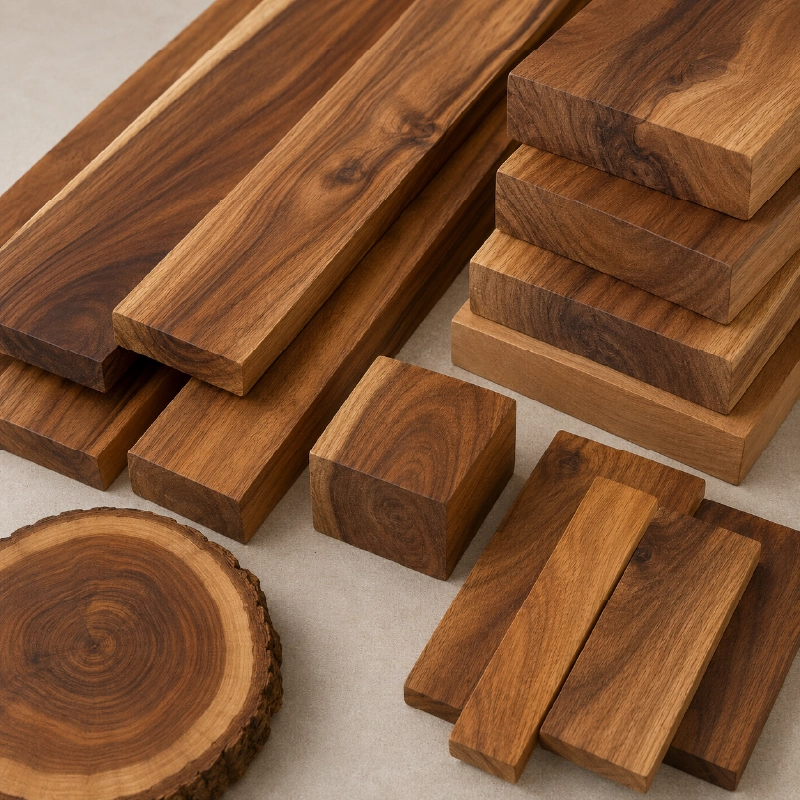
Eucalyptus is another hardwood option used in outdoor furniture. It is often more affordable than teak and offers a natural look suitable for outdoor learning spaces.
Its performance depends heavily on drying, finishing, and maintenance. Properly processed eucalyptus can work well outdoors, but poor-quality or poorly finished eucalyptus may crack, warp, or absorb moisture.
For preschool outdoor furniture, eucalyptus should be selected carefully, especially if the furniture will be placed in humid, rainy, or high-use areas.
Teak
Teak is a premium outdoor hardwood known for its strong weather resistance and rich natural appearance. It contains natural oils that help it perform well outdoors, making it one of the most recognized materials for high-end outdoor furniture.
However, teak is usually much more expensive than pine, acacia, or eucalyptus. For many preschool projects, it may not be necessary unless the project requires a premium appearance and a higher material budget.
Exterior-Grade Plywood
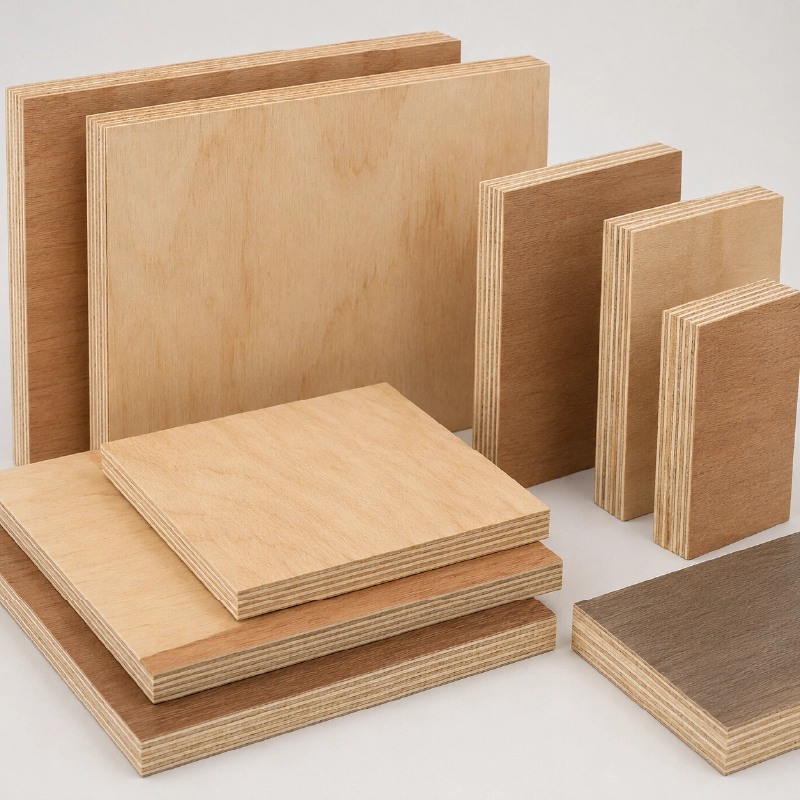
For outdoor use, plywood should have suitable adhesive, weather-resistant surface protection, and properly sealed edges. Edge sealing is especially important because water can easily enter through exposed plywood edges, screw holes, and cut sections.
Exterior-grade plywood is useful for certain panel structures, but it should not be treated as the same as solid wood. Its outdoor performance depends on board quality, glue, coating, edge sealing, and product design.
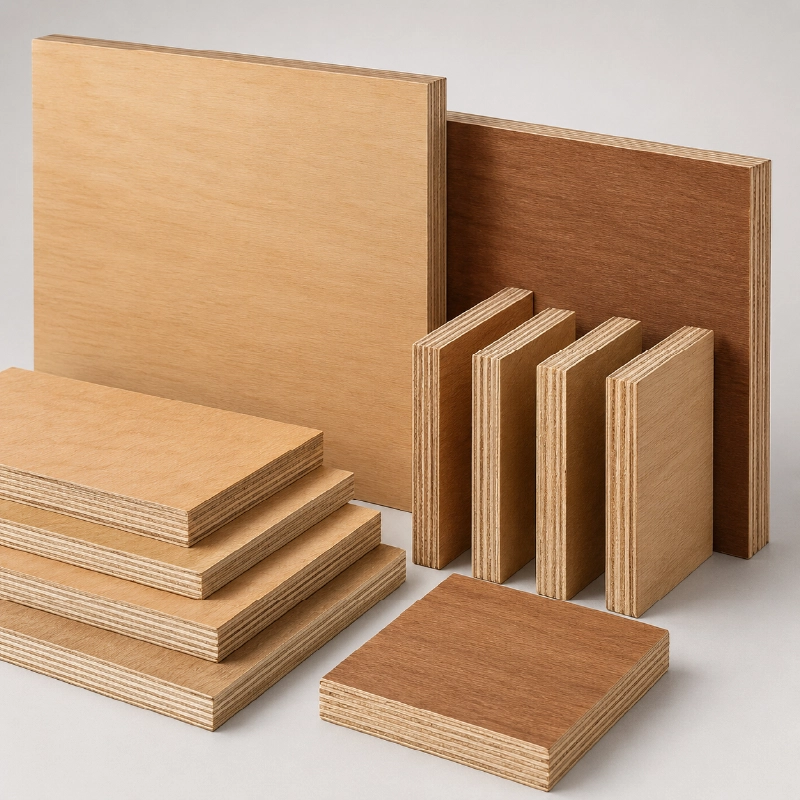
Marine Plywood
Marine plywood offers better moisture resistance than standard plywood and is often used in higher-moisture applications. It can be a stronger option for projects where water exposure is a concern.
However, marine plywood is usually more expensive and may not be necessary for every outdoor preschool furniture project. Even marine plywood still needs proper sealing, coating, and edge protection when used in children’s outdoor furniture.
Metal Materials
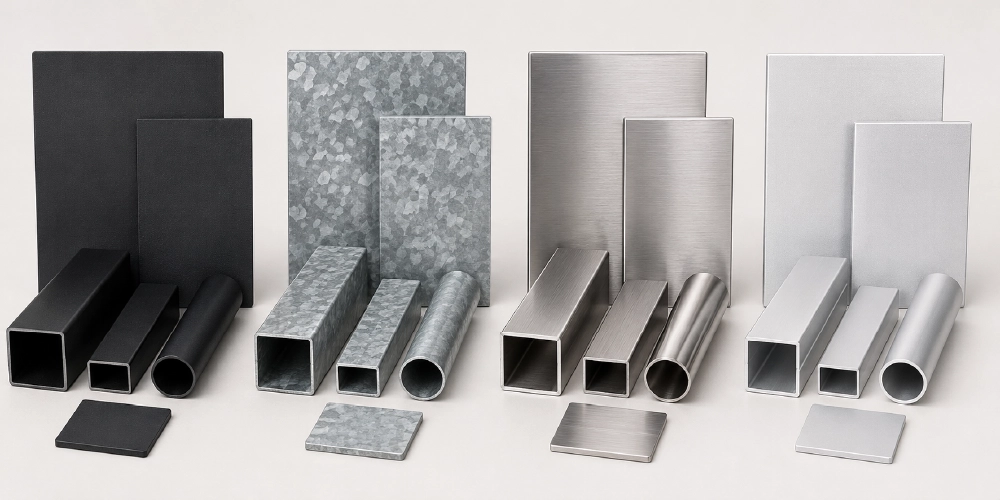
Metal is commonly used in outdoor preschool furniture and equipment because it provides strong structural support. It is often used for frames, connectors, support legs, climbing structures, and other parts that need stability and strength.
Common uses for furniture frames, climbing structures, swing frames, support legs, connectors, brackets, and outdoor play equipment structures.
The main concern with metal is not strength, but outdoor protection. If metal is not properly treated, it may rust, become hot under direct sunlight, or create sharp edges if damaged. For preschool use, metal parts should be rounded, smooth, stable, and protected with suitable finishing.
Aço com revestimento em pó
Powder-coated steel is widely used in outdoor furniture because it combines strength with surface protection. The powder coating creates a protective layer that helps reduce rust and improves appearance.
For preschool outdoor use, powder-coated steel is suitable for frames, legs, and structural support. If the coating is scratched or damaged, rust may develop over time. Buyers should check the coating quality, surface smoothness, weld quality, and whether the coating is suitable for outdoor exposure.
Galvanized Steel
Galvanized steel is steel coated with a layer of zinc to improve corrosion resistance. It is often used in outdoor structures and equipment where rust protection is important.
It can be a strong option for outdoor preschool equipment, especially for structural parts. However, you should consider whether the material will be exposed to heavy moisture or coastal air.
Aço inoxidável
Stainless steel offers strong corrosion resistance and is often used for screws, bolts, hinges, brackets, and other hardware. It is especially useful in humid, rainy, or coastal environments.
In preschool outdoor furniture, stainless steel is often not the main material, but it‘s important. Low-quality hardware can rust quickly, even if the main furniture material is good.
For daycare playground, stainless steel is often worth considering, especially for products exposed to water or frequent cleaning.
Aluminum
Aluminum is lightweight, naturally corrosion-resistant, and suitable for outdoor furniture frames. It does not rust like ordinary steel, which makes it useful in outdoor environments.
Aluminum is easier to move than steel and can be a good choice for furniture that needs a lighter structure. However, it may not be as strong as steel for heavy-duty structures unless the design and thickness are carefully planned.
Plastic Materials
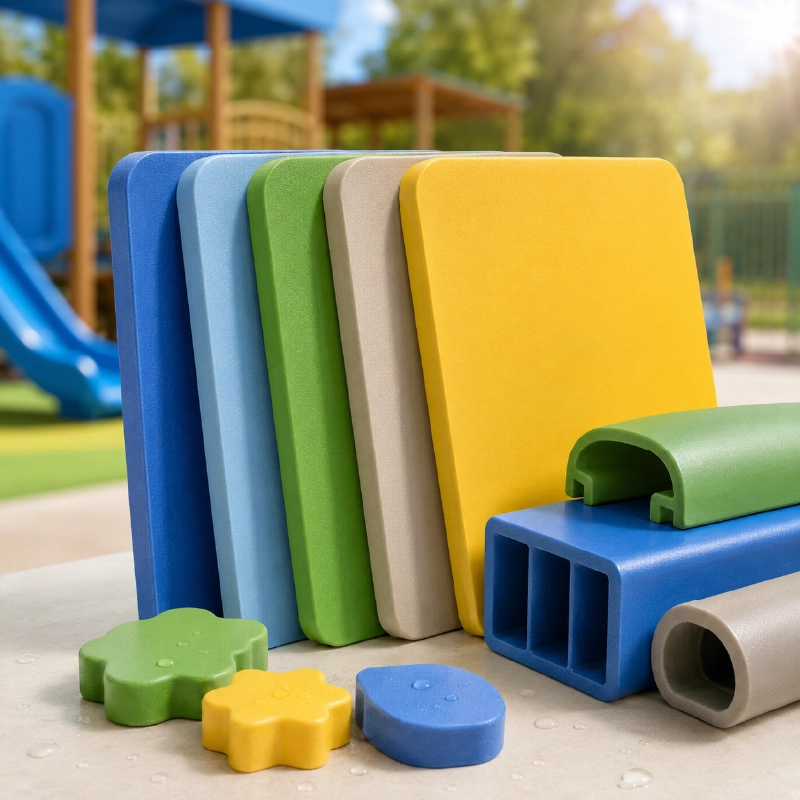
Plastic materials are widely used outdoors because they are lightweight, waterproof, easy to clean, and available in many colors. They are often used for chairs, tables, play panels, storage units, and wet-area furniture.
Common uses for outdoor chairs, activity tables, play panels, storage bins, sand and water play parts, movable furniture, and wet-area equipment.
However, not all plastic is the same. Low-quality plastic may fade, crack, become brittle, or lose strength under sunlight. For outdoor use, should pay attention to material thickness, UV resistance, structural strength, and whether the plastic is suitable for long-term outdoor exposure.
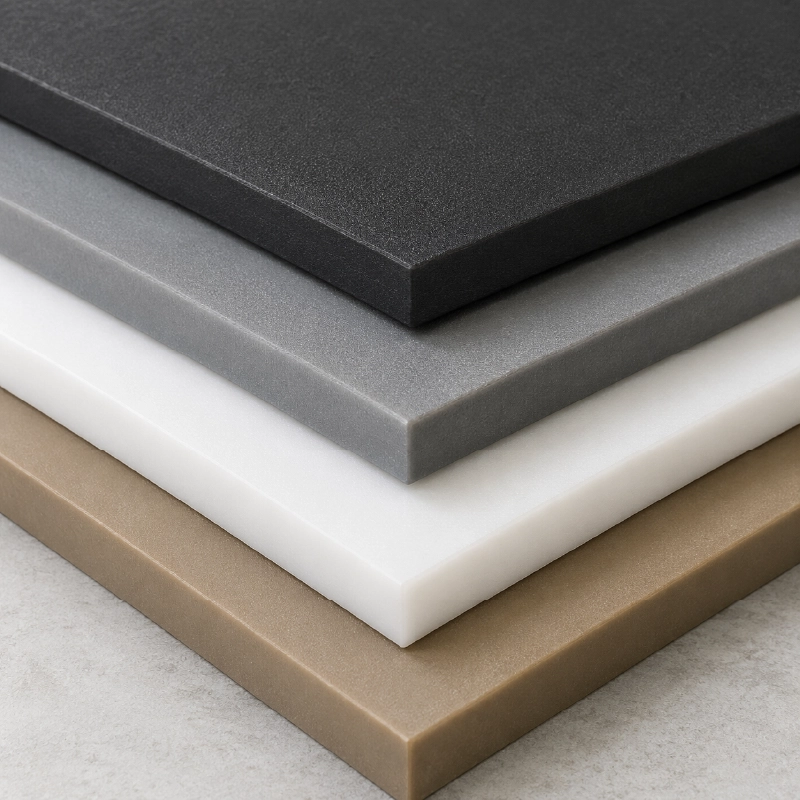
PEAD
HDPE is one of the most suitable plastic materials for outdoor. It has strong water resistance, good impact resistance, and low maintenance requirements. It is often used in outdoor furniture, playground panels, wet-area products, and high-use children’s equipment.
Compared with ordinary plastic, HDPE is more durable and better suited for outdoor. It does not absorb water like wood and does not rust like metal.
For preschool use, HDPE is a choice for projects that need easy cleaning, bright colors, and long-term outdoor performance.
PE
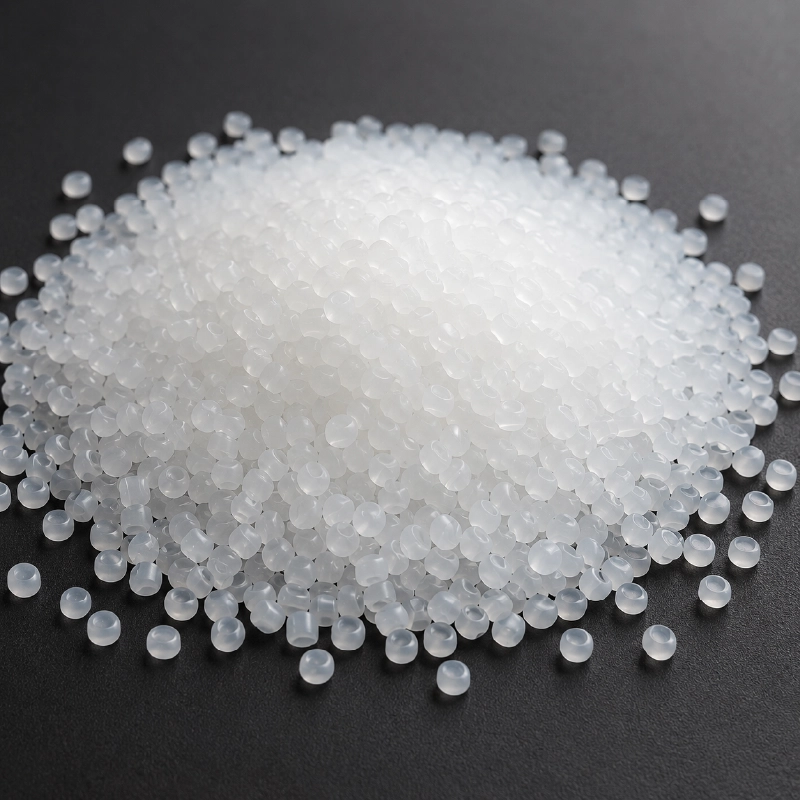
PE, or polyethylene, is a common plastic used in many outdoor products. HDPE and LDPE are both types of polyethylene, but their performance is different.
For outdoor, PE can be useful, but you should check density, thickness, UV resistance, and product structure. Generic PE without outdoor-grade additives may not perform well under sunlight.
PP
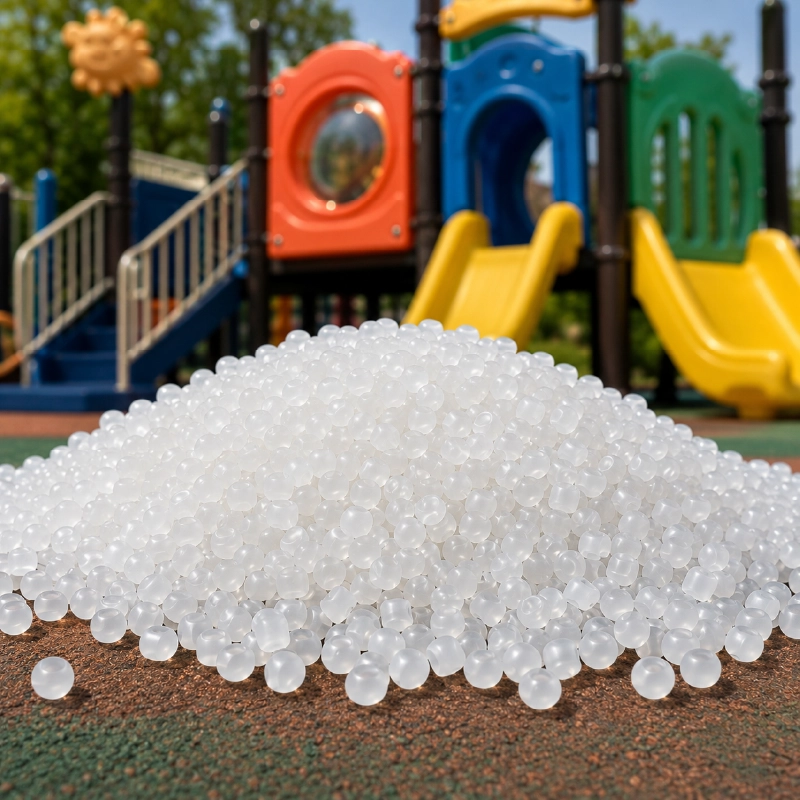
PP, or polypropylene, is lightweight and cost-effective. It is often used for plastic chairs, tables, bins, and small outdoor furniture parts.
PP can be a practical material for budget-friendly outdoor products, but it should be UV-stabilized if used outdoors. Without UV protection, PP may become brittle or fade after long exposure to sunlight.
PVC
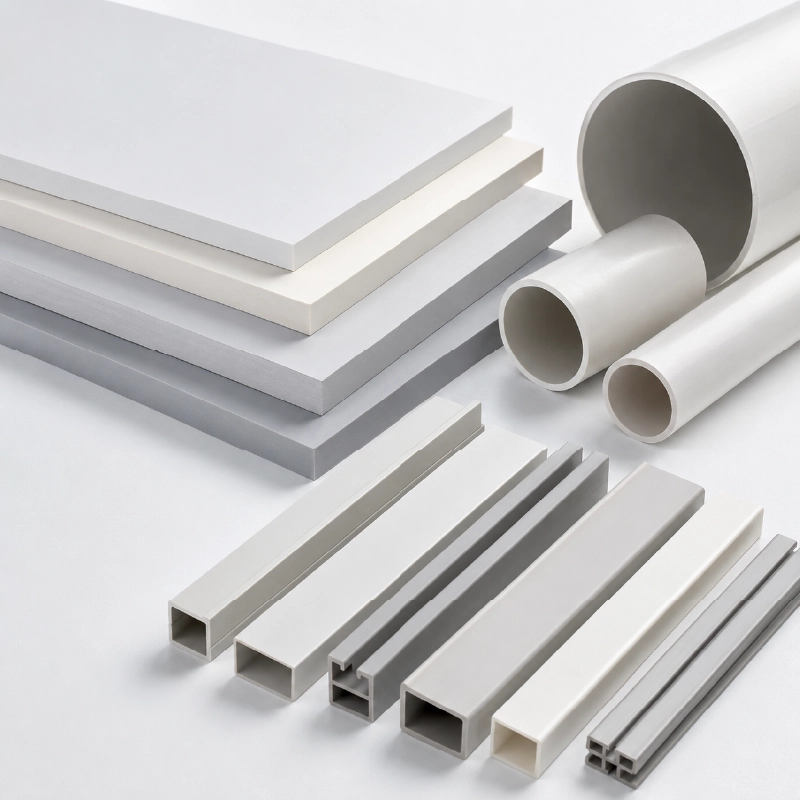
PVC is waterproof and can be used in some outdoor furniture parts, panels, or coverings. However, for preschool furniture, buyers should pay attention to material safety, formulation, and applicable standards.
PVC may be suitable for certain components, but it is not always the first choice for main furniture structures in early childhood environments.
UV-Stabilized Plastic
UV-stabilized plastic is designed to resist damage from sunlight. Because outdoor furniture is often exposed to UV rays for long time.
When choosing plastic outdoor furniture, buyers should not only ask what plastic is used. They should also ask whether it is UV-stabilized. This can make a major difference in color stability, surface quality.
Rotomolded Plastic
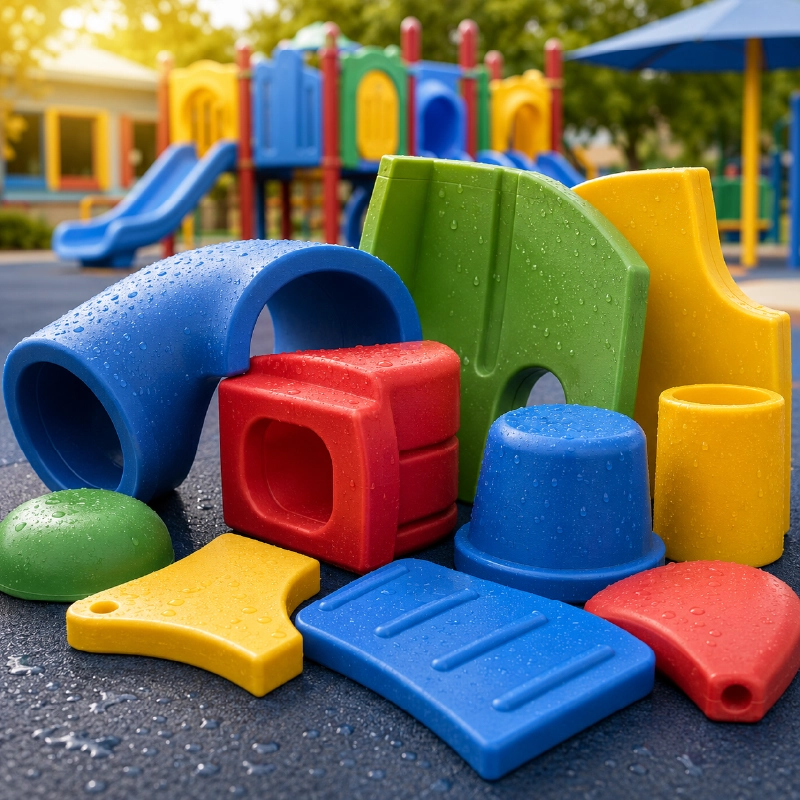
Rotomolded plastic is made through a molding process that creates thick, hollow, durable shapes. It is often used for outdoor play equipment, storage, and children’s activity products.
This material form can be strong and impact-resistant when properly designed. It is useful for outdoor preschool environments where products need to be durable, easy to clean, and safe for frequent use.
Composite Materials
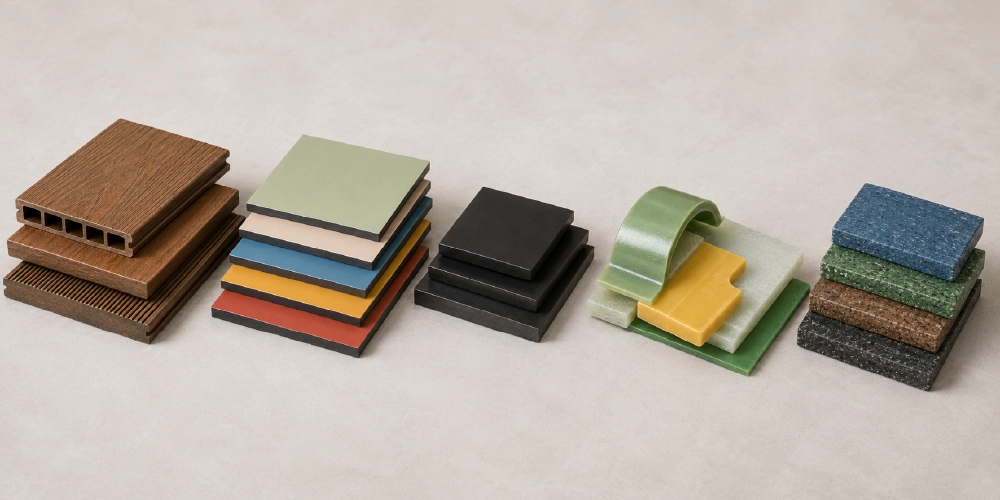
Composite materials are made by combining different materials to improve durability, stability, or weather resistance. In outdoor furniture, composite materials are often chosen because they can offer lower maintenance than natural wood and better outdoor performance than some traditional materials.
Common uses for tabletops, benches, outdoor cabinets, play panels, platforms, fence panels, storage units, and low-maintenance outdoor furniture surfaces.
Composite materials can be useful for benches, panels, platforms, cabinets, play equipment surfaces, and outdoor furniture components. However, quality can vary greatly. You should check density, surface finish, thickness, UV resistance, and whether the material is suitable for outdoor use.
WPC
WPC, or wood-plastic composite, combines wood fiber or wood powder with plastic. It offers a wood-like appearance with better moisture resistance and lower maintenance than many natural wood materials.
WPC is often used for outdoor panels, benches, decking-style surfaces, and low-maintenance outdoor furniture. It can be a good choice when buyers want a natural look but do not want the same level of maintenance required by solid wood.
HPL Compact Laminate
HPL compact laminate is a dense, durable panel material with strong surface resistance. It is often used in high-use furniture, wet areas, and outdoor or semi-outdoor environments.HPL
For outdoor preschool furniture, HPL can be useful for tabletops, panels, partitions, and furniture surfaces that need to resist wear and cleaning. It has a clean appearance and is easier to maintain than many natural wood surfaces. You should confirm whether the HPL grade is suitable for outdoor exposure.
Phenolic Board
Phenolic board is a durable panel material known for moisture resistance, wear resistance, and structural stability. It can be used in outdoor furniture panels, equipment surfaces, and high-use environments.
When the project needs a strong panel material with better moisture resistance than ordinary indoor boards.
FRP
FRP, or fiber-reinforced plastic, is a composite material made with plastic reinforced by fibers. It offers strength, corrosion resistance, and lightweight performance.
In preschool outdoor equipment, FRP may be used for certain panels, covers, molded parts, or structural components. It is especially useful when corrosion resistance and strength are important.
FRP surfaces should be smooth, safe to touch, and properly finished to avoid sharp fibers or rough edges.
Recycled Plastic Composite
Recycled plastic composite is often used as a low-maintenance outdoor material. It can be made into boards or lumber-like profiles for benches, outdoor seating, tables, and other exterior products.
This material is water-resistant, easy to clean, and less likely to rot than natural wood. It can be a good option for buyers who want durable outdoor furniture with reduced maintenance.
Supporting Materials and Finishing Details
Besides the main materials, outdoor preschool furniture also depends on supporting materials and small finishing details. These parts may not look obvious at first, but they affect safety, comfort, weather resistance, and long-term use.
Rubber and Soft Protection Materials
Rubber materials are often used for anti-slip feet, protective pads, edge protection, wheel parts, and shock-absorbing details. They are usually not the main structure of outdoor preschool furniture, but they help make the product safer and more comfortable for children to use.
Common options include rubber, EPDM rubber, TPE, and EVA foam. EPDM rubber is often used for outdoor areas because it handles weather better. TPE and EVA foam are commonly used where a softer touch, cushioning, or child-friendly protection is needed. For preschool use, these materials should be durable, easy to clean, firmly attached, and suitable for outdoor conditions.
Outdoor Fabric Materials
Outdoor fabric is often used for shade covers, canopies, tents, cushions, soft seating, and some outdoor play structures. These materials need to handle sunlight, moisture, dirt, and daily use.
Common options include outdoor fabric, canvas, and mesh fabric. Canvas gives a stronger and more natural fabric look, while mesh fabric is useful for ventilation and lightweight structures. For outdoor preschool furniture, fabric materials should be UV-resistant, water-resistant, easy to clean, and quick to dry.
Hardware and Connectors
Hardware may be small, but it has a big effect on outdoor furniture durability. Low-quality screws, hinges, bolts, or brackets may rust, loosen, or weaken the structure over time.
Common hardware options include stainless steel hardware and zinc-plated hardware. Stainless steel is usually better for humid, rainy, or coastal areas because it resists corrosion better. Zinc-plated hardware can also be used for some outdoor products, but buyers should check whether it is suitable for the actual outdoor environment.
For preschool furniture, hardware should be firmly installed, smoothly finished, and protected from direct child contact when needed.
Outdoor Coatings and Sealers
Coatings and sealers help protect the main materials from sunlight, moisture, rust, fading, and surface damage. They are especially important for wood and metal outdoor furniture.
Common finishing options include outdoor wood coating, powder coating, UV-resistant coating, and waterproof sealer. Outdoor wood coating and waterproof sealer help reduce water absorption, cracking, and surface wear. Powder coating is often used on metal frames to improve rust resistance and appearance. UV-resistant coating helps reduce fading and material aging caused by sunlight.
For outdoor preschool furniture, coating quality should be checked carefully because it affects both safety and service life. A good coating should be smooth, child-safe, weather-resistant, and suitable for frequent outdoor use.
Preschool Outdoor Furniture Materials Comparison Chart
This comparison chart can help buyers understand the main differences between common outdoor preschool furniture materials.
| Tipo de material | Main Advantages | Limitações | Maintenance Level | Melhor para |
|---|---|---|---|---|
| Wood Materials | Natural look, warm texture, suitable for nature-inspired spaces | Needs treatment, coating, sealing, and regular maintenance | Medium | Outdoor tables, benches, mud kitchens, playhouses, garden furniture |
| Metal Materials | Strong structure, stable support, long service life if treated well | May rust if coating is damaged; can become hot in direct sun | Medium | Frames, support structures, climbing equipment, connectors |
| Plastic Materials | Waterproof, lightweight, easy to clean, colorful | Quality varies; low-grade plastic may fade or crack | Low to Medium | Chairs, tables, play panels, storage, wet-area furniture |
| Composite Materials | Moisture-resistant, low maintenance, stable panel performance | Quality varies; some options cost more than basic materials | Low to Medium | Benches, panels, platforms, outdoor cabinets, low-maintenance furniture |
A good outdoor preschool furniture project may combine several materials instead of using only one. For example, wood may create a natural appearance, metal may provide structural strength, HDPE may be used in wet areas, and composite panels may reduce maintenance in high-use outdoor spaces.
Which Material Is Best for Outdoor Preschool Use?
There is no single best material for all outdoor preschool furniture. The best choice depends on what the buyer values most: natural appearance, low maintenance, strength, weather resistance, budget, or long-term durability.
Natural look
Treated wood, cedar, acacia, eucalyptus, and teak are good options. These materials create a warmer and more natural outdoor environment than plastic or metal.
However, wood requires more attention to coating, sealing, and maintenance. It is best for who value appearance and are willing to maintain the furniture properly.
Low maintenance
HDPE, WPC, HPL compact laminate, phenolic board, and recycled plastic composite are better options. These materials are often easier to clean and more resistant to moisture than natural wood.
They are suitable for busy preschool environments where staff do not have much time for regular wood maintenance.
Strong structural support
Powder-coated steel, galvanized steel, stainless steel, and aluminum are good choices. Metal works well for frames, support structures, and equipment parts that need strength and stability.
For early learning use, metal should always be protected against rust and designed with safe edges, smooth surfaces, and stable connections.
Wet or humid
HDPE, WPC, aluminum, stainless steel hardware, galvanized steel, and properly treated wood are better choices. These materials can handle moisture better than untreated wood or indoor-grade panels.
In rainy or humid climates, you should pay special attention to drainage, sealing, hardware, and rust protection.
Limited budget
Pressure-treated pine, PP, PE, and mixed-material designs may be practical options. A good budget-friendly outdoor furniture design does not always mean using the cheapest material. It means choosing materials that are affordable but still suitable for outdoor use.
For example, pressure-treated pine with proper coating may be more practical than untreated wood. A metal frame with a suitable panel material may also provide better durability than a weak single-material structure.
Premium Project
Teak, high-grade HDPE, aluminum, stainless steel hardware, HPL compact laminate, and premium modified wood may be considered. These materials usually cost more, but they can reduce long-term maintenance and replacement problems when used correctly.
For premium preschool projects, the focus should be on long-term value, not only the purchase price.
How Can Buyers Choose the Right Material?
Choosing outdoor furniture materials should not be based on material name alone. Buyers need to consider where the furniture will be used, how often children will use it, and how much maintenance the center can manage.
- Check the local climate: A dry climate, humid climate, coastal climate, and rainy climate may require different materials and finishes.
- Check whether the furniture is fully exposed or covered: Furniture placed under shade, a roof, or a covered outdoor area will face less direct rain and sunlight than furniture placed in an open playground. Fully exposed outdoor furniture needs stronger weather resistance.
- Check the product structure: Different materials are better for different parts of furniture. Buyers should not only ask, “What material is this?” They should also ask, “Is this material suitable for this part of the product?”
- Check surface safety: Buyers should check whether the surface is smooth, whether the edges are rounded, whether there are splinters, sharp corners, rough welds, exposed screws, or unstable joints.
- Check coating and sealing: Wood needs coating, oiling, sealing, or pressure treatment. Metal needs powder coating, galvanizing, stainless hardware, or other anti-rust protection. Plastic needs UV resistance. Plywood and panel materials need edge sealing.
- Check maintenance ability: Wood may need regular oiling, repainting, or surface checks. Metal may need inspection for scratches and rust. Plastic and composite materials may need less maintenance, but they still need cleaning and quality checks.
FAQs About Outdoor Preschool Furniture Materials
1. What type of wood do you use for outdoor preschool furniture?
We select wood based on the product design, outdoor exposure level, and customer requirements. Common options include pressure-treated pine, Finnish pine, cedar, acacia, eucalyptus, exterior-grade plywood, and marine plywood. For outdoor use, we do not only consider the wood species. We also check treatment, coating, sealing, surface smoothness, and long-term maintenance needs.
2. Is the wood treated for outdoor use?
Yes, outdoor wood can be treated according to the product and project requirements. Treatment may include pressure treatment, preservative treatment, outdoor coating, wood oil, sealing, or edge protection. For preschool furniture, we also pay attention to smooth sanding, rounded corners, and child-safe surface finishing.
3. Can the furniture stay outside in heavy rain?
Outdoor furniture can be made with weather-resistant materials and finishes, but the final performance depends on the material, structure, drainage, coating, and maintenance. For areas with frequent rain, we usually recommend treated wood, HDPE, WPC, aluminum, stainless steel hardware, or well-protected metal structures. Proper drainage and regular inspection are also important for long-term use.
4. How long can outdoor preschool furniture last?
The service life depends on the material, local climate, usage frequency, maintenance, and installation environment. For example, furniture used under shade will usually last longer than furniture exposed to constant rain and direct sun. Before quoting, we can recommend suitable materials based on your climate and expected use period.
5. Can your outdoor furniture handle extreme weather, such as Canadian winters?
For cold regions with large temperature differences, material selection is very important. We can suggest suitable options for freezing winters, hot summers, snow, rain, and seasonal expansion or contraction. For example, treated wood, HDPE, galvanized or powder-coated metal, aluminum, and stainless steel hardware are often considered for demanding outdoor environments.
6. Will metal parts rust outdoors?
Metal parts can be protected through powder coating, galvanizing, stainless steel hardware, or aluminum construction. However, the anti-rust performance depends on coating quality, welding quality, installation environment, and whether the surface is scratched during use. For humid or coastal areas, we usually recommend stronger anti-corrosion hardware and better surface protection.
7. Can we choose a lighter wood color or custom color?
Yes, color customization is available for many outdoor furniture products. We can adjust wood stain, paint color, coating finish, or panel color based on your project style. If you prefer a light natural wood look, we can recommend suitable wood and finish options while still considering outdoor durability.
8. Can the size or design be customized?
Yes, many outdoor preschool furniture and equipment designs can be customized in size, color, material, and layout. If you like an existing design but need different dimensions, we can adjust it based on your space, age group, capacity, and safety requirements.
9. How are outdoor climbing frames or large equipment fixed to the ground?
The fixing method depends on the product size, structure, ground condition, and local safety requirements. Some products may use ground anchors, bolts, base plates, or concrete foundation support. For larger outdoor equipment, we can provide installation guidance and recommend a suitable fixing method for your project.
10. Do you provide assembly instructions?
Yes, we can provide assembly instructions, labeled parts, hardware lists, and reference photos or videos when needed. For larger or more complex outdoor equipment, we can also offer remote installation support to help your team understand the setup process.
11. Do you offer assembly service?
For international projects, most outdoor furniture is shipped flat-packed to reduce shipping volume and cost. However, some products can be pre-assembled before shipment if the customer prefers easier installation and accepts the higher shipping volume. We can discuss the best option based on your order size and shipping plan.
12. Do you have a catalog for outdoor preschool furniture and play equipment?
Yes, we can provide outdoor product catalogs and reference photos. Our outdoor range can include playhouses, mud kitchens, sand and water play furniture, outdoor storage, climbing structures, balance equipment, garden furniture, and customized outdoor play items.
13. Do your outdoor products meet safety standards?
We can support material and safety requirements based on the target market and project needs. For customers in Canada, Australia, New Zealand, the United States, or Europe, we can discuss relevant safety expectations, material documents, test reports, and product details before production. If a specific standard is required, please share it with us before quotation.
14. Are the surface finishes safe for children?
For preschool furniture, surface safety is very important. We can use child-safe finishes and provide material information when required. Buyers can also request coating details, material documents, or MSDS where applicable. For outdoor use, the finish should be safe for children while also resisting moisture, sunlight, and daily cleaning.
15. Are moving parts safe for children?
Moving parts need special attention in preschool products. For example, steering wheels, doors, panels, or rotating parts should be checked for pinch points, loose gaps, sharp edges, and finger-trapping risks. We can review these details during the design and production process to make the product safer for young children.