
 Swedish
  English
  Arabic
  French
  Italian
  German
  Spanish (Spain)
  Thai
Thai  Japanese
  Turkish
  Indonesian
  Vietnamese
  Polish
  Portuguese
  Malay
Malay  Spanish (Mexico)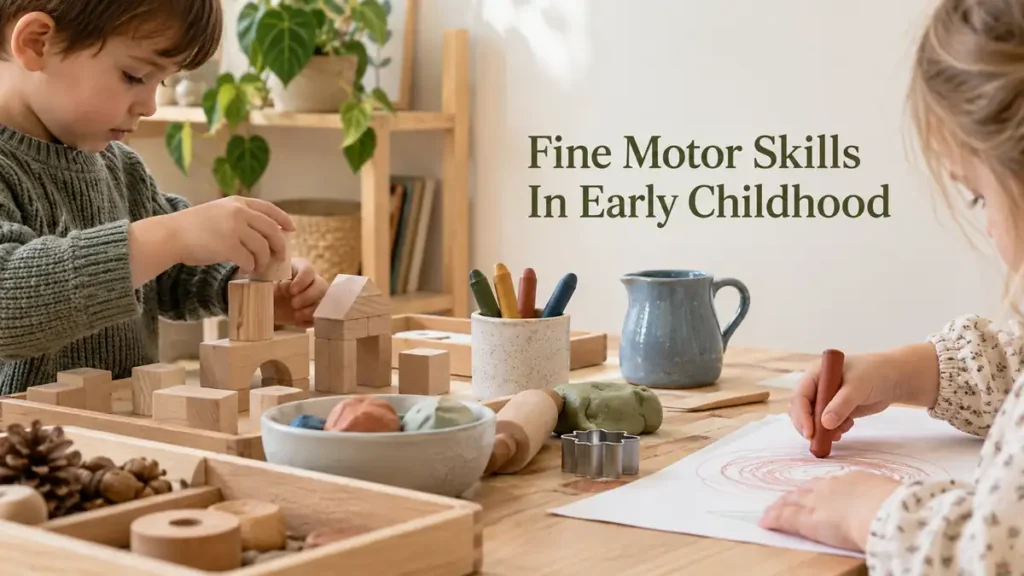
Fine motor skills in early childhood grow through real hand work. Children build control when they pour, pinch, twist, draw, cut, build, open, fasten and care for personal things.
You can see the difference in the small details. Can children reach the materials? Can a child hold the work steady with one hand and use the tool with the other? Can a child clean up and try again without waiting for help each time? The room has a direct effect on all three.
Fine Motor Skills Start With Everyday Tasks
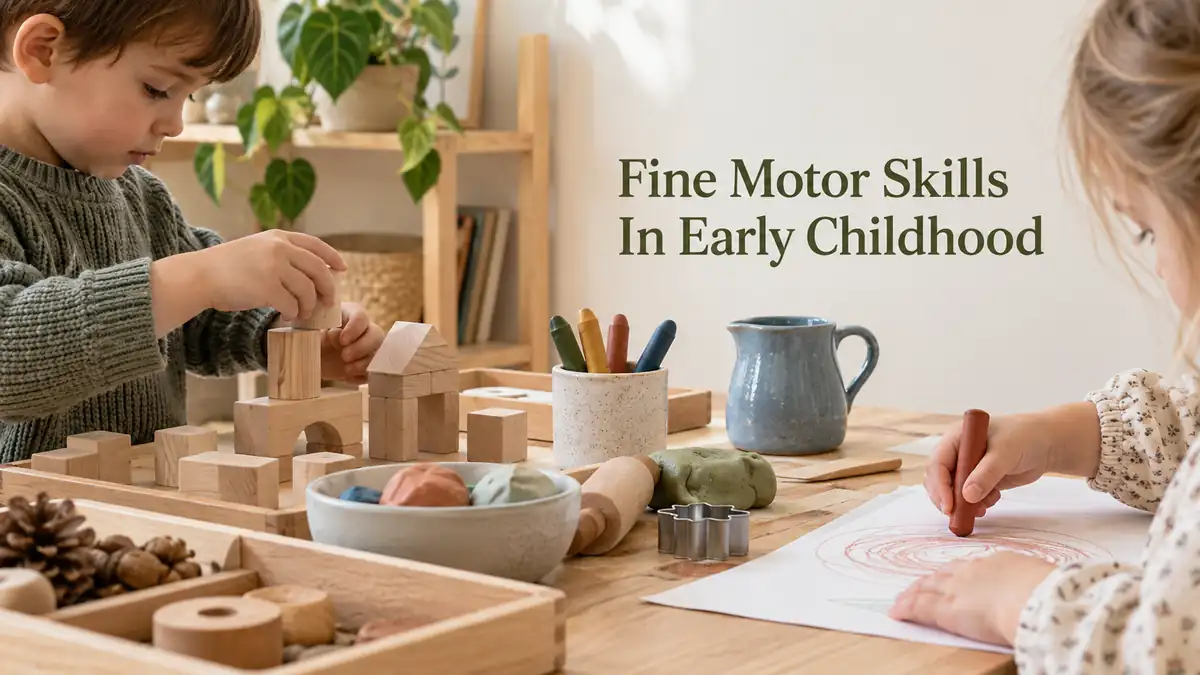
Fine motor skills use the hands and fingers together with the eyes, arms and body. Children use these skills when they eat, dress, draw, make marks, build, use tools and handle small parts.
The task matters. A child who spreads glue, turns a screw, threads a bead or opens a lunch box has a reason to control the fingers. The action is easier to repeat when the child can see what the action is for.
Hands Do More Than Hold Pencils
Cooking, gardening, washing dolls’ clothes, building, fixing, threading and making all give the hands different jobs. One task asks for pressure. Another asks for a steady hold or a careful turn.
De Department for Education guidance on fine motor skills includes cooking, gardening, sewing, fixing and making as useful experiences. You can use the same idea when you review the materials already in your room.
Look At The Whole Working Position
A child may struggle with drawing because the table is too high, the feet cannot rest or the body is tired. Fine motor work depends on a steady body, shoulder control and a comfortable reach. More pencils will not solve a table that does not fit.
Fine and gross motor work also meet here. If you are planning the movement side of the room, see gross motor skills in early childhood so the layout supports both kinds of movement without turning them into the same activity.
Choose The Task Before The Product
Different hand actions need different space and materials. Decide what children will do first. Then check whether the table, storage, tools and clean-up point make that task easy to repeat.
Build And Fit
Blocks, puzzles, peg pieces and construction parts ask children to pick up, turn, place and adjust. Give the pieces a steady surface where they will not slide into another activity. Leave enough room for the finished work to stay in place.
Pour, Pinch And Transfer
Jugs, cups, pipettes, tongs, scoops and trays help children practise grip, pressure, timing and hand-eye control. Choose the size for the age group and decide what happens when water, sand or dough spills.
A wipeable surface and a nearby clean-up point make the activity easier to offer again. If cleaning takes too long, the material may stop being available even when it is useful.
Open, Fasten And Fix
Containers, zips, buttons, clips and child-safe tools connect hand work with daily independence. These tasks also show you where a handle is too small, a lid is too tight or a part needs more adult help than expected.
Put Materials Where Children Can Use Them
Storage is part of the activity. Children use materials more often when they can see what is available, carry it to a suitable place and put it back without lifting a heavy box or asking for help.
Use Low Shelves And Small Trays
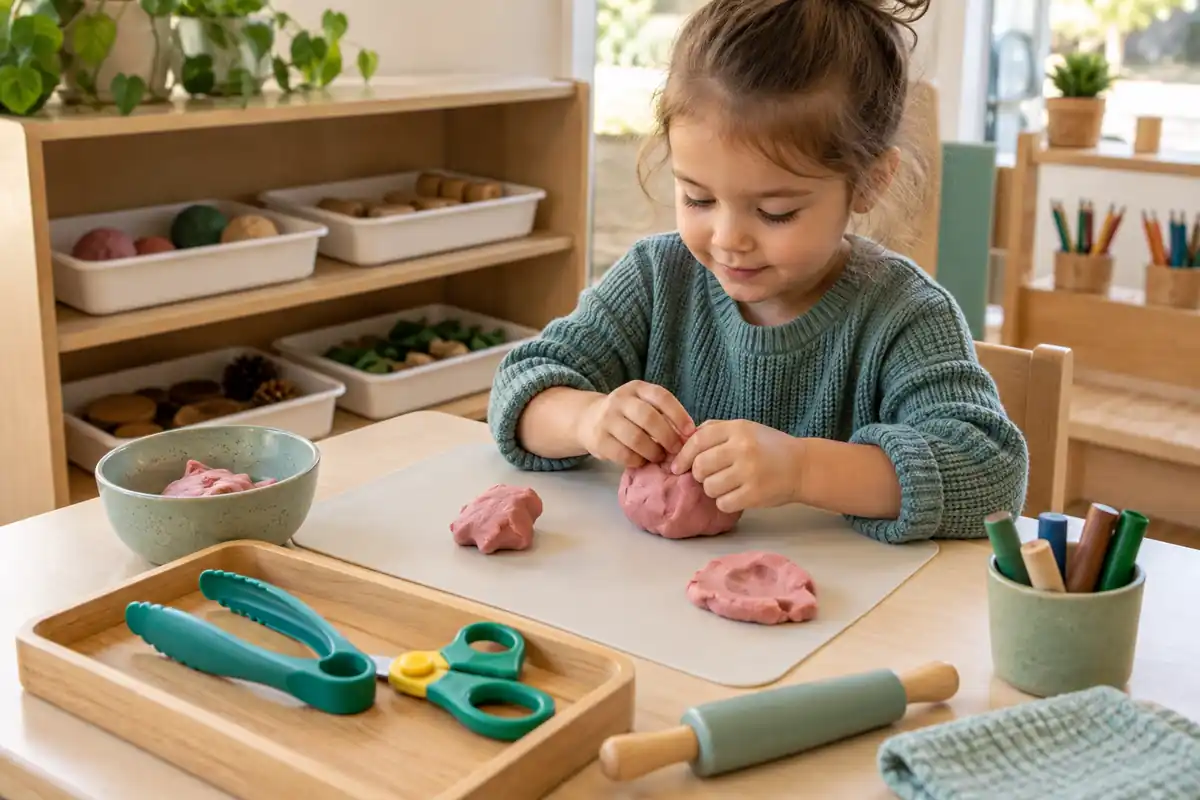
Low shelves, shallow trays and open baskets work well for blocks, puzzles, dough, drawing tools and simple equipment. You do not need to display every option. A smaller choice can make it easier to begin, keep the work surface clear and reset the shelf.
Use a picture or a short word to show where a tray belongs if that helps. The label should support use. It should not turn the shelf into a display that children cannot touch.
Keep The Tool Next To The Work
Put brushes near paint, scoops near the sensory tray, fasteners near dressing play and paper near the mark-making surface. When a child has to cross the room for one small tool, the task slows down and another activity may be interrupted.
Keep wet or messy work near the place where you can wipe it. A sink, cloth, drying rack or waste basket close to the activity can make the difference between a material being used every day and staying in a cupboard.
Keep The Choice Manageable
Too many small pieces can make a fine motor area hard to use. Put out enough for the task and keep the rest nearby. Children can make a choice without having to sort through a full box before they begin.
If you need more activity ideas, you can read these finmotoriska aktiviteter för förskolebarn. That article gives activity ideas; this one helps you check whether the room and the products support those activities.
The Table And Chair Need To Fit
The table and chair change how children hold, move and control materials. A child-sized label does not tell you whether the setup fits the children in front of you or the task you have planned.
Check Feet, Elbows And Reach
Look at the feet, knees, back, elbows and reach. A child should be able to sit or stand steadily, bring the material close and use both arms without leaning across another child. A table that is too high can make the shoulders lift and the hand work harder.
A study of school furniture found better object handling when the furniture fitted the child’s size and the seated position was stable. Use this as a reason to check the fit, not as one universal table-height rule. The right measurement still depends on the child, the furniture and the local standard.
Leave Space For Two Hands
Many tasks need one hand to hold and the other to work. A child may steady a bowl while stirring, hold paper while cutting or keep a piece still while building. Leave enough room for the material, both arms and the child next to them.
If different ages share the room, consider more than one working height or a layout that can change. One table size rarely feels right for every child and every task.
Choose A Surface You Can Wipe
Fine motor work may involve paint, water, glue, dough, food and natural materials. Check the surface, edges, finish and cleaning method before you approve the table. The finish needs to suit repeated use, not only look good in a product photograph.
Let Children Finish The Whole Job
Fine motor practice becomes easier to see when a child can choose, use, put away and try again. The layout should make the next step clear without doing the whole task for the child.
Keep Clean-Up Close
Place a cloth, water source, waste basket or drying area near messy work. Children can wipe the table, return a brush to the right container or carry a tray back to the shelf. These jobs add more hand use and leave the area ready for the next child.
Offer Another Position
Some tasks work better at a table. Others work on the floor, at a standing surface or outside. Give children a safe choice when the material allows it. A different position may help a child continue without sitting at the same table for too long.
Change The Setup First
If a child avoids a tool, check the size, grip, material, position and amount of help first. Try a larger handle, a shorter task, a different surface or a more familiar material. The problem may be the setup rather than the child’s interest.
Small Product Problems Show Up Quickly
Fine motor materials and furniture are often small, but a small fit problem can stop an activity. Check the exact product and the way it will be used before you approve a larger order.
Check That The Parts Fit
Ask for exact dimensions, assembly details and a sample when several parts need to work together. Check that trays fit the shelf, cushions fit the frame, holes line up and lids open with the amount of force children can manage.
Inspection photos can help, but a sample gives you a better chance to find a mismatch before the order is complete.
Ask How The Surface Will Be Cleaned
Check how the surface reacts to paint, water, glue, food and repeated wiping. Look at edges, corners, handles and places where dirt can collect. The cleaning method should match the real work you plan to offer.
Keep Small Parts In View
Match small parts and tools to the age group and the supervision available. Keep adult access clear when a material needs help. You should be able to reach the area, see the children and change a material without moving several pieces first.
Sources
These sources support the points about fine motor development, useful tasks, furniture fit and play materials.
- Department for Education guidance on fine motor skills
- Head Start guidance on perceptual, motor and physical development
- Department for Education guidance on gross and fine motor skills
- Study on seated positioning and object manipulation skills
- NAEYC guidance on play materials that support fine motor skills
Vanliga frågor
- Do you need a special fine motor table? Not always. Start with a stable work surface that fits the task and the children using it. Different heights or positions may help when the room serves more than one age group.
- Should every small material stay out all day? No. Choose access based on age, size, safety and supervision. A smaller, well-organised selection is often easier to use and return.
- What can you offer before pencil work? Try dough, tearing, sticking, puzzles, threading, pouring, large brushes and other tools that build hand strength and control without asking children to write too soon.
- Why may a child work better on the floor? The floor can give more room to steady the body or use both hands. Check the material, cleanliness and supervision before offering that position.
- What should you check when a tool is hard to use? Check the handle, size, pressure, material, work surface and the amount of adult help. A different tool or a smaller first step may make the task more useful.
Slutsats
Fine motor skills grow through hand work that has a clear purpose. Put the materials within reach, give children a steady place to work and let everyday tasks do part of the teaching.
If you need to match tables, storage and materials to the room, the age group and the way the space is used, Xiair Word can help you check those details as one practical plan.