
 Spanish (Spain)
  English
  Arabic
  French
  Italian
  German
  Thai
Thai  Japanese
  Turkish
  Indonesian
  Vietnamese
  Polish
  Portuguese
  Malay
Malay  Swedish
  Spanish (Mexico)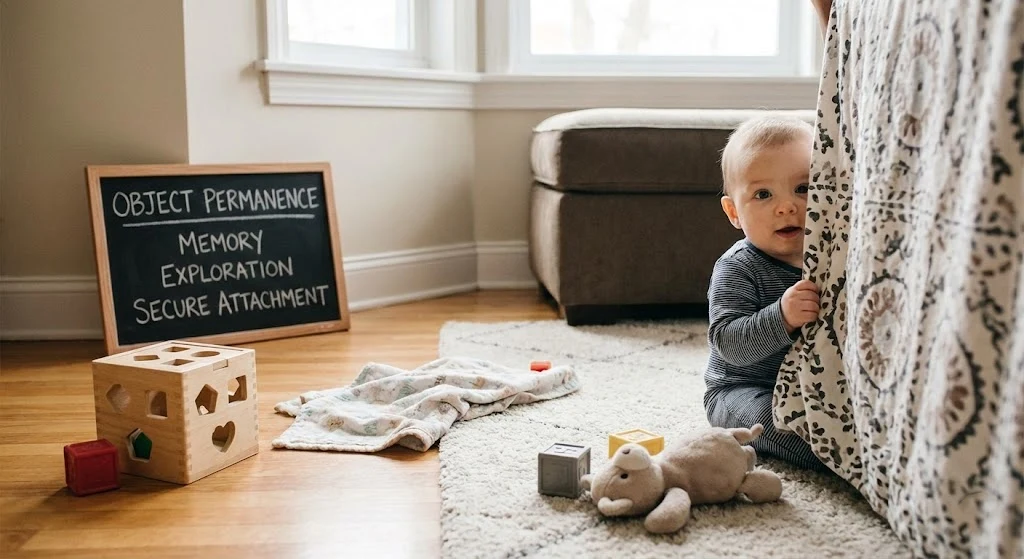
Object permanance might sound like a big psychology term, but for your baby it simply means understanding that you are still there even when they cannot see you. When you step out of the room to grab your phone and your baby suddenly cries harder, it is not just clinginess. It is a sign that their brain has started to realise you still exist somewhere else, and they are not very happy about that yet.
During the first year, your baby slowly shifts from “out of sight, gone forever” to “out of sight, but still around.” That quiet change is what people mean by object permanence or object permanance, and it shapes how your baby feels about goodbyes, strangers, naps, and even simple games like peekaboo.
The good news is that you are probably already supporting this skill without even thinking about it. Every time you play peekaboo, hide a toy under a blanket, or talk to your baby from the next room, you are training their little brain to trust that people and things stick around, even when they are not right in front of their eyes.
Why Is Object Permanence Important?
Object permanence is important because it marks a major shift in how a child understands the world. When a baby realizes that people and objects continue to exist even when out of sight, their thinking moves from purely sensory reactions to early memory, prediction, and mental representation. This is one of the first foundations of cognitive development.
On an emotional level, object permanence plays a key role in attachment and security. When infants understand that a parent still exists even after leaving the room, they begin forming stable expectations about relationships. Although separation anxiety may temporarily increase, it actually reflects growing cognitive maturity. The child is not confused about whether the caregiver exists — they are expressing awareness and emotional connection.
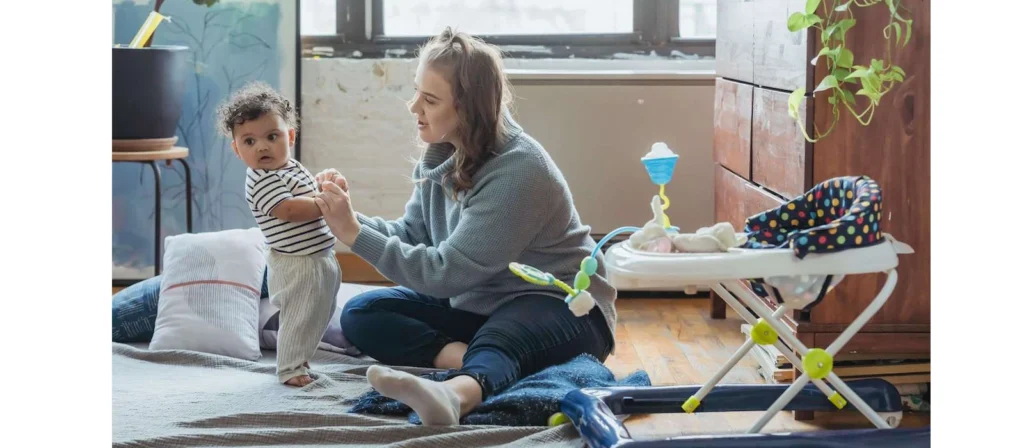
Object permanence also supports problem-solving and logical thinking. Once children know that hidden objects still exist, they begin searching, planning, and experimenting. This ability lays the groundwork for later skills such as symbolic play, language development, and even early math reasoning. In structured learning environments, including Montessori settings, activities that involve hiding, revealing, and object tracking intentionally strengthen this emerging understanding.
In short, object permanence is not just a milestone. It is a cognitive turning point that influences emotional stability, learning readiness, and the child’s ability to make sense of an increasingly complex environment.
When Do Babies Develop This Skill?
Most parents asking about object permanence age just want to know, “Roughly when should this start?” For most babies, object permanance begins to show up sometime in the second half of the first year. You might notice the first hints around 5–7 months, and by somewhere close to their first birthday many babies can clearly remember that you and their favourite toys still exist when they are out of sight.
It is not a single moment where a switch flips. At first your baby might just pause when something disappears. Later, they start leaning or peeking toward where it went, and eventually they actively search under a blanket or crawl after you when you walk away. The exact timing of these steps can vary a lot from baby to baby, and that is still normal.
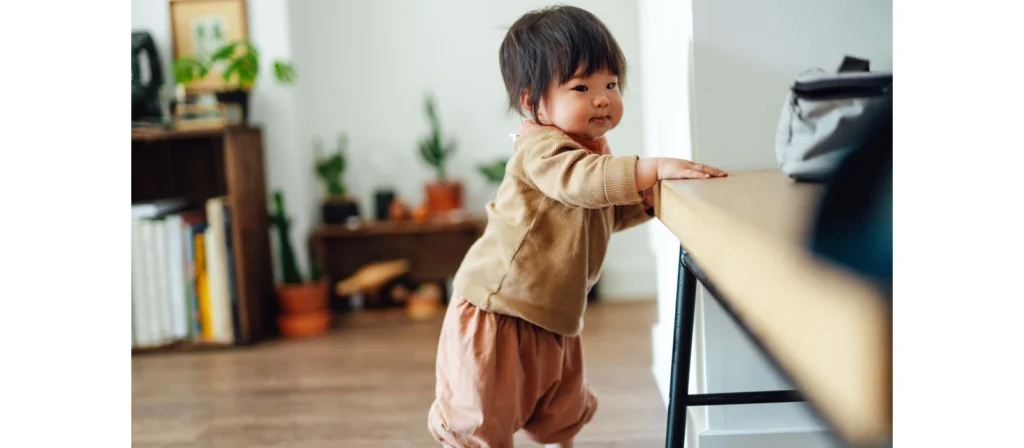
By the time your child is a toddler, the basic idea is usually rock solid: they know toys left in another room are still there, and they understand you go away and come back. If you are worried about your baby seeming far behind in several areas, that is a good time to check in with your pediatrician, but small differences in when object permanance shows up are usually just part of their unique pace.
How Does Object Permanence Develop?
Object permanence does not appear overnight. It builds gradually as a baby’s brain matures and their interactions with the world become more intentional. During the first two years of life, children move from simple reflex reactions to complex mental representation. Developmental psychologist Jean Piaget described this progression in a series of stages within the sensorimotor period.
- Birth to 1 Month – Reflexes: Infants explore their world through basic reflexes like rooting and sucking.
- 1 to 4 Months – New Schemas: Babies begin forming early mental patterns as they repeat actions they enjoy.
- 4 to 8 Months – Intentional Actions: Infants start acting intentionally to observe responses in their environment.
- 8 to 12 Months – Active Exploration: Babies deliberately explore toys and objects, showing increasing awareness of their surroundings.
- 12 to 18 Months – Trial and Error: Children experiment with different actions to learn new outcomes.
- 18 to 24 Months – Symbolic Thinking: Mental representation grows, enabling children to understand that objects continue to exist even when out of sight.
By the end of this period, most toddlers clearly understand that people and objects continue to exist even when they cannot see them. This shift from reflex-based interaction to mental representation marks one of the most important cognitive turning points in early childhood development.
Everyday Signs and Examples of Object Permanence
You do not need a formal test or checklist to see object permanance developing. It shows up in small everyday moments that are easy to spot once you know what to look for. Here are some simple examples.
Signs your baby is starting to understand object permanence:
- Lifting a cloth to find a toy
You hide a toy under a light cloth and your baby reaches to lift or pull the cloth instead of losing interest. This suggests their brain is saying, “The toy is still there, I just cannot see it right now.” - Looking for dropped objects
A spoon, toy or cup falls from the high chair and your baby leans over the side, looks down, or searches the floor instead of forgetting it immediately. - Watching the doorway when you leave
After you walk out of the room, your baby keeps their eyes on the door or the direction you went, waiting for you to come back. - Following you from room to room
Some babies will crawl or shuffle after you when you move away, clearly acting as if you still exist somewhere nearby and can be reached.
On the other hand, a lack of object permanence in the very early months just looks like your baby “forgetting” that something ever existed. The toy disappears and they instantly move on, or you slip out of sight and they do not react at all. This is completely normal at the beginning. Over time, the shift from “gone forever” to “I know it is still around here somewhere” is exactly how you can tell that object permanance is starting to take hold.
How Can You Gently Support This Skill at Home?
You do not need special training or complicated activities to help your baby with object permanance. Most of the support they need can happen right in the middle of your normal day through short, playful moments that show them people and things are still there, even when they are briefly out of sight.
Play Simple Peekaboo Games
Peekaboo is one of the easiest ways to support object permanance. Sit in front of your baby, cover your face with your hands or a light cloth, pause for a second and then show your face again with a warm “Here I am.” As they get used to this, you can let the cloth slip a little so they see part of your face or encourage them to pull the cloth off by themselves, turning the game into gentle practice for the idea that you are still there even when they cannot see you.
Try Easy Hiding Toy Activities
You can use your baby’s favourite toys in the same way by hiding them in simple, gentle ways. At first, place a cloth over part of the toy so it still peeks out, then later try covering it completely or tucking it just inside a box or behind a soft cushion where your baby can reach. The idea is not to trick them, but to offer small, solvable challenges that let their brain practise finding something that is out of sight, which quietly strengthens their understanding of object permanance.
Use Books And Everyday Routines
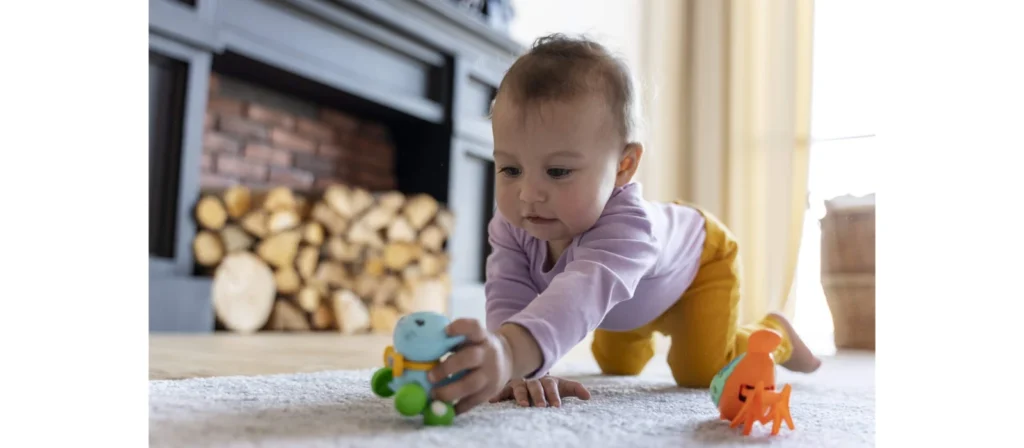
Lift the flap libros, pop up pictures and very simple “Where did it go, here it is” moments during playtime or diaper changes can all reinforce object permanence without any extra effort. You can also support this skill by talking to your baby when you step into another room, saying things like “I am in the kitchen, I will be right back” so they still hear your voice. Over time, these everyday routines teach your baby that people and things do not simply vanish, they come back, which helps build both object permanence and a deeper sense of security.
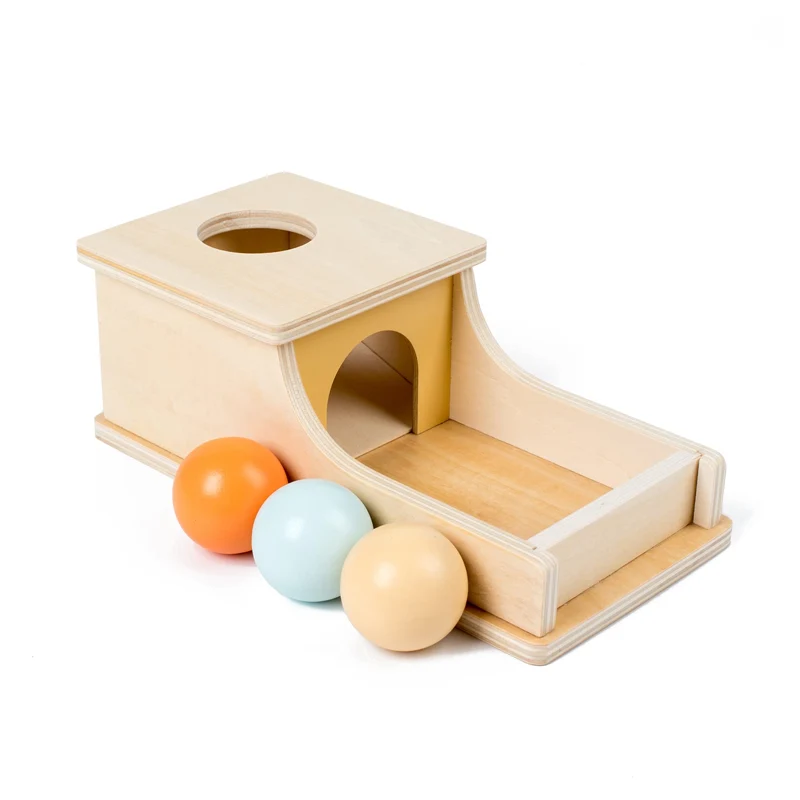
Montessori Object Permanence Box for Infants
Support early cognitive development with a Montessori Object Permanence Box. Designed for babies aged 6–12 months, this simple drop-and-reveal activity helps infants understand that objects still exist when out of sight, while building focus and hand-eye coordination.
 View Object Permanence Box
How Object Permanance Shapes Your Baby’s Feelings and Behaviour?
Once object permanance starts to click, your baby’s emotional world can feel a bit bigger and louder. They now understand that you still exist when you walk away, which is exactly why they may cry harder when you leave. That is not them turning into a clingy baby overnight. It is their brain saying, “I know you are still out there and I want you back.” This is a normal part of development and a sign that your baby is strongly attached to you.
You may also notice changes in how they play. A baby with growing object permanence can stay interested in a toy for longer, look around for things that go missing, and feel more confident to explore a safe space while checking in with you using eye contact or little glances. They are slowly learning that you are their safe base and that the world is worth checking out, even if you step a few steps away.
Sleep and goodbyes often shift too. Bedtime can suddenly become harder for a while, because being left in a dark room now feels very different once your baby understands that you have walked away. Short, calm routines and consistent goodnight words help send the message that you always come back. The same is true for daycare drop offs or leaving your baby with family. A predictable goodbye, a clear “I will be back,” and plenty of warm reunions over time teach your child that separations are temporary, which gently calms the big feelings that come with their new object permanance skill.
Common Worries And Myths About Object Permanance
It is completely normal to look at other babies and think, “Why is my baby not doing that yet?” With object permanance, there is a wide range of normal. Some babies start looking for hidden toys quite early, others only do this closer to their first birthday, and both can be healthy. One sleepy day, one failed game, or a baby who prefers chewing the blanket instead of lifting it does not mean anything is wrong. What really matters is the overall pattern over time, not one moment or one comparison.
There are also a couple of myths worth clearing up. Showing object permanence very early does not automatically mean a baby is gifted, and showing it later does not mean there is a problem. This is just one skill among many, and babies develop at different speeds. You may also see people online linking object permanence and ADHD, as if people with ADHD do not understand that things still exist when they cannot see them. In reality, they do understand this; losing track of things is more about attention and memory than a lack of object permanence. If you ever feel uneasy about your baby’s development overall, the most helpful step is to ask your pediatrician rather than relying on social media.
When Should You Talk To Your Pediatrician?
Most of the time, differences in when object permanance appears are simply part of your baby’s own pace, and there is no need to panic. If your baby makes eye contact, responds to your voice, shows interest in people and toys, and is gradually more aware when someone or something goes away, their development is usually on a healthy track, even if they do not match every milestone chart exactly.
You might choose to speak with your pediatrician if several things worry you at the same time, for example if your older baby rarely reacts when you leave or return, hardly follows or reaches for objects, or often seems very disconnected across many situations. In that case, a calm conversation is absolutely appropriate. Simply describe what you see at home and share a few specific examples. A trusted professional can help you decide whether what you are seeing is within the wide range of normal or whether a little extra support would be helpful, so you are not left guessing on your own.
Quick Parent FAQs About Object Permanance
When do babies usually show object permanance in everyday life?
Most babies begin to give little hints between about 6 and 10 months. You might see them searching for a favourite toy that rolled away, looking toward the door when you leave, or protesting more when you suddenly disappear from view.
My two year old still cries when I leave. Does that mean they do not have object permanence?
No. By the toddler years, children almost always understand that you still exist when you walk out. Tears at this age are usually about missing you, feeling unsure, or not liking the change in routine. Calm, consistent goodbyes and warm reunions matter more here than worrying about object permanance itself.
What is one quick object permanence activity I can do right now?
Sit with your baby and place a small toy under a cloth, leaving just a corner showing. Gently ask, “Can you get it?” and let them pull or lift the cloth. If they ignore it, just smile, uncover the toy yourself, and try again another day so it stays light and playful.