
 Italian
 English
 Arabic
 French
 German
 Spanish (Spain)
 Thai
 Japanese
 Turkish
 Indonesian
 Vietnamese
 Polish
 Portuguese
 Malay
 Swedish
 Spanish (Mexico)
If you spend much of the day repeating the same reminders, look at what makes those instructions hard to follow. The link between classroom environment and positive behavior becomes clearer when you look at everyday tasks, from getting materials to moving between activities.
What Connects Classroom Environment And Positive Behavior?
You want children to ask for a turn, look after materials, join play, and seek help. Your room and daily routine can make these things easier or harder:
- Your space affects what is easy to reach and whether there is enough room to play.
- Your routine sets the time available for play, the number of stops, and the length of each wait.
- Your response shows how you handle mistakes, disagreements, and requests for help.
To support learning and behavior, consider all three together. Alongside clear regole della classe, you need daily arrangements that make those rules possible to follow.
Look At What Happens First
Choose one recurring problem and watch what happens just before it. Write down when it happens and how often you need to step in. For example, note how many times you help during cleanup rather than describing the whole group as difficult. Use the situations below to decide what to try; you still need to find out what is happening in your own room.
Play That Keeps Getting Interrupted
If you often step in after a block structure gets knocked over, watch how children reach the nearby shelves and tables. You may be asking everyone to walk through the building area to get something needed elsewhere.
Move the walkway so children can pass without stepping through the block area. You might turn the play area or move a nearby shelf. Keep exits clear and every area in view.
Check the space during play, too. A table may fit beside a shelf on your floor plan, but you also need room for pulled-out chairs, carrying materials, and helping at the table. When placing quiet and active areas, allow for how you will use both at the same time.
Materials Within Reach
If you want independent cleanup but keep having to open lids, move stacked bins, or lift heavy baskets, change the task before repeating the instruction. Offer a small set of materials in containers that can be taken out and returned easily.
With deposito per aule, check more than the shelf height. Try the tray with its usual contents, leave room to grip it, and use a picture to show where it belongs. Keep supplies that need adult handling secure.
Choose materials that are easy to reach and use for the age group in your room. A listed size tells you whether an item fits the space; you still need to check whether it suits the children using it. Show how to take materials out and put them back, then allow time to practice.

Less Waiting Between Activities
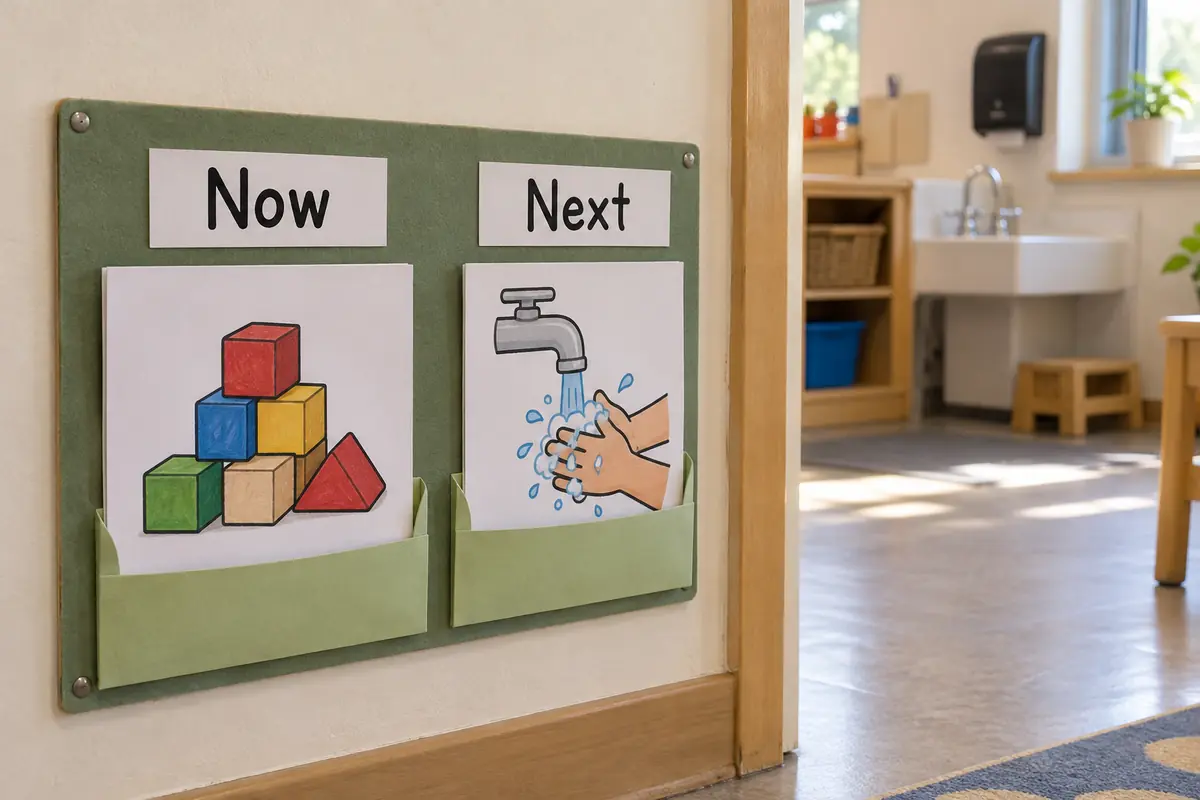
If you stop all play for handwashing before the sink is available, you leave the group waiting with little to do. You may spend that time asking for quiet instead of getting on with the next activity.
To reduce waiting between activities, prepare what you need before calling children over. Where staffing and supervision allow, invite a small group to wash while you keep the rest busy nearby. Give a familiar warning before the change and show what comes next with a simple picture prompt.
Too Much Noise And Distraction
If you keep raising your voice during a small-group activity, pause and listen to the room. You may be competing with background music, chair scraping, and a louder activity nearby. Before asking for better attention, remove a sound you do not need or change where the activity takes place.
Look at the walls too. Keep the picture prompts and current work you use; remove old displays you no longer need. You can use a small study of classroom decoration as a reason to check for distraction, but its short laboratory lessons cannot tell you what works in every preschool. You do not need to strip the walls bare.
Offer a quieter place to pause without leaving the group or your view. Use it as a choice for a break, not a punishment. Introduce it during a settled moment so that you can explain its purpose before it is needed.
Your Response Matters Too
Once you have made an activity easier to join, help with the parts that take practice, such as asking for a turn or dealing with a disagreement.
Stay close enough to help with the first exchange. Model a short request such as “Can you pass the blue paint?” and give time for a reply. If you notice a helpful action, describe it: “You made space at the table.” You make the action clear without turning the moment into a long lesson.
When a child is upset, offer calm, steady help. You can talk about what went wrong once there is time to listen and respond.
How To Tell Whether It Helped
Try one change at a time, then compare the same part of the day with your earlier notes over several sessions. Keep other conditions as similar as you can, and note changes in attendance or staffing. Look for easier participation and fewer moments of distress, not simply a quieter room.
If the difficulty continues across different activities and settings, talk with the family and seek further support when needed. You can use the guide to challenging behavior in early childhood to explore concerns that go beyond the room itself.
Domande frequenti
- How Can You Include Children In Decisions About The Room?
Offer two workable choices, such as which of two suitable places should hold a drawing display. Invite children to show you a favorite spot or point out something hard to use. Keep safety decisions with adults, and explain the choice you make. You can collect views through pointing or drawing as well as conversation.
- How Can You Keep A Room Change Consistent Across Different Shifts?
Leave a short shared note with a photo of the setup, the reason for the change, and the words you use during that routine. Add it to the handover rather than relying on one person’s memory. Keep the instruction where anyone covering the room can find it, and avoid children’s names or identifiable photos.
Conclusione
If your observations point to a need for different furniture or a revised layout, share the activity you want to support along with your room plan. You can discuss suitable options with Xiair World without starting with a full-room replacement.