
 Italian
 English
 Arabic
 French
 German
 Spanish (Spain)
 Thai
 Japanese
 Turkish
 Indonesian
 Vietnamese
 Polish
 Portuguese
 Malay
 Swedish
 Spanish (Mexico)
If you are preparing a toddler room, choose furniture by following the day from arrival to rest. You need a room that lets toddlers reach useful materials, move between activities, sit for meals, settle for rest, and return items without constant adult help.
This checklist helps you connect furniture with the work you actually do. It covers the pieces that carry the room, the activity materials that belong with them, and the details that keep the floor open and the room easy to supervise.
Keep your toddler plan separate from your infant plan. When your infant guide is ready, you can add it here: infant room furniture and activity checklist.
Follow the day before you buy
Write down what you need to do in the room before you choose products. A toddler room changes often. The same table may support snack, painting, and a small-group activity, while the open floor may change from movement space to a meeting area.
This way of planning follows Head Start guidance for infant and toddler learning environments, which highlights safe traffic patterns, clear activity areas, and routine-care spaces that work for both children and adults.
| Part of the day | Furniture and materials to plan | What you need the setup to do |
|---|---|---|
| Arrival | Cubbies, hooks, labels, a low bench, and a clear entry route | Let you help one child without bags and shoes spreading into the play area. |
| Meals and snacks | Low tables, toddler chairs, serving storage, and wipeable surfaces | Give you a stable place to serve, sit, clean, and reset. |
| Free play | Low shelves, open floor, soft mats, blocks, books, and pretend-play props | Let toddlers make choices while you keep the main room visible. |
| Art and sensory work | Washable tables, trays, an easel, drying space, and nearby cleaning supplies | Keep messy materials contained and make cleanup part of the routine. |
| Rest and care | Cots or mats, bedding storage, a changing or toileting area, and adult storage | Allow you to care for one child without losing sight of the rest of the room. |
This step stops your checklist from becoming a collection of attractive products. If a piece does not support a routine, an activity, or a care task, you should question the space it takes.
For labels, return points, and practical shelf organization, you can also use this guide to organize a preschool classroom.
The pieces that carry the room
Start with furniture that you will use across the day. In a toddler room, low storage often does more work than a large themed unit. It holds materials, separates areas, and gives toddlers a clear view of their choices.
Low tables and toddler chairs
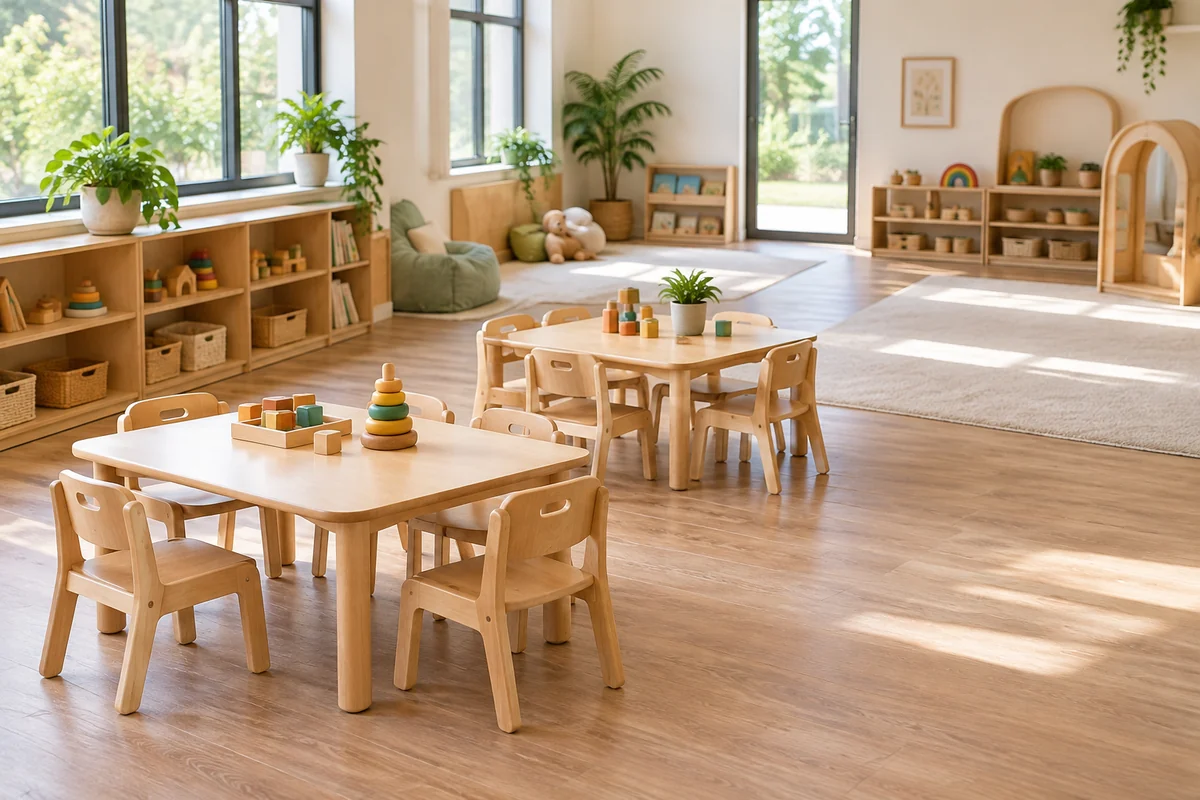
Use small tables for meals, art, puzzles, and short group work. A stable base, rounded corners, enough legroom, and a surface that can be wiped without special treatment matter more than decoration. Match the chair seat and table height to the toddlers who will use them, and leave enough room for you to help from more than one side.
- Choose tables that can support more than one routine.
- Use chairs that toddlers can sit in and leave without being lifted.
- Keep table legs and chair legs from narrowing the main walking route.
- Choose a weight that feels stable but still lets you change the room when needed.
Low shelves and open storage
Use low shelves as working storage and light boundaries between activities. Open fronts help toddlers see where materials belong, while closed cabinets keep cleaning supplies, spare materials, and adult-only items out of reach. Keep heavy items low and leave some shelf space empty so the room does not feel crowded.
- Give each daily activity a shelf, basket, tray, or clear return point.
- Keep shelf depth manageable so materials do not disappear behind one another.
- Place heavy blocks and large baskets on lower levels.
- Secure tall or narrow units and avoid using storage as a wall.
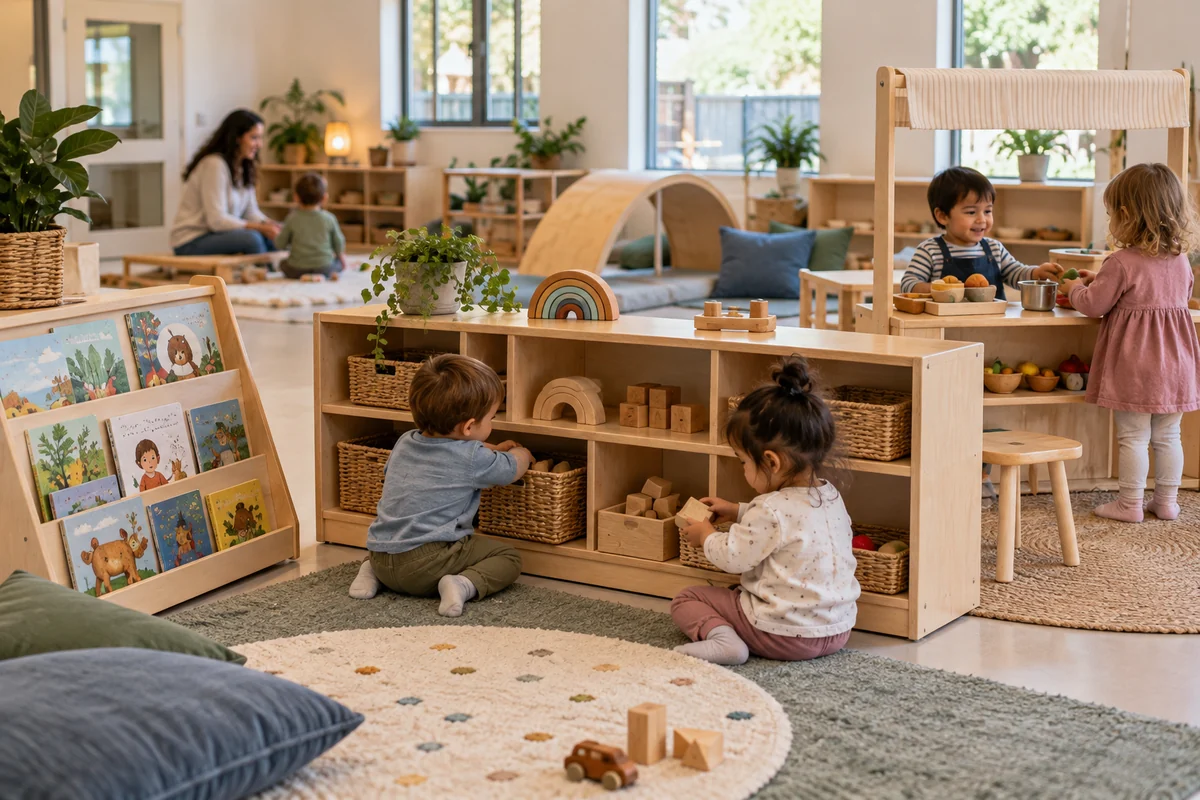
For more ways to match shelves, baskets, and closed storage with daily use, read these daycare classroom storage solutions.
Arrival storage
Keep cubbies, hooks, labels, and a low bench close to the entrance. Give each child a clear place for personal items, but keep the area small enough that bags and shoes do not become part of the play route. Give your records, spare clothing, medication, and staff items a separate adult-only location.
Rest and care furniture
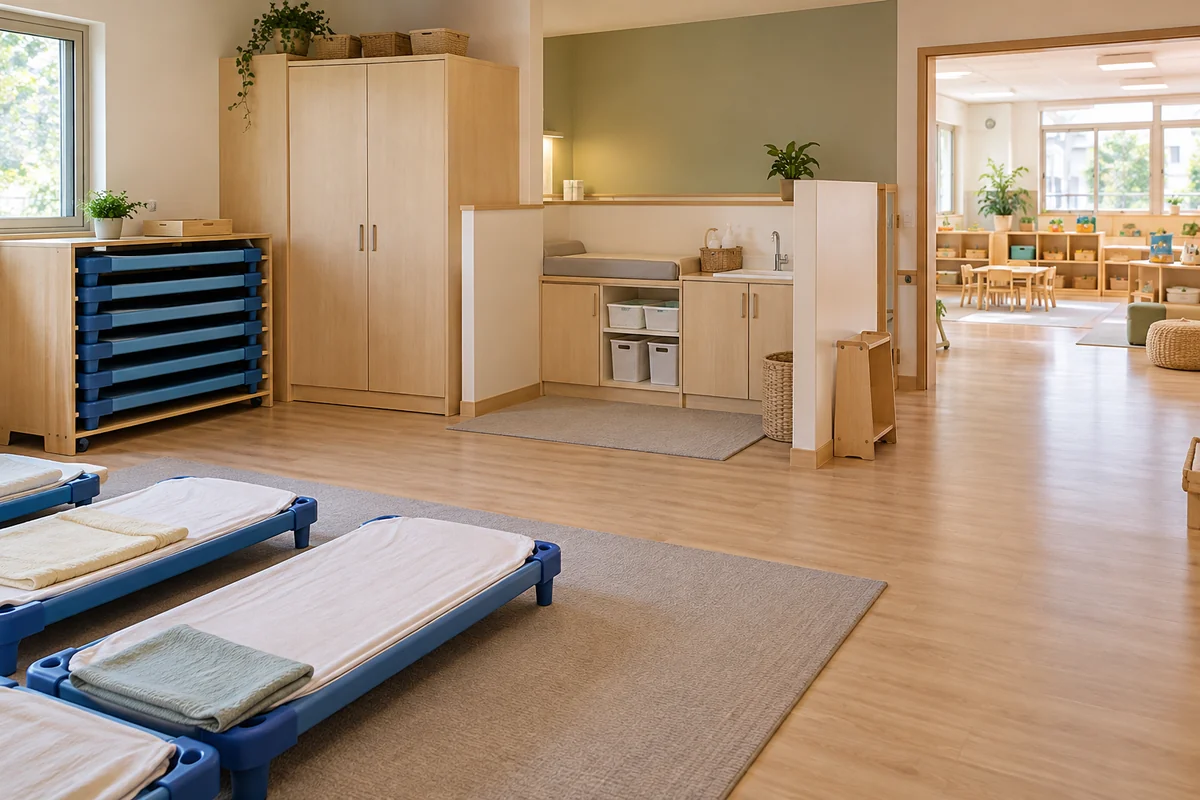
Plan where you will store cots, mats, sheets, and blankets before you fill the room with play furniture. If you provide diapering or toileting support, keep the changing unit, hygiene supplies, and cleaning materials in a controlled care area. You need a clear staff route and enough visibility to help one child while the rest of the room remains in view.
Choose a cot or mat system that your team can set up, stack, clean, and return without a long changeover. A storage method that looks compact but takes too much effort to use will usually remain in the room and reduce your active floor.
Books and quiet seating
Use a front-facing book display or low bookcase so toddlers can see covers and return books without climbing. Add a small rug or simple soft seating, but keep the area visible from the main work points. A quiet corner should feel calmer than the movement area without becoming a hidden corner.
Role-play furniture
A low pretend-play unit, a small counter, a mirror, and a few open baskets can support home, shop, kitchen, or care play. Choose open-ended pieces that you can change with props and pictures. Leave enough room for toddlers to play beside each other without creating a narrow entrance or a blind spot.
Art and sensory furniture
Use a washable activity table, toddler chairs, a low easel, trays, and a place for finished work. Keep cleaning access close to the table. A sensory table can support water, sand, dough, natural materials, scooping, pouring, and sorting, but you need a stable surface and a clear plan for spills.
Adult-only storage
Reserve closed storage for cleaning products, spare bedding, paper goods, records, and extra furniture parts. Plan this space before you fill child-accessible shelves. Otherwise, adult supplies tend to move onto low units, beside the care area, or into corners that you need for movement.
Give every kind of play a place
Choose activities that match the furniture you have already planned. You do not need every material on display at the same time. You need a clear place for each kind of play, enough materials for a small group, and a simple way to reset the area.
When you decide which materials to offer, you can also review NAEYC’s Developmentally Appropriate Practice guidance. It is useful when you are matching play choices, adult support, and room design to your toddlers’ development.
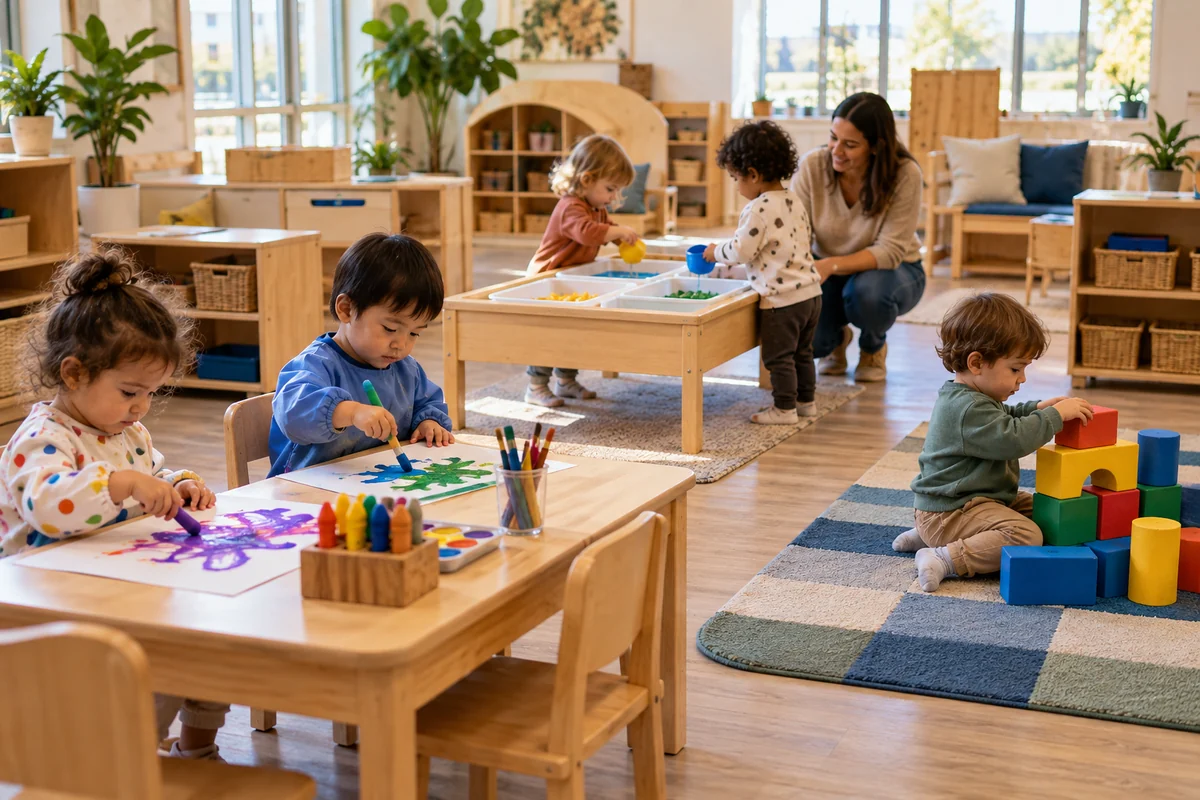
Movement
- Keep one clear route for walking, carrying, pushing, and dancing.
- Add soft mats, low balance pieces, and safe push-pull materials when your supervision plan supports them.
- Store large movement pieces where you can bring them out without crossing the quiet or care area.
Blocks and building
- Offer large blocks, simple connectors, vehicles, and natural loose parts suited to your age group.
- Use a low shelf and a defined mat so building does not spread across the whole floor.
- Keep a small place for unfinished work when your schedule allows a project to continue.
Pretend and social play
- Offer familiar roles such as cooking, caring, shopping, cleaning, and carrying.
- Choose a small number of durable props that toddlers can carry and return.
- Change the play theme with props, pictures, and books instead of replacing the main unit.
Books and early language
- Keep board books, picture books, simple story props, puppets, and photo cards within reach.
- Use a front-facing display so toddlers can choose without pulling down a full shelf.
- Add everyday objects that encourage naming, pointing, copying, and conversation.
Art and sensory exploration
- Prepare chunky crayons, large brushes, dough tools, paper, and simple collage materials.
- Use trays to control the amount of material available at one time.
- Offer scooping, pouring, filling, pressing, and sorting rather than only finished crafts.
- Keep small loose parts and materials that need close supervision in an adult-controlled place.
Practical routines
Add simple activities for carrying, wiping, transferring, opening, closing, matching, and putting away. Use small trays, child-safe tools, and a clear return point. These tasks should fit into your existing room rather than become another large center.
Rest and self-regulation
Give toddlers a calm place to look at books, sit with you, or pause after active play. Keep it comfortable, visible, and easy to clean. If you are planning several activity areas, you can use this guide to set up learning centers without making every area fixed or crowded.
Walk through the room before you order
Put the furniture on your floor plan and then walk through the busiest moments. Check the route from the door to cubbies, from the care area to the sink, from storage to the activity tables, and from the movement area to rest. The plan should work when several toddlers and adults are moving at once.
- Keep the middle usable: Leave enough open floor for movement, gathering, and quick changes.
- Use shelves as boundaries: Separate activities without creating walls or blind spots.
- Put quiet work away from traffic: Keep books and rest away from the main route to the door and care area.
- Put messy work near cleaning: Make water, paint, and sensory cleanup easy to reach.
- Keep adult work out of child storage: Give records, cleaning products, and spare service items their own controlled location.
If your room is tight, compare options in this guide to the best daycare furniture for small spaces. You can also use the preschool and daycare furniture size guide to check age fit before you finalize the layout.
Buy in the order you will use it
If you are furnishing the room in stages, buy the pieces that make the room work before adding extra materials:
- Low storage, cubbies, and your arrival setup.
- Tables and chairs for meals and shared work.
- Rest and care furniture with controlled adult storage.
- Open-floor materials for movement and group play.
- Book display, block storage, and role-play furniture.
- Art and sensory surfaces with trays and cleanup access.
- Rotating materials and activity props.
This order gives you a usable room before you add extras. You can then adjust materials to your toddlers’ interests and your daily schedule.
Leave room for toddlers to move
- Do not fill the center of the room with fixed furniture.
- Do not use tall storage that blocks your sightlines.
- Do not put every material at child height without a rotation plan.
- Do not place rest, messy play, and active movement in one crowded corner.
- Do not choose a large product when a low shelf, tray, or small table can support the same activity.
- Do not let attractive furniture decide the layout before you check supervision and movement.
FAQ
- Should you buy a matching toddler furniture set? You can, but matching finishes should not decide the whole order. Check whether each piece fits your room, supports your routines, and can be replaced or moved without disrupting the rest of the setup.
- Can you use toddler furniture in a preschool room later? You can reuse some open shelves, book displays, storage, and role-play units. Check tables and chairs separately because older children may need different seat heights, legroom, and work surfaces.
- What should you confirm before approving a toddler furniture order? Ask for clear dimensions, material and finish information, cleaning guidance, assembly details, stability information, and the process for ordering replacement parts. These details affect daily use more than a product photograph.
- How should you plan furniture for a room that serves toddlers and infants at different times? Keep the routines separate in your plan. Toddler furniture supports walking, carrying, shared work, and independent access, while an infant setup must account for feeding, sleep, non-walking movement, and closer care.
- What should you do when a toddler room has an unusual shape? Start with the fixed points such as doors, sinks, care areas, and storage, then place the clearest walking route. Use smaller tables, low movable shelves, and flexible activity materials to fit the space instead of forcing a standard layout.
If you are planning a toddler room, you can visit Xiair World and share your room size, age group, daily routines, and furniture needs. Xiair World can help you connect furniture, learning materials, play, art, storage, and layout planning into one workable room.