
 Portuguese
  English
  Arabic
  French
  Italian
  German
  Spanish (Spain)
  Thai
Thai  Japanese
  Turkish
  Indonesian
  Vietnamese
  Polish
  Malay
Malay  Swedish
  Spanish (Mexico)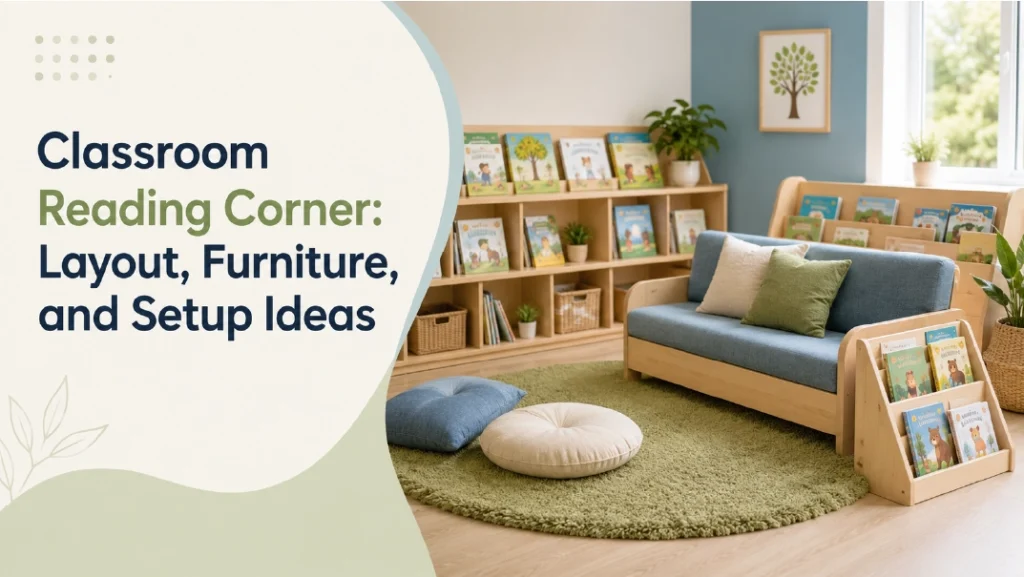
A classroom reading corner may look simple at first. A few books, a small rug, and some seats can already create a quiet book area for children. But in real preschool projects, the planning is usually much deeper.
Many schools ask the same questions before setting up a classroom reading corner. Where should it be placed? How much space should it take? Should we use bookshelves, sofas, cushions, benches, or a feature piece? Will it work for toddlers? Can it also support story time or quiet play?
These details matter because a reading corner needs to look inviting, but it also has to work well every day. A good classroom reading corner should help children reach books easily, sit comfortably, and spend time with books in a clear and calm area. For preschool owners, teachers, and project buyers, it also needs to be safe, easy to clean, durable, and suitable for the size of the classroom.
What Is a Classroom Reading Corner?
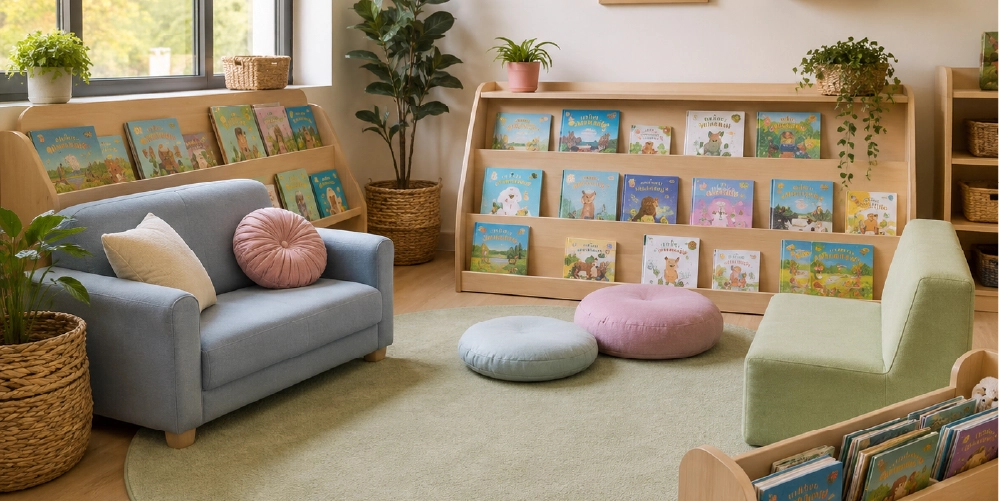
A classroom reading corner is a dedicated book area inside a preschool classroom. It gives children a clear place to choose books, sit down, look at pictures, listen to stories, or read quietly on their own.
In a small classroom, it may only include a low bookshelf, a soft rug, and a few cushions. In a larger learning centre project, it may include book displays, small sofas, reading benches, storage furniture, or a special feature such as a cozy nook arch or reading tree.
A classroom reading corner is different from a full literacy center. A literacy center often includes letter work, writing practice, phonics games, and teacher-led language activities. A reading corner is mainly about books, seating, comfort, and easy access.
It is also different from a calm corner. A calm corner is usually designed for emotional support and self-regulation. A reading corner can feel quiet and comfortable, but its main purpose is reading and book engagement.
For language activity ideas, you can refer to our guide on Preschool Literacy Centers. If you are planning a space for emotional support, you may also find our Calm Corner Classroom guide helpful.
Where to Place a Classroom Reading Corner
The best place for a classroom reading corner is usually a quiet, visible, and easy-to-define area. It should feel separate from busy play zones, but teachers should still be able to see the children clearly.
- Classroom Corner
A classroom corner is usually the easiest place to set up a reading corner. Two walls naturally create a boundary, so the area feels separate without needing many dividers. This works well for small and medium classrooms. - Along a Wall
Placing the reading corner along a wall is a good choice. This layout works well with front-facing book displays, low bookshelves, and wall-side seating. - Near a Window
A window-side reading corner can feel warm and comfortable because of the natural light. If the sunlight is too strong, soft curtains or shade may be needed to make the area more comfortable. - Beside Low Shelves or Dividers
In open classrooms, a low shelf can help separate the reading corner from noisier areas. This is useful when the classroom also has block play, dramatic play, or art areas nearby. The shelf should be low enough for teachers to see over it. - Around a Column
Some classrooms have a column in the middle of the room. Instead of treating it only as an obstacle, it can sometimes become part of the reading corner design. - Near the Story Time Area
If the classroom often has group reading or language time, the reading corner can be placed near the story time area. This makes it easier for teachers to use books during daily activities.
Places to Avoid
Some places are usually not suitable for a classroom reading corner:
- Next to block play or dramatic play areas
- Beside doors or busy walkways
- Too close to sinks, messy play, or art areas
- In a fully hidden corner where teachers cannot see children clearly
- In a space that blocks tables, chairs, or daily classroom movement
A classroom reading corner should feel calm, but it should still be easy to access, easy to supervise, and practical for everyday classroom use.
Essential Furniture for a Classroom Reading Corner
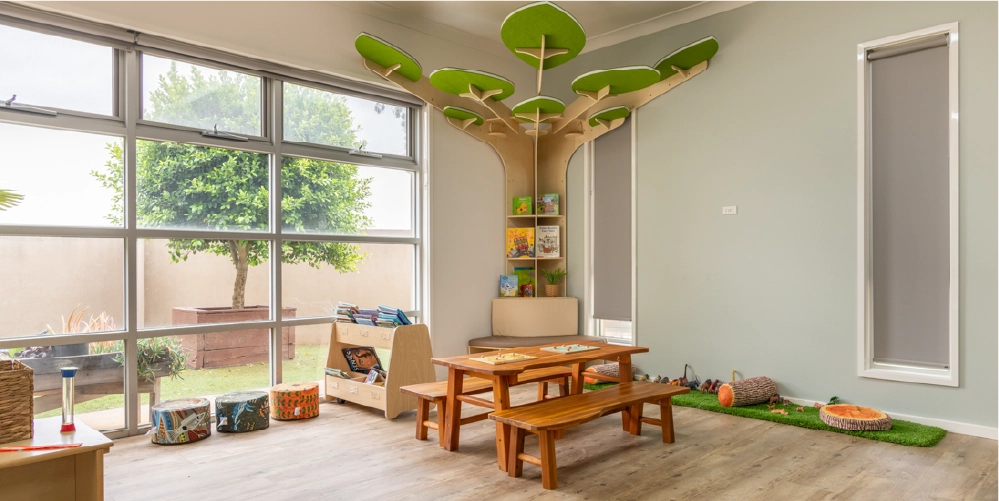
A classroom reading corner does not need too many pieces. The key is to choose furniture that matches the room size, age group, and daily use. In most preschool projects, the main items are book storage, seating, a rug, and sometimes extra storage or a feature piece.
Book Display and Low Bookshelves
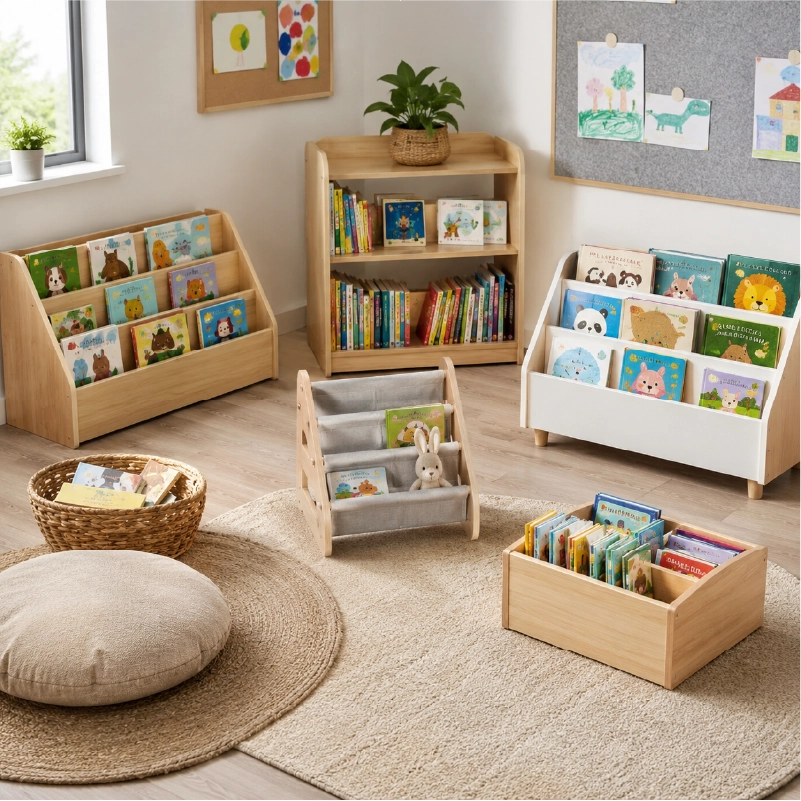
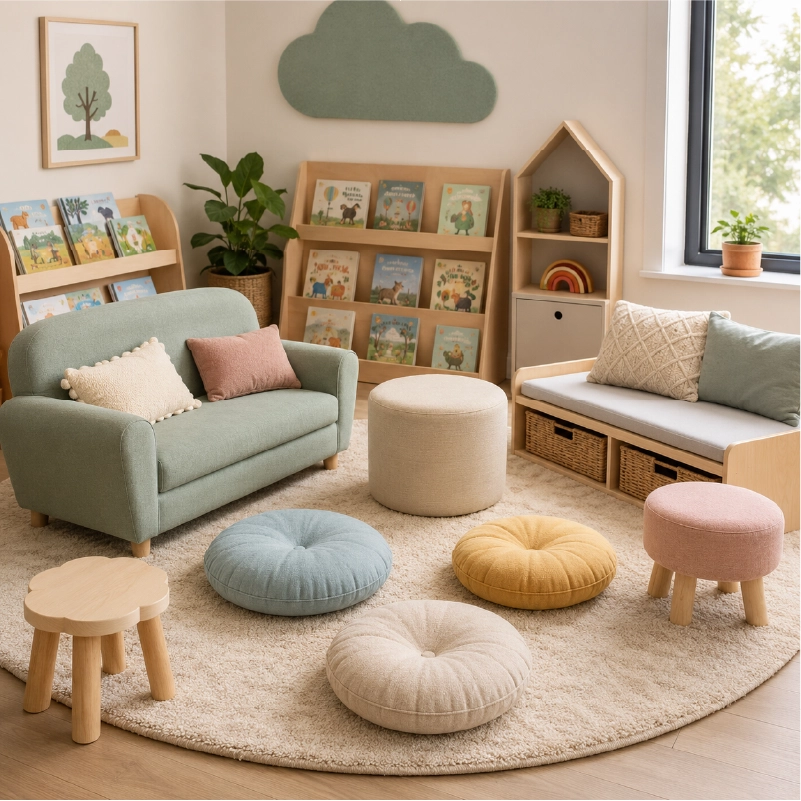
Low bookshelves are the basic furniture for a classroom reading corner. They keep books at children’s height, so children can choose and return books by themselves. Front-facing book displays are also useful because young children often choose books by looking at the cover.
Assentos confortáveis
Seating can be simple. Small sofas, cushions, stools, or reading benches can all work. For daily classroom use, the key is comfort, easy cleaning, and the right size for children.
Classroom Rug
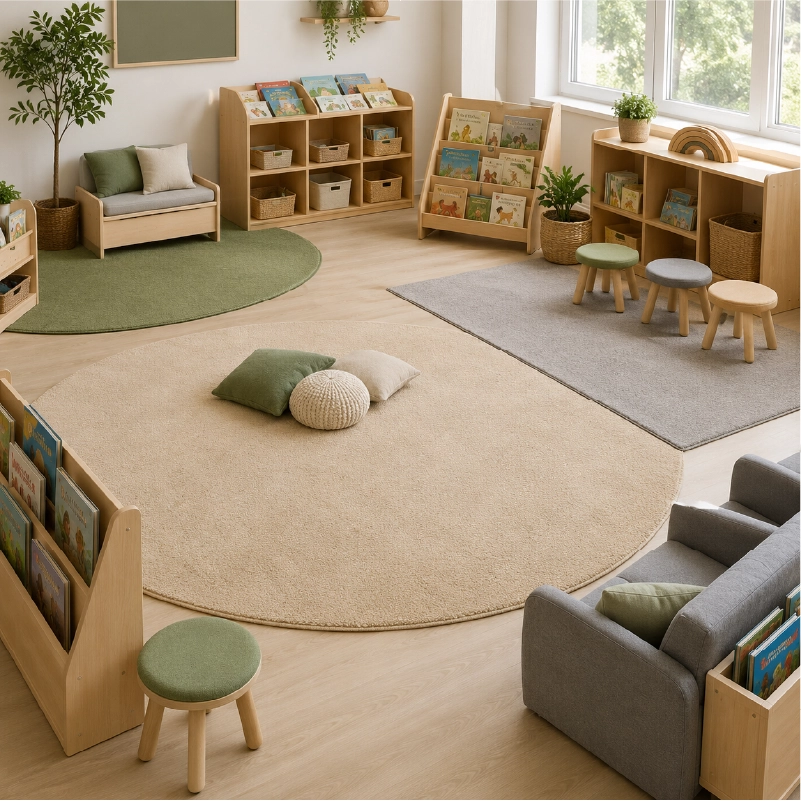
A rug helps define the reading area and makes the space feel softer. Plain colors such as gray, beige, or soft green are often easier to match with classroom furniture and create less visual distraction.
Storage and Organization
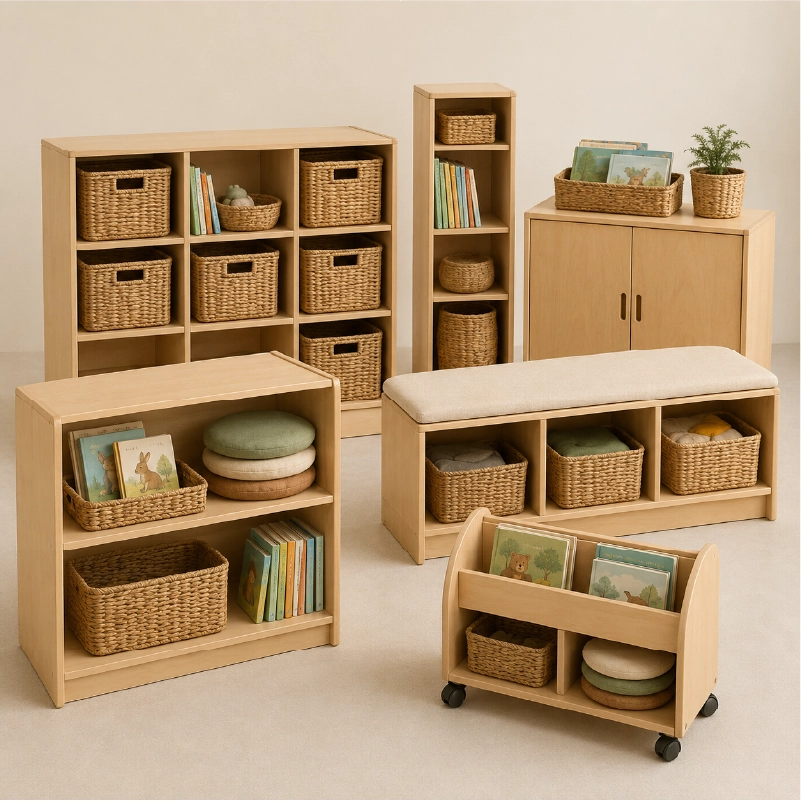
Storage helps keep the reading corner tidy. Open shelves, storage benches, or low cabinets can be used for extra books, cushions, or small story materials. For small classrooms, storage benches are especially practical because they save space.
Feature Pieces
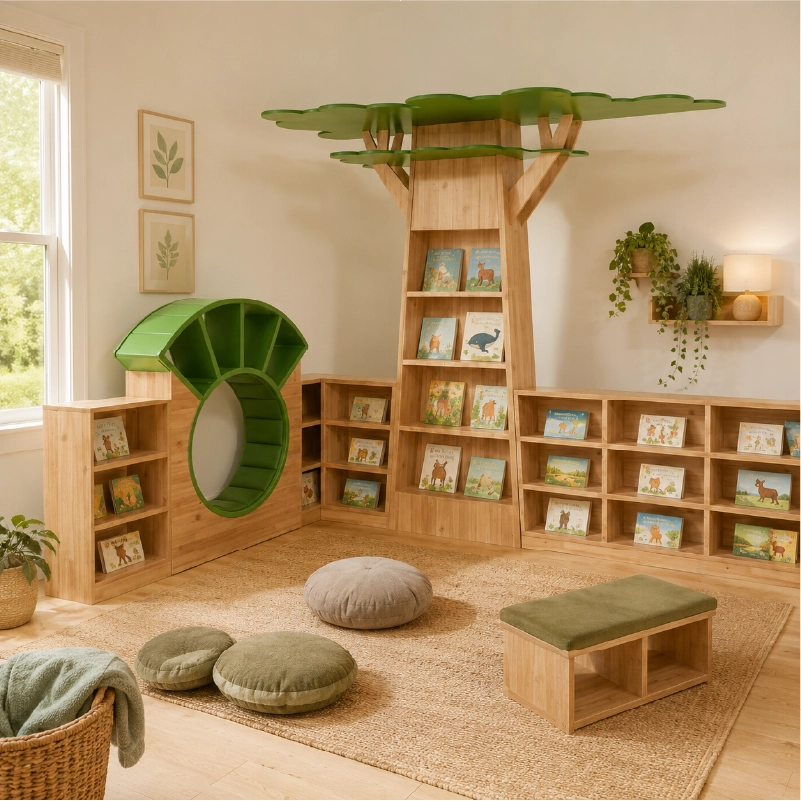
Some schools may add a book nook arch, curved bench, reading tree, or feature shelf. These pieces can make the reading corner more attractive, but they are optional. For many classrooms, simple bookshelves, seating, and a rug are already enough.
Classroom Reading Corner Layout Ideas for Different Room Sizes
The best classroom reading corner setup depends on the available floor space, the age group, and how many children will use the area at the same time. In real preschool projects, we usually plan the reading corner based on both space size and daily use, not only the classroom size.
| Reading Corner Type | Área sugerida | Children at One Time | Melhor para |
|---|---|---|---|
| Small Reading Corner | Sobre 1.5–3 m² | 2–4 crianças | Toddler rooms, small classrooms, compact book areas |
| Medium Reading Corner | Sobre 3–6 m² | 4–8 children | Most preschool classrooms |
| Large Reading Area | Sobre 6–10 m² or more | 8–12+ children | Large classrooms, story time areas, full preschool projects |
These ranges are only a guide. The final size should also consider walkways, teacher supervision, furniture size, and nearby activity areas.
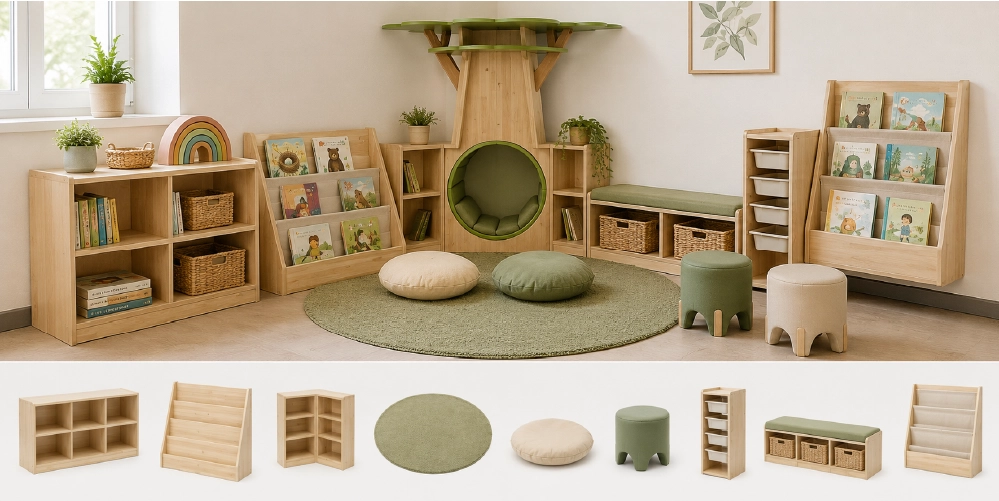
Small Classroom Reading Corner
1.5–3 m²/2-4 children
It is suitable for toddler rooms, small classrooms, or classrooms that only need a compact book area. The goal is to create a clear reading space without taking too much room from tables, chairs, storage, or play areas.
- Low bookshelf
- Front-facing book display
- Corner bookshelf
- Small classroom rug
- Floor cushions
- Small stools
- Narrow storage shelf
- Storage bench
- Wall-side book rack
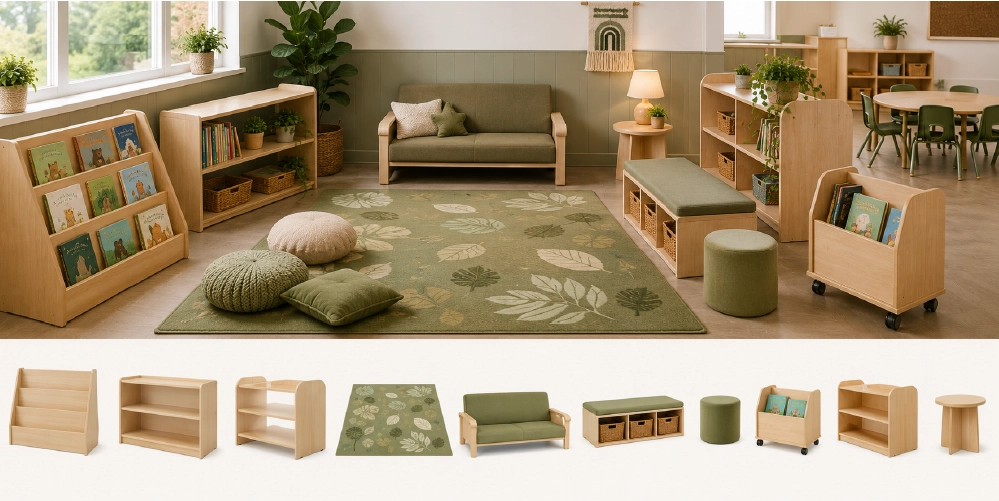
Medium Classroom Reading Corner
3–6 m²/4-8 children
There is enough room for book display, seating, a rug, and simple storage, while still keeping the classroom open for daily activities. If the classroom needs a clearer boundary, a low divider shelf or storage bench can separate the reading corner from block play, dramatic play, or table work.
- Front-facing book display
- Low open bookshelf
- Two-sided bookshelf
- Medium classroom rug
- Children’s sofa
- Reading bench
- Floor cushions
- Small stools
- Storage bench
- Low divider shelf
- Book cart
- Small side table
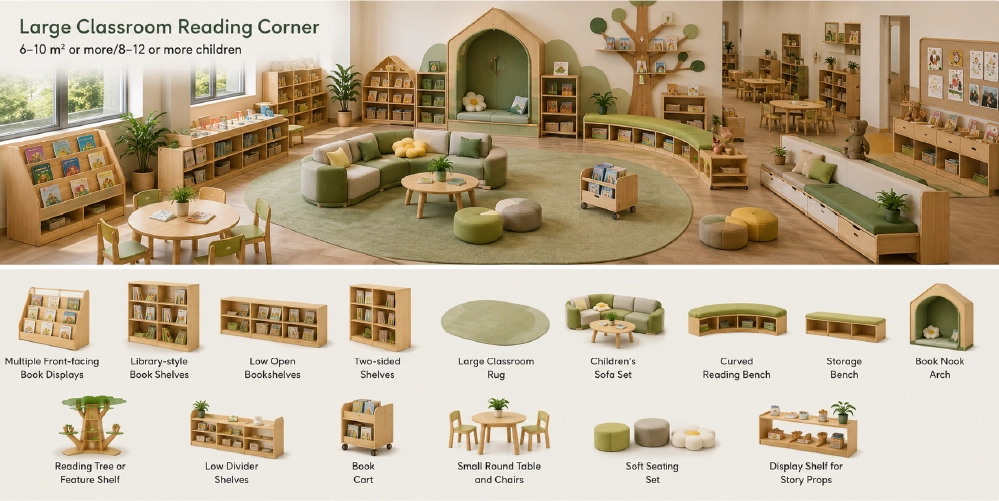
Large Classroom Reading Corner
6–10 m² or more/8–12 or more children
It’s for large learning centre, new school projects, library-style areas, or classrooms that need a stronger visual feature. This type of reading area can support independent reading, group reading, story time, quiet play, and a more complete classroom design.
The reading area should still leave enough space for children to walk, teachers to supervise, and other classroom zones to work properly.
- Multiple front-facing book displays
- Library-style book shelves
- Low open bookshelves
- Two-sided shelves
- Large classroom rug
- Children’s sofa set
- Curved reading bench
- Storage bench
- Book nook arch
- Reading tree or feature shelf
- Low divider shelves
- Book cart
- Small round table and chairs
- Soft seating set
- Display shelf for story props
How to Design a Classroom Reading Corner for Different Age Groups
Children of different ages use a classroom reading corner in different ways. Younger children need a simple and safe space where they can touch, sit, and look at books freely. Older preschool children can use the area with more independence and may stay longer for picture reading, story sharing, or small group reading.
So when planning a classroom reading corner, age should affect the height, openness, book quantity, seating style, and level of teacher supervision.
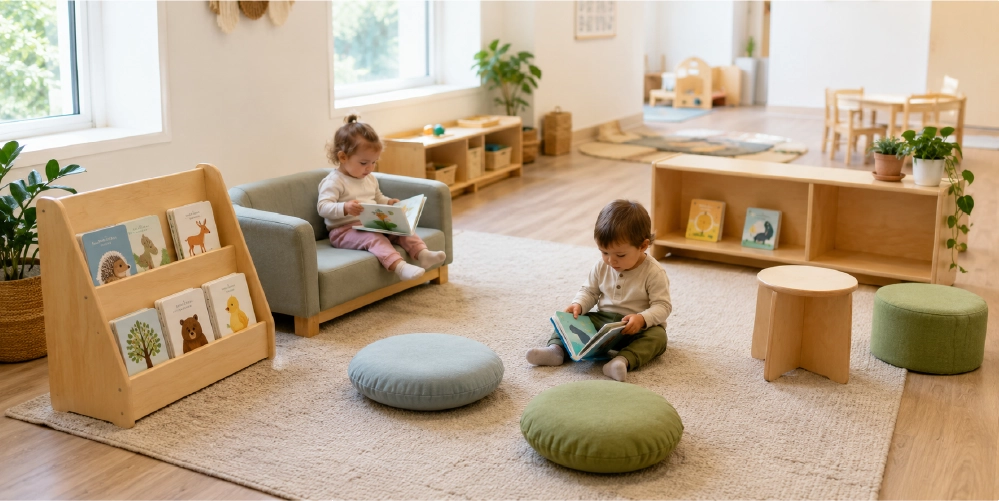
Toddlers: Keep It Low, Open, and Simple
For toddlers, the reading corner should be easy to enter and easy to leave. Children at this age may not sit for a long time, so the space should support short, repeated visits throughout the day.
Keep books low and easy to see. Display fewer books at one time so children do not pull everything out at once. Board books and picture books are easier for toddlers to handle.
The area should stay open for teacher supervision. Avoid making the corner too enclosed or too full. Toddlers still need space to move, stand, sit, and change position often.
- Low access
- Simple layout
- Fewer books on display
- Soft but stable seating
- Open visibility for teachers
- Easy cleaning after daily use
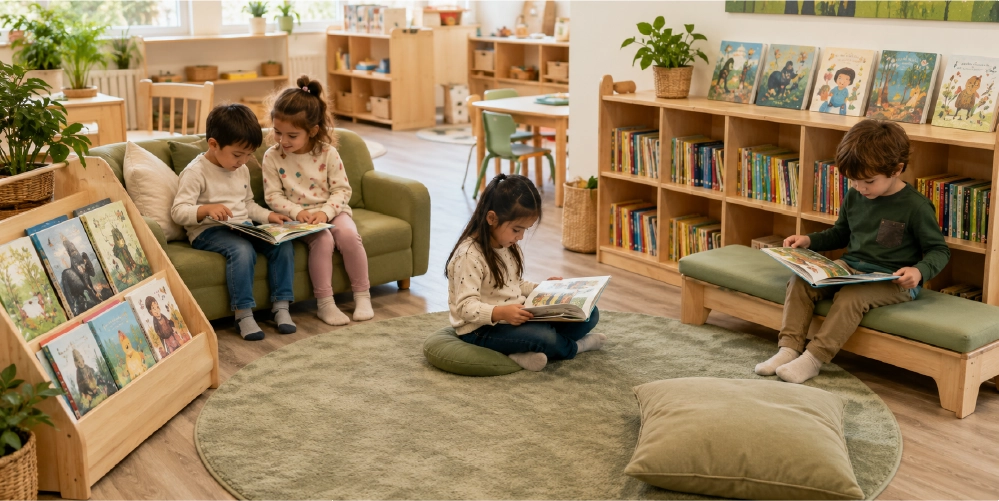
Preschoolers: Support Choice and Longer Reading Time
A preschool-age child can use a classroom reading corner with more independence. They can choose books, sit with a friend, listen to stories, and return books with teacher guidance.
For this age group, the reading corner can show more books, but it still should not feel crowded. Book covers should be easy to see, and books can be grouped by theme, season, or interest
Preschoolers may stay in the reading area longer than toddlers, so comfort becomes more important. The space can also support story time, picture reading, and small group activities.
- Clear book display
- More book choices
- Comfortable seating time
- Simple book organization
- Space for 2–6 children
- Connection with story time or language activities
Pre-K and Kindergarten: Create a More Independent Book Area
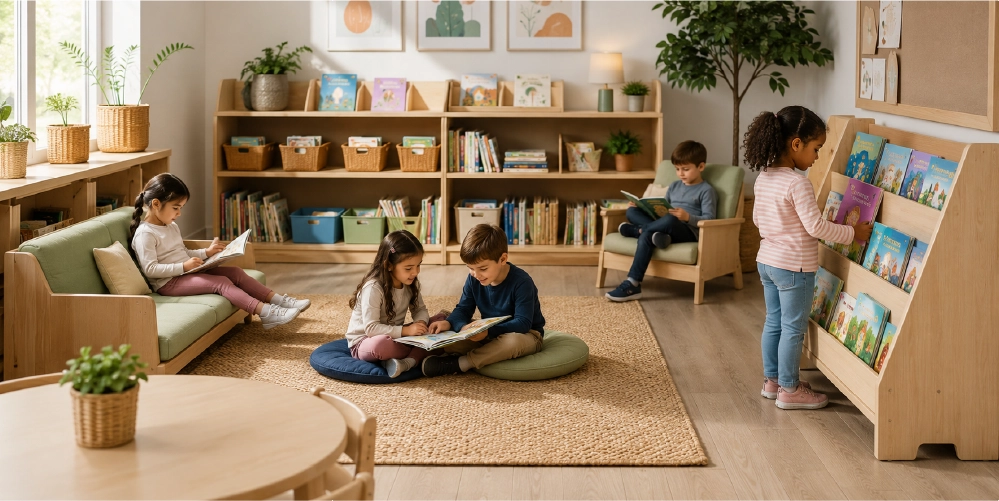
Older children can use the classroom reading corner more like a small classroom library. They can choose books with a purpose, look through books for longer periods, and take part in small reading activities.
At this stage, the reading corner can have clearer book categories. For example, picture books, nature books, story books, and seasonal books can be placed in different sections. Labels or signs can help children return books to the right place.
The space can also support partner reading, teacher read-aloud, or quiet independent reading. It does not need to be large, but it should feel organized and mature enough for older children.
- Clear categories
- More independent use
- Longer sitting time
- Space for partner reading
- Better book rotation
- Simple labels or signs
Mixed-Age Classrooms: Easy for Everyone to Use
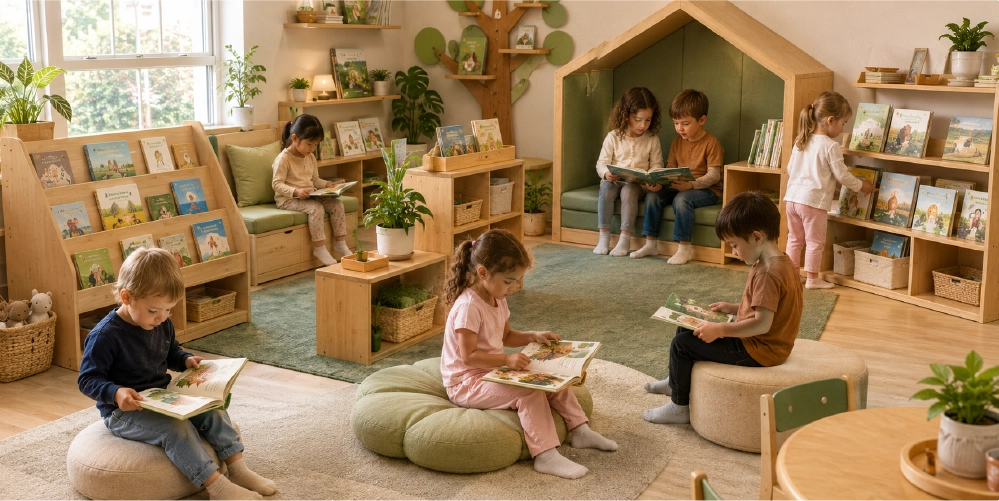
In mixed-age classrooms, the reading corner needs to work for children with different heights, habits, and attention spans. This means the layout should be flexible and easy.
Place the most frequently used books at the lowest level. Books for older children can be placed slightly higher. Seating should also offer different choices, such as floor sitting and bench sitting, so children can use the space in their own way.
The reading corner should avoid becoming too crowded. If younger children move in and out often while older children are reading, the space may need a clearer boundary or a little more floor area.
- Different access heights
- Clear visual organization
- Flexible seating choices
- Enough space between children
- Easy teacher supervision
- Book rotation for different levels
Custom Classroom Reading Corner Furniture for Preschool Projects
For many preschool projects, a classroom reading corner needs to fit a specific room size, age group, color theme, and daily classroom use. Standard furniture can work for simple classrooms, but custom furniture is often helpful when the school wants a better fit or a more complete classroom look.
At Xiair World, we usually start from the classroom layout first. Before choosing the furniture, it is important to know where the reading corner will be placed, how many children will use it, and whether the area will also support story time, quiet play, or small group reading.
Custom Size
The size of the furniture should match the real classroom space. Bookshelves, benches, storage units, book nook arches, and feature shelves can be adjusted based on the room layout.
For small classrooms, the furniture should stay compact and easy to place. For larger classrooms, the reading corner can include wider book displays, longer benches, more storage, or a stronger visual feature.
If the room has a column, wall recess, or special corner, the furniture can also be designed around that space. This is useful in real projects because not every classroom has a perfect square layout.
Custom Color and Classroom Style
Color affects the whole feeling of the classroom reading corner. Many schools prefer natural wood, maple, white, soft green, light blue, or warm neutral colors. These colors are easy to match with preschool furniture and help the reading area feel calm and friendly.
For project orders, wooden furniture, sofas, cushions, rugs, arches, and feature pieces can be matched with the school’s classroom style. This is helpful for Montessori classrooms, Reggio-inspired spaces, natural classrooms, and modern preschool interiors.
Custom Seating
Different classrooms need different seating. Some schools prefer small sofas because they make the reading corner feel more complete. Others prefer cushions or small stools because they are easier to move and store.不
For toddler rooms, seating should be low, stable, and easy to clean. For preschool classrooms, benches, cushions, or small sofas can support longer reading time and small group story activities.
The fabric choice also matters. In daily classroom use, wipeable and durable materials are usually more practical than delicate fabric.
Custom Book Storage
Book storage can be adjusted based on the number of books, the age of the children, and the way teachers manage the area.
Low bookshelves are better for younger children. Front-facing book displays are useful for picture books because children can see the covers clearly. Open shelves are better when the school needs more book capacity.
For smaller rooms, book storage can also be combined with benches, low dividers, or storage cabinets to save space.
Custom Feature Pieces
Some schools want the classroom reading corner to become a special part of the room. In these cases, feature pieces such as a book nook arch, curved bench, reading tree, or themed bookshelf can be added.
These pieces should be chosen based on the available space, not only the appearance. A feature piece works best when the classroom still has enough room for children to sit, move, and use the area safely.
For smaller classrooms, a simple setup with bookshelves, soft seating, and a rug may be more practical. For larger classrooms, feature furniture can make the reading area more attractive and memorable.
Materials, Safety, and Packing
For preschool furniture, safety details should be confirmed before production. Common requirements include smooth edges, stable structure, non-toxic water-based paint, and child-safe materials.
Many projects also need specific material options, such as birch plywood, solid wood, FSC-certified wood, or easy-clean upholstery. For international preschool projects, standards such as EN71, ASTM, or other market requirements may also need to be considered.
Packing and assembly are also important for overseas projects. Classroom reading corner furniture is often designed for flat-pack shipping to reduce volume and make delivery easier. Clear English assembly instructions can help schools, distributors, and installation teams set up the furniture more smoothly.
For full classroom projects, Xiair World can help match the reading corner with tables, chairs, storage units, activity areas, and the overall classroom style. This makes the reading corner feel like part of the whole learning space, rather than a separate furniture set placed in one corner.
Perguntas frequentes
- How many books should be placed in a classroom reading corner?
For toddlers, 10–20 books are usually enough. For preschool classrooms, you can prepare more books but rotate them regularly. Too many books at once can make the area messy. - How often should books be changed?
Books can be changed every few weeks. You can also rotate them based on seasons, classroom themes, holidays, or children’s current interests. - Should a classroom reading corner have labels?
Yes, simple labels help children return books and materials. For younger children, picture labels are easier to understand than text-only labels. - What type of books are best for a classroom reading corner?
Picture books, board books, simple storybooks, nature books, family books, and theme-related books work well. Choose durable books that are easy for children to handle. - Can toys be placed in a classroom reading corner?
A few story props, puppets, or soft animals can be useful. Avoid adding too many toys, or the reading corner may become a general play area. - How can teachers keep a classroom reading corner tidy?
Keep the setup simple. Use low shelves, baskets, clear categories, and fewer books on display. Children should be able to see where everything belongs. - Should a classroom reading corner have a theme?
A theme is optional. Natural, forest, soft color, or seasonal themes can make the area more attractive. Just keep the design simple and not too busy. - Is soft seating required?
Soft seating is helpful, but it is not required. Cushions, stools, benches, or low chairs can also work. The best choice depends on space, age group, and cleaning needs. - Can a classroom reading corner be used without a rug?
Yes. A rug helps define the area, but shelves, benches, or low dividers can also create a clear reading space. Some classrooms avoid rugs for cleaning reasons. - What should be avoided in a classroom reading corner?
Avoid tall furniture, too many books, heavy decorations, hard-to-clean seating, and hidden layouts. The area should be easy to use, easy to clean, and easy for teachers to supervise. - How can a classroom reading corner help children who do not like reading?
Use front-facing book displays, comfortable seating, and books with strong pictures or familiar topics. When children can choose books by themselves, they are more likely to stay interested.
Conclusão
A good classroom reading corner should be easy for children to use and easy for teachers to manage. It does not need to be large or complicated. The most important points are clear book access, comfortable seating, safe furniture, and a layout that fits the classroom.
When planning a classroom reading corner, schools should consider the room size, children’s age, daily use, and cleaning needs. With the right furniture and layout, the reading corner can become a warm, practical, and inviting part of the classroom.