
 Portuguese
  English
  Arabic
  French
  Italian
  German
  Spanish (Spain)
  Thai
Thai  Japanese
  Turkish
  Indonesian
  Vietnamese
  Polish
  Malay
Malay  Swedish
  Spanish (Mexico)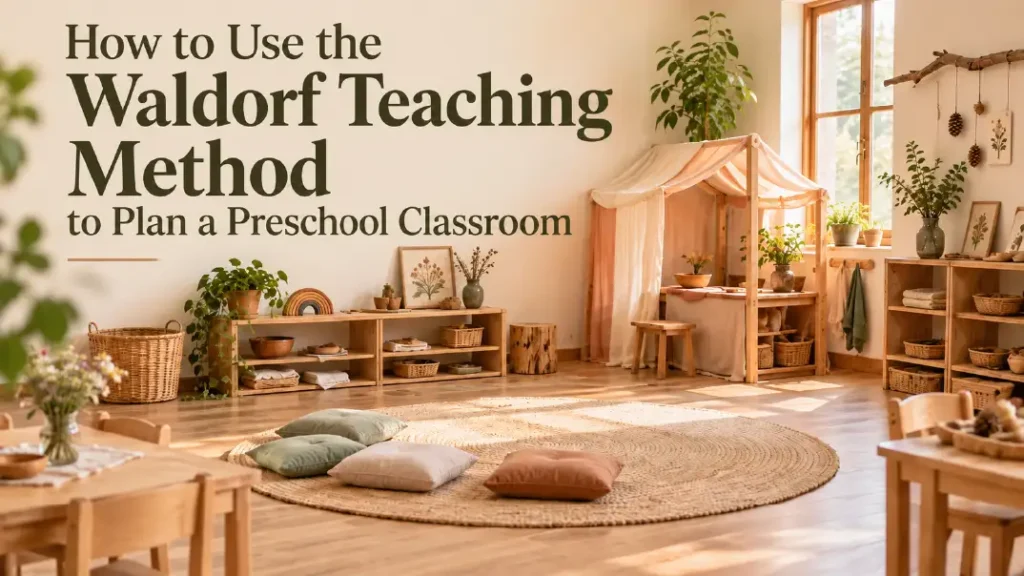
If you want to plan a preschool classroom around the Waldorf Teaching Method, you need to connect educational principles with the way your space actually works. This guide explains how Waldorf ideas influence classroom atmosphere, furniture, materials, activity areas, layout, and the practical decisions you make when planning the room.
Understanding the Waldorf Teaching Method
The Waldorf Teaching Method was developed by Rudolf Steiner and is built around the idea that young children learn best through direct experience, imagination, movement, practical activities, and a strong connection with nature.
In the preschool years, the focus is not on introducing formal academics as early as possible. Instead, you create opportunities for children to learn through play, storytelling, art, music, movement, simple household activities, and outdoor experiences.
Daily rhythm is also an important part of Waldorf education. Rather than filling the day with constantly changing activities, you create a more predictable flow between free play, group time, meals, creative work, rest, and outdoor play. This helps the classroom feel calmer and gives each area a clearer purpose.
Another important principle is simplicity. You do not need a classroom filled with highly themed toys, bright displays, or single-purpose equipment. Waldorf environments usually rely more on open-ended materials, natural textures, and flexible resources that children can use in different ways.
You also give children more opportunities to participate in everyday classroom life. Activities such as setting the table, tidying materials, baking, gardening, or caring for the environment are treated as meaningful parts of learning rather than separate tasks.
When you apply these ideas to classroom planning, the environment becomes part of the teaching method itself. The way you organize space, choose materials, support movement, and create areas for play, practical work, art, storytelling, and quiet activity should all reflect how you want children to use the classroom throughout the day.
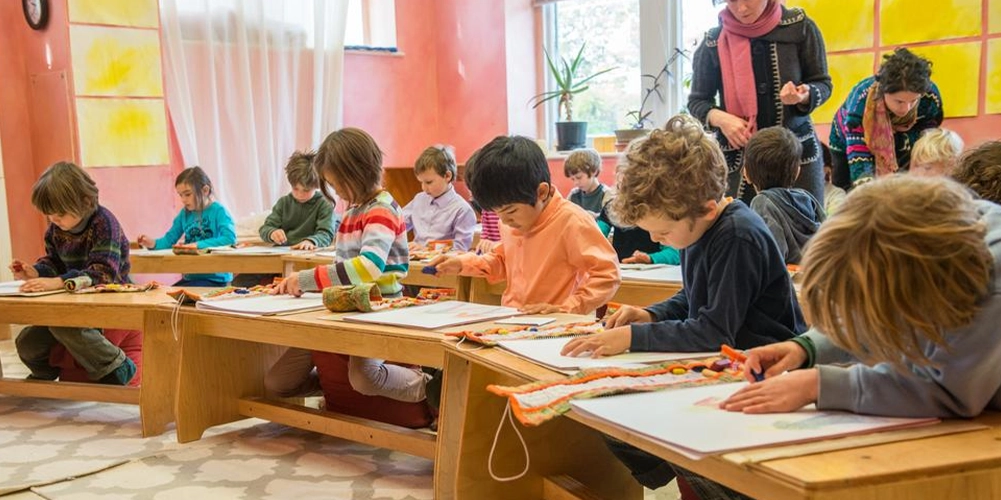
Criando um ambiente de aprendizagem inspirado em Waldorf
A Waldorf-inspired classroom should feel calm and welcoming, but the goal is not only to make the room look natural. You need a space that can change with the daily routine.
In many Waldorf kindergartens, the same classroom may be used for free play, practical activities, circle time, snack, storytelling, and rest at different times of the day.
Leave Enough Open Space
Open floor space is useful space.
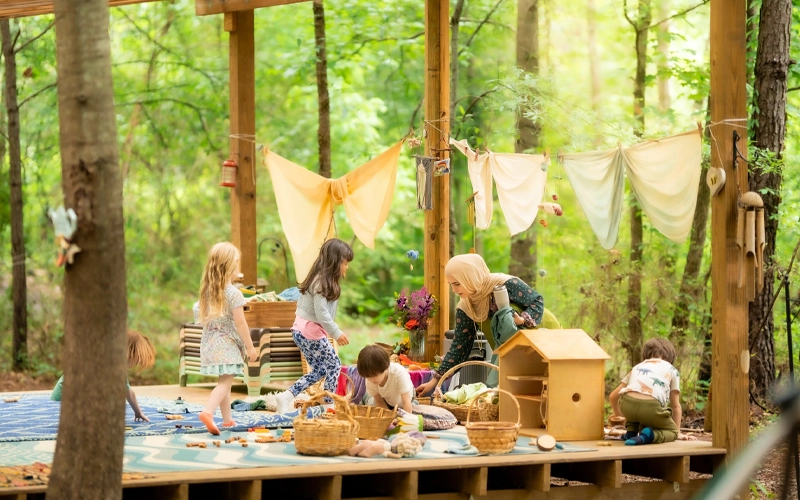
During free play, children may use cloths, blocks, play stands, furniture, and simple loose materials to build houses, shops, boats, or other play settings. Later, the same floor area may be used for circle time, movement, or storytelling.
This means you do not need to fill every wall and corner with furniture.
Create a Warm but Simple Room
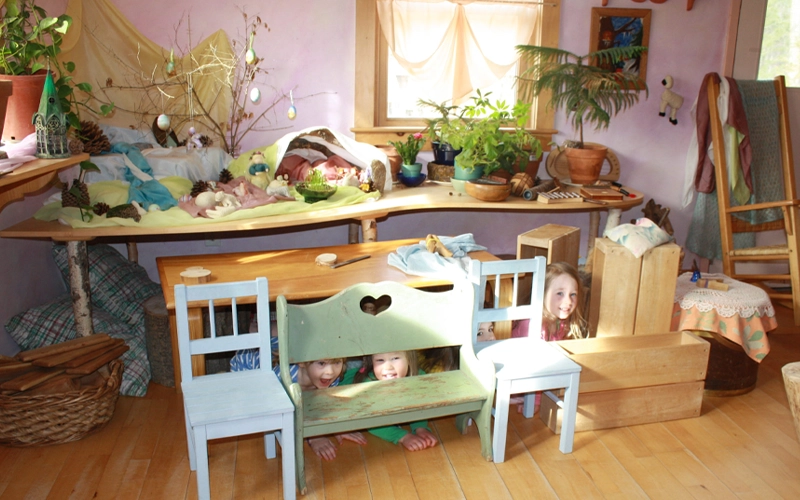
Soft colors, natural light, wood, fabric, baskets, seasonal items, and children’s work can make the room feel warm without making it too busy.
A home-like Waldorf classroom does not need a lot of decoration. The feeling also comes from the way children use the room for daily activities such as preparing food, setting the table, cleaning, resting, playing, and caring for the space.
So when you plan the room, think about how it will be used every day, not only how it will look.
Choose Furniture That Can Be Used in Different Ways
Before adding a product to your furniture list, ask:
What else can this piece be used for?
Por exemplo:
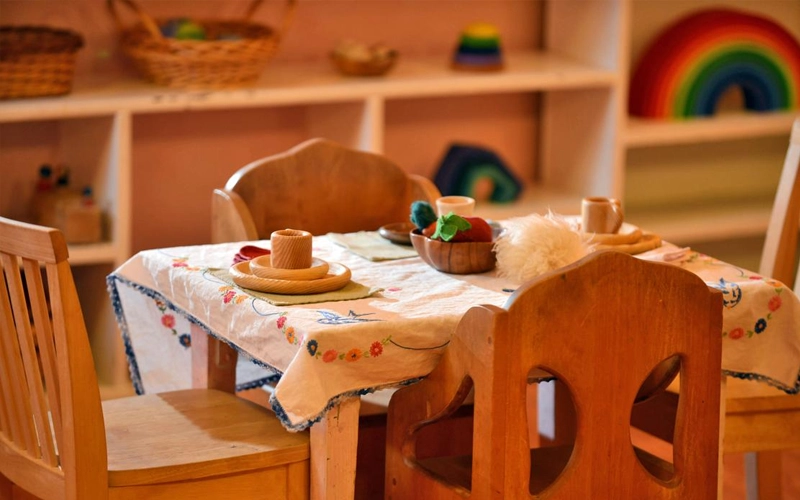
- A table can be used for meals, baking, painting, crafts, and group work.
- A play stand can become a house, shop, theater, fort, or quiet corner.
- A low shelf can hold different materials as your activities change.
- A rug can be used for storytelling, quiet play, or group time.
This can help you reduce furniture that only has one use and leave more open space in the classroom.
Plan for Daily Practical Activities
In many Waldorf classrooms, children may help with baking, preparing food, setting the table, washing dishes, folding towels, sweeping, gardening, and caring for classroom materials.
If you want to include these activities, you should think about:
- whether your tables can be used for different activities;
- where tools and materials will be stored;
- how close the work area is to water;
- where wet or unfinished work can be placed;
- and how the area will be cleaned and used again afterward.
This is more useful than creating a separate area that is only used once in a while.
Balance Natural Materials With Daily Use
Natural materials work well in Waldorf classrooms, but you should not choose furniture only because it looks natural.
For furniture that will be used every day, also check:
- stability;
- correct size for the age group;
- smooth and rounded edges;
- surface strength;
- easy cleaning;
- safe finishes;
- easy repair;
- and whether the furniture can be moved easily when needed.
Natural materials should still work well for daily preschool use.
Basic Furniture Checklist
| Mobília | What It Can Be Used For |
|---|---|
| Tabelas | Meals, baking, art, crafts and group work |
| Cadeiras | Daily seating and table activities |
| Low Shelving | Toys and materials children use often |
| Suportes de jogo | Dramatic play and changing play settings |
| Armazenamento de arte | Painting and craft materials |
| Baskets & Bins | Loose parts and materials |
| Rugs & Cushions | Storytelling, quiet play and group time |
| Cubbies | Personal belongings |
| Closed Storage | Extra materials, seasonal items and adult-use supplies |
You do not need every item in the same quantity. Your furniture list should come from the way you want the room to work.
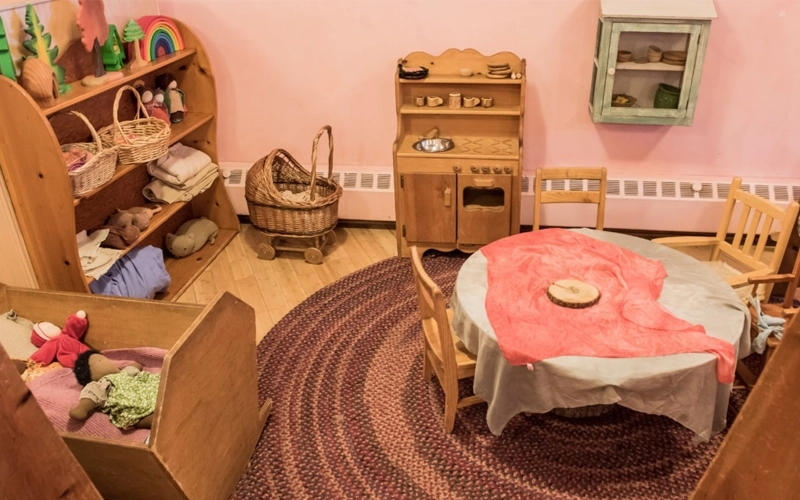
Planning Activity Areas and Classroom Layout
Waldorf classroom planning is often different from simply creating many fixed learning areas.
Instead of starting with a list of permanent zones, start with the daily routine.
Many Waldorf kindergarten schedules move through free play, practical activities, circle time, snack, outdoor play, storytelling, rest, and later play. Some weekly routines may also include baking, painting, crafts, gardening, or nature walks.
Plan the Daily Routine Before the Layout
Write down what happens from arrival to pickup.
Then ask:
- Which activities happen at the same time?
- Which activities can use the same table?
- Which activities need open floor space?
- Which activities need water or easy cleaning?
- Which activities need a quieter place?
- Which materials are only used once or twice a week?
- What needs to move when one activity changes to another?
You may find that you need fewer fixed areas than you first expected.
For example, the same table may be used for baking in the morning, snack later, and painting on another day. The same open floor area may be used for free play first and circle time later.
Give Open-Ended Play Enough Room
Do not make the play area too small just because the furniture itself is small.
Children may use cloths, blocks, play stands, and simple materials to create much larger play settings.
So leave enough room around the furniture for the play to grow.
Keep Quiet and Active Areas Apart Where Possible
You do not need solid walls between every activity, but placement still matters.
Keep storytelling or quiet play away from the busiest walking path where possible.
Practical activities can be closer to tables, storage, and water.
Open-ended play should have enough space to grow without blocking the main path through the room.
The goal is not to create more areas. The goal is to stop activities from getting in each other’s way.
Use Two Types of Storage
Not everything needs to be available to children all the time.
You can divide storage into:
Daily Storage
Materials children use often and can take and return by themselves.
Extra Storage
Seasonal materials, rotating toys, extra art supplies, adult-use tools, and items that need supervision.
This helps you keep low shelves simple and avoid showing too many materials at once.
Check How the Room Works When Activities Change
A floor plan can look good when the room is empty, but the room may become difficult to use during the day.
Check what happens when you move from:
free play → clean-up → circle time → snack
art → clean-up → lunch
- Can children return materials easily?
- Can tables be used without blocking storage?
- Can furniture move without making the paths too narrow?
- Can the room be put back in order without a lot of extra work?
A good layout should work not only during activities, but also when one activity changes into another.
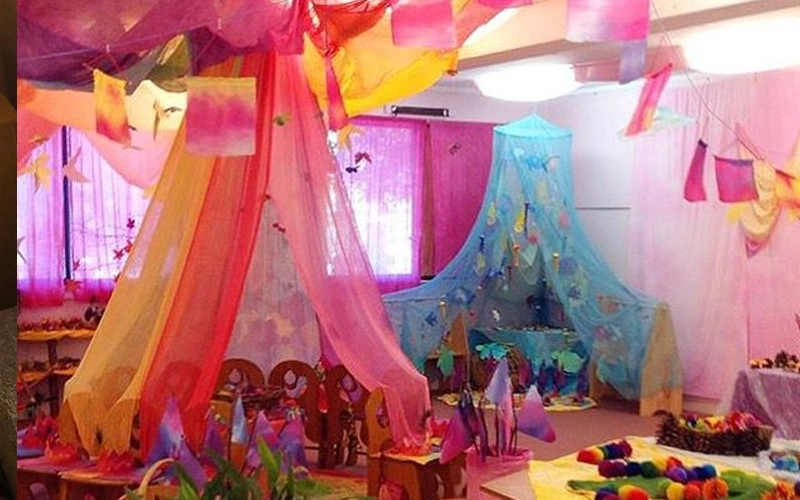
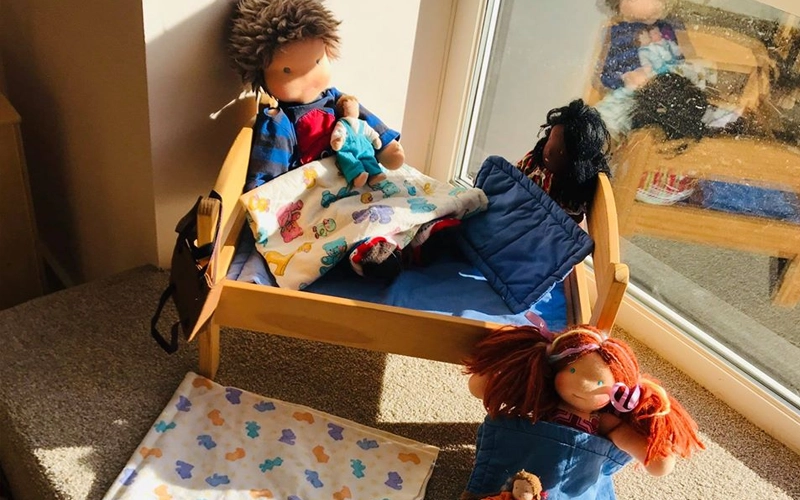
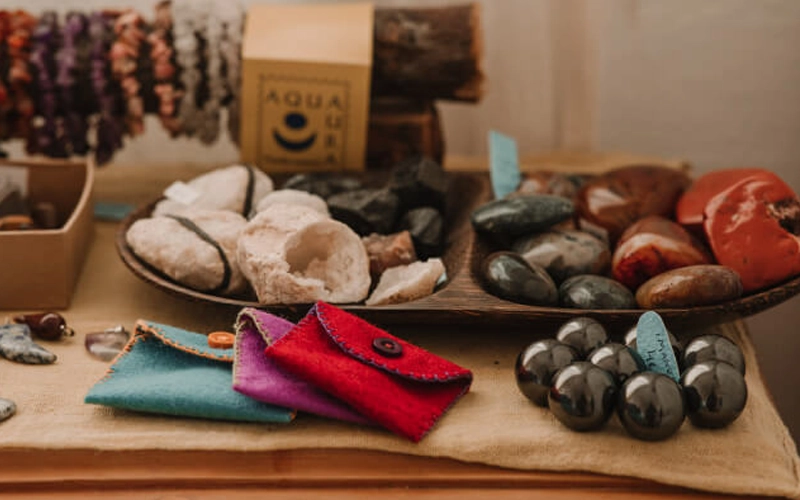
Bringing Nature Into Your Indoor and Outdoor Spaces
You do not need to fill the classroom with natural decorations to create a connection with nature.
You can use natural light, plants, seasonal materials, natural textures, and objects children collect outdoors.
A nature or seasonal display can also work well, but the height and location should depend on how you want children to use it.
A low display can allow children to take a closer look. A higher display may work better when some items are mainly for looking at.
Treat Outdoor Space as Part of the Daily Routine
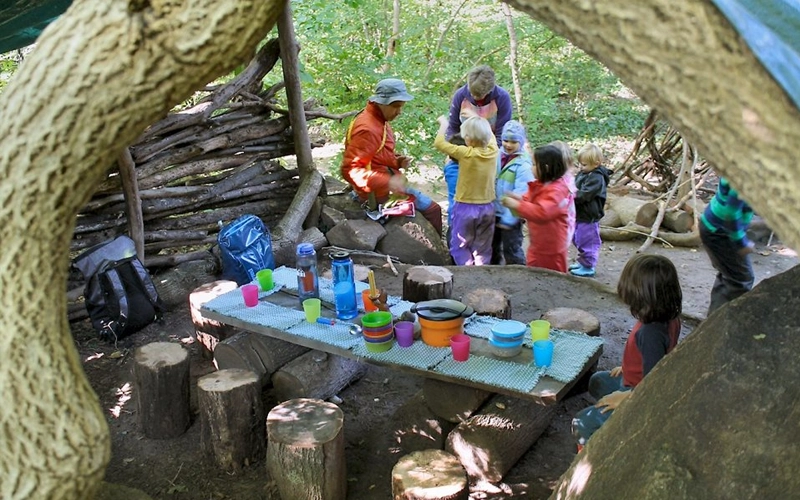
Outdoor time is often a regular part of the day in Waldorf early childhood programs.
Before you finish the indoor plan, think about how much of your day will happen outside.
This may change what you need indoors.
For example, frequent outdoor use may make these things more important:
- coat and boot storage;
- easy movement between indoor and outdoor areas;
- storage for outdoor materials;
- space for wet or dirty clothes;
- and a clear entrance area.
Your outdoor space can support gardening, sand and water play, loose parts, art, storytelling, movement, and nature activities without copying every indoor area outside.
Finalizing Your Waldorf Preschool Plan
Before you order furniture, review the whole room together rather than choosing each product separately.
Check your:
- age group and number of children;
- room size and floor plan;
- daily activities;
- furniture sizes and quantities;
- storage needs;
- open floor space;
- indoor and outdoor access.
A floor plan can help you see whether the furniture fits, whether the room still has enough space to move and play, and whether you are missing anything before you order.
If you have a floor plan, you can send it to us with the age group and number of children. We can help you plan the layout, furniture types, and quantities before you place your order.our school or preschool.
Conclusão
When you use the Waldorf Teaching Method to plan a preschool classroom, start with how the day will actually work, not with a furniture catalog.
Your daily routine helps you decide where to leave open space, which activities can use the same furniture, what children need to reach easily, and how the indoor and outdoor areas should work together.
This helps you create a classroom that feels simple, natural, and practical for daily use.
Waldorf and Reggio Emilia Classrooms Are Not the Same
If you are comparing different preschool approaches, you may also want to look at how a Sala de aula de Reggio Emilia is planned. Both approaches value the learning environment, natural materials, and child-led activity, but they use space, displays, materials, and teacher interaction in different ways.
This comparison can help you decide which ideas fit your own preschool instead of copying one classroom style exactly.
Perguntas frequentes
- Can You Combine Waldorf Ideas With Other Preschool Approaches?
Yes. You do not have to follow every part of the Waldorf method to use some of its classroom planning ideas. You can choose the parts that fit your program, such as simpler materials, more open play space, natural elements, or a stronger daily routine. - How Is a Waldorf Classroom Different From a Reggio Emilia Classroom?
Both can use natural materials and flexible spaces, but the focus is different. Waldorf classrooms usually place more attention on rhythm, imagination, simple materials, and a warm home-like feeling. Reggio Emilia classrooms often give more attention to project work, documentation, displays, collaboration, and the environment as part of children’s investigation. - Do You Need to Follow a Fixed Waldorf Classroom Design?
No. There is no single floor plan that every Waldorf classroom must follow. Your room size, age group, number of children, daily routine, and local requirements should guide the final plan. - Can You Use Modern Preschool Furniture in a Waldorf-Inspired Classroom?
Yes. You do not need every product to look handmade or traditional. Simple shapes, natural or soft finishes, suitable sizes, and flexible use are usually more important than copying a specific Waldorf style. - How Much Should You Change an Existing Classroom to Make It More Waldorf-Inspired
You may not need a full redesign. Start by removing items that make the room too busy, reviewing how much open space you have, simplifying visible materials, and checking whether the room supports the daily routine you want. You can then decide which furniture or storage really needs to change. - Should You Choose Waldorf Furniture Before You Have a Floor Plan?
It is better to review the floor plan first. Product sizes that look suitable on their own may take too much space once tables, shelves, storage, activity space, doors, and walking paths are considered together.