
 English
  Arabic
  French
  Italian
  German
  Spanish (Spain)
  Thai
Thai  Japanese
  Turkish
  Indonesian
  Vietnamese
  Polish
  Portuguese
  Malay
Malay  Swedish
  Spanish (Mexico)
A preschool playground can cost a few thousand dollars for a small equipment setup, or more than $100,000 for a complete commercial project. The biggest difference is usually not the playground equipment itself. It is the scope of the quotation.
Some suppliers quote only the equipment price. Some include delivery. Others provide a full project price that also covers site preparation, safety surfacing and installation.
Before comparing prices, make sure every supplier is quoting the same scope. An equipment-only price cannot be compared directly with a full installed price.
What Does a Preschool Playground Cost at Different Budgets?
The following ranges can help you prepare an early budget. They are not fixed prices. Your actual cost will depend on the site, project location, and construction work.
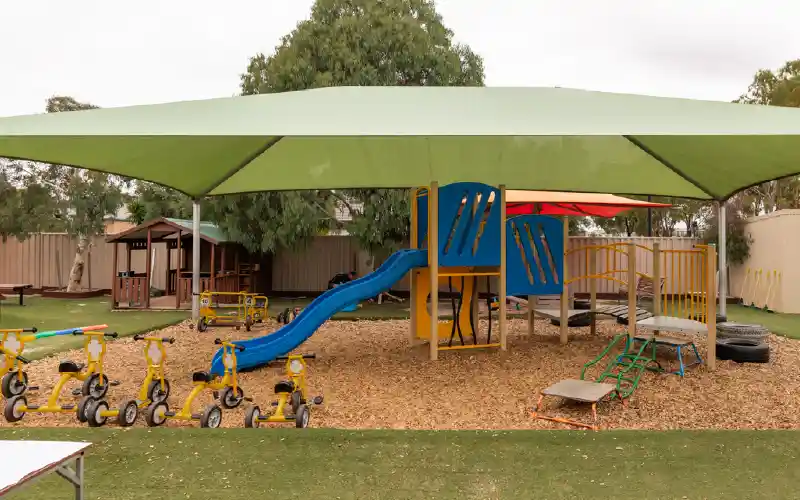
Small Equipment Setup: $3,000 to $15,000
This budget is suitable when the outdoor area is already in good condition, and you only need to add a few items.
For example, the site may already have fencing, suitable flooring, and working drainage. You only need a climbing structure, a , sand-and-water equipment, or several freestanding play units. The benefit is that the money can go toward the equipment.
The limitation is that you will have fewer choices in size, quantity, and custom design. The plan should focus on the play’s needs rather than include too many products.
Standard Preschool Playground: $15,000 to $40,000
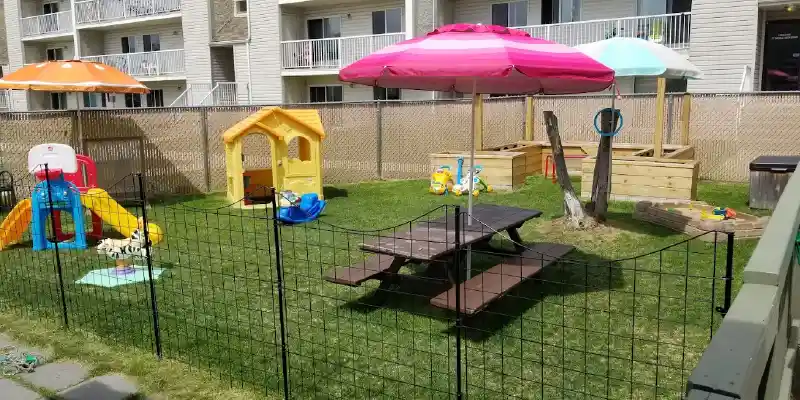
This is a common budget for small and medium preschools. It may cover a main play structure with several additional items, such as swings, balance equipment, sand and water play, or a small playhouse.
When the site is already prepared, this budget may also cover basic installation and the main safety areas around the equipment.
If the project needs customization, imported products or safety surfacing, less of the budget will be available for equipment.
Larger Playground: $40,000 to $100,000
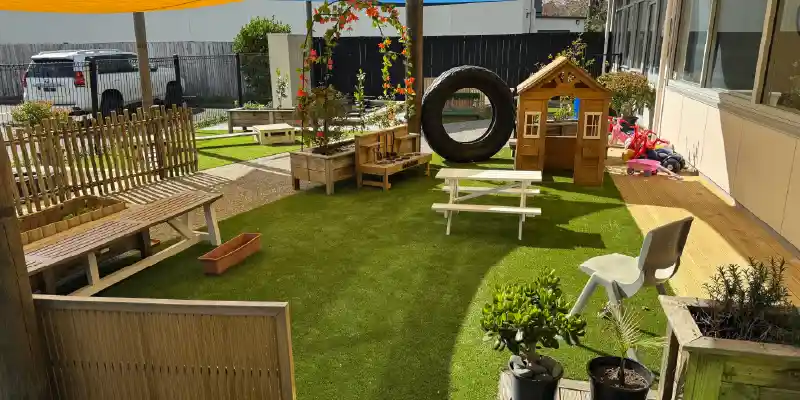
This range is more suitable for larger learning centres, higher child capacity, or a full outdoor area upgrade.
The project may include a larger main structure, separate areas for different age groups, and a wider mix of play activities. It also includes safety surfacing and more site features.
For a new site, ground preparation and installation can take a large share of the budget.
At this level, layout planning matters more than adding more equipment. Good layout can reduce crowding, make supervision easier, and improve how the whole space is used.
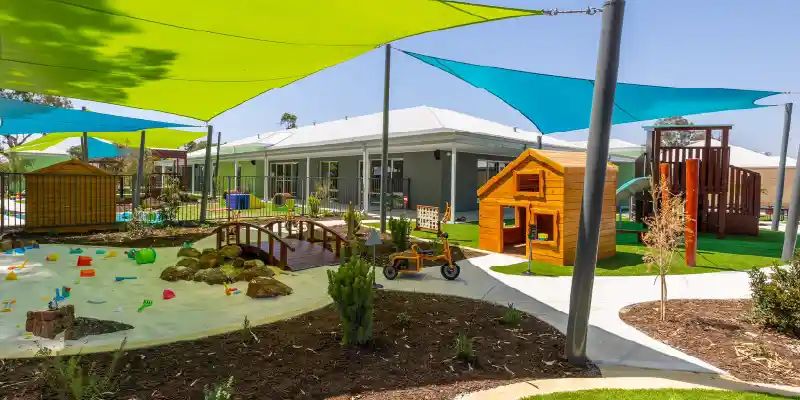
Custom Commercial Project: $100,000+
Large early learning campuses, themed playgrounds, and high-standard commercial projects often cost more than $100,000.
These projects may include custom structures, large safety surfacing areas, shade systems, fencing, accessible paths, site construction, and professional installation.
You assume that the equipment causes most of the cost. In real projects, ground work, surfacing areas, shipping volume, and local labor can have a greater effect on the final budget.
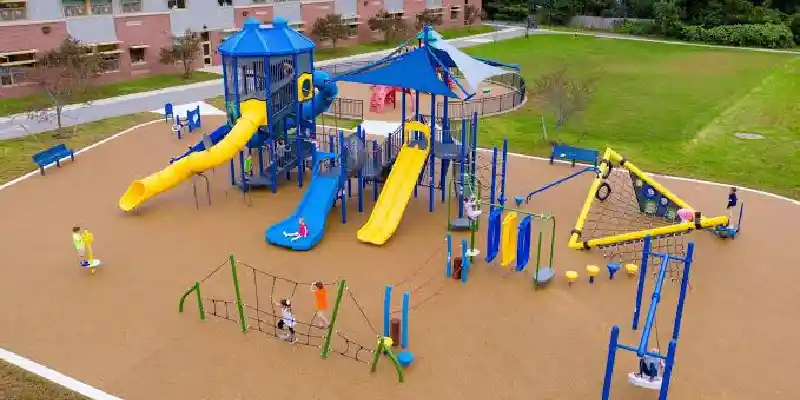
What Is Included in the Total Playground Cost?
You must look at the equipment price first. In a complete playground project, equipment is only one part of the total cost.
- Playground Equipment
This includes the main play structure, slides, climbing units, swings, sand and water equipment, playhouses and other freestanding items.
The first price from the supplier is often the basic equipment price. You still need to confirm whether it includes connecting parts, ground fixing parts, spare hardware, packing, and custom design charges.
For customization, the size, material, color, and play functions should be confirmed before production begins. Changes made after production starts usually increase the price and delay the order. - Safety Surfacing
Common options include poured rubber, rubber tiles, engineered wood fiber, and artificial grass with a shock-absorbing layer.
The cost is not based on the number of playground items. It is mainly affected by the total area, fall height, depth, existing ground condition, and local labor rates.
This is one of the most underestimated parts of a playground budget. The required safety area is usually larger than the equipment footprint. Please do not just measure the equipment itself but forget the clear space that must be left around it. - Site Preparation
Site preparation may include removing old equipment, leveling the ground, improving drainage, pouring concrete footings, and clearing access for construction. A flat site with firm ground and good drainage is less to prepare. Costs rise when the site has slopes, standing water, soft soil, or old concrete foundations that must be higher.
For a new project, this cost is easy to overlook during the budget discussion. - Shipping and Import Costs
When playground equipment is purchased from overseas, the final cost includes international freight, port charges, customs clearance, import duty, local delivery, and unloading. Do not assume that “shipping included” means every delivery cost is covered.
You need to know where the delivery ends, whether customs clearance and import duty are included, and who is responsible for unloading.
Large playground equipment takes up a lot of space. Shipping fees can be a major part of the project cost, even when the equipment is not heavy. - Installation
Installation includes assembly, positioning, ground fixing, adjustment and final checking. Large structures often require concrete foundations. The local contractor should complete these before the equipment arrives. The installation drawings, fixing locations and foundation requirements should be confirmed early.
When there is no experienced local installation team, you also need to budget for extra labor, lifting equipment, and more time on-site. - Shade and Site Amenities
A complete preschool playground should have fencing, shade, seating, paths, signs, and outdoor storage. These items are often left until the end of the project.
This can create a problem. The equipment has already been installed, but the playground still cannot open because the accessories are not ready. It is better to include these items in the first phase, even when some of them will be added later.
What Factors Affect the Cost of Playground Equipment?
The previous section explains the full project cost. This section looks only at why the equipment can vary so much in price.
- Equipment Size and Capacity
Larger equipment needs more material, stronger supports, and more connecting parts. The number of children using the equipment at the same time also affects the design.
A high-capacity structure needs wider platforms, more entrances, and stronger load-bearing parts. Similar structures may have different prices because they are made for different numbers of users. - Children’s Age Range
Different age groups cannot be designed in the same way. The structure for children under two cannot simply be a smaller unit. The platform height, entrance, handrails, slide slope and climbing level all need to match younger children.
When the preschool serves mixed age groups, separate areas are usually safer and more practical than trying to make one structure work for everyone. - Playground Materials
Wood, metal, plastic, and rope have different prices, service lives, and maintenance needs. The lowest purchase price does not always give the best long-term value.
Your local climate also affects the choice. Coastal areas need better rust protection. Hot and wet locations need stronger moisture resistance. Areas with intense sunlight need materials and finishes that resist fading.
You can read our Outdoor Playground Materials guide for a comparison of common materials and suitability for outdoor use. - Standard Design or Custom Design
Standard equipment is easier to price and produce. The structure is already established, and the factory can follow a regular process.
Custom size, themed shapes, special functions, and unusual structures need more design work and production time. From our project experience, simplifying the structure is often a better way to reduce cost than lowering the material quality.
For example, changing a curved shape into a straight structure will lower the price. - Color and Branding Requirements
Standard colors normally have little effect on the price. Extra costs appear when you request a specific Pantone color, special wood tone, school logo, or custom graphic. Do not confirm a color only from a rendering. Check the color code and a real material sample when possible.
Color issues are much easier to correct before production. - Safety and Compliance Requirements
Playground requirements are different from the market. The structure, material, fall protection, and required documents may change based on the country and project type.
All safety and compliance needs should be confirmed during the quotation stage. Do not wait until production is complete to request a different standard or testing document. Late changes may require new parts, a new design, or even full production again.
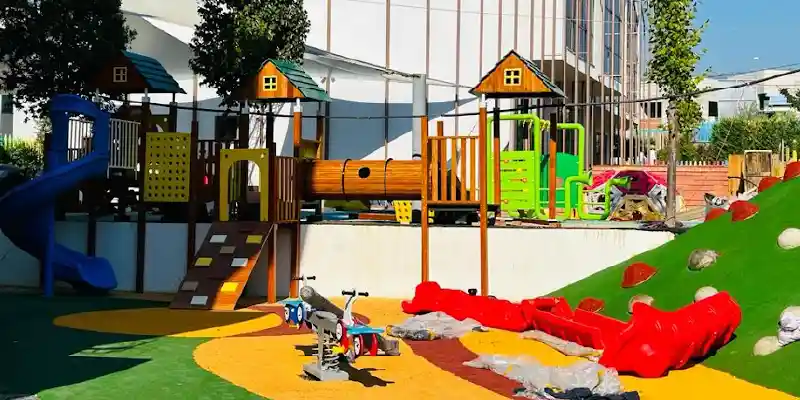
How Should You Divide Your Playground Budget?
There is no single budget formula that works for every project, but the following ranges are useful for early planning.
| Cost Area | Suggested Budget Share |
|---|---|
| Playground Equipment | 40% to 50% |
| Safety Surfacing | 20% to 30% |
| Site Preparation | 10% to 15% |
| Installation | 8% to 12% |
| Shipping and Other Costs | Based on Project Location |
Do not spend the whole budget on equipment.
Check the site. Then estimate the surfacing, ground work, shipping, and installation costs. After that, use the remaining budget to choose the equipment.
Keep 5% to 10% as a reserve for unexpected ground problems, extra construction work, or freight changes.
If the site is remote or needs major work, the equipment may be lower than 40%. If the site is already prepared, most of the budget can go to equipment.
How to Keep the Project Within Budget
Keeping the project within budget does not mean choosing the cheapest supplier. The best savings come from better planning and fewer changes.
Complete the Site Plan Before Selecting Equipment
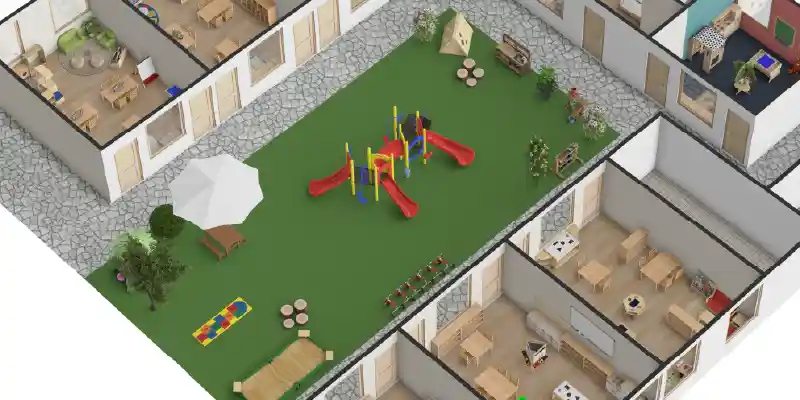
Confirm the site size, safety clearances, entrances, drainage, and construction access before choosing the equipment.
Do not only look at the equipment dimensions.
You also need space for children to move, staff to supervise, and installers to work. The structure may fit inside the site but still leave an unsafe layout.
When equipment is selected before the site is checked, later size changes and redesign work can add both cost and delay.
Avoid Paying for Repeated Play Functions
The limited budget should cover different types of play instead of several items that do the same thing. When the main structure already offers climbing and sliding, you may not need several extra small slides.
The remaining budget can create more value when used for balance play, sand and water activities, role play or sensory equipment.
Before adding an item, consider whether it adds a new play experience, reduces crowding, suits the target age and remains easy for staff to supervise.
Combine Related Products and Shipping
When you also need outdoor furniture, storage or playground accessories, it may be more efficient to produce and ship them together. Combined shipment can make better use of container space and reduce the work of dealing with several suppliers.
It is not always cheaper, so the total volume, packing method, shipping route, and final address still need to be checked.
Build in Phases
You do not have to complete every part of the playground at one time. When the budget is limited, start with a safe and usable core area.
The first stage normally includes the ground foundation, essential safety surfacing, main playground equipment, basic fencing and access paths. Playhouses, sand and water equipment, shade and seating can be added later.
The full layout should still be completed before the first stage begins. Without an overall plan, future equipment may block a path, reduce safety space or require finished surfacing to be removed.
Our How to Build a Playground guide explains the planning and construction order in more detail.
Get Your Preschool Playground Cost
A playground cannot be priced accurately from a product photo alone. To prepare a realistic estimate, the supplier needs to know:
- Site dimensions and ground
- Children’s age range and capacity
- Project location
- Materials and play functions
- Total budget and what it must include
- Target completion date
These details affect final project cost.
For example, a $30,000 equipment budget is different from a $30,000 budget that must cover freight, surfacing and installation.
Send the site plan to Xiair World, photos and budget, and we can prepare a layout, equipment list and itemized cost estimate for your project.
FAQs
- 1. Can I order only one small playground structure
Yes. This works well when the site already has suitable flooring, fencing and installation conditions. For an international order, check the freight cost carefully. Shipping one small structure may have a high cost compared with the equipment price. - 2. Can playground colors match our school branding?
Yes. Specific colors, wood tones, logos, and printed graphics can normally be customized. Some requests may require a sample or an extra production process. The final color should be confirmed before production starts. - 3. How long is a playground quotation valid?
The equipment price may stay valid for a set period, but freight rates often change faster. When project approval takes a long time, ask the supplier to update the shipping cost before placing the order. - 4. Can playground equipment be customized for children under two?
Yes, but it must be designed for that age group. The platform height, entrance, handrails, slide slope, and climbing level must suit younger children. A regular preschool structure should not simply be reduced in size. - 5. Should I order a sample before placing a large order?
For a custom project, you can ask for material samples, color samples or a sample of an important part.
Conclusion
The cost of a preschool playground should not be judged by the equipment price alone. Site conditions, safety surfacing, freight, installation, and local construction can all change the final amount.
Confirm the full project scope before choosing the equipment. When the site, age group, budget and delivery needs are clear at the beginning, it becomes much easier to control the cost and avoid expensive changes later.