
 Arabic
  English
  French
  Italian
  German
  Spanish (Spain)
  Thai
Thai  Japanese
  Turkish
  Indonesian
  Vietnamese
  Polish
  Portuguese
  Malay
Malay  Swedish
  Spanish (Mexico)
 Locker Cubbies For Coats, Bags, And Shoes
You can give each place a clear daily routine: a coat hangs at the hook, a backpack stays in its section, and shoes stay below. Xiair World supplies locker cubbies with open or enclosed fronts, bench options, nameplate holders, and agreed dimensions, materials, and finishes for your project.
- Separate places for coats, backpacks, shoes, and small personal items
- Hooks, shelves, shoe spaces, benches, doors, and nameplate holders
- Open, bench, door, mobile, nameplate, and mixed locker cubby formats
- Custom dimensions, materials, colors, and finish details
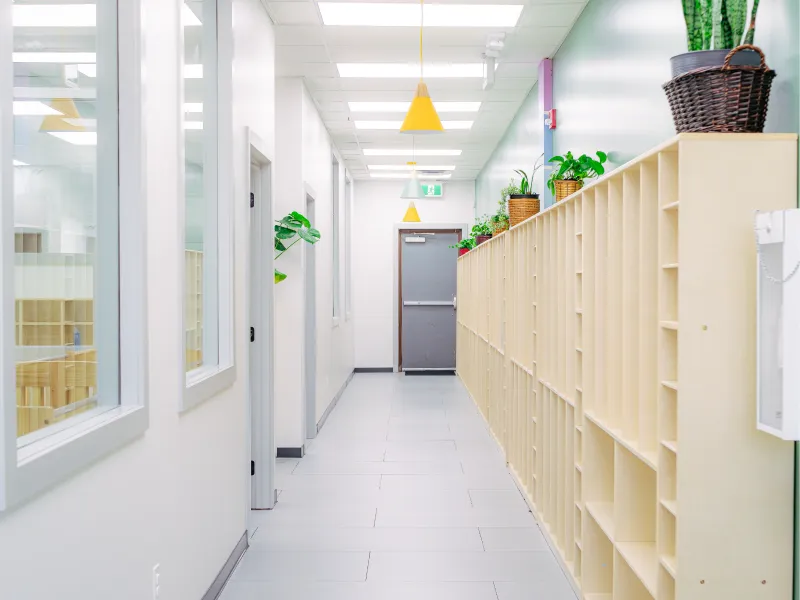
A Locker Cubby Has To Work At Drop-Off And Pick-Up
You feel the difference when each place has an obvious sequence: the bag has a section, the coat has a hook, the shoes have a lower space, and the name or number is easy to find. That keeps the entry area easier to supervise and makes the storage useful to the child, not only to the room plan. The lower shelf, divider depth, and hook position matter because bulky coats and backpacks do not use the space in the same way.
Coats stay within reach
Hook height and spacing can be set around the way you use the room.
Bags have a clear home
Open compartments make daily drop-off quick without blocking the walkway.
Shoes stay below
A planned lower zone keeps footwear separate from coats and backpacks.
Storage Formats For Your Room Plan
The formats below belong to one locker cubby range. You can compare the main construction first—open bays, bench seating, doors, nameplate holders, wheels, or mixed sections—then confirm hooks, shelves, labels, and shoe space around your layout.

Open Locker Cubbies
Open locker cubbies keep each place visible. You can use a top shelf for hats or small personal items, a central hanging zone for coats and bags, and a lower shoe space that can be checked and cleaned easily.

Bench Locker Cubbies
Bench locker cubbies add a stable sitting surface below the storage sections. You can confirm seat height, front edge, cubby depth, and the position of hooks so changing shoes does not block the walkway.

Door Locker Cubbies
Door locker cubbies give each place a cleaner front when you prefer belongings to be less visible. You can confirm door swing, finger clearance, label position, and lower shoe storage before production.

Mobile Locker Cubbies
Mobile locker cubbies are useful when you need the storage run to move between rooms or change with the layout. Wheel type, locking method, handle location, floor clearance, and unit stability need to be agreed together.

Locker Cubbies With Nameplates
Nameplate locker cubbies make each place easy to identify without turning the unit into a closed metal locker. You can confirm the holder size, label format, hook layout, upper shelf, and lower shoe compartment for each section.

Mixed Locker Cubby Systems
Mixed locker cubby systems let one run combine open sections, nameplate holders, doors, benches, and shoe spaces. This is useful when different parts of the room need different storage actions but the finished row still needs to look consistent.
Details That Decide Whether The Locker Works
You can confirm the main shape in a drawing, but daily use depends on the small relationships inside each section. A hook that is too high is not useful; a shoe space that is too shallow becomes a floor pile; a label holder that cannot be replaced becomes a maintenance problem. Before production, check the points below against your room and the items you expect to store.
- Overall width, depth, and height for the available room
- Section count and usable space for each coat and backpack
- Hook quantity, height, spacing, and fixing method
- Upper shelf, nameplate holder, and lower shoe compartment
- Bench height, front edge, floor clearance, and cleaning access
- Open fronts, doors, colors, numbering, and anti-tip or fixing details
Materials And Finishes For Locker Cubbies
For a locker cubby, the finish has to handle more than appearance. The front edge, hook fixing area, shelf surface, and lower shoe zone are touched and cleaned every day. You can choose a natural wood look, painted panels, laminate faces, or selected color combinations, then confirm the edge treatment, hardware, label holders, and cleaning expectations together. This is where a clear material and finish brief prevents a good-looking sample from becoming the wrong production result.
Panel and body finish
Select a natural wood look, painted face, or laminate appearance according to the project brief.
Edges and touch points
Confirm rounded edges, front treatment, hook finish, and bench surfaces where hands and shoes meet the unit.
Fronts and labels
Use open fronts, doors, label holders, or numbering when you need a faster daily handover.
From Your Locker Cubby Brief To Factory Production
You can send a room length, number of places, target height, preferred format, or even a simple sketch. The production brief becomes useful when it records the storage action for each section—hang, place, label, sit, or store shoes—along with the material, finish, hardware, quantity, and packing requirements.
01 Confirm The Storage Brief
You share the room length, number of places, age or reach range, coat and backpack volume, shoe requirement, bench need, and any corner or access limits.
02 Confirm The Construction
You set the section width and depth, hook layout, upper shelf, shoe space, nameplate holder, doors, bench, wheels, and fixing details that belong to the chosen format.
03 Review The Drawing And Finish
You check the overall run, clearances, door movement, label position, edge treatment, colors, and the way each section sits next to the next one before production.
04 Produce, Check, And Pack
You receive production against the approved details. Checks cover dimensions, panel edges, hardware fit, finish consistency, stability, quantity, carton marks, removable parts, and assembly notes.
Factory-Made Locker Cubby Products
You can use the product slots below to show actual locker cubbies made in the factory. The useful details to show are not only the front view: include the hook fixing, nameplate area, bench edge, lower shoe space, panel joints, finish, and how the units align in a row.
Locker Cubbies Made Around Your Room Plan
You do not have to fit every room into one fixed row. A useful locker cubby run can follow a straight wall, turn a corner, leave a passage clear, or combine bench and non-bench sections. You can also keep the outside finish consistent while changing the inside arrangement to suit coats, backpacks, shoes, and daily routines.
- Straight runs sized to the usable wall length
- Corner or return layouts where the room turns
- Bench sections placed where shoes are changed
- Open, door, and nameplate sections combined in one run

Locker Cubbies At A Glance
You can send a short brief and confirm the details that affect the finished storage run.

Designed For
Coats, backpacks, shoes, and personal items
Storage Actions
Hang, place, label, sit, and put away
Configurations
Open, bench, door, mobile, nameplate, and mixed
Key Details
Sections, hooks, shelves, shoe spaces, labels, and fixing
Finish Options
Wood-look, painted, laminate, and selected hardware
Supply Support
Layout review, production checks, packing, and delivery coordination
Questions You May Have Before Ordering
You can use these questions to prepare the information needed for a clear locker cubby brief.
Ready To Plan Your Locker Cubbies?
Send your room dimensions, number of places, preferred format, nameplate or bench requirements, and finish direction. You can start with a standard arrangement or request a custom drawing.