
 Spanish (Spain)
  English
  Arabic
  French
  Italian
  German
  Thai
Thai  Japanese
  Turkish
  Indonesian
  Vietnamese
  Polish
  Portuguese
  Malay
Malay  Swedish
  Spanish (Mexico)
 If you are planning a flexible seating classroom, start with the room, not the products. Decide where children need to sit, move, work together or find a quiet place. Then choose the furniture that supports those moments.
Flexible seating does not mean removing every chair. It means giving children a few safe choices and making sure each choice fits the activity, the child and the space.
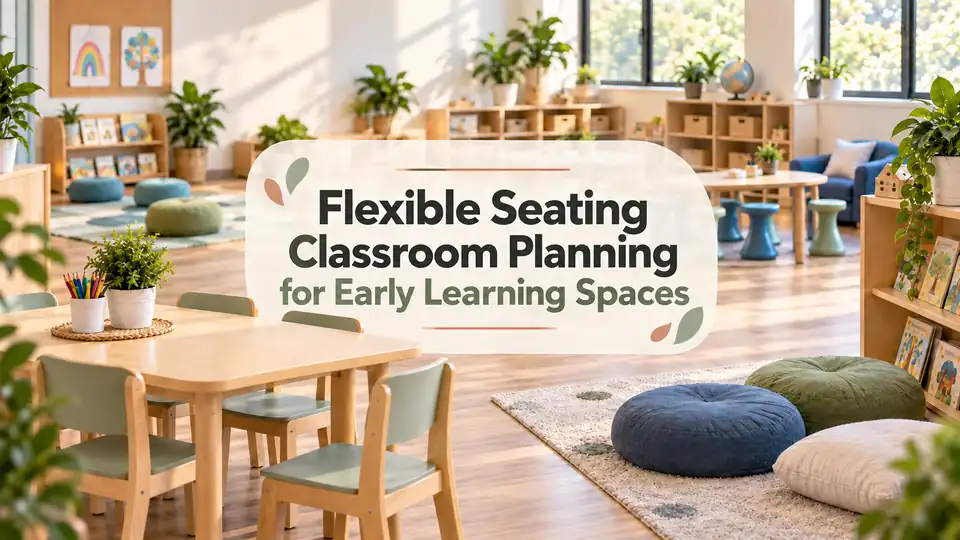
What flexible seating looks like
You can build a flexible seating classroom with child-sized chairs, stools, floor cushions, mats, a soft reading seat, low tables and mobile tables. You do not need every type. You need the options that match the way you use the room.
You get useful choice when each option helps a child take part in an activity. You may use a floor cushion for a book or a small group talk. You may use a chair for drawing, meals or a task that needs steady hand control. You may use a mobile table to change a group from four children to eight, but only if you have somewhere safe to move it.
You can think about flexible space through three simple ideas: you can change the room, children can choose how they work, and the space can support different activities. You also need to match the setup to the activity instead of treating flexibility as a product feature. You can read the findings in the 2026 review of flexible classroom design, which draws on 118 studies.
You can use flexible seating to create more chances to stand, move and work with others. In this systematic review of flexible learning spaces, you can see links with less sitting, more standing and movement, and stronger engagement in the spaces studied. Treat the findings as a guide rather than a promise because the review covered a small number of studies.
You should also be careful with claims about marks or test results. In the ERIC review of dynamic seating, you can see some positive results for attention and in-seat behaviour, especially for children with attention difficulties. You do not get a clear answer about memory, concentration or academic results, and the quality of the studies varied.
Start with the way you use the room
Before you look at products, write down how you use the room. Include:
- whole-group talks and circle time;
- small-group work at a table;
- quiet work, drawing and early writing;
- blocks, sensory play and other floor activities;
- meals, snacks and cleaning;
- arrivals, departures and changes between activities.
Then ask a more useful question than “Which flexible seat should you buy?” Ask “Where does the current room make this routine harder?” You may find that the problem is a table that cannot move, a shelf that blocks a view, a reading space with no clear edge or too much furniture around the main activity area.
If you are planning one room for 25 children and another for 16, you may need different numbers of tables and chairs, carpets for activity zones, cushions for reading, and storage that can move when the activity changes. You need the floor plan as much as the product list because each item has to fit a real part of the day.
Choose a few options that fit
You do not need to replace every chair. Start with a mix that gives you a clear reason for each option:
- Sillas for meals, drawing, writing and tasks that need steady support.
- Floor cushions or mats for books, group talk and quiet floor work.
- Stools for short tasks when children can sit safely without leaning or tipping.
- Soft seating for a reading or calm area, with enough space to get in and out.
- Mobile tables or carts when you need to change a zone or store an item after use.
Keep some familiar seating. A flexible room should give children more than one way to take part, not force every child into the same new style. You should also check that the options are shared fairly and that a child who needs firm support is not left with only a soft or moving seat.
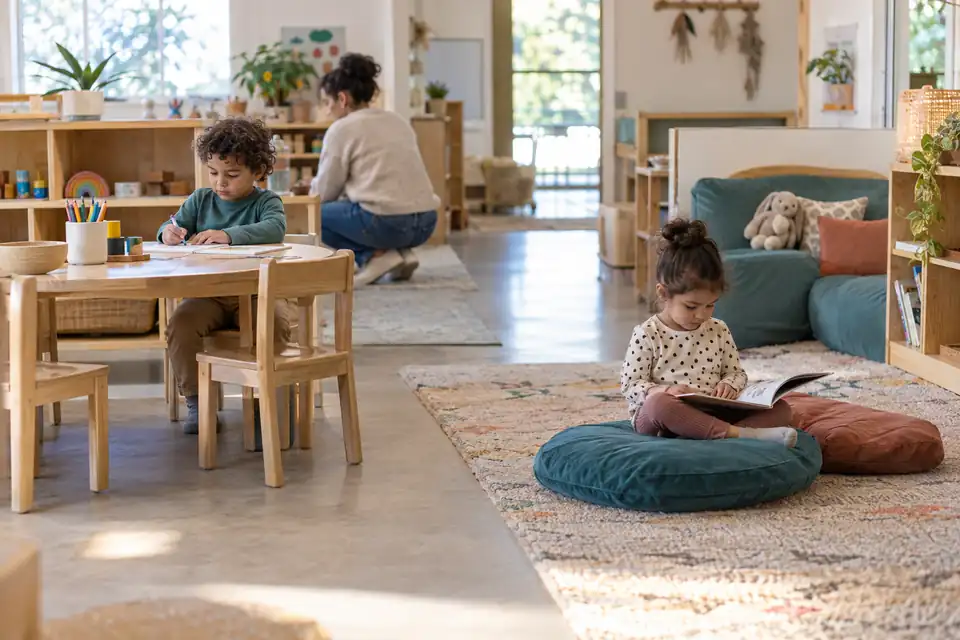
Match the size before the style
You can use age as a starting point, but it is not the whole answer. Check whether a child can place their feet safely, reach the work surface, sit without slipping and get up without climbing over another child. Check the table and chair together. A chair can look right on its own and still be a poor match for the table.
Use the table below as a starting point when you compare sizes. Children in the same age group can be different, so check the actual sitting position before you order.
| Child height | Chair seat height | Table height | Common use |
|---|---|---|---|
| 80–95 cm | 20–26 cm | 36–42 cm | Young toddlers |
| 95–110 cm | 26–31 cm | 42–52 cm | Toddlers and younger preschool |
| 110–125 cm | 31–35 cm | 52–59 cm | Preescolar |
| 125–140 cm | 35–40 cm | 59–66 cm | Older preschool and early primary |
These are working ranges, not a universal standard. Check local requirements, product specifications, foot support and knee space before you approve a size.
En el review of school furniture design and size, you can see why the match between furniture size and children’s body measurements matters for physical comfort and some performance measures. Use that point as a reason to check fit before colour or style.
If you work with ages 1–2, 2–3 and 3–5, you may need separate table and chair sizes. You may also need to check whether a chair will fit children aged 3–6. Ask those questions before you compare finishes. If you are buying for more than one room, keep a simple size list so you do not order one height for every age group.
Make the room easy to use
A flexible seating classroom still needs clear routes and good sightlines. You should be able to see where children are working, hear what is happening and reach each area without moving several pieces first.
You can look at the room from a child’s height. Check the path from the door to the main areas. Separate loud and quiet activities where possible. Leave space around tables so children can pull out a chair without blocking a route. Keep low shelves where children can reach materials, and keep adult-only items out of reach.
Head Start guidance asks you to check traffic patterns, line of sight, activity areas, movement space and the size and strength of furnishings. The classroom environment guide also suggests looking at the room from a child’s point of view. NAEYC guidance makes a similar point about low shelves, child-sized seating and furniture placement that supports movement.
Do not treat mobile furniture as automatically safe. If you use wheels, confirm how the wheels lock, where the item can move and who can move it. Secure tall or top-heavy storage. The U.S. Consumer Product Safety Commission advises you to anchor furniture and keep heavier items low. You can review its Anchor It guidance before you approve a storage plan.
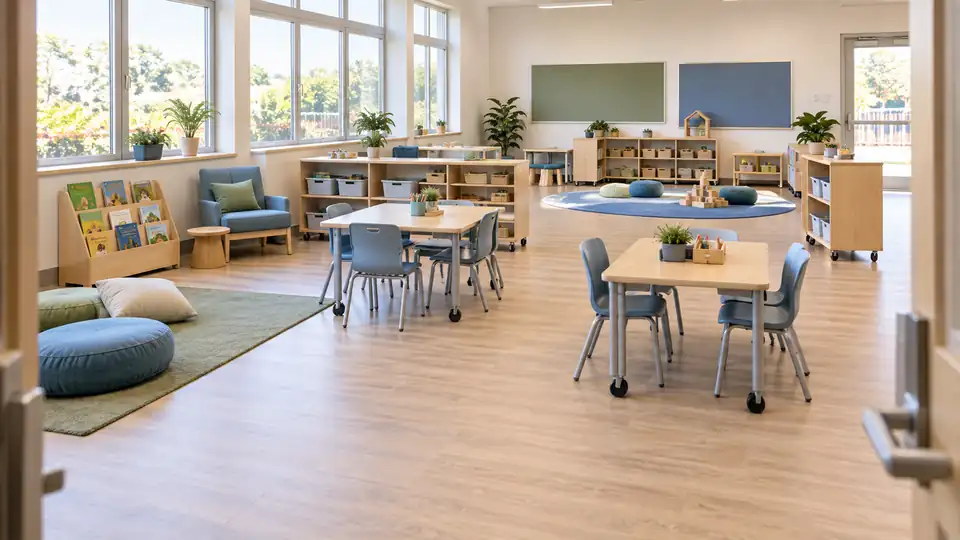
Leave room to move
More seating can make a room less flexible if it leaves no space to move. You need an open area for group work, floor play, transitions and the quick changes that happen in early learning.
If you want portable carts, decide where you will park them when you are not using them. Keep food carts separate from classroom storage when they have a different job. Mobility should solve a storage or routine problem. A cart that has no parking place becomes another obstacle.
You should also avoid filling every wall with shelves. If you have many toys and loose materials, plan where they will live before you add more seats. A room with fewer pieces that children can reach and return is often easier to use than a room packed with products.
Keep the rules simple
You need to give children time to learn how flexible seating works. You can introduce one option at a time and show the safe way to use it. Keep the rules short:
- Choose a seat that matches the activity.
- Keep feet, hands and furniture safe.
- Keep the route clear.
- Move furniture only when you know where it will go.
- Return shared items and clean them after use.
- Change the choice when it makes the work harder.
You can keep one place for group instruction and open choice during selected activities. You can also set a quiet area where a child can work without being moved through a busy route. The goal is not constant movement. The goal is a room where movement and choice support the work.
Try one area first
You can learn more from a small trial than from a full catalogue. Choose one area, add two or three options and watch the same routines for a short period. Keep a simple note about:
- whether children can choose without long arguments;
- whether the option helps or distracts from the task;
- whether routes stay clear during busy times;
- whether children can use and return the item safely;
- whether cleaning, storage and daily checks remain practical.
If the trial makes the room harder to run, you have useful information before spending more money. You may need a different size, fewer choices, a new location or a different type of furniture. You may also find that a layout change solves the problem without a new purchase.
Fix the main problem first
You should pause a flexible seating project when the basic room problems are not solved. Fix an unstable shelf, a blocked route, a poor furniture size or an unclear supervision position before you add more choice.
You should also pause when the room is already too full. A new soft seat may look helpful in a product photo and still reduce the space children need to play. You may need to remove, move, repair or store existing items before you buy anything new.
You cannot use flexible seating as a replacement for a clear daily plan. You still need to know when children can choose, how you will guide the choice and how you will review the result.
Sources for your review
- Spatial flexibility and 21st-century education
- School flexible learning spaces, movement behaviour and educational outcomes
- The effects of classroom-based dynamic seating interventions
- The influence of school furniture on performance and physical responses
- Head Start classroom environment guidance
- NAEYC operational guide
- U.S. Consumer Product Safety Commission Anchor It guidance
Preguntas frecuentes
- Can you use flexible seating in a mixed-age room? Yes. Keep the height, depth and support suitable for each age group, then place the options where you can supervise them clearly.
- What can you do when you have fewer flexible seats than children? Use the options for selected activities, create a simple turn system and keep a stable chair available for children who need one.
- Can you use floor cushions during meals? You can, but only when the cushion, floor and cleaning plan meet your food-area needs. A stable child-sized chair may be the better choice for some meals.
- How can you check a flexible seat before you buy many? Measure the seat and table together, check how a child gets on and off, inspect the edges and joints, and confirm how you will clean and store it.
- Can you mix existing furniture with new flexible seating? Yes. Check that the heights, finishes, condition and visual style work together, and remove any item that is unstable or hard to clean.
Conclusión
You can start by watching one busy part of the day. Notice where children wait, where routes become tight, where a table needs to change size and where a quiet activity needs a better place. Then make one small change and check what happens.
You do not need the room with the most products. You need a flexible seating classroom where you can make a safe choice, keep the space open and change the setup when the activity changes.
If you want help connecting your floor plan with tables, chairs, storage or custom sizes, you can send Xiair Word the room size, age range, daily routines, current furniture and budget range. That gives you a better starting point than sending a product list alone. You can also review sample classroom spaces, mobiliario de aula y soluciones para el aula when you are ready to compare options.