
 Spanish (Spain)
 English
 Arabic
 French
 Italian
 German
 Thai
 Japanese
 Turkish
 Indonesian
 Vietnamese
 Polish
 Portuguese
 Malay
 Swedish
 Spanish (Mexico)

What Does Modular Classroom Furniture Mean?
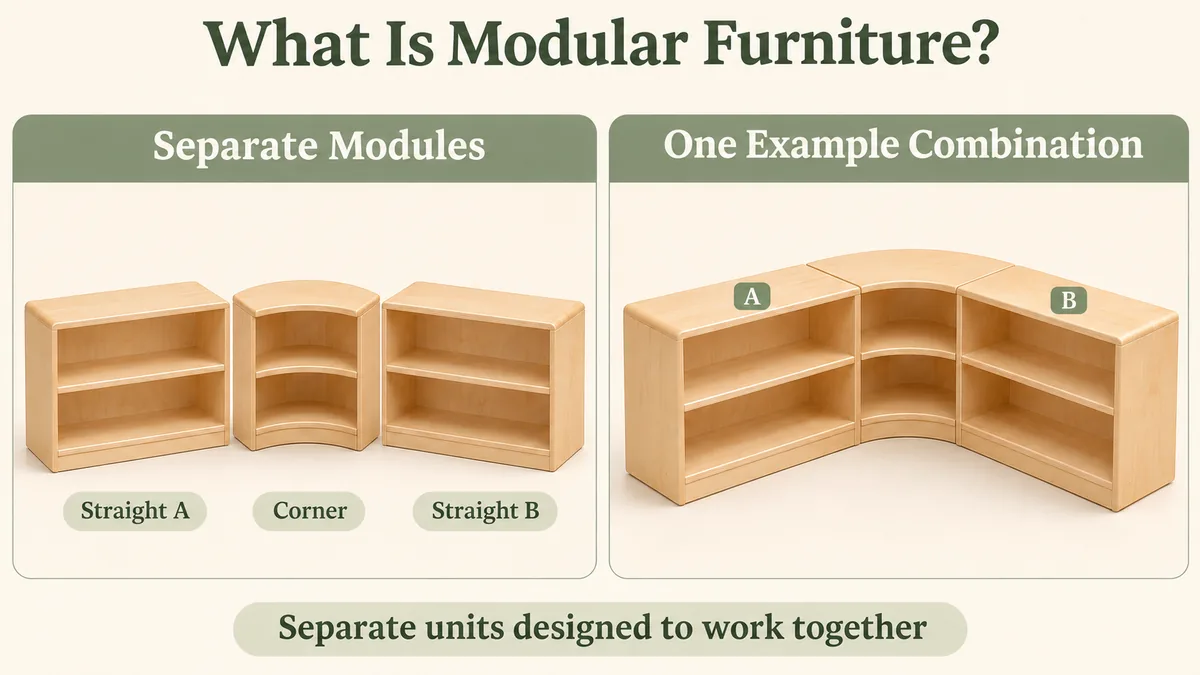
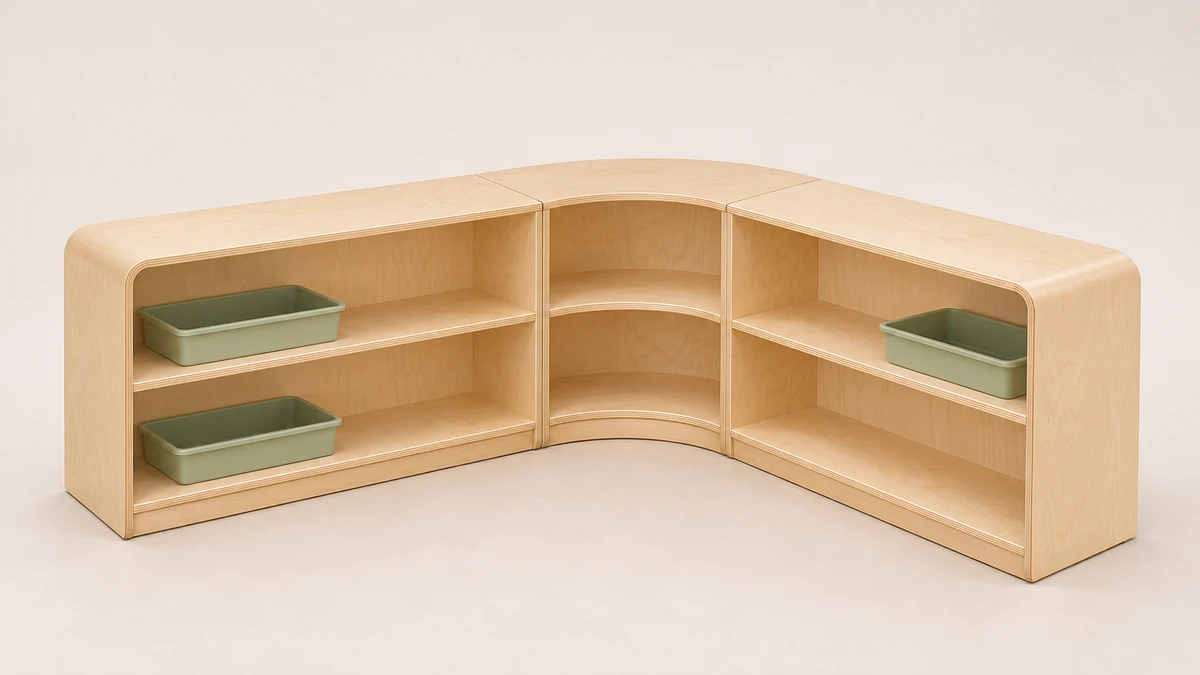
With modular classroom furniture, you choose separate pieces designed to work together in different combinations. Each piece is called a module. For example, you can combine two straight shelf units and a matching corner unit to make L-shaped storage, as shown below.
You may see modular furniture in early learning catalogs as connected storage, room divider systems, or seating sections. Some pieces need joining fittings. With certain table ranges, you combine pieces by placing their matching shapes alongside one another.
Is it just a furniture set? When you buy a set, you receive several items together. To choose modular furniture, you also need to know which arrangements you can make with those items. You should be able to see the combinations allowed for the particular range.
When Is Modular Furniture A Good Choice?
Consider modular furniture when you expect one of these changes:
- You will add more materials or places for children over time. You want to build on what you buy now.
- You switch between small activities and larger shared projects. You need the same furniture to serve different group sizes.
- You may change rooms or give an activity area a new use. You want to reuse individual pieces in a different arrangement.
If your needs and arrangement are likely to stay the same, ordinary furniture may already do the job. You can choose modular pieces for just one part of your classroom.
How To Choose Modular Classroom Furniture
1. Pick the type of furniture you need
Start with how you will use the furniture. You do not need every type in a matching collection.
- For materials children choose themselves, start with open shelf units. Choose straight units when you mainly use rectangular trays, baskets, or books. Add a corner unit when you need the storage to turn a corner. A curved section can complete an attractive arrangement, but it may hold fewer of your containers. Compare the options in the classroom storage range.
- For separating activity areas, choose shelves or linking panels. Use shelves if you also need storage at that boundary. Choose panels from a suitable divider system if you already have enough storage. This avoids filling the room with cabinets you do not need.
- For shared work surfaces, choose tables designed to fit together. Look at the intended shapes: a row, a larger rectangle, or a group around a center. Choose a range that makes the shape you will use for activities, rather than one with many combinations you are unlikely to need.
- For a reading area, choose modular benches or soft seats. Straight sections suit a row along a wall; corner sections help you make an L-shaped seat. Curved seats can form an arc, but may leave less usable space against a straight wall. Use the preschool soft seating guide for help with comfort and cover materials.
2. Match the size to your children and materials
Ask for measurements of the complete arrangement, then check the parts you will actually use:
- Shelves: compare the clear space inside each opening with your trays and books, including room to lift them out. Choose a height that lets children reach the materials intended for independent use.
- Tablas: match the table height to the chairs and children. Then place chairs around the grouped tables. You cannot count the edges where two tables meet as seating space, and legs near a join can get in the way of knees. Refer to the preschool furniture size guide for height selection.
- Seats: check seat height and depth, not just the overall sofa size. Choose a seat that lets children sit comfortably with their feet supported instead of sliding forward to reach the floor.
- Dividers: choose a height and design that let you supervise both sides. Check the view from where you normally sit or stand, following Head Start’s active supervision guidance.
Mark the complete arrangement on the floor with tape. Include space to pull out chairs, open doors, and walk past. Several small modules can still take up a large part of your room once you put them together.
3. Check how much work it takes to rearrange
Ask to see the full change from one arrangement to another, following the manufacturer’s moving instructions. Include emptying shelves if required, releasing connections, and putting materials back. An empty showroom demonstration may leave out much of the work you would do in class.
- If you will change it during the day, choose pieces you can move and secure without a long interruption. Check how many adults you need and whether you need tools. For wheeled furniture, ask how it stays stationary during use.
- If you will change it occasionally, a system that takes more setup time may suit you. You do not need wheels on every piece. If you must take the cabinet itself apart to change the arrangement, allow for a planned reassembly job.
4. Check what keeps the pieces secure
Ask the supplier to show the supports and connections needed for your chosen arrangement. Check these points before you accept it:
- When pieces are joined: use the specified connecting parts and check that they hold the pieces firmly. For surfaces intended to line up, check that they meet evenly, without a raised edge or sharp fitting where children will touch.
- When pieces are separated: confirm which units are designed to stand alone. A middle seat, panel, or cabinet section may need another piece or an extra support.
- When wall fixing is required: include it in the plan. Joining cabinets together does not replace required anchoring. Use the manufacturer’s instructions and the CPSC’s furniture anchoring guidance to check the installation.
Request the relevant instructions and test information for the exact models. The daycare furniture safety standards guide can help you check the requirements for your location.
5. Decide what to buy now and what you can add later
Ask for a drawing of your starting arrangement and a matching item list. You should be able to identify every cabinet, table, panel, seat, and accessory you are ordering.
- Choose individual units when a package includes pieces you will not use. Choose a ready-made set when its contents fit the arrangement you have selected.
- Check what you can buy separately later. Ask about single units and replacement fittings, rather than assuming you must buy another full set. Get current availability and lead-time information without assuming the range will always remain available.
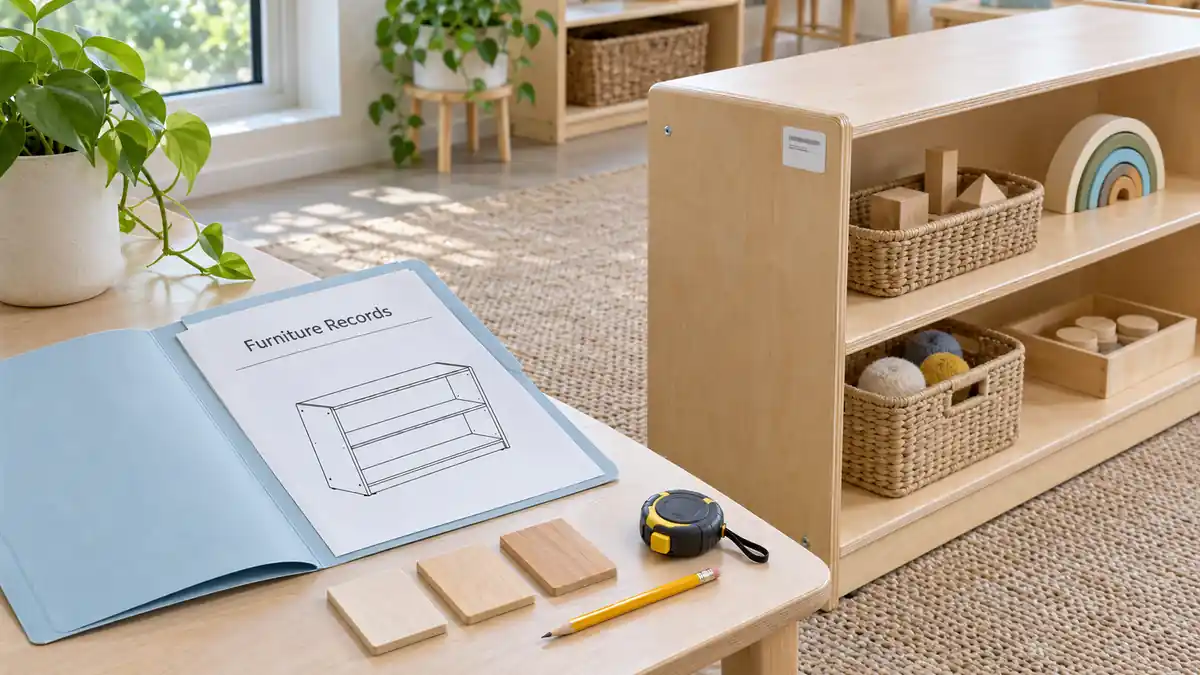
- Keep the model codes, drawings, and parts list. Use them when you request an addition. A similar color or height does not tell you whether a new piece will fit the existing connections.
Preguntas frecuentes
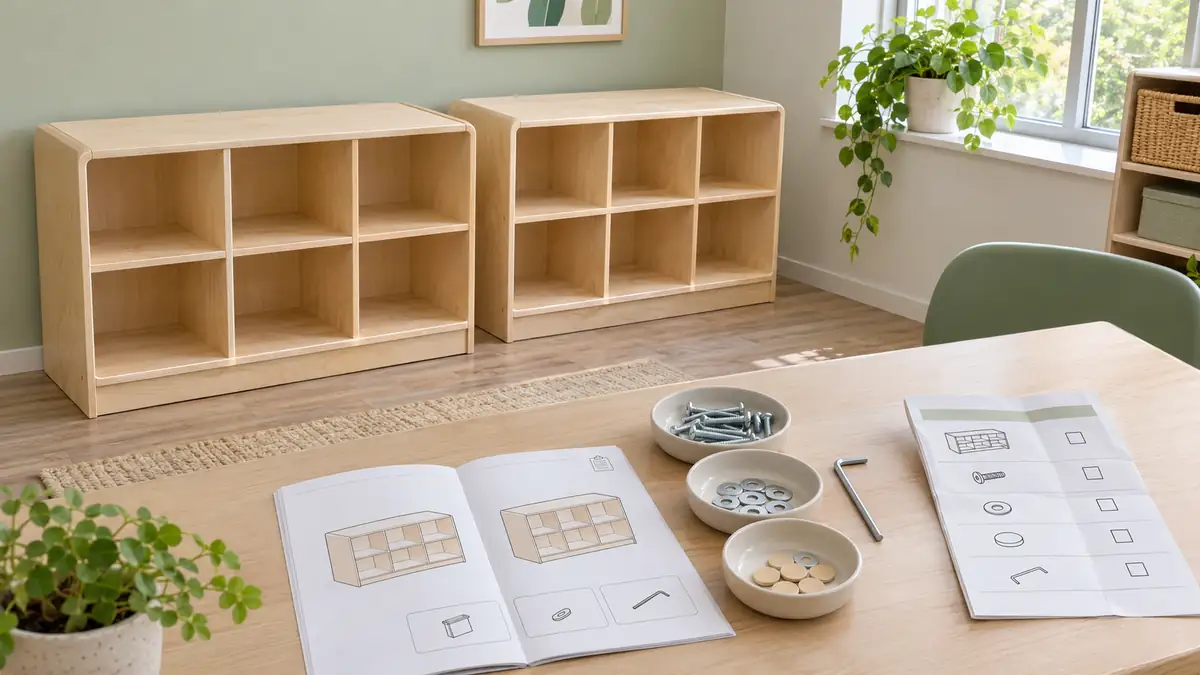
- Does modular furniture arrive assembled? You may receive assembled units or flat-packed parts; “modular” does not describe the delivery format. Check the packed dimensions against the doors on your delivery route. If you choose flat-packed furniture, arrange a suitable place and enough time for the initial assembly before it goes into the classroom.
- Can you use a low storage unit as a seat? Only if the manufacturer confirms that the model is designed for sitting. You cannot judge this from its height or appearance, and adding a cushion does not make it suitable. Choose a storage bench if you need both functions in one piece.
- How do you clean between connected units? Ask whether you can reach the gaps and the floor underneath while the furniture is in place. If you need to separate units for cleaning, follow the instructions for doing so and reconnect them correctly afterward. Use cleaning products approved for the surfaces and fittings.
- Where should you keep units that are temporarily out of use? Set aside storage space before you remove pieces from the classroom. Keep doorways and exits clear, and put loose fittings in a labeled container out of children’s reach. Stack units only if the manufacturer specifically allows it.
- How can you help children adjust after a change? Keep familiar materials easy to find and move picture labels with them. Show children where to collect and return items before the next activity. Introduce one changed area at a time so you can explain the new places without changing every familiar routine at once.
Conclusión
If you would like help comparing suitable options, share your room measurements, age group, and the furniture you want to keep with Xiair World. Include the activity or storage need you want to improve.