
 Turkish
  English
  Arabic
  French
  Italian
  German
  Spanish (Spain)
  Thai
Thai  Japanese
  Indonesian
  Vietnamese
  Polish
  Portuguese
  Malay
Malay  Swedish
  Spanish (Mexico)
A Reggio inspired classroom should support the way children explore, create, communicate, and work together. It is not simply a room with wooden furniture and neutral colors.
For you, the question is how to turn these ideas into a classroom that works every day. Decide which learning areas to include, what furniture each area needs, how materials should be displayed, and how much flexibility the room should have. That means planning the right learning areas first, then choosing furniture and materials to support them.
What Is a Reggio-Inspired Classroom?
A Reggio-inspired classroom is based on the idea that the environment can act as a “third teacher.” The room itself should encourage children to explore, make choices, share ideas, and take part in their own learning.
There is no single Reggio classroom layout or fixed furniture list. Two Reggio inspired classrooms may look very different because they serve different age groups, room sizes, programs, and daily routines.
What matters is how the environment works. Materials should be visible and meaningful. Children should have opportunities for both independent and group work. The classroom should also be able to change as projects and children’s interests develop.
This is why a good Reggio classroom starts with learning needs, not a decorating style.
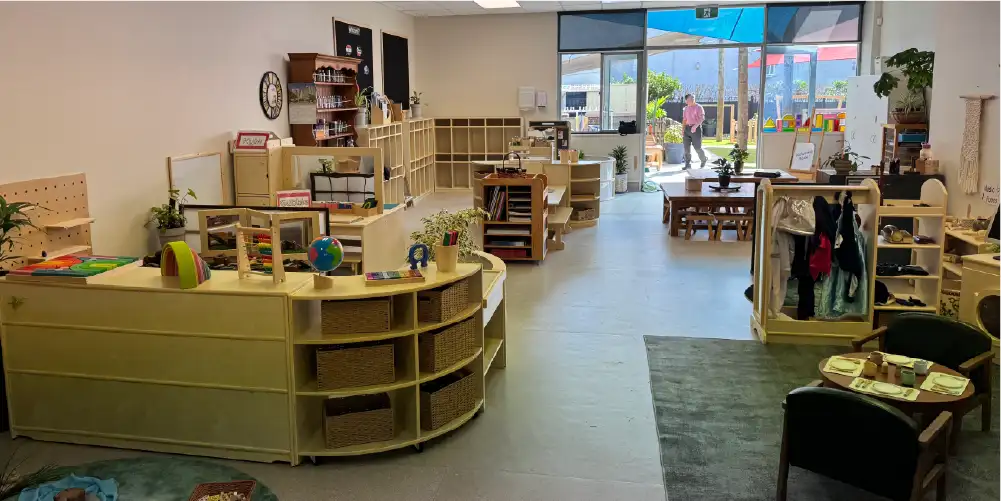
Planning Learning Areas in a Reggio Inspired Classroom
Before making a furniture list, decide what children will actually do in the room.
In the Reggio projects we see, the same core areas come up repeatedly: construction, dramatic play, art, sensory exploration, and reading. Each area has a different purpose, so the furniture should follow the activity.
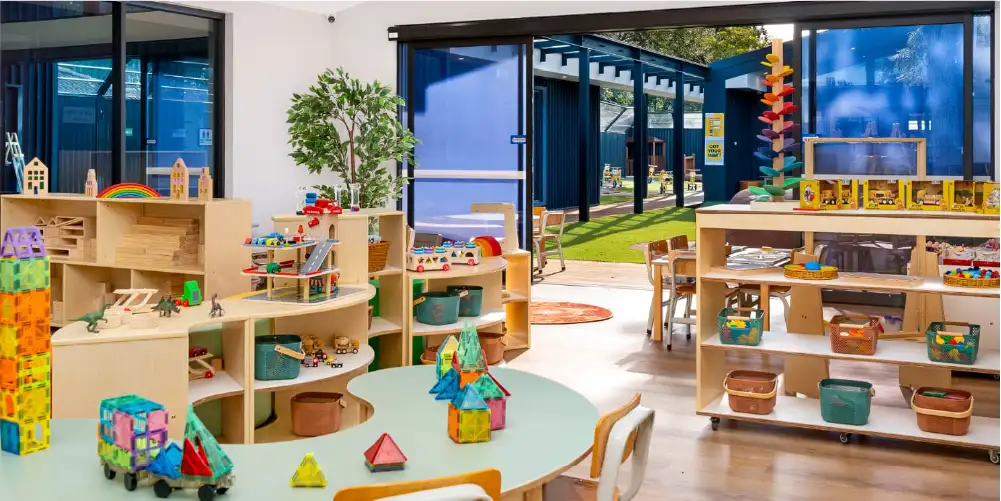
Block and Construction Area
A block area needs enough open floor space for children to build, expand a project, and sometimes leave work in place.
A practical setup usually includes low block storage, open shelving, a rug, blocks, and baskets for loose parts.
The storage should help children see the main types of materials instead of putting everything into one large container. Blocks can stay on the main shelf, while smaller construction pieces and loose parts can be separated into baskets.
Also pay attention to location. Avoid putting the block area directly in a main walkway.
Related Products: Sınıf Depolama / Ahşap Bloklar
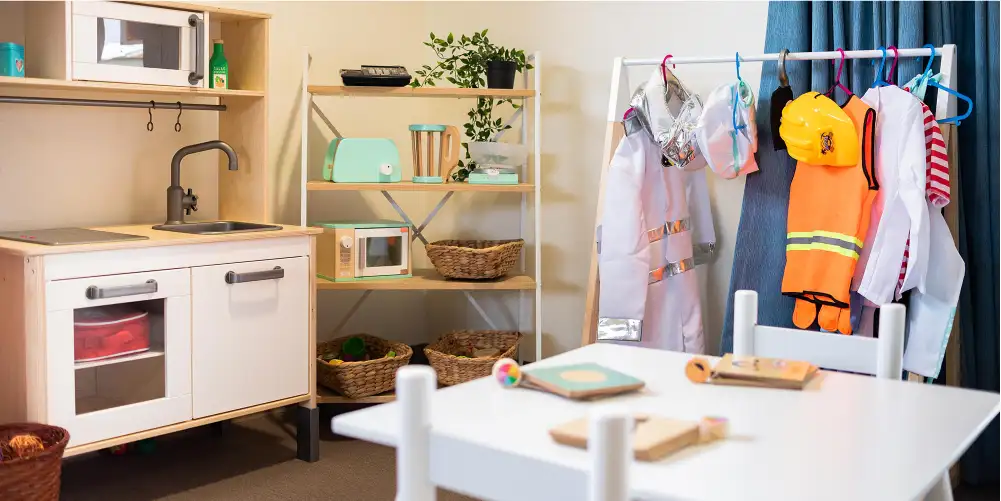
Dramatik Oyun Alanı
We often see in real Reggio projects that customers do not only choose a standard play kitchen. They may combine a kitchen, market stand, workbench, pegboard wall, and open-ended props.
A large fixed themed structure limits what the area can become. Flexible pieces can support different needs, markets, workshop during another project. You do not need to rebuild the whole area every time children’s interests change. Keep a few useful furniture pieces as the base, then change the props and materials around them.
Related Article: Create Dramatic Play Area
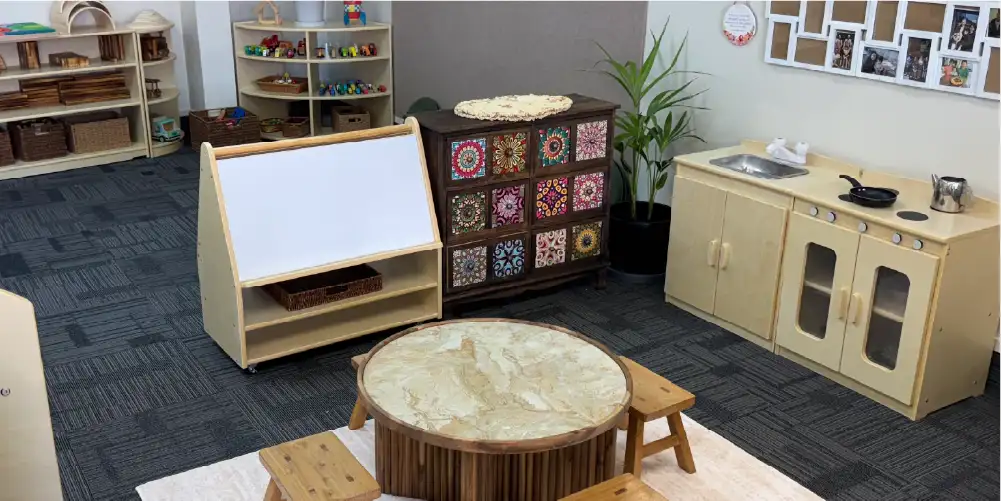
Art and Atelier Area
The art area should support more than scheduled craft activities. Children need a place where they can choose materials, create something, leave work to dry, and return to a project later.
This is why an art area should be planned as a complete working process rather than just “a table and some paint.”
A useful setup may include:
- Art tables
- Çift taraflı şövaleler
- Drying racks
- Paint and paper storage
- Material trays
- A mobile art cart
These are also products that come up repeatedly in Reggio classroom.
A drying rack, for example, may look like a small detail when making the first furniture list. But without one, wet artwork quickly takes over tables and other work surfaces.
A mobile art cart is useful for a different reason. Materials can stay organized in one place but move with the project when children are working somewhere else in the room.
Related Article: Art Center Setup
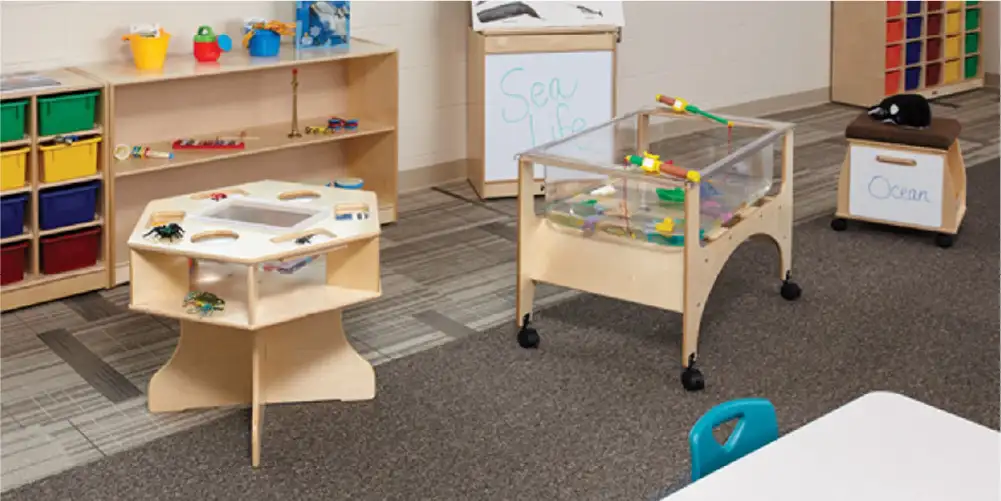
Sensory and Exploration Area
A sensory area may include sand, water, light, texture, or other hands-on materials. Common furniture includes sand and water tables, sensory tables, light tables, and activity trays. For this area, mobility has real practical value.
May you will choose sensory and sand-water tables with wheels. These activities do not always happen in the same place. A table may need to move closer to a sink, an easier-to-clean floor, natural light, or an outdoor connection.
This is a good example of Reggio flexibility serving daily classroom operation rather than simply changing the appearance of the room.
Related Products: Sensory Tables
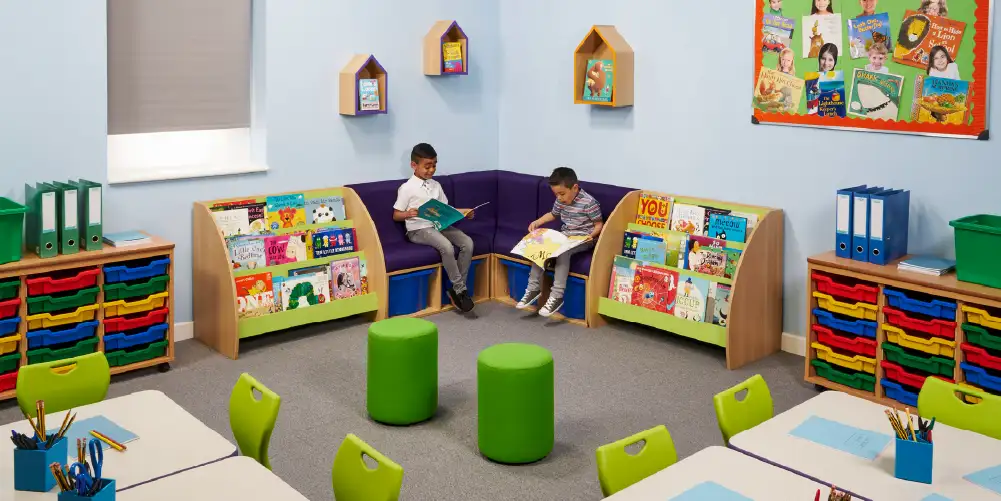
Reading and Quiet Area
The reading area should keep some distance from active zones. The furniture is often simple: a regular or feature bookshelf, a soft sofa, and a rug. Reading trees are also used when the center wants to be important. The important point is not to fill the corner with furniture.
Books should be easy to notice, seating should feel comfortable, and the area should have enough separation from construction and dramatic play to keep calm.
The best reading corner is often a simple one that children immediately understand how to use.
Related Article: Reading Corner Setup
Choosing Furniture for a Reggio Inspired Classroom
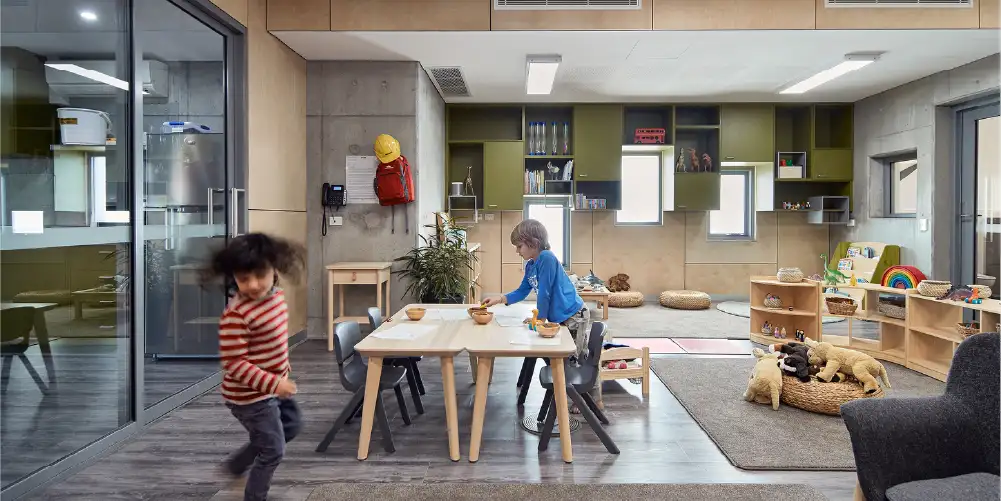
There is no special furniture category that automatically makes a reggio classroom. What makes furniture suitable is how children can use it and how well it supports the classroom over time.
Open Rather Than Hidden
Open storage supports a very simple process: See → Choose → Use → Return
When children can see materials, they have more opportunity to choose independently instead of waiting for a teacher to take something out. But this does not mean every cabinet should be open.
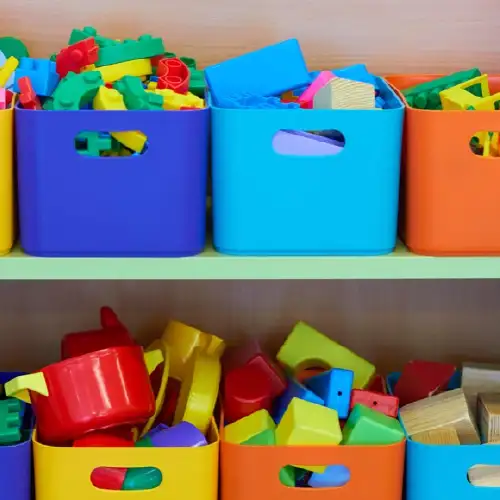
Use open shelves for materials children are expected to access. Use closed storage for teacher supplies, backup stock, or items that need controlled access.
The important decision is not “open or closed?” It is who needs access to what.
Low and Child Accessible
Low furniture will help children use the environment with less adult help. Books, blocks, toys, and daily learning materials should be placed at a height that makes sense for the age group.
This also affects the classroom experience. When children can take and return materials themselves, teachers do not need to manage every small transition. Low furniture can also help keep sight.
Flexible and Moveable
A Reggio classroom is not expected to stay the same after the layout is finished. Curriculum changes. Group sizes change. Children’s interests change. Because of this, selected pieces of furniture should be easy to reset.
- Mobile shelves
- Rolling art carts
- Mobile sensory tables
- Lightweight activity tables
This does not mean putting wheels on everything.
Large storage units may be better keep stable. Mobility should be used where changing the layout actually improves how the area works.
Neutral Enough to Let Materials Stand Out
Light birch is one of the most common furniture finishes requested in our Reggio projects. Natural baskets and wicker baskets also appear frequently.
But this should not be turned into a rule that says: “Reggio furniture must be light wood.” The real reason is visual balance.
Open shelves already contain books, blocks, loose parts, artwork, and curriculum materials. If the furniture and storage containers are also very bright, it becomes harder for those learning materials to stand out. Light wood or a natural finish creates a calmer environment.
A Reggio classroom can absolutely use color. The goal is not to make the room beige. The goal is to avoid letting furniture and storage compete with learning materials.
Choosing Reggio Toys and Learning Materials
You will ask us for “Reggio toys,” but what they usually need is not a standard list. They are looking for materials that support open-ended play, construction, role play, and sensory exploration. That difference matters when building the purchase list.
Open-Ended Materials
An open-ended material does not tell children exactly what the finished result should be. Wooden blocks are a simple example. The same set can become a house, bridge, shop, road, animal enclosure, or part of a much larger project.
This gives the material more value over time because it can follow children’s ideas instead of being limited to one activity.
Gevşek Parçalar
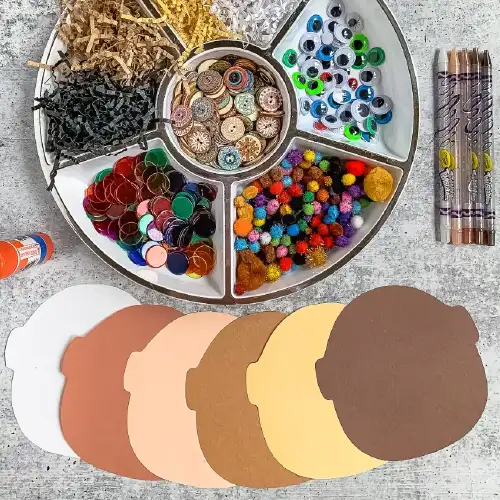
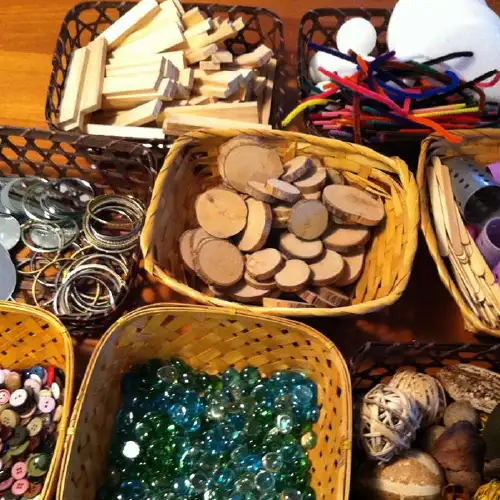
Loose parts give children materials they can move, arrange, combine, sort, stack, and use with other materials. Examples may include wooden pieces, rings, stones, cork, shells, natural objects, and other age-appropriate materials. You don’t have to buy hundreds of different loose parts.
A smaller selection that children can understand and combine is often more useful than a large collection.
Role-Play Materials
Role-play materials should leave enough room for children’s ideas. This is another reason we see Reggio projects choosing a mix of kitchens, markets, workbenches, dolls, baskets, fabrics, and simple props rather than Relying on specific themed toys. The same materials can be used again when the play changes.
For you, this also means you can build a stronger basic collection first instead of buying a completely different set of props for every theme.
Multicultural Materials
Multicultural resources are another real request that appears in international preschool projects.
Customers may ask for dolls representing different cultures, along with books, role-play items, fabrics, or other materials that reflect different families and backgrounds. This is easy to miss if a Reggio material list focuses only on wooden blocks and natural loose parts.
The classroom should connect with the children who actually use it. So it should therefore be considered when selecting learning materials, not treated as an extra decoration added later.
Can You Combine Reggio and Montessori in One Classroom?
Yes, and this happens frequently in early learning projects. Some centers are mainly Reggio inspired but still use Montessori materials. Someone wants to build a mixed environment rather than following one approach completely.
The useful way to combine them is by learning purpose, not by dividing the classroom into two different styles.
Montessori materials may work well for practical life, fine motor work, individual activities, language, or math. Reggio-inspired may be used more for open-ended exploration, art, collaborative projects, dramatic play, and project work.
You do not need to decide that every product must belong to one method. First decide what you want children to do. Then choose the furniture or material that best supports that activity. This is much closer to how many real centers build their classrooms.
Planning a Reggio Inspired Classroom?
If you are planning a new preschool or early learning center, you can explore Xiair Dünyası sınıf mobilyaları and learning materials, or send us your floor plan and requirements to discuss the furniture setup.
SSS
- Does a Reggio classroom need a separate atelier room?
No. A separate atelier is useful when space allows, but many preschool classrooms create an art and project area inside the main room. What matters is having enough workspace, material access, drying or storage space, and room for children to continue projects. - Can a small classroom still follow Reggio principles?
Yes. A small classroom does not need a separate zone for every activity. Some areas can share space or change purpose during the day. Just keeping enough open floor space and avoiding more furniture than the room can support. - How should I prepare a Reggio classroom furniture list?
Start with the floor plan, age group, number of children, and the main learning areas you want to provide. List the core furniture for each area first. After that, add special items such as sensory tables, easels, dramatic play units, or feature bookshelves. - Should documentation space be considered when planning the room?
Yes. Reggio environments often use children’s drawings, photos, project notes, and work-in-progress as part of the classroom.
Leave useful wall or display space when arranging tall storage and other furniture. If every wall is filled before the classroom opens, there is very little room for children’s work to become part of the environment. - Do I need to buy products specifically labeled “Reggio”?
No. Focus on how the product is used.
A simple shelf, basket, wooden block, table, or dramatic play unit can work very well in a Reggio inspired classroom if it supports independence, exploration, collaboration, or flexible project work. - What should I send a supplier before asking for a classroom proposal?
A floor plan is the best starting. Also provide the children’s age range, number of kids, preferred learning areas, furniture style, and any special requirements. This gives the supplier enough information to recommend furniture based on the actual classroom instead of sending you a generic product list.
Çözüm
A Reggio inspired classroom should be planned around how children actually use the space. Start with the learning areas. Then choose furniture that supports access and flexibility, and materials that leave room for exploration. The goal is not to copy a Reggio look. It is to create a classroom where the environment genuinely supports the way children learn.