
 Malay
 English
 Arabic
 French
 Italian
 German
 Spanish (Spain)
 Thai
 Japanese
 Turkish
 Indonesian
 Vietnamese
 Polish
 Portuguese
 Swedish
 Spanish (Mexico)
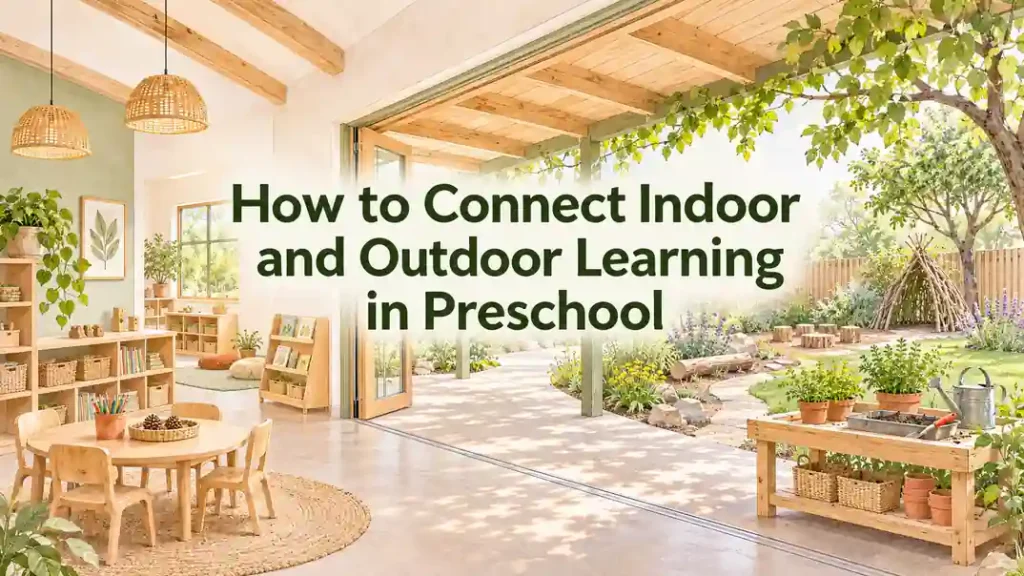
Connecting indoor and outdoor learning spaces means planning experiences that build on each other across the classroom and the outdoor area. You carry an idea, question, or discovery from one setting into the other. You also arrange the space and daily routine so that the move is easy to make.
Why Connect Indoor And Outdoor Learning?
You give learning a purpose beyond a single activity. Instead of finishing a classroom task and starting an unrelated outdoor session, you can offer a chance to use an idea, test it, and come back with something new to discuss.
- Put an idea into use. You can move from talking about a concept to exploring it in a real setting. Measuring, describing, and predicting then become useful parts of play.
- Offer more than one way to take part. You can combine handling materials and moving with drawing, talking, and close observation. You do not have to expect the same response from every child.
- Give an interest time to develop. You can return to an unfinished question over several sessions, using earlier attempts to decide what to try next.
Use each setting for what it offers. Indoors, you can keep small models, books, and records dry and available. Outdoors, you can work with growing plants, changing weather, shadows, and larger movements. You can still offer quiet experiences outside and active play inside.
This approach fits ACECQA’s guidance on learning environments, which describes outdoor experiences as complementing and extending indoor learning. You do not need to copy the classroom outside or connect every activity in the day.
How To Link One Activity
Choose one interest already present in your group. Decide what the second setting will let you explore that the first setting cannot. Use the following ramp activity as a planning example, adjusting the materials and support to your age group.
Start With A Question
At an indoor table, offer a short ramp and a toy car. Ask, “What could make the car travel farther?” Invite a prediction through words, a gesture, or a drawing. Keep the first attempt simple enough to compare with the next one.
Try Something Outside
Move to a clear outdoor surface where you have room for a longer run. Bring the same car and, where suitable, the same ramp. Change one thing, such as the ramp height, and mark where the car stops. If you change the surface or equipment as well, name those differences rather than treating the result as a test of height alone.
Bring The Result Back
Back indoors, compare the stopping marks using a sketch or photograph. Ask, “What changed?” and “What would you try next?” Leave the record beside the model so you can resume the investigation another day. The learning connection comes from comparing the attempts, not simply from carrying a toy through the door.
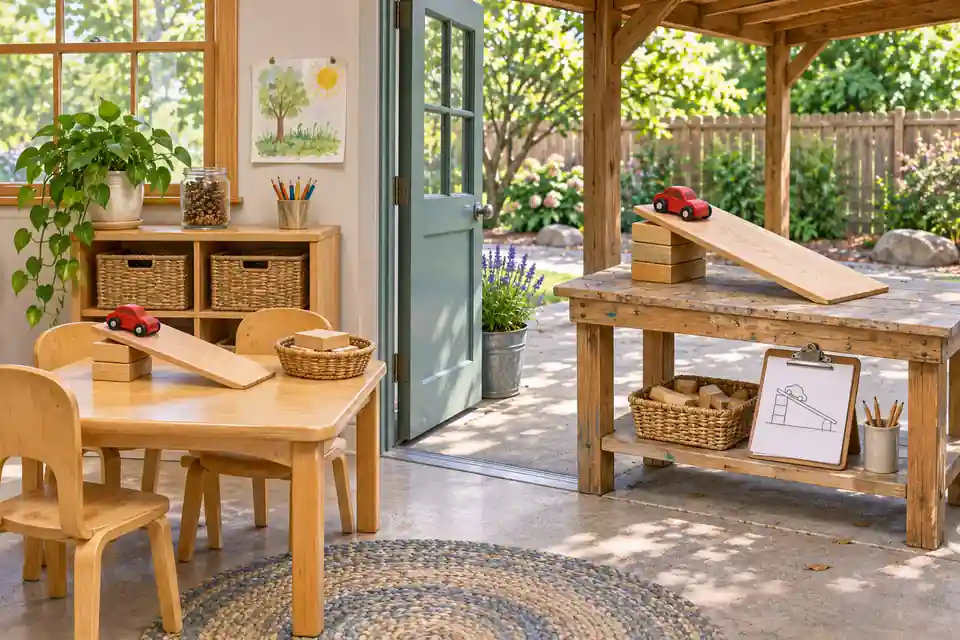
You can also begin outdoors. Follow an unexpected discovery back into the classroom when you need a book, a drawing surface, or time to look more closely. Treat the sequence as a way to follow an interest, not a fixed lesson that must always end with indoor work.
Other Activities You Can Connect
Choose a connection that adds something to the experience. Use these examples to see how a shared topic can lead to different work in each setting.
| Your Topic | What You Can Do Indoors | What You Can Do Outdoors | How To Connect The Experiences |
|---|---|---|---|
| Growing plants | Look closely at seeds and record a prediction. | Plant, water, and observe growth. | Add dated drawings to the same record and compare changes over time. |
| A story journey | Read a story and choose places from it. | Build a route with suitable props and act out the journey. | Use the route to draw a map and retell the story. |
| Light and shadows | Explore shapes with a suitable light source. | Trace shadows in sunlight at different times. | Compare the outlines and discuss the position of the light. |
For more outdoor activity areas and equipment ideas, use the outdoor classroom guide. Choose the activity first, then decide what space and materials you need to support it.
How To Arrange The Space
Plan three places together: the indoor work area, the route outside, and the outdoor activity area. Put all three on the same drawing so you can see where a project starts, how you reach the next setting, and where you work on arrival.
With a direct courtyard door, you could place a drawing table near a garden-facing window and an outdoor worktable beyond the doorway. Keep the reading corner away from the busy route. The illustration shows these relationships; it is not a measured plan or an approved capacity.
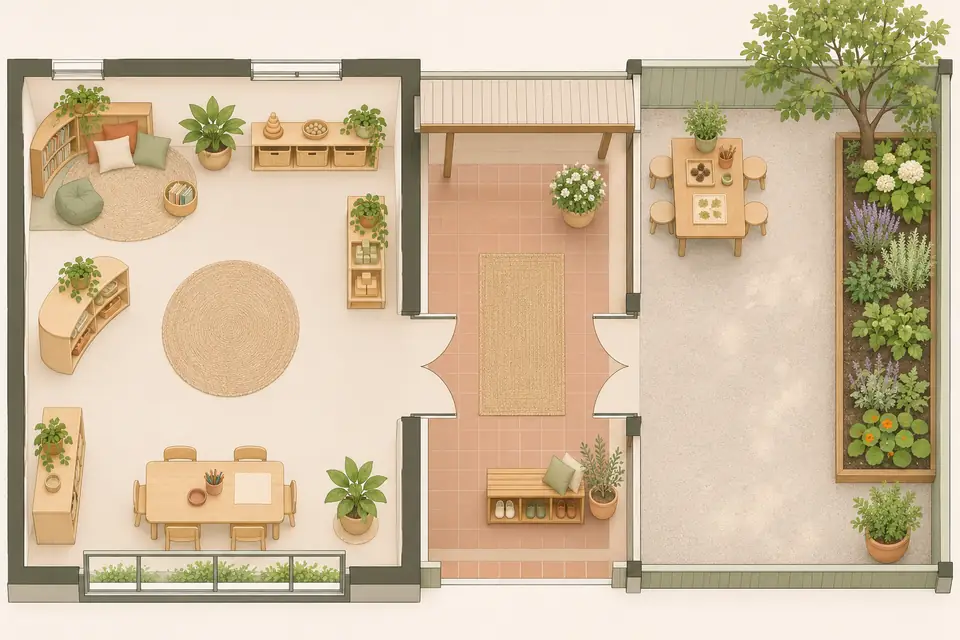
If you reach the garden through a corridor, keep the connection through a portable project tray or a record of the work. You do not need to rebuild the entrance to link the experiences. For the rest of the yard, use the outdoor play area planning guide to arrange activity zones and equipment.
Leave Room To Get Ready And Pass Through
Put a clothing bench, hooks, and boot storage beside the route, leaving the doorway clear. Check the space with someone seated, cabinet doors open, and a tray being carried. Allow for mobility aids and adult help as well as walking.
Keep the outdoor arrival area clear of worktables and wheeled play. Ask your building professional to check the threshold, door operation, drainage, access, and escape routes under local rules. Do not hold a fire door open with furniture or add an improvised ramp.

What To Keep In Each Area
You usually need to move only part of an activity. Keep bulky or weather-specific equipment where you use it, and share smaller tools or records that help the work continue.
| Where It Belongs | What You Might Keep There | What To Check |
|---|---|---|
| Indoors | Books, paper, small models, and project records | Reserve a shelf or tray where unfinished work can stay without blocking everyday supplies. |
| Outdoors | Planters, a mud kitchen, large construction pieces, and an outdoor worktable | Confirm suitability for the actual rain, sun, ground conditions, and storage arrangements. |
| Moving between both | Washable tools, selected play materials, and a clipboard | Test the loaded tray for weight, handle clearance, and a clear view while carrying it. |
Match shared trays to the usable cabinet opening, not its outside dimensions. Include the handles and the height of the contents; a tray may slide in when empty but catch on the shelf above when loaded. Use the same picture label on the container and its return position.
Provide a separate return point for used outdoor materials. Clean and dry them before putting them back with ready-to-use supplies. If you need a trolley, test its wheels, loaded stability, turning space, and parking position along the actual route.

For furniture used outside, check the whole product: panel edges, joints, feet, fasteners, and maintenance instructions. A wipeable top or a sheltered position does not establish outdoor suitability. Compare the options in the guide to outdoor preschool furniture materials, and describe the intended exposure to your supplier.
How To Fit It Into The Day
Choose either planned group moves or simultaneous indoor and outdoor use. Base that decision on your staffing, the building, and the needs of your group. You can connect learning with either arrangement; you do not have to keep the door open all day.
Agree who is responsible for each area and how responsibility transfers at the doorway. Follow Head Start’s active supervision guidance on positioning, scanning, listening, and name-to-face checks during transitions. Account for toilet trips and help with clothing without leaving either group unsupervised.
Allow time to finish an attempt before moving. Avoid a schedule in which getting dressed and carrying equipment use most of the available outdoor session. After a trial session, note where you waited or lost track of materials, then adjust that part of the routine.
Check weather, heat, air quality, and surface conditions under your setting’s procedures and individual care plans. Use the CDC outdoor play guidance for relevant precautions. If you cannot go outside, continue with earlier observations or models indoors and return to the outdoor work when conditions permit.
Soalan Lazim
Can You Use A Public Park As The Outdoor Part?
You can connect classroom work to a planned park visit, but treat the journey and visit as an off-site activity. Check permissions, travel arrangements, site risks, and your required staffing. Do not assume access to a public park satisfies licensed on-site outdoor-space requirements.
Should You Bring Natural Finds Into The Classroom?
Check each item for suitability before bringing it in, including plant identification, contamination, sharp edges, and choking risks for your group. Use photographs or drawings when collecting would disturb wildlife or when you cannot identify a material confidently.
How Can You Include Families In A Shared Project?
Share the question you are exploring and invite an optional drawing or observation from home. Offer a way to contribute that needs no garden, equipment purchase, or photo of a child. Add relevant contributions to the project record with the required consent.
Kesimpulan
If you need help turning your activity plan into a furniture layout, you can review your classroom and outdoor area together with Dunia Xiair.