
 Malay
Malay  English
  Arabic
  French
  Italian
  German
  Spanish (Spain)
  Thai
Thai  Japanese
  Turkish
  Indonesian
  Vietnamese
  Polish
  Portuguese
  Swedish
  Spanish (Mexico)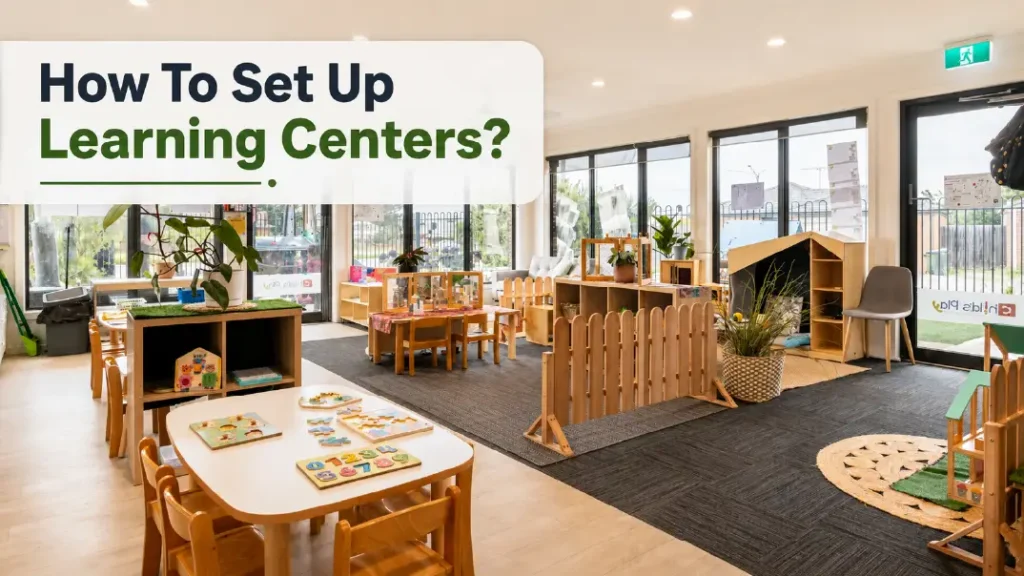
Set up learning centers in a preschool classroom is more than placing furniture and toys in different parts of the room. A well-designed layout clearly shows where each activity should take place, supports classroom management, and creates a space that is safe, organized, and easy for children to understand. For you, the key is not only choosing which learning centers to include, but also arranging them in a way that fits your daily routine.
What Types of Learning Centers Are in a Preschool Classroom?
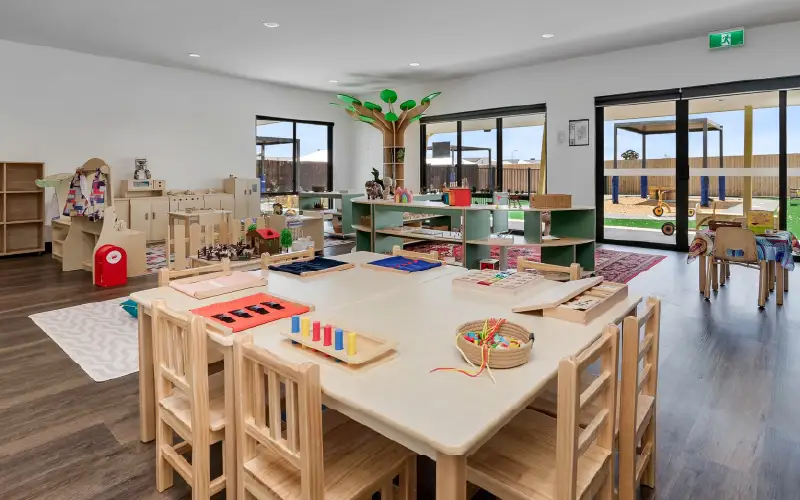
Preschool classrooms can include many learning centers, such as:
- Sudut Bacaan
Books, soft seating, and a calm place for children to read. - Pusat Seni
Drawing, painting, cutting, gluing, and other creative activities. - Kawasan Permainan Drama
Role-play furniture, costumes, and props for pretend play. - Block Area
Open floor space and block shelves for building and construction play. - Sensory Station
Sand, water, textures, and hands-on materials for exploration. - Music Area
Simple instruments, rhythm tools, movement, and sound activities. - Literacy Center
Letters, word cards, writing tools, and early language materials. - Technology Corner
Tablets, listening devices, or digital tools used with teacher supervision. - Nature and Science Center
Plants, natural objects, magnifiers, and simple observation tools. - Math Manipulatives Station
Plants, natural items, magnifiers, and simple tools.
Each center has a different use. Some areas need to be quiet, while others allow more movement. Some need tables, chairs, and storage shelves, while others need washable surfaces and easy-to-clean materials. Because of these different needs, it can be hard to decide where to start. Putting too many centers into one classroom can make the space feel too full, messy, and hard to manage.
It is better to start with a clear plan. First, decide which centers are most important for your classroom. Then choose the right furniture and think about how each area will be used during the day.
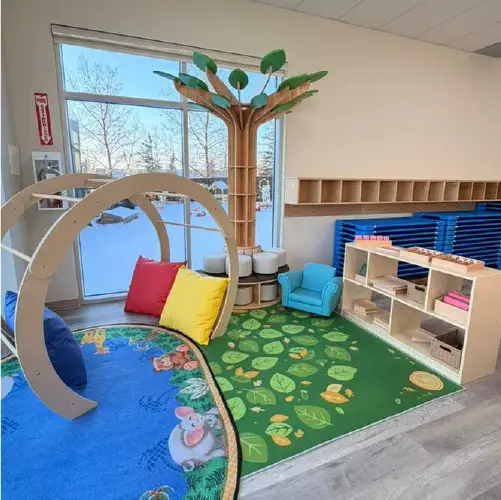
Where Should You Start When Set Up Learning Center ?
When setting up learning centers in a preschool classroom, it is not about choosing beautiful furniture. The first step is looking at the classroom itself. You need to think about the room size, the number of children, their age group, and how teachers usually supervise and move around the room.
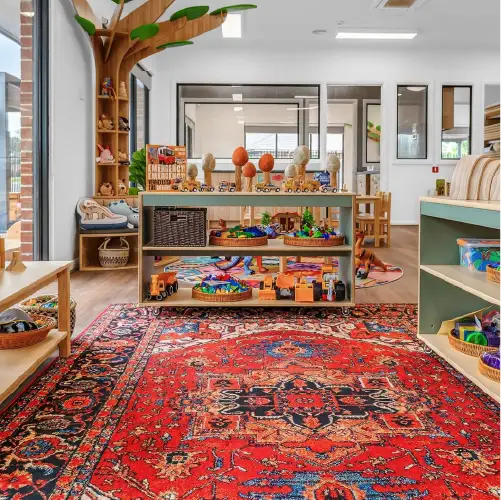
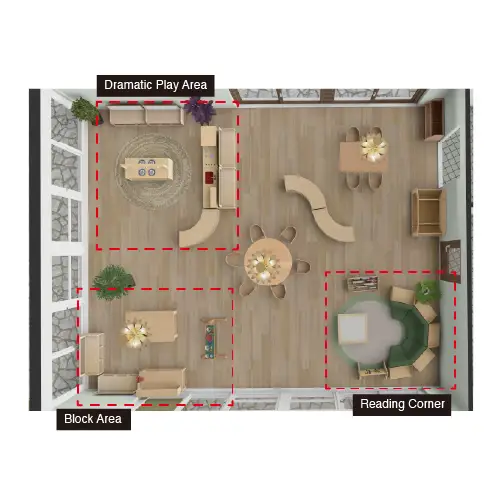
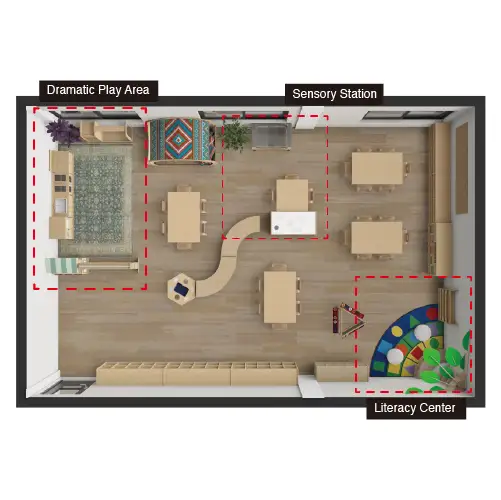
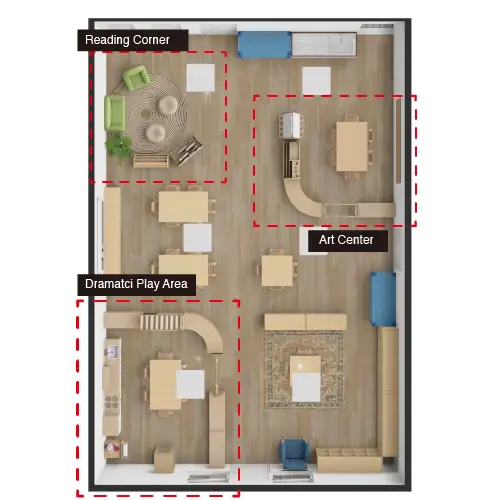
You may already have a list of centers you want to include, such as a reading corner, art center, block area, dramatic play area, sensory area, or math center. But in reality, you also need to consider doors, windows, pillars, sinks, walkways, and built-in cabinets. If you ignore these details, even nice furniture can cause problems., even nice furniture will be a problem. A sofa may block the pathway, a large reading tree may take up too much space, or a reading corner may be placed in an area that actually works better for block play. A good layout starts with how this classroom can work well every day without feeling too full and hard to manage.
From Floor Plan to Daily Use
Start with the classroom floor plan. Mark the doors, windows, sinks, restroom entrances, built-in cabinets, pillars, and any areas where teachers need a clear view. Then look at how children move through the room. Where do they enter? Where are the materials stored? Where do teachers usually stand? Which areas get the most traffic?
This helps you avoid buying furniture that looks good but does not work. For example, a large sofa may look comfortable in a reading corner, but if it blocks a busy path, it becomes a problem. The reading tree may be better in the larger classroom, but in a small room, a corner shelf or small bookcase may be a better choice.
If the classroom is small, focus on function. Do not try to fit every type of learning center into one room. Choose compact shelves, corner units, small activity tables, or furniture that can serve more than one purpose.
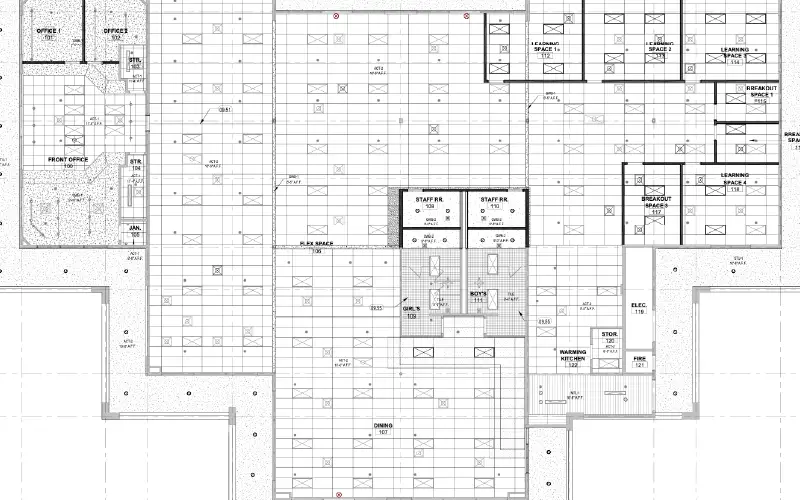
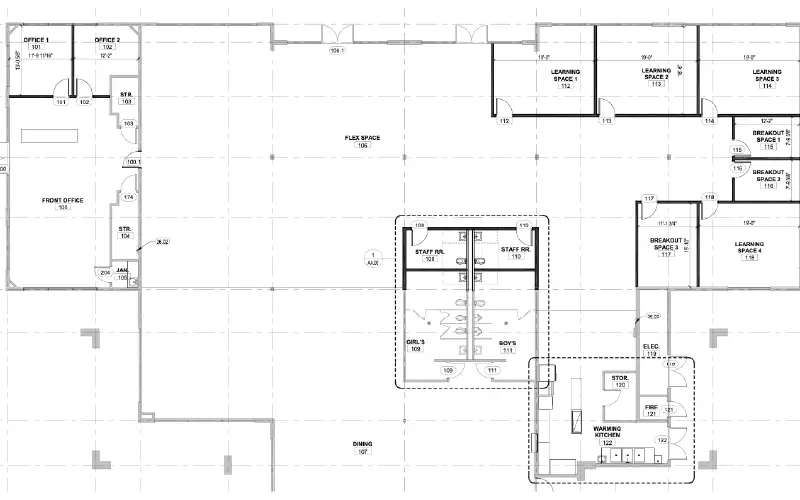
Fixed and Flexible Learning Centers
Some learning centers need a fixed place. A reading center should stay in a quiet area with books, soft seating, and a calm environment. An art center usually needs tables, drying racks, washable surfaces, and easy access to a sink, so it also works better in one fixed spot.
Other centers can be more flexible. The block area and dramatic play area can share the same space if you use rugs, low shelves, and storage to separate them. A mobile sensory table can be moved based on the day’s activity. Regular activity tables can also be used for drawing, math, puzzles, group work, or small projects at different times of the day. Not every activity needs its own furniture set. Start by deciding which centers must stay fixed. For other activities, you can rotate materials, share furniture, or combine areas when needed.
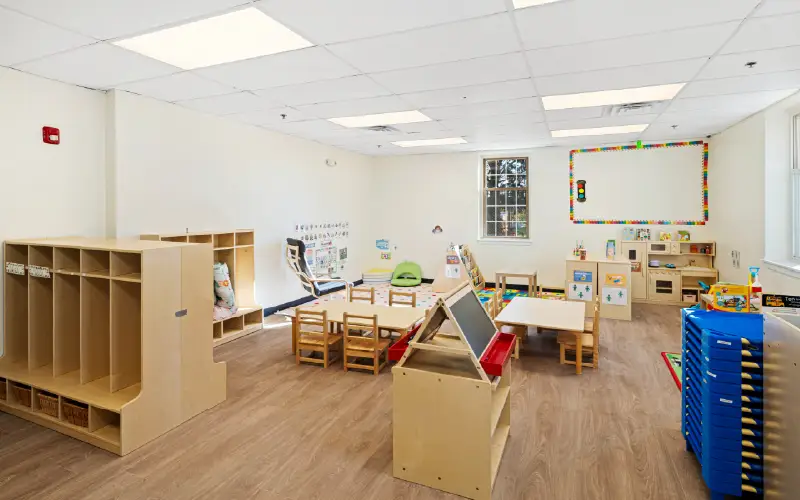
Where to Place Each Learning Center
A good classroom layout should follow how children actually use the space. Some centers need a quiet corner. Some need open floor space. Others should be close to a sink, washable surfaces, or a place where teachers can easily supervise.
Sudut Bacaan:
Place it in a quiet part of the classroom, away from the entrance, lockers, block area, and dramatic play area. A fixed spot usually works best because it helps keep the space calm.
Art Center:
Set it up near a sink if possible. Keep the art table, material cart, and drying rack close together, so children can work, clean up, and store materials more easily.
Kawasan Permainan Drama:
This area can be placed in a more active part of the classroom. Just make sure it does not block doors, pathways, restrooms, or lockers.
Block Area:
Blocks need open floor space. Children need space to build, spread out materials, and move around their structures. Try not to place this area in a busy walkway.
Sensory Area:
Place this area near an easy-to-clean surface. A mobile sand and water table and mobile storage work well because they can be moved when needed. Keep tools on a nearby shelf or storage rack.
Music Area:
Keep it away from the reading corner and other quiet spaces. If your classroom does not have enough room for a fixed music center, you can set it up as a small rotating activity station.
Literacy Center:
This center works well near the reading corner or a table activity area. You can place books, letter cards, writing tools, and early language materials together, so children can move naturally from reading to writing.
Technology Corner:
Place it where teachers can see it clearly. If the equipment needs charging, keep cords and outlets organized and away from busy walking paths.
Nature and Science Center:
A window area is a good choice, especially for plants, observation trays, or nature displays. This center does not need to be large. It can be a small table, a display shelf, or even an outdoor activity area when the weather allows.
Math Manipulatives Area:
Place it near tables or low shelves. Children need a stable surface for sorting, counting, matching, and using small learning tools. This area can also share space with puzzles, writing activities, or other work.
In a smaller classroom, every center is not necessary. Reading, art, blocks, and dramatic play are usually the main centers. Music, science, literacy, technology, and math can be set up as smaller rotating centers.
Use Furniture to Create Clear Zones
Clear Area helps children understand what each space is for. In a completely open classroom, toys and materials can spread everywhere, and teachers need to spend more time keeping the room organized.
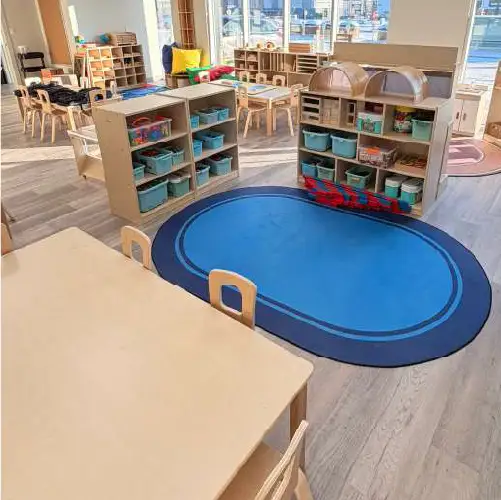
You can use low shelves, rugs, sofas, storage cabinets, arched dividers, curved panels, or soft mats to divide the classroom into different zones. They help separate each area, but teachers can still see the whole classroom.
For example, a large rug can define a reading or block area. A low shelf can separate dramatic play from daily activities. Dividers or Panels can make a reading corner feel more comfortable and focused. The goal is to guide movement and organize the space, not to block the classroom.
Furniture Size, Material, and Safety
For learning centers to work well, children need to use the furniture easily and safely. Furniture size should match the age group. Toddler classrooms, preschool classrooms, and Pre-K classrooms all need different table heights, chair heights, shelf heights, and storage depths.
Low shelves help children take materials and put them back by themselves. Tables and chairs should fit their body size, so they can sit, draw, build, and play comfortably. Storage cabinets should also be easy to reach, but not too deep. If shelves are too deep, materials can get hidden, and the area will become messy over time.
Material choice also matters. Many people use maple-tone finishes, FSC-certified birch plywood, E0-grade boards, rounded edges, and non-toxic water-based paint. If the project needs to meet school, government, or local safety requirements, standards such as EN71 dan ASTM F963 should also be considered.
Plan Storage for Each Center
The organization should be planned from the beginning. If a center has toys and materials but no storage, the space will become messy quickly, even if the furniture looks good.
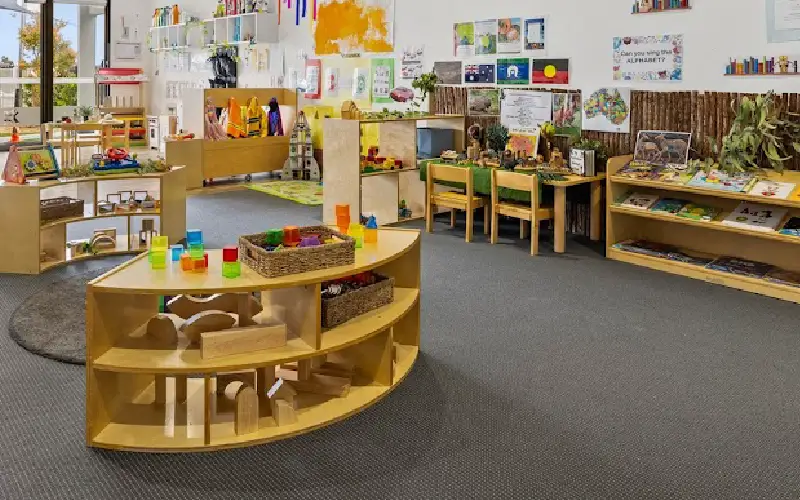
Each center needs its own storage solution. A reading center may need book displays, baskets, or low bookcases. An art center needs shelves, cabinets, carts, and drying racks for paper, paint, tools, and children’s artwork. A block area needs open shelves so children can see different shapes and sizes clearly. A dramatic play area needs space for costumes, play kitchen items, and props.
Good storage also helps answer a common question from clients: how many toys are needed to make a classroom look complete? The answer is not to fill the room with as many toys as possible. The key is to choose enough materials, display them clearly, and keep each center easy to use and easy to clean.
Avoid Over-Decoration
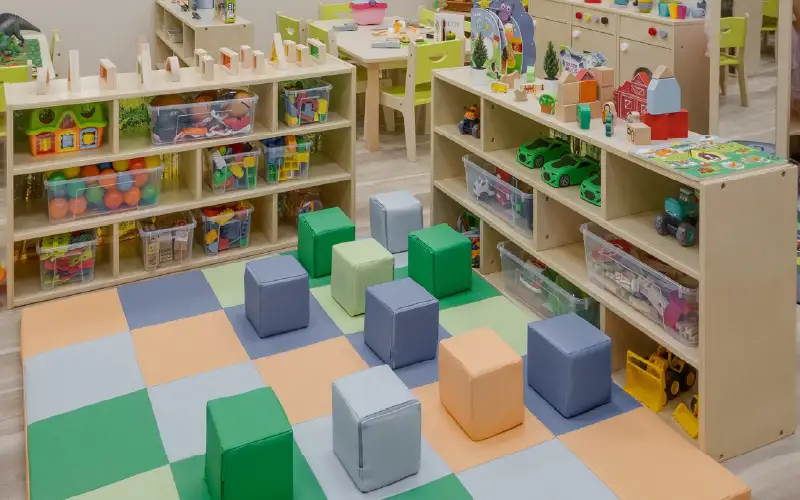
A preschool classroom does not need to be filled with decorations to look professional. In many cases, a clean layout, light wood furniture, soft floor mats, and a soft color palette are enough. Maple-tone wood works well with colors like beige, light blue, and sage green. This kind of combination makes the classroom feel warm, calm, and easy to organize.
Floor mats can be used to define areas, such as reading corners, block areas, or quiet activity spaces. Bright colors are better used in small details, such as cushions, toys, wall labels, or small decorations. Try not to cover the whole wall or floor with strong colors. Your goal should be to make each learning center clear, comfortable, and easy to use. When the room is not over-decorated, children can focus more easily, and teachers can manage the classroom with less effort.
Create the Right Learning Center Layout for Your Classroom
How can you fit different learning centers into your classroom? What furniture size is right for the children’s age? How much storage does each center need? And how can the layout stay easy for teachers to manage every day?
Many classroom problems do not come from the furniture. They often come from how the space is arranged. For example, the reading corner may be too close to a noisy play area. Shelves may not clearly separate each center. Or the classroom may have many toys, but no clear storage for each type of material.
In many cases, you do not need to redesign the whole room. Small changes can make a big difference. You may adjust the walking path, replace a few key furniture, add better storage, or turn an unused corner into a useful learning center.
For a new classroom, the biggest mistake is buying furniture before the layout is clear. A bookshelf, rug, table, or play unit may look good on its own, but it still needs to fit the room size, traffic flow, teacher sightlines, children’s age, and daily routines.
A better way is to plan the whole classroom first. Then make a clear list for each center, including furniture, storage, teaching materials, soft seating, and accessories.
Soalan Lazim
- What Is a Learning Center in the Classroom?
A learning center is a small area in the classroom for a specific activity. Children may read, build, draw, pretend, sort, count, or explore materials in that space. - What Learning Centers Are Common in Preschool Classrooms?
Include reading, blocks, art, dramatic play, science, math, sensory play, music, and writing. NAEYC does not require a fixed setup for every classroom, so the best choice depends on your space, age group, and daily routine. - How Many Learning Centers Should a Classroom Have?
There is no set number. A small classroom may only need a few main centers. A larger classroom can have more. The key is to avoid overcrowding. - How Do You Set Up Learning Centers in a Small Classroom?
Start with the centers children use most often, such as reading, art, blocks, and dramatic play or sensory play. Keep the furniture compact, use shelves for storage, and avoid putting too many things in the room at once. - How Do I Choose the Right Furniture Size?
Toddlers need simpler, fewer materials, and lower furniture, such as 14–16 in tables, 7–9 in chairs, and 16–24 in shelves. Preschoolers usually use 18–20 in tables, 10–12 in chairs, and 24–30 in shelves. Pre-K and kindergarten rooms can use 20–22 in tables, 12–14 in chairs, and 30–36 in shelves. - What Furniture Do Learning Centers Need?
Most centers need simple furniture, like shelves, child-sized tables and chairs, rugs, storage bins, and book displays. Some centers need special pieces. For example, an art center may need a drying rack, while a reading center may need soft seating. - Does the Classroom Layout Affect Parents’ Impression?
Yes. Parents notice the classroom quickly when they visit. A clear, clean, and well-planned room makes the preschool feel safer, more professional, and easier to trust. - Can I Add More Learning Centers Later?
Yes. You can start with the main centers first and add more later as your class grows, your space changes, or your curriculum needs more activities. - What If the Classroom Still Feels Hard to Use?
Check the layout first. The problem may not be the furniture. It may be that the centers are too close together, storage is not clear, or children do not have enough space to move and clean up.
Kesimpulan
If you are updating an existing classroom or setting up a new one, a clear layout can help you manage space, budget, and purchasing more easily. It also makes future classroom upgrades or new classroom projects much easier to plan.
Dunia Xiair can help you turn your ideas into a classroom layout, with layout design, furniture selection, customization, and one-stop learning center solutions. We have worked with more than 5,000 early learning centres worldwide, so we understand how to create spaces that look good and work well in daily use.