
 Malay
Malay  English
  Arabic
  French
  Italian
  German
  Spanish (Spain)
  Thai
Thai  Japanese
  Turkish
  Indonesian
  Vietnamese
  Polish
  Portuguese
  Swedish
  Spanish (Mexico)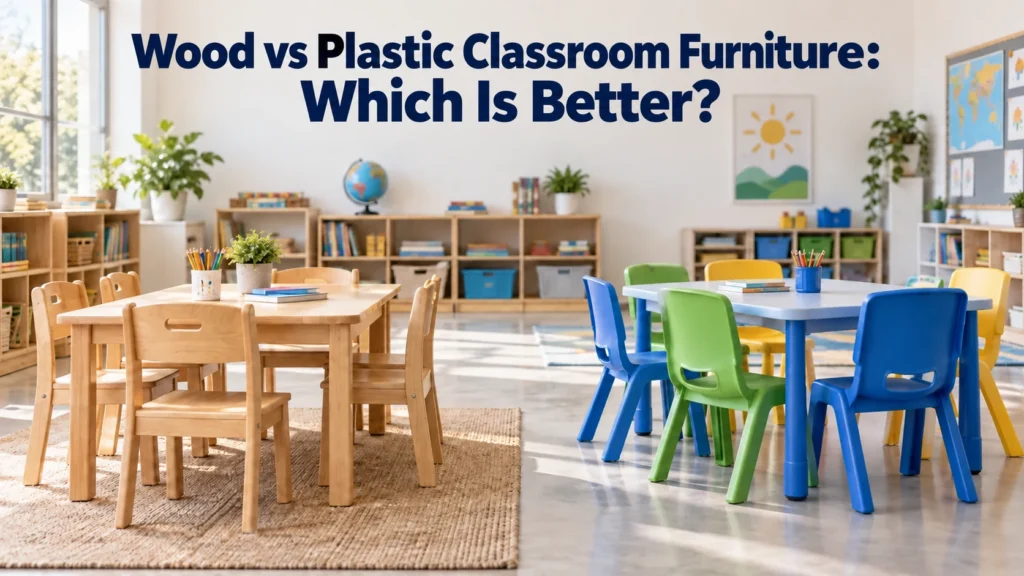
If you are comparing wood vs plastic classroom furniture, start with the way you use the room. Wood usually fits quiet areas and furniture that stays in place. Plastic usually fits messy areas and furniture that moves often. If one room needs both, use both materials.
Do not make the choice from a product photo alone. Look at the daily activities, the cleaning routine, the floor plan, and the storage space before you choose.
Start with the work in each area
Walk through a normal day in the classroom. Ask yourself four simple questions:
- Where will children read, build, draw, or work in small groups?
- Where will water, paint, food, or sensory materials reach the furniture?
- Which tables and chairs will move during the day?
- Where will you store furniture after an activity?
Your answers will usually show where wood works better, where plastic works better, and where a mix makes more sense.
When wood makes sense
Wood gives you a warm and steady feel. You can use wood tables and chairs in reading areas, small-group spaces, and rooms where furniture stays in one place for most of the day.
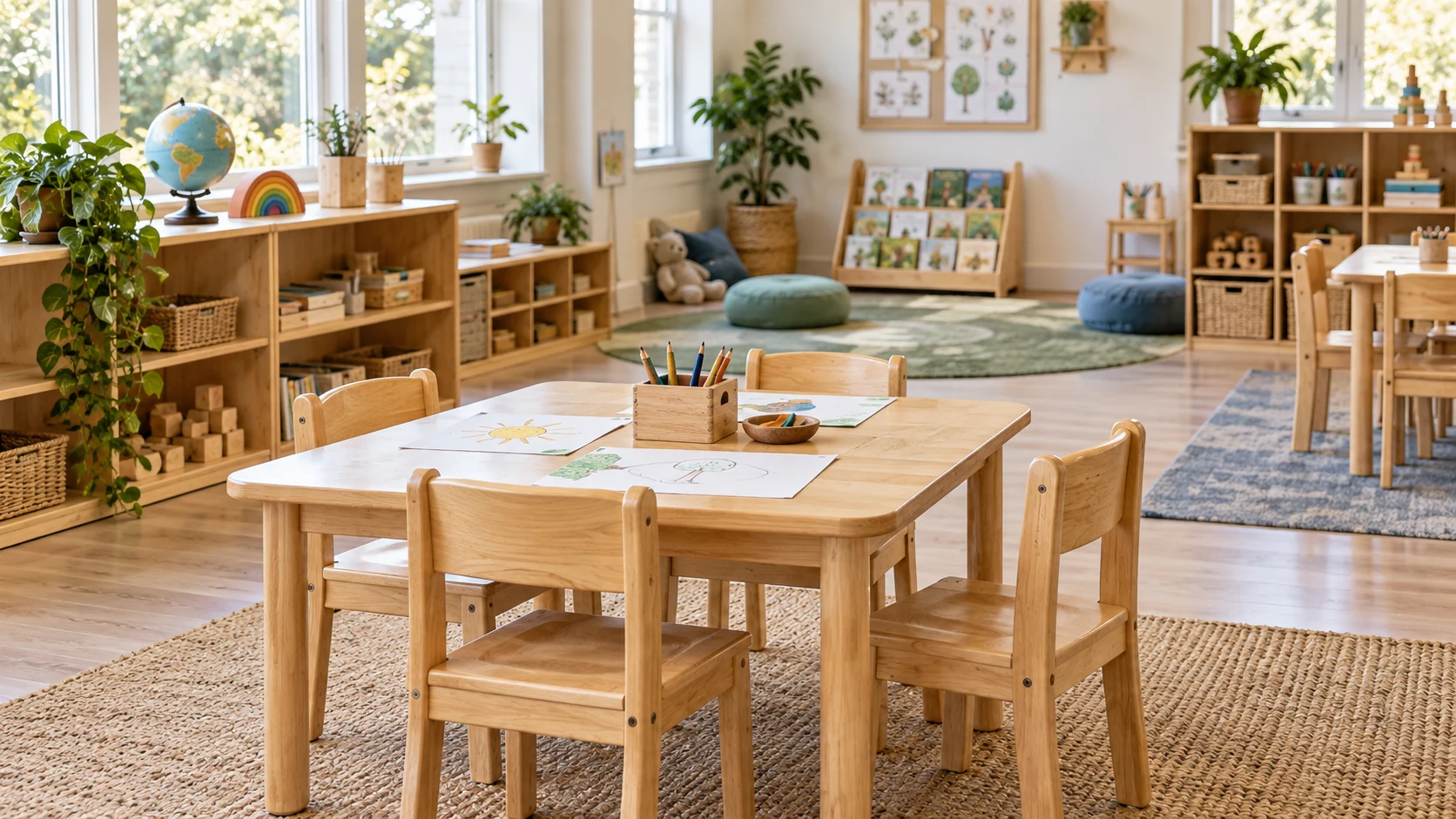
Wood can suit your room when you need:
- A stable table for group work.
- A warm look beside bookshelves and storage.
- A solid feel for a quiet learning area.
- Furniture that stays in one position.
Look at the surface before you buy. A smooth sealed finish makes daily cleaning easier. Rounded corners reduce sharp points around children. Strong joints and stable legs help stop wobble.
Wood needs the right care. Standing water, strong chemicals, and rough cleaning can damage some finishes. Ask which cleaning products you can use, especially if you plan to place wood near a sink, art table, or food area. A reading-corner layout guide can help you plan a calm area around wood tables, chairs, and shelves.
When plastic makes sense
Plastic suits rooms where furniture gets wiped, moved, and reset many times. Molded shapes often have smooth surfaces and rounded edges. Light chairs and tables can also make room changes faster.
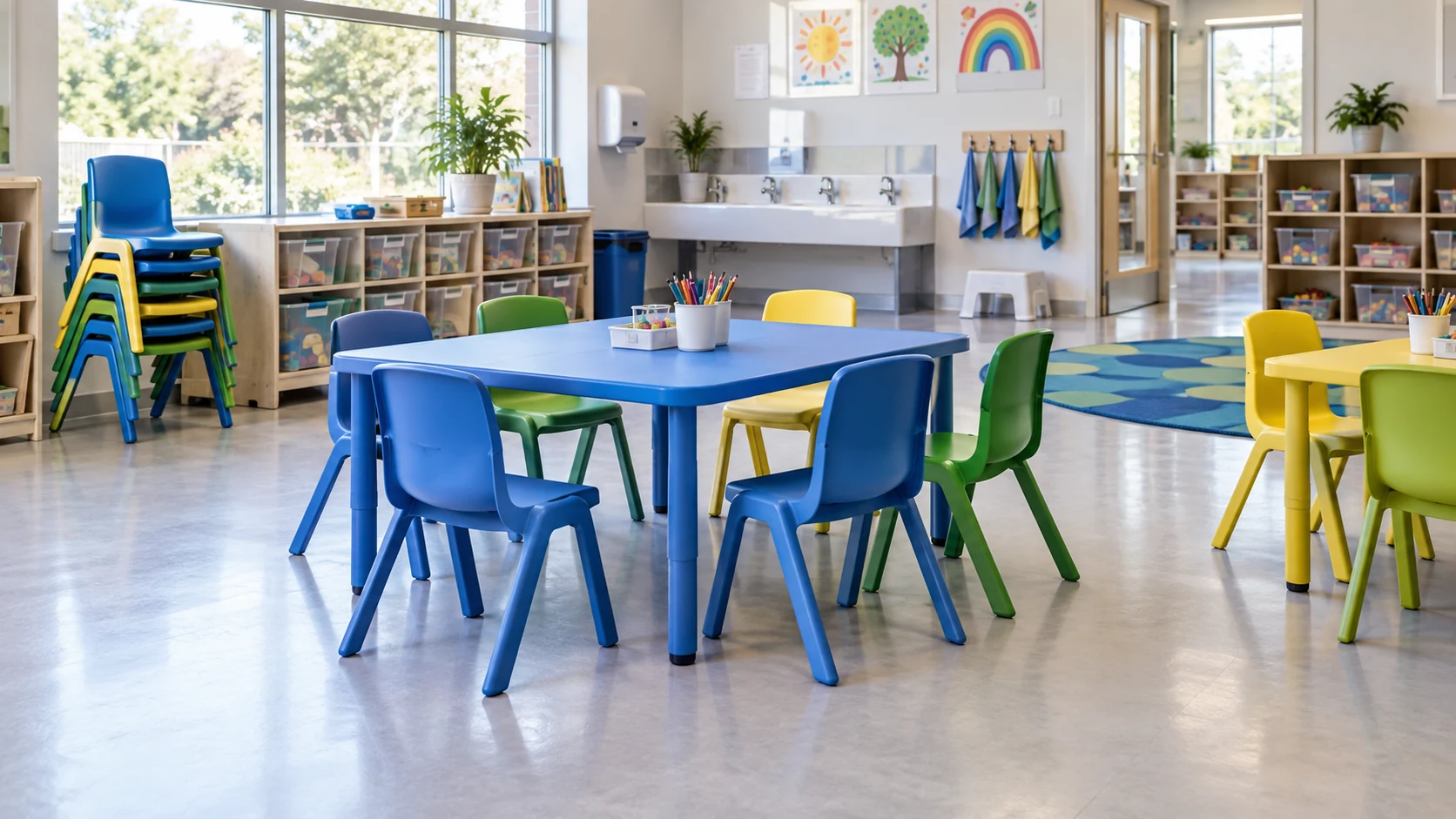
Plastic can suit your room when you need:
- Quick cleaning after art, food, or water play.
- Chairs that you can carry between activity areas.
- Stacking or easy storage.
- Different colors for different classroom zones.
Do not judge plastic by color alone. Check the plastic thickness, seat shape, leg strength, protective feet, and the cleaning products allowed for the surface. A light chair still needs a comfortable seat height, seat depth, and back angle.
When you compare cleaning products, you can use the U.S. EPA Safer Choice program as one reference. You still need to confirm that a cleaner suits the furniture finish and the rules in your market.
Wood and plastic side by side
| Point | kayu | plastik |
|---|---|---|
| Best for | Reading, small-group work, and furniture that stays in place | Art, food, water play, and furniture that moves often |
| Pembersihan | Works well with a sealed finish and the right cleaner | Usually quick to wipe after daily activities |
| Feel | Warm, solid, and natural | Light, smooth, and easy to handle |
| Penyimpanan | Often better for fixed areas | Often easier to stack or move away |
| What needs attention | Moisture, finish, joints, and surface care | Plastic thickness, seat shape, legs, and feet |
Neither material wins every row. Your classroom routine decides which column matters more.
Use both materials when the room has different needs
You do not need one material throughout the classroom. A mixed plan can give you a calm reading area and an easy-clean activity area in the same room.
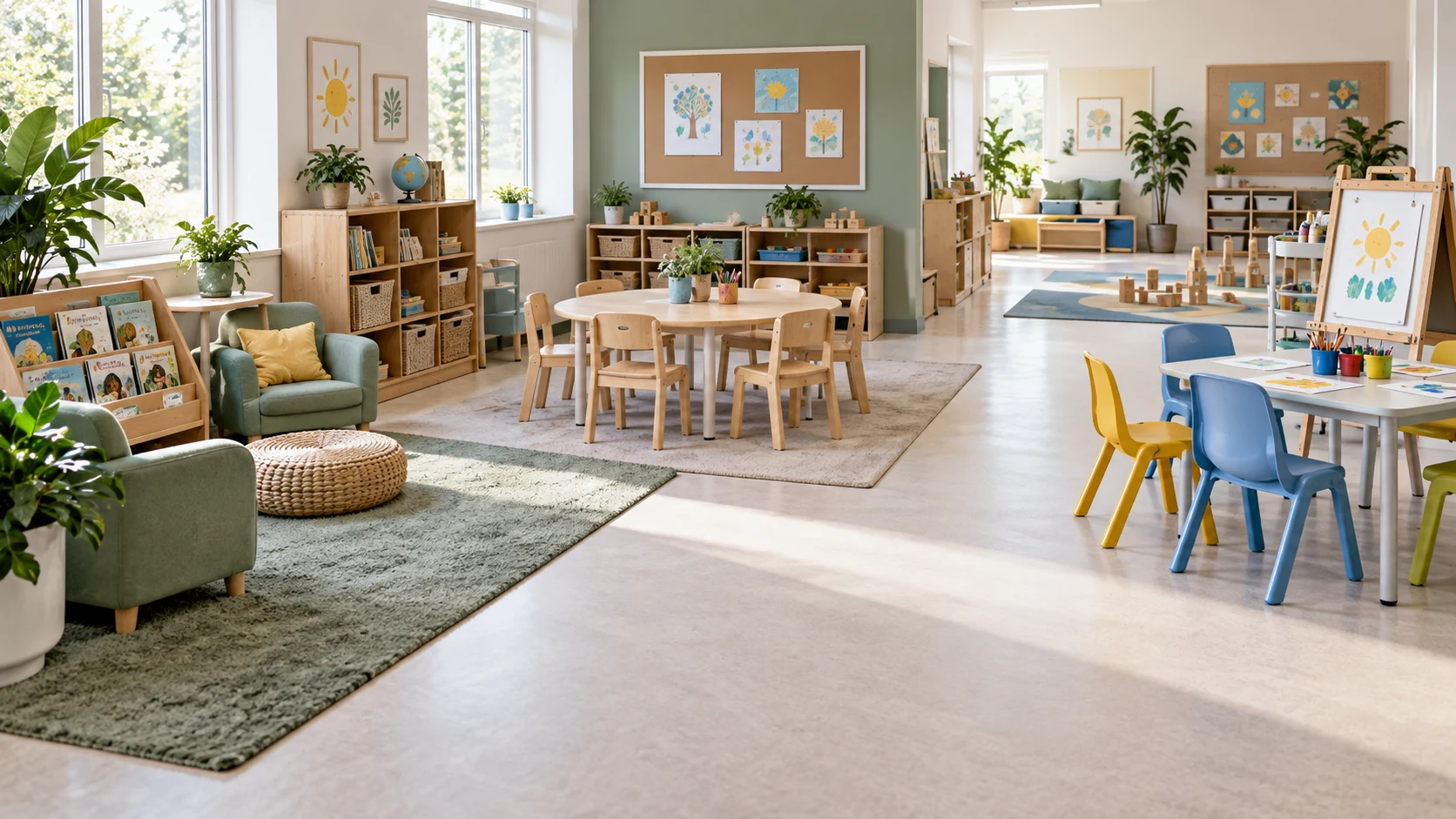
You can place wood furniture in a reading or small-group area. You can place plastic furniture in an art, food, water, or flexible activity area. Keep the colors, sizes, and walking paths consistent so the room feels connected.
Storage needs the same attention. A light chair only saves time when you have a safe place to stack or park it. Use this daycare classroom storage planning guide when you plan the room reset.
Look closely at the parts you use every day
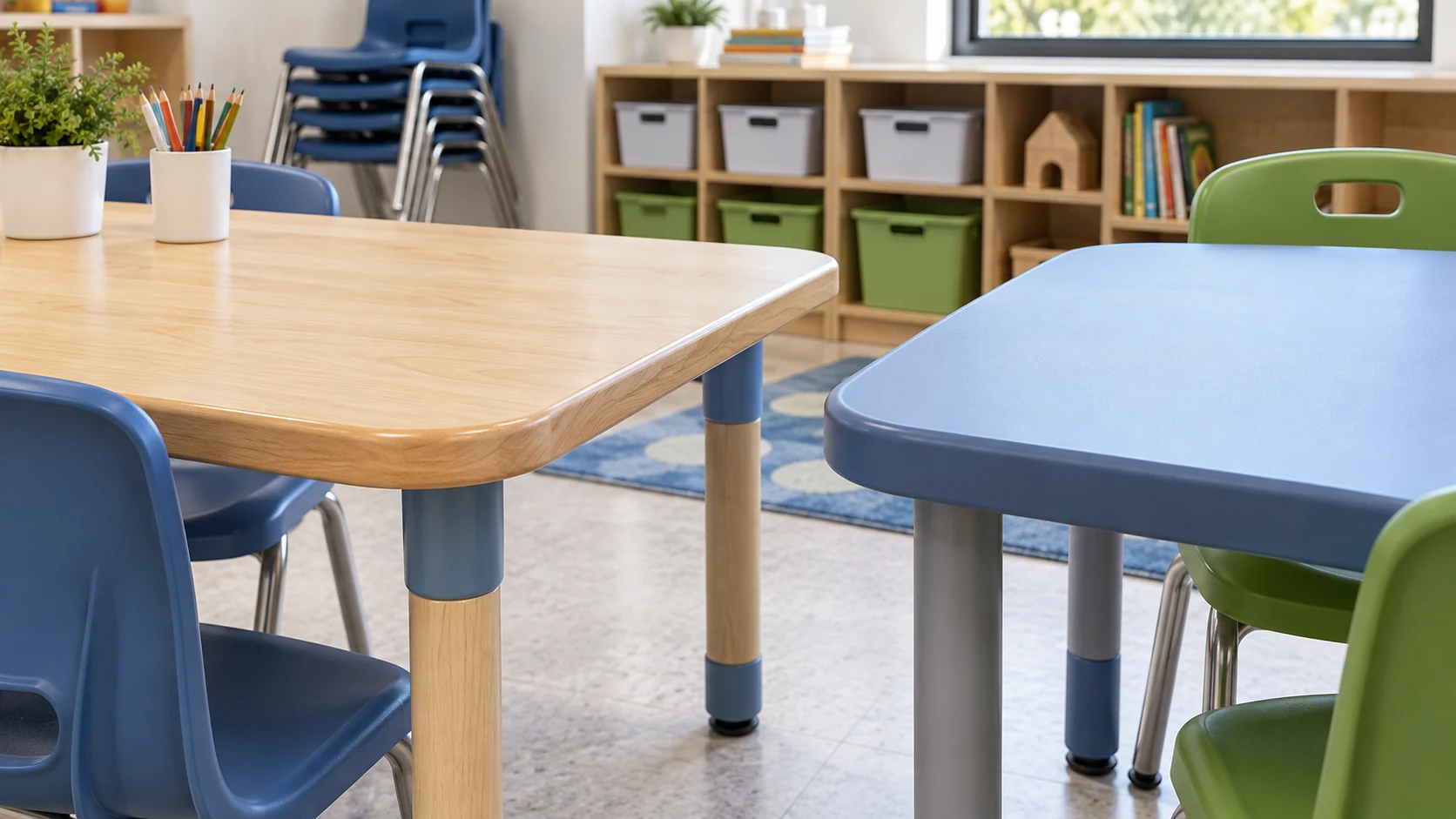
Before you approve a product, look at the corners, table edges, leg connections, feet, and surface finish. These small details affect cleaning, comfort, movement, and repairs every day.
Soalan Lazim
- Which material is better for a classroom? Choose wood for quiet areas and furniture that stays in place. Choose plastic for messy areas and furniture that moves often. Choose both when the room has different needs.
- Is plastic more durable than wood? Compare the exact construction and the daily use. Good plastic can handle frequent cleaning and movement. Good wood can last for a long time in a suitable area.
- Is wood hard to clean? Sealed wood can be easy to clean when you follow the finish instructions and keep standing water under control.
- Can you use wood and plastic in one room? Yes. Use each material where the material gives you the clearest benefit.
- What should you ask before ordering? Ask about material, finish, cleaning, safety documents, quality control, repairs, packaging, shipping, and layout support.
Choose for the room you have
Wood suits calm, fixed areas. Plastic suits active, messy, and flexible areas. A mix suits a room with several types of work. The best choice comes from your daily routine, not from a general rule about one material.
For room-specific guidance, you can visit the Xiairworld and share your room layout, activity areas, and cleaning routine before selecting tables and chairs.