
 Polish
  English
  Arabic
  French
  Italian
  German
  Spanish (Spain)
  Thai
Thai  Japanese
  Turkish
  Indonesian
  Vietnamese
  Portuguese
  Malay
Malay  Swedish
  Spanish (Mexico)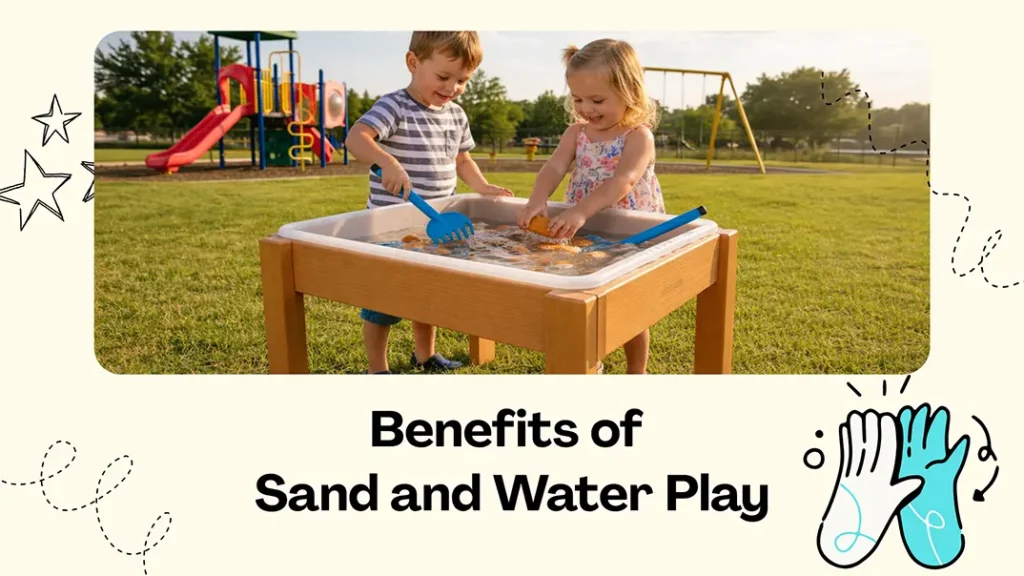
Sand and water play help children build sensory awareness, fine motor skills, early science understanding, and social interaction through hands-on activities like pouring, scooping, and mixing. Learning happens during play. Children explore concepts like volume, movement, and cause and effect without needing formal instruction. At the same time, they strengthen hand control, stay engaged longer, and interact with others in a relaxed and open-ended environment.
This kind of play works across ages and ability levels without needing to be adjusted too much. A younger child might focus on filling and emptying containers, while an older child starts noticing patterns, testing ideas, or working together with others. The materials stay the same, but the learning naturally grows with the child.
So what exactly do children gain from sand and water play, and how can it be used safely and effectively in real settings? The following sections break down the key benefits of sand and water play and teach educators how to encourage it.
What is Sand and Water Play?
Sand and water play is a type of sensory play in early childhood education where children explore materials like sand, water, and similar loose substances through hands-on interaction. It is typically set up using tools such as sand and water tables, containers, scoops, and funnels, allowing children to touch, pour, mix, dig, and experiment freely.
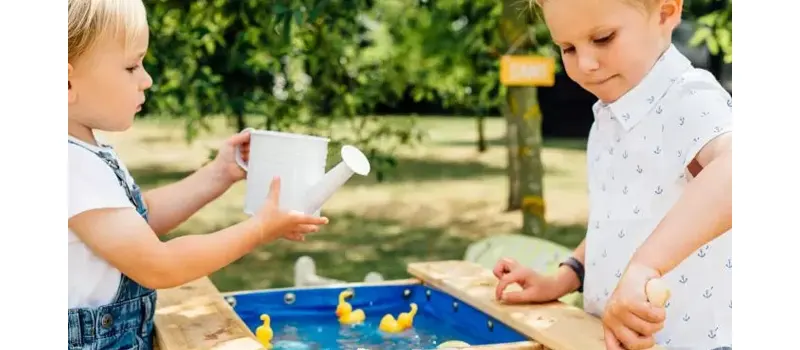
Sand and Water Play Has Three Key Characteristics:
- Sensory-Based Exploration
It focuses on engaging children’s senses, especially touch. Children experience textures, temperature, weight, and movement by interacting directly with sand and water, which helps them understand the physical properties of materials. - Gra otwarta
There is no fixed outcome or “correct” way to play. Children decide what to do, whether it is building, pouring, mixing, or simply observing. This flexibility encourages independent thinking and sustained engagement. - Process-Oriented Learning
The value lies in the process rather than the result. Children learn through actions such as filling and emptying, comparing wet and dry sand, or noticing how water flows, rather than creating a finished product.
What Are the Benefits of Sand and Water Play?
Playing with sand and water allows young children to learn through direct experience. They can touch, move, try, repeat, and observe. It starts from the child’s existing level, allowing them to learn through their hands and senses.
Supports Sensory Development
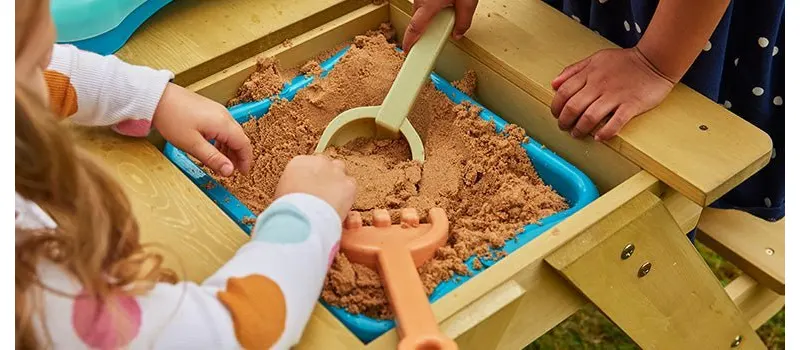
Sand and water give children rich sensory input through texture, temperature, weight, and movement. Dry sand feels different from wet sand. Still water behaves differently from flowing water. By touching and comparing these materials, children become more aware of how different substances feel and respond.
Builds Fine Motor Skills
Many sand and water activities require controlled hand movements. Children use cups, funnels, scoops, spoons, buckets, and molds to move materials from one place to another. These repeated actions strengthen hand muscles, improve coordination, and support later skills such as writing, buttoning, and other practical skills.
Zachęca Early Science Learning
Sand and water play naturally introduces children to basic science concepts. They begin to notice what floats or sinks, what pours quickly or slowly, and what happens when sand becomes wet. These simple discoveries help children understand cause and effect, volume, movement, and material properties in a way that feels natural and easy to remember.
Develops Problem-Solving and Thinking Skills
Children often make decisions during sand and water play without being directly told what to do. They test ideas, notice results, and adjust their actions. For example, if water spills too fast, they may choose a different container. If sand does not hold its shape, they may add water. This process helps develop observation, reasoning, and simple problem-solving skills through trial and error.
Supports Language Development
Sand and water play creates many chances for children to talk, ask questions, and describe what they are doing. They learn words related to texture, size, movement, quantity, and action. In group play, they also practice expressing ideas, making requests, and responding to others. This makes sand and water play useful not only for physical exploration, but also for everyday language growth.
Poprawia umiejętności społeczne
When children share a sand and water table, they learn how to play alongside others in a shared space. They take turns with tools, negotiate roles, watch what others are doing, and sometimes work together on the same activity. These small interactions help build cooperation, patience, and social awareness in a natural and low-pressure way.
Supports Focus and Emotional Regulation
Playing with sand and water can calm children because these types of games are repetitive, open-ended, and controllable, allowing children to proceed at their own pace. The actions of pouring, stirring, and scooping can help them focus and maintain concentration for extended periods.
Encourages Creativity and Open-Ended Exploration
There is no single correct way to play with sand and water. Children can build, mix, fill, and experiment in their own way. This freedom encourages creativity and allows the same setup to support different interests, ability levels, and stages of development without making the activity feel repetitive.
How to Encourage Sand and Water Play in Your Classroom?
Sand and water play is easier to encourage when both the environment and guidance methods support children’s natural curiosity. A well-prepared space, the right equipment, and simple materials make the activity accessible, while open-ended guidance and consistent routines help children stay engaged and explore more deeply. The following strategies focus on how to make sand and water play practical to manage and appealing to children.
Create a Clear and Inviting Play Area
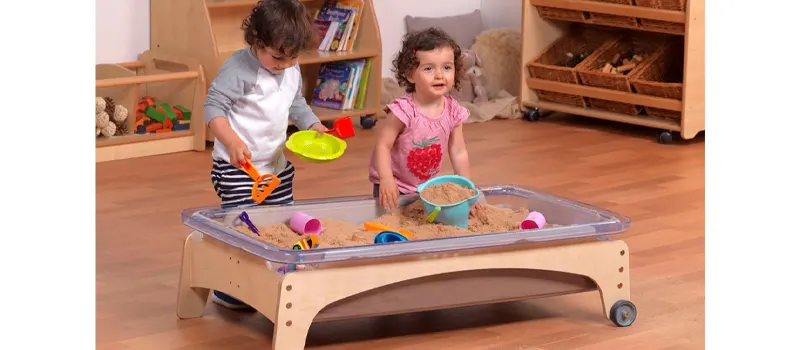
Start by creating a clearly defined space for sand and water play. Choose a location that is easy to access but not in a high-traffic path. Corners or side areas work better than entrances or main walkways. Place the area near a sink or on a surface that is easy to clean, since daily refilling and cleanup are unavoidable.
Use a stable sand and water table at child height so children can play comfortably. Leave enough space around the table for movement and supervision. Define the area clearly with mats or trays to contain mess.
Choose the Right Stół z piaskiem i wodą
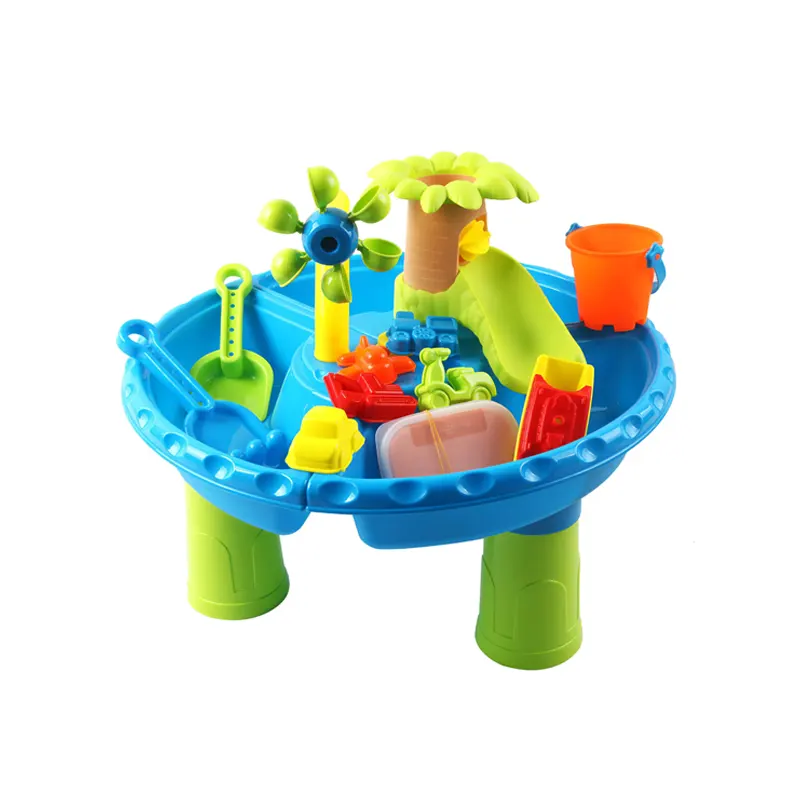
Select a table that matches your classroom size and daily usage. Focus on stability and durability. The table should have a strong base and smooth edges.
Height and accessibility are also important. Choose a child-height design so children can reach the surface comfortably without climbing. If different age groups share the space, consider adjustable legs or multiple table heights.
Look for practical features that reduce daily work. Drain plugs make water changes faster, lids help keep materials clean when not in use, and removable bins allow quick setup and cleanup.
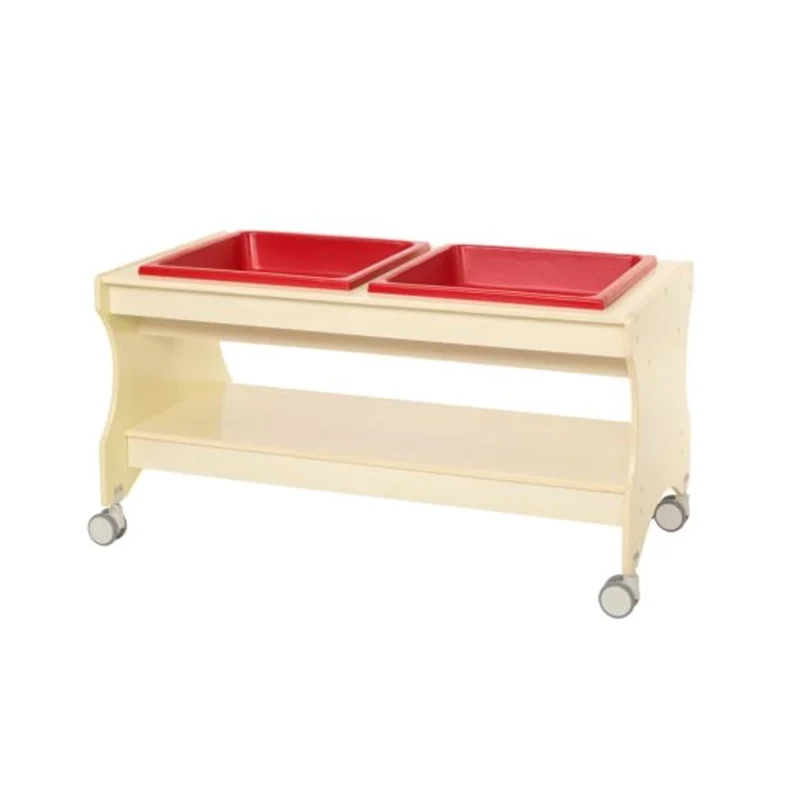
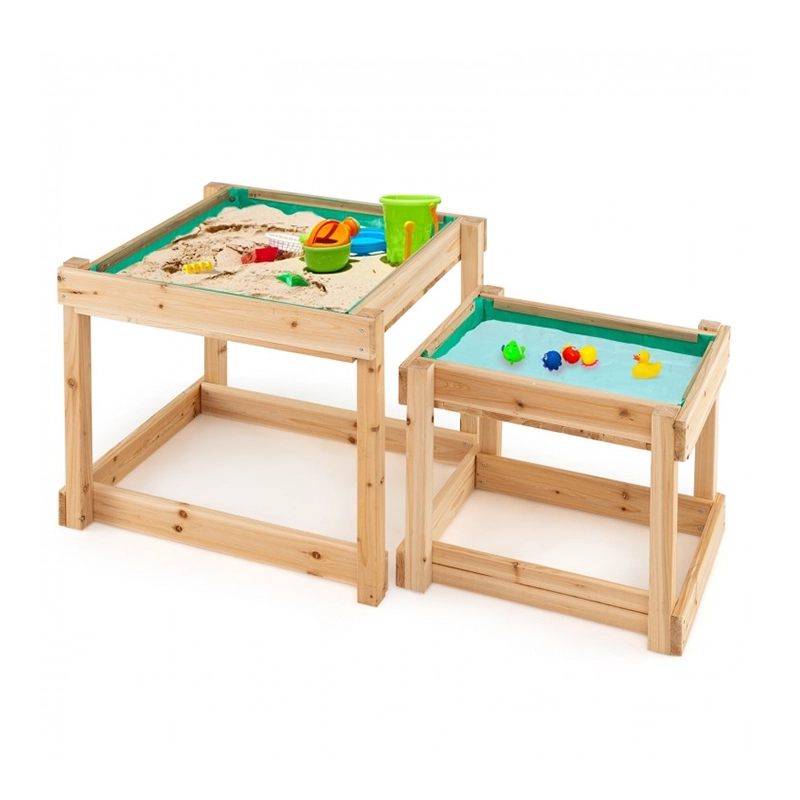
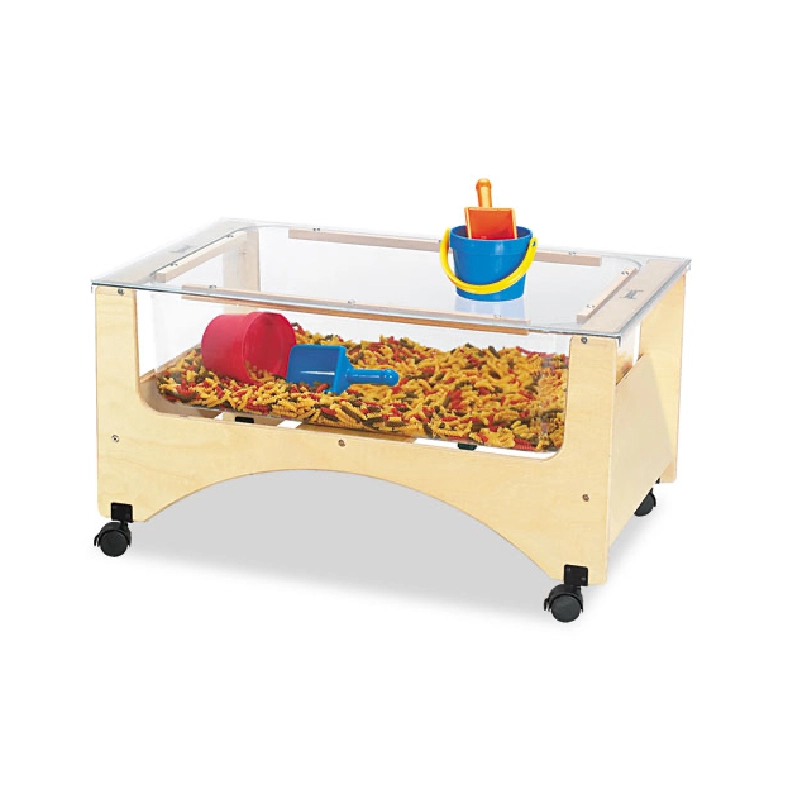
Organize Simple Tools and Materials
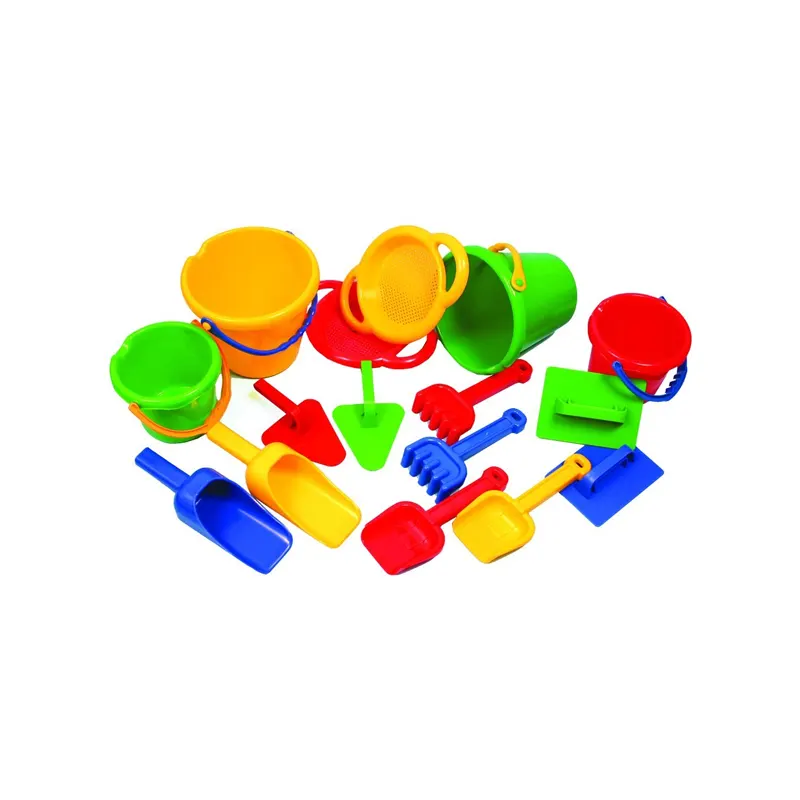
Children need simple tools to help them test their ideas. Items such as spoons and funnels give children more ways to pour, fill, compare, and experiment. Place tools in low bins or open containers so children can reach them easily and return them after use.
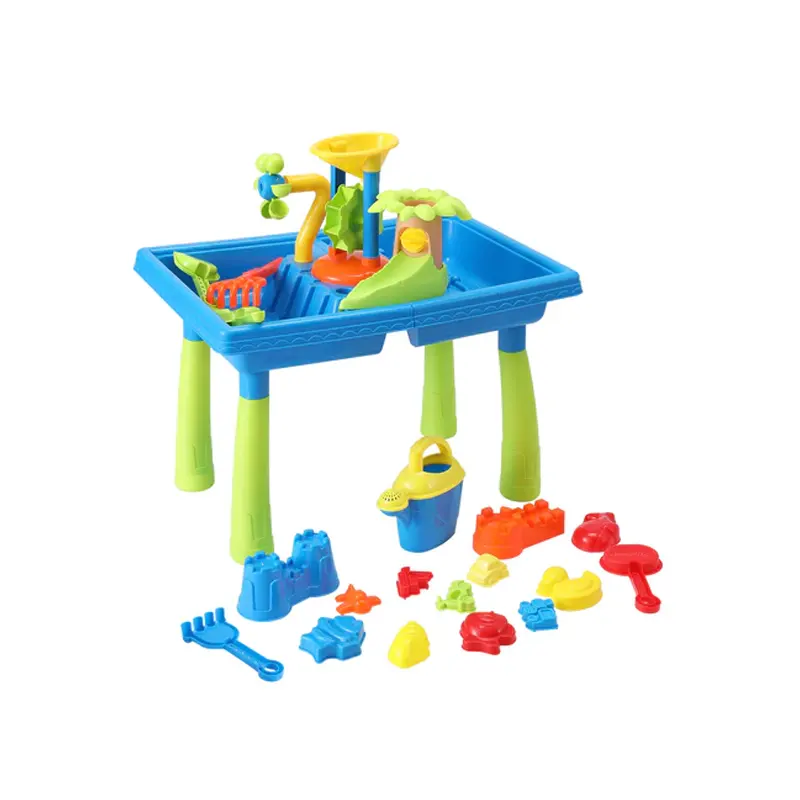
Rotate Materials to Keep Interest Fresh
Rotate materials occasionally to maintain interest, but avoid overcomplicating the setup. Teachers can rotate in shells, stones, floating objects, or seasonal items connected to classroom themes. These changes help maintain interest and support different types of exploration.
Introduce Open-ended Prompts
Children learn more when they are encouraged to think rather than simply follow instructions. Instead of telling them exactly what to do, teachers can use simple prompts that guide attention and spark curiosity. Questions such as “Which one holds more?”, “What happens when you add water to the sand?”, or “Can you make this float?” encourage observation and experimentation while keeping the play child-led.
Avoid turning the activity into a structured lesson with fixed outcomes. Open-ended exploration is what makes this type of play valuable. Teachers can observe, ask simple questions, and respond to children’s ideas rather than directing every step.
Model How to Use the Space
Some children need a little support before they feel confident using the sand and water area. Teachers can help by modeling simple actions such as pouring carefully, sharing tools, or exploring materials in different ways. This is especially useful when the area is first introduced or when new materials are added. Modeling gives children a clearer starting point while still leaving room for independent play.
Connect It with Classroom Learning
Sand and water play can be linked naturally to topics such as weather, seasons, nature, measurement, transport, or construction. Children may compare full and empty containers during a math activity, explore floating and sinking during science time, or use sand for digging and building during a themed unit. These connections make the play area more purposeful while still keeping it open-ended.
Support Both Individual and Shared Play
Not every child will use the sand and water area in the same way. Some may prefer to explore quietly on their own, while others will naturally interact with classmates. A good classroom setup allows room for both. Shared tools and open space can encourage cooperation, but children should also have enough freedom to explore at their own pace. This balance helps the area support social growth without forcing interaction.
Create Opportunities for Both Indoor and Zabawa na świeżym powietrzu
An indoor table can support smaller, more controlled activities, while an outdoor setup can allow for larger-scale digging, pouring, mixing, and collaborative play. When both options are considered, children have more chances to explore, and teachers can adapt the activity more easily to space, weather, and classroom needs.
Is Sand and Water Play Safe for Young Children?
Sand and water play is generally safe for young children when the environment is properly prepared and basic safety practices are followed. Like most hands-on activities in early childhood, the level of safety depends less on the activity itself and more on how it is set up, supervised, and maintained.
Use Safe and Age-Appropriate Materials
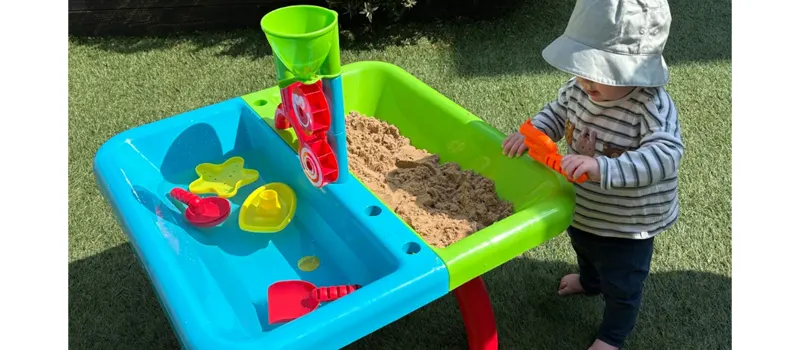
Choose clean, non-toxic sand and safe water sources. Avoid materials with sharp edges, small detachable parts, or items that can easily break. For younger children, tools should be large enough to prevent choking risks and simple enough to use without frustration. If adding extra items such as stones, shells, or natural materials, check that they are smooth, durable, and appropriate for the children’s age group.
Maintain Cleanliness and Hygiene
Sand and water areas need regular cleaning. Change water frequently, especially in shared classroom settings. Sand should be kept dry when not in use and covered to prevent contamination. Encourage children to wash their hands before and after play. This simple routine helps reduce the spread of germs.
Ensure Proper Supervision
Active supervision is essential, especially for younger children. Teachers should be able to see the entire play area clearly and step in when needed. This is not about controlling play, but about ensuring safe use of materials and guiding behavior when necessary. Supervision also helps prevent unsafe actions such as throwing sand, splashing excessively, or misusing tools.
Set Clear Safety Rules
Simple and consistent rules help children understand how to use the area safely. For example: keep sand and water inside the table, do not throw materials, use tools as intended, and walk instead of running near the play area. When children know what is expected, accidents are less likely to happen, and the activity becomes easier to manage.
Manage Water Levels and Spills
Keep water levels shallow to reduce the risk of slipping or accidental spills. Use mats or trays under the table to catch excess water and prevent the floor from becoming slippery. Quick access to towels or cloths also helps manage spills immediately and maintain a safe environment.
Check Equipment Stability
Make sure the sand and water table is stable and placed on an even surface. Avoid lightweight setups that may tip during active play. Regularly check for loose parts, cracks, or damage that could affect safety. A well-built table with a strong base and smooth edges provides a safer and more reliable play experience.
5 Sand and Water Activities
In early childhood, sand and water play should stay simple, safe, and easy to explore. At this stage, children are still developing basic coordination and understanding of cause and effect, so activities do not need complex rules or outcomes. The goal is to give them opportunities to touch, move, and observe materials in a way that feels natural and engaging.
- Building and Molding
Using wet sand to build shapes and fill molds. Children might make mounds, patties, roads, or pretend food, depending on the materials available. - Floating and Sinking
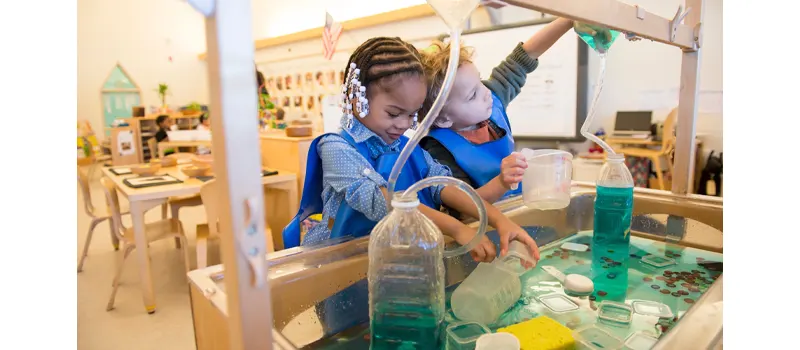
Children can place different objects in water to see which ones float and which ones sink. Items such as leaves, stones, plastic animals, or small building blocks can all be used for comparison. - Measuring and Comparing
Teachers can add measuring cups, marked containers, spoons, or clear jars to encourage comparison. Children can look at which container holds more, how many small cups fill one large container, or whether one bucket is heavier than another. - Digging and Excavating
Children can use shovels, scoops, or their hands to dig holes, bury objects, and uncover them again. Teachers can hide natural materials, letters, numbers, or small classroom theme objects in the sand to add interest. - Funnel and Tube Exploration
Funnels, pipes, and connecting tubes give children more ways to explore how water moves. They can pour water through different pathways, test which opening works faster, or observe what happens when the flow is blocked.
Final Thoughts
Sand and water play allow children to learn through doing. Instead of following instructions, they explore, test, and adjust their ideas through direct experience. This process is simple on the surface, but it supports how young children actually understand the world.
At Xiair, we focus on making that setup easier to achieve. From classroom layout planning to durable sand and water tables, our goal is to help educators create spaces that work in real teaching environments. We believe that when the environment supports it, even the simplest setup can lead to meaningful, lasting learning.
Często zadawane pytania
Is sand and water play suitable for all age groups?
Yes, but the setup should be adjusted based on age. Toddlers need simpler tools, a lower table height, and closer supervision, while preschoolers can handle more complex materials and group interaction. Choosing age-appropriate equipment helps ensure both safety and engagement.
What features make a sand and water table easier to use every day?
Practical features can make a big difference in daily classroom use. Tables with drain plugs, removable bins, lids, and durable surfaces are usually easier to clean and maintain. Smooth edges, stable legs, and child-friendly height also help create a safer and more manageable setup.
How do you keep sand and water play hygienic?
Regular maintenance is important. Water should be changed frequently, tools should be checked and cleaned, and sand should be kept dry and covered when not in use. A simple routine makes it easier to keep the area clean without adding extra workload.
What should be considered before purchasing a sand and water table?
Key factors include child height, available space, number of users, ease of cleaning, and whether the table will be used indoors or outdoors. A well-chosen table makes daily use easier and increases how often children engage with the activity.
What type of sand is best for classroom use?
Clean, fine play sand is usually the best choice because it is soft, easy to shape, and safe for children to handle. Avoid construction sand or materials with sharp particles. Some classrooms also choose dust-free or treated sand to reduce mess and improve hygiene.
How do you store sand and water play materials when not in use?
Materials should be stored in a clean and dry place. Sand tables can be covered to keep them clean, while tools can be placed in labeled bins or containers for easy access. A simple storage system helps maintain hygiene and makes setup faster for the next use.