
 Polish
  English
  Arabic
  French
  Italian
  German
  Spanish (Spain)
  Thai
Thai  Japanese
  Turkish
  Indonesian
  Vietnamese
  Portuguese
  Malay
Malay  Swedish
  Spanish (Mexico)
If you are furnishing a small daycare room, every product needs a clear job. A compact table is not a good choice if children cannot sit down without blocking the main path. A low shelf is not space-saving if it makes supervision difficult or leaves no place for materials.
The right choice comes from the relationship between the furniture, the children, and the daily routine. You need age-appropriate tables and chairs, storage that fits the way materials are used, and enough open floor for the room to change during the day.
What makes furniture work in a small daycare room
Use four tests when you compare products:
- Activity fit: the table, chair, or storage unit should support a real activity in your room.
- Working space: you need room for children to sit, stand, reach, open storage, and move with adult support.
- Access: children and teachers should be able to reach the materials they use without crossing another activity.
- Reset: you should be able to clear or change the area without carrying every item through the room.
Your age group comes first. Infant, toddler, preschool, and kindergarten rooms need different levels of reach, support, supervision, and furniture access. Choosing the smallest available product can create a poor fit if the table, seat, or shelf does not match the children using it.
The best furniture types for small daycare rooms
Tables and chairs for small-group activities
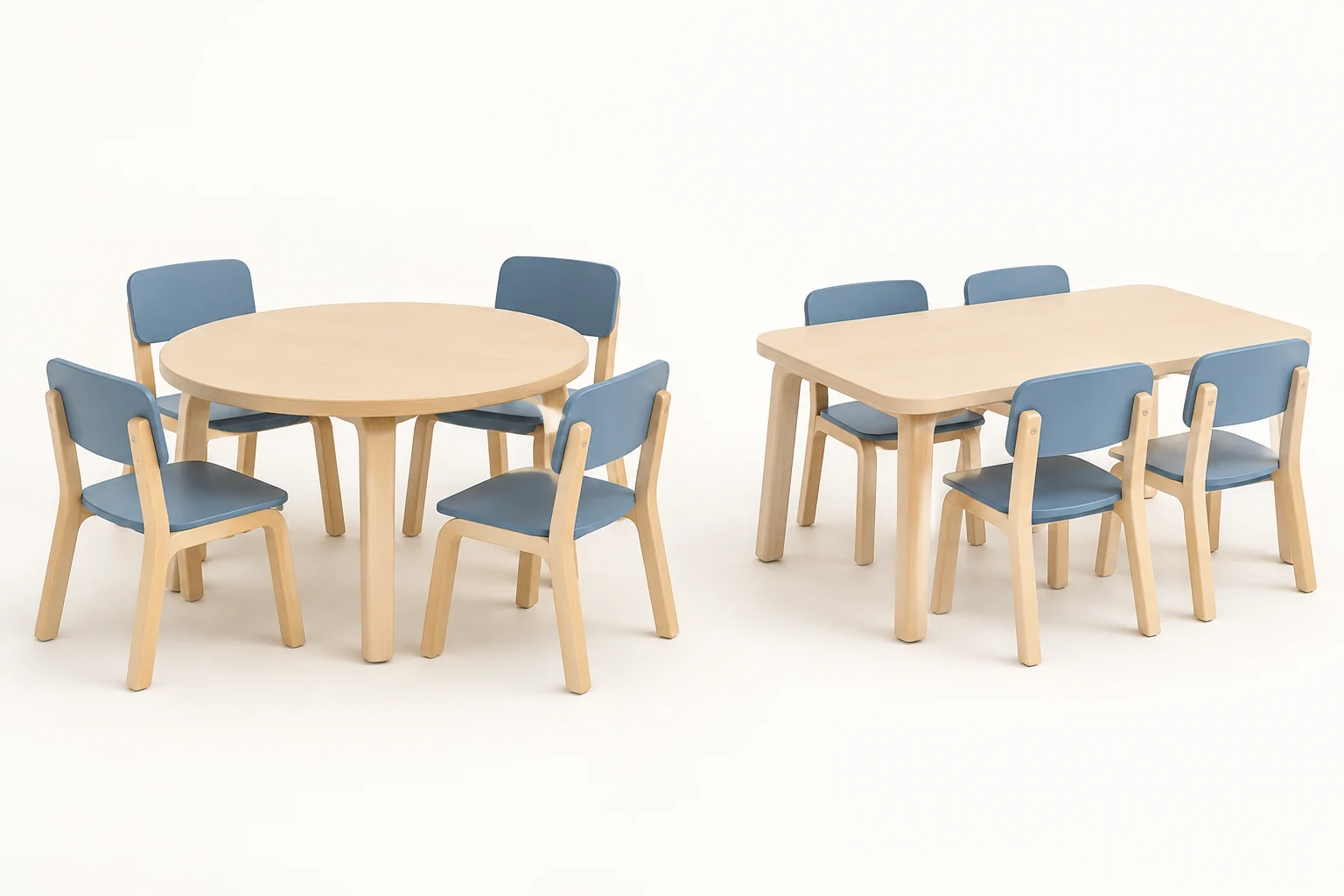
Tables and chairs should be chosen as one working set. The table must leave enough clearance for the chairs, while the chairs need to match the children using them in seat height, depth, stability, and ease of movement. This pairing supports small-group work, drawing, puzzles, meals, and hands-on learning without adding separate furniture for every task.
Choose the table shape around the room and then check the matching preschool tables I preschool chairs together. Review the surface, edge treatment, base position, back support, floor contact, cleaning guidance, and the clearance needed when children sit down or leave the table.
Low open storage and cubbies
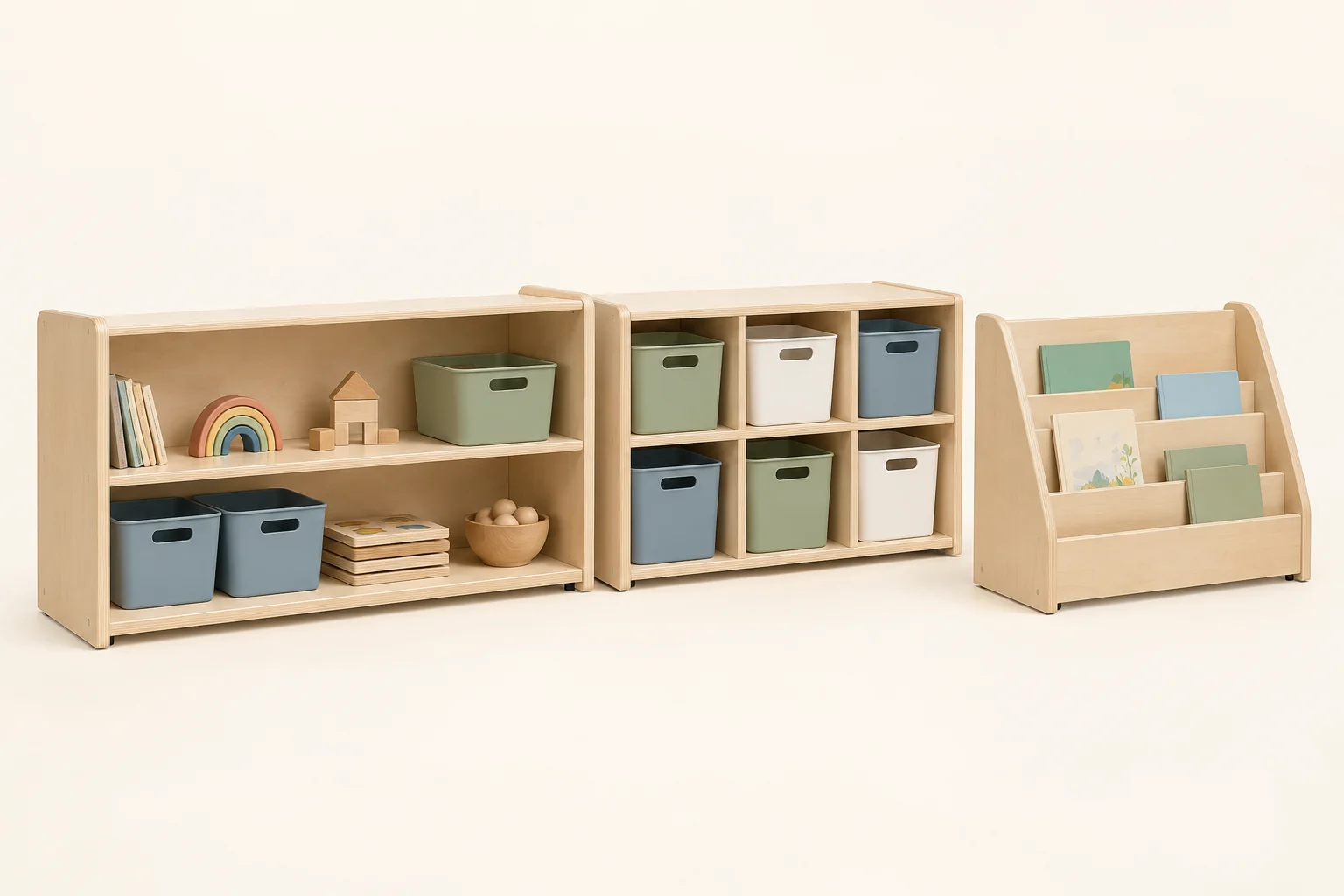
Low storage works best when it is placed near the activity it serves. Keep books close to reading, art materials close to the art table, and daily belongings close to the entry route. This reduces unnecessary movement and keeps supplies from spreading across the room.
Open shelves, cubbies, and book displays can also separate areas without creating a tall visual barrier. Choose the depth and height around supervision, reach, and the items you actually need to store. Review regały na książki w klasie I przechowywanie w klasie as part of the room plan rather than adding them after the furniture is selected.
Storage benches and low seating
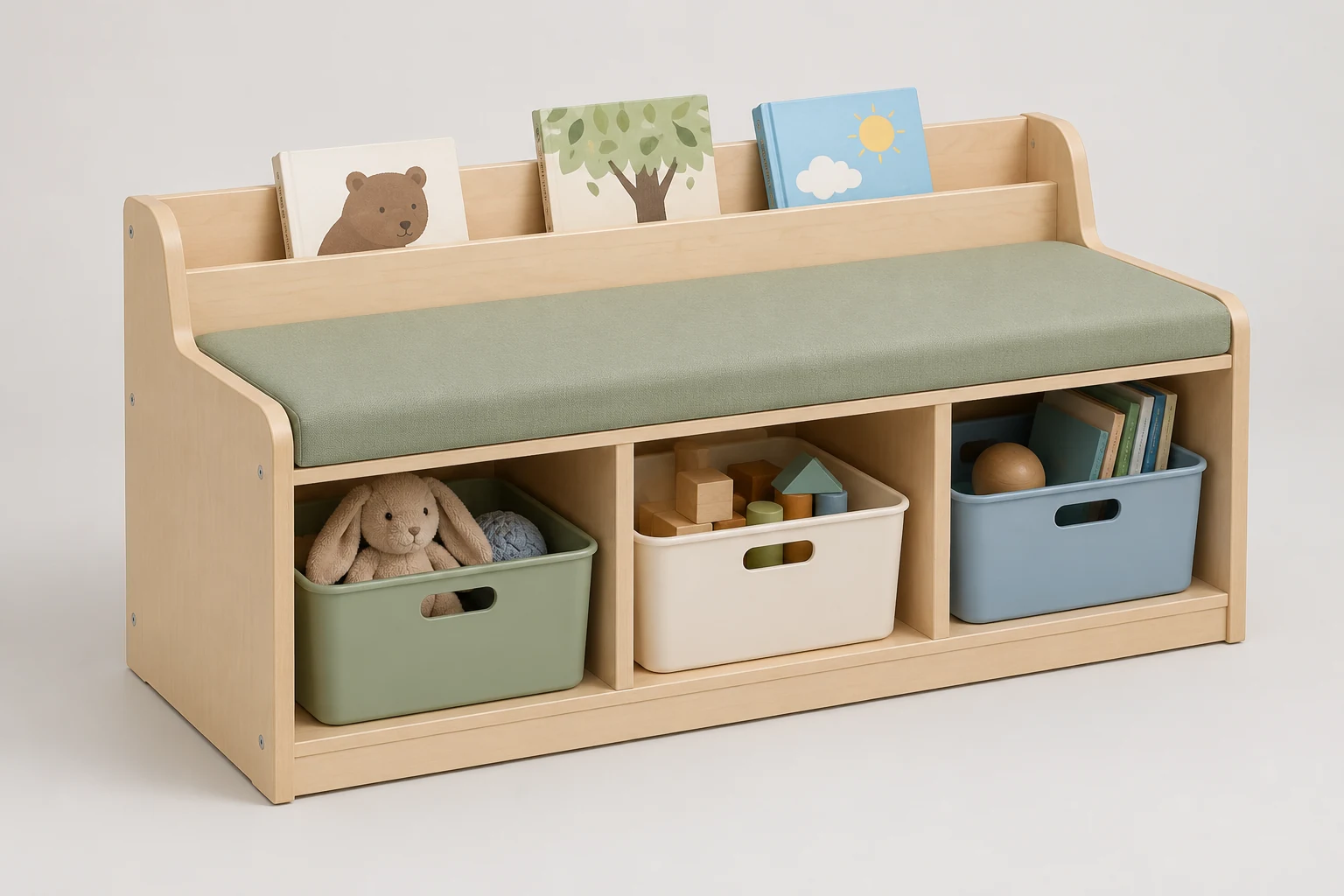
A low bench with storage underneath can do two jobs in a small room: provide child seating and keep books, bins, or soft materials off the floor. It can work in a reading, arrival, or quiet area when you want fewer separate pieces.
Check the seat surface, bin access, edge treatment, and supervision sightlines. The bench should not become a fixed barrier or make it difficult to reach the materials below.
Mobile storage and movable activity units
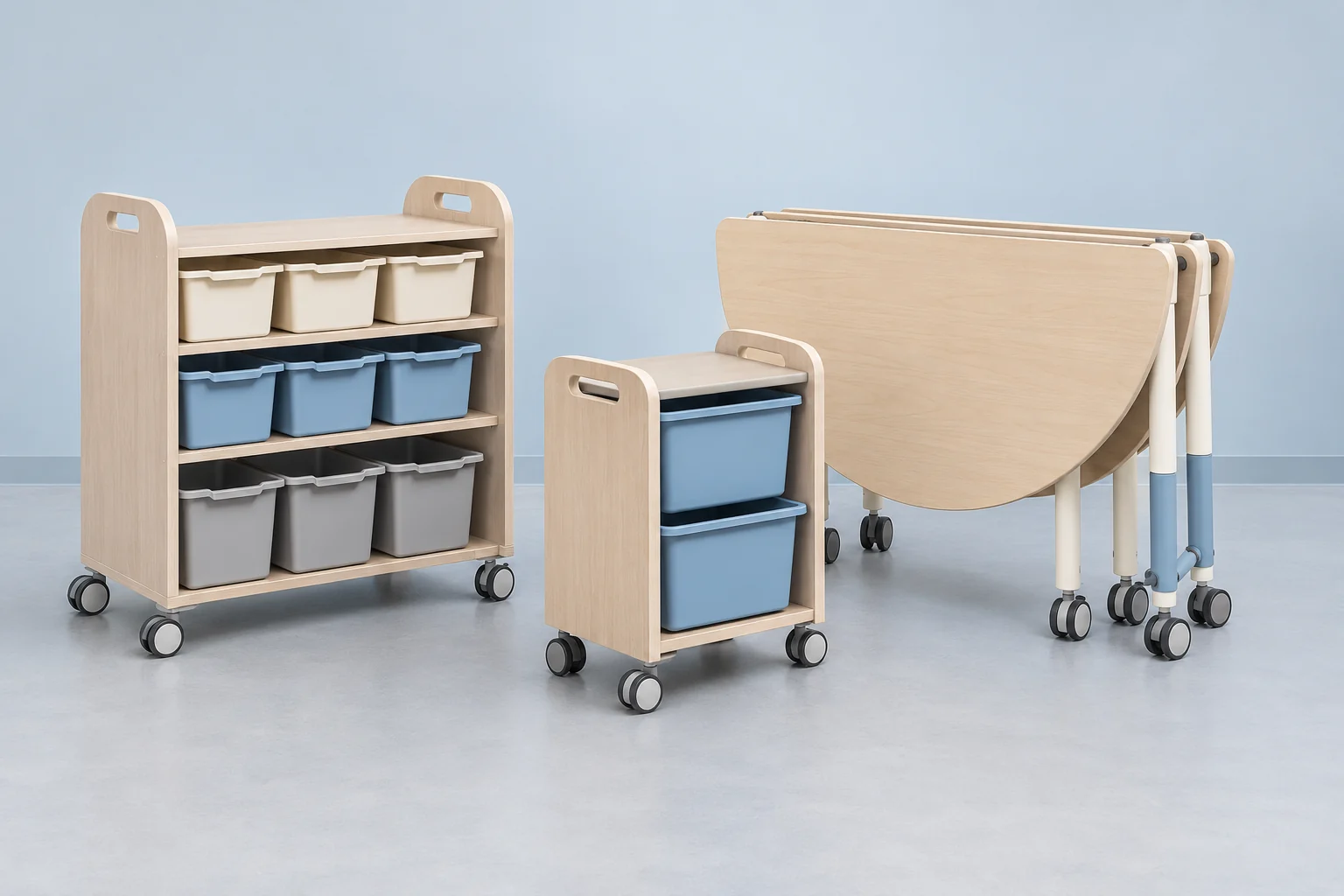
A compact rolling cart or movable bin unit can help you change an activity area without lifting a large cabinet. It can bring supplies to the activity and return to a defined parking place after the activity ends.
Mobility only saves space when the unit has a home. Decide where you will park it, who can access it, and how you will keep wheels or handles from interrupting the main route.
Compact reading-area furniture
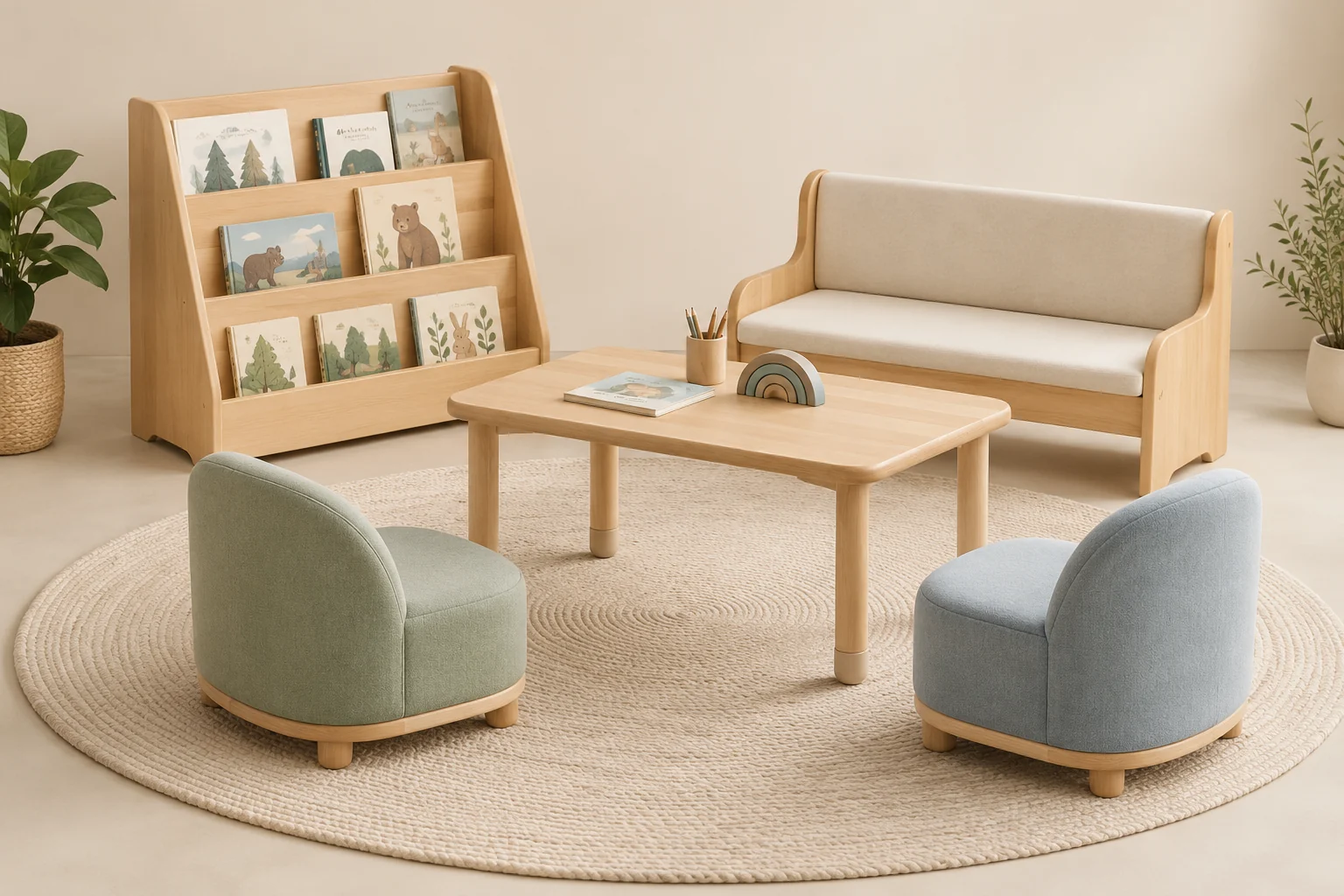
A small reading area can use a low book display, a compact bench or child-size seats, and a narrow activity table. Keep the arrangement open so you can supervise the area and reach the rest of the room.
You do not need a large enclosed reading corner. A few coordinated pieces can create a clear change of activity while keeping the floor available for other parts of the day.
Match each product to its work area
| Area | Furniture to consider | What to check |
|---|---|---|
| Small-group learning | Compact table and matching chairs | Adult access, chair clearance, surface care |
| Art or sensory work | Cleanable table, chairs, nearby bins | Finish guidance, supply access, easy reset |
| Reading and quiet time | Low book display, compact seats, storage bench | Supervision, reach, clear sightlines |
| Arrival and belongings | Cubbies, low storage, labeled bins | Entry flow, daily access, open floor |
| Flexible activities | Rolling cart or movable storage unit | Parking place, wheel clearance, supervision |
This approach lets you use different products in one room without making the room feel random. You can choose furniture by task while keeping the height, finish, and visual language consistent where pieces work together.
Give materials and finishes a clear purpose
Material choice should follow the activity, not a general rule that one material is always better. A warm wood finish may suit a reading or display area. A plastic or laminate surface may be easier to wipe after art, food, or water activities. The actual finish and care instructions still matter, so you should confirm them for the product you select.
In a small room, visual consistency also matters. Too many unrelated colors, edge profiles, or storage styles can make a compact space feel busy. You can use different materials in different zones while keeping the overall finish plan controlled.
Know when standard or custom furniture fits better
Standard furniture can work well when the room has a clear plan and the available products fit the age group and activities. It can also make later additions easier when the material, finish, and product records are clear.
Customization becomes useful when columns, windows, doors, fixed storage, or unusual wall lengths make standard dimensions difficult to place. Adjusting dimensions, materials, or finishes can protect the way the room works. The goal is not to make every item as small as possible. The goal is to keep access, supervision, activity space, and maintenance practical.
Before production, confirm the specification: dimensions, material, finish, age group, quantity, and intended activity. If you are furnishing more than one room, keep those records for future additions. A clear quality-control, packing, and shipping plan helps you compare delivered pieces with the approved specification.
Check the plan before you order
- Mark doors, windows, fixed points, and the main movement route.
- List the activities that must happen in the room each day.
- Assign a furniture group to each activity instead of filling empty wall space.
- Check the working area around chairs, storage openings, and movable units.
- Record the material, finish, age group, care guidance, and future replacement needs.
For a broader guide to arranging a compact classroom, you can also read these small classroom setup ideas. That guide focuses on the room arrangement; this article focuses on the furniture you place inside it.
Często zadawane pytania
- Can a small daycare room use more than one table shape? Yes. You can use one shape for central group work and another along a wall or in a corner when both support the room plan. Keep the height and activity purpose clear for each group.
- Should every storage unit in a small daycare room be open? No. Open storage suits daily-use materials, while closed storage can keep occasional-use items out of the main visual field. Choose the type according to access and supervision.
- What should you do with furniture used only once a week? Keep it out of the main working area when possible. A movable, nesting, or easily stored piece can return the floor to daily activities after occasional use.
- How do you compare two products with a similar footprint? Compare the usable clearance around each product, the way children and adults reach it, the storage access, the care instructions, and the ease of adding matching pieces later.
- Should you choose all furniture from one material? No. You can use different materials when each one suits its area, but keep the finish plan controlled so the small room does not become visually crowded.
If you are planning a small daycare room, you can visit Świat Xiair and share your layout, age group, activity areas, and furniture requirements. Xiair World can help you connect tables, chairs, storage, materials, finishes, and optional customization to the way you plan to use the room.