
 Polish
  English
  Arabic
  French
  Italian
  German
  Spanish (Spain)
  Thai
Thai  Japanese
  Turkish
  Indonesian
  Vietnamese
  Portuguese
  Malay
Malay  Swedish
  Spanish (Mexico)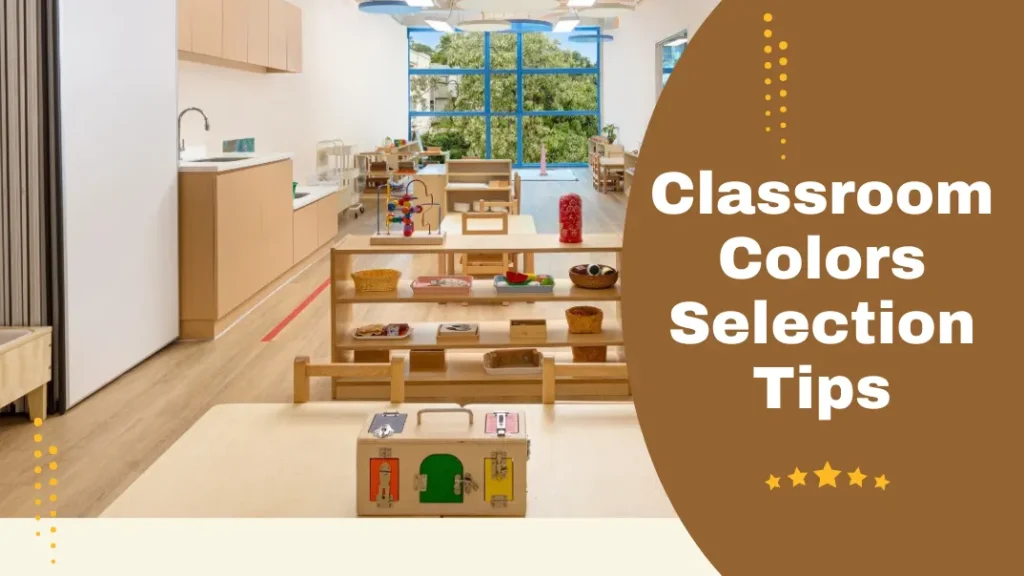
Classroom colors should be considered together, not chosen one item at a time. Walls, flooring, furniture, rugs, soft seating, and storage all appear in the same room. If these colors do not work together, the space can easily look busy or disconnected.
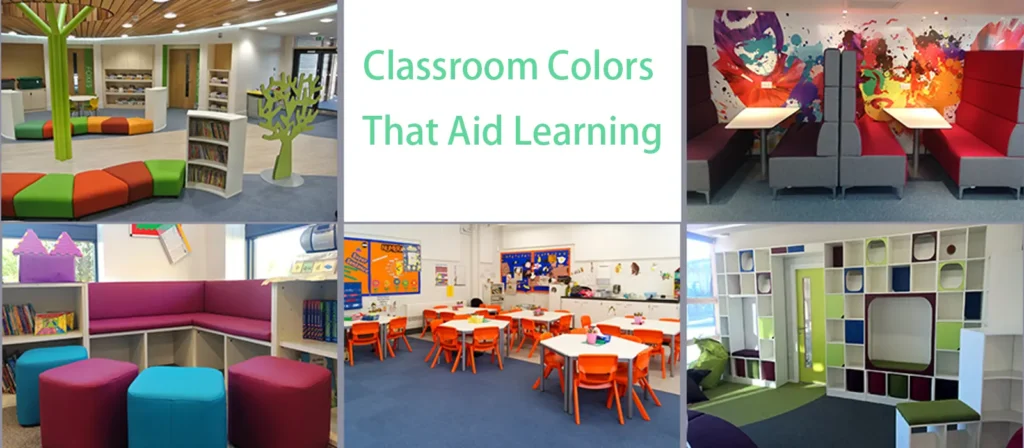
A classroom does not need many bright colors to feel welcoming. Natural wood, cream, beige, soft green, and other soft colors can create a quieter base, while stronger colors can be added through chairs, rugs, cabinet panels, or small details. Color can also help separate different learning areas or give different classrooms their own identity.
If you are planning a classroom, it helps to decide on the main color palette before choosing individual furniture pieces. If the walls and flooring are already finished, those existing colors can guide your furniture choices. The following sections explain how to handle different situations.

Understanding Common Classroom Colors
Different colors create different visuals in the classroom. Instead of choosing a color only because it is popular, think about how much of that color you want to use and where it will appear.
| Kolor | How It Can Be Used |
|---|---|
| Natural Wood | Works well as a main furniture finish and pairs easily with many wall and flooring colors. |
| Zielony | Fits naturally with wood finishes and is often used on chairs, cabinet panels, soft seating, and small details. |
| Niebieski | Can create a softer visual feel when used in controlled amounts, especially in quiet or younger-age spaces. |
| Żółty | Adds warmth and energy and often works better as an accent than as the main color across the whole room. |
| Cream and Beige | Create a soft neutral base and work well with natural wood and muted colors. |
| Grey | Can provide a clean neutral background but may need warmer wood tones or soft colors to keep the room from feeling too cold. |
| Red and Orange | Strong colors that are usually easier to manage in smaller areas rather than across large furniture surfaces. |
| Pastel Colors | Add color without creating the same visual intensity as bright primary colors. |
You do not need to limit a classroom to one color. In most spaces, a neutral or natural base with one or two accent colors is easier to coordinate and maintain over time.
How to Choose a Classroom Color Scheme
If you are designing a new classroom from the beginning, avoid choosing each surface and product separately. Start by building a simple color system.
Start With the Overall Direction
Before selecting exact colors, decide how you want the classroom to feel.
- A natural and warm environment
- A soft and calming space
- A clean modern look
- A more playful classroom
- A color scheme that follows your school branding
This decision will make later choices much easier. A natural classroom may use light wood, cream, beige, and muted green. A modern space may combine light wood with white, grey, or soft blue. A more playful classroom can still use a neutral base while adding brighter colors in selected areas.
Choose the Base Colors First
Your base colors cover the largest surfaces in the room.
- Flooring
- Walls
- Large fixed cabinets
- Main furniture finish
Try to keep these colors relatively easy to coordinate. For example, natural wood furniture with warm white or cream walls gives you much more flexibility than using several strong colors across large surfaces.
Once the base is settled, it becomes much easier to add color through chairs, cabinet doors, rugs, cushions, storage bins, or small furniture details.
Add One or Two Accent Colors
Accent colors give the classroom character without taking over the whole space. You might use green on selected chairs and cabinet panels, while keeping tables and storage units in natural wood. Another classroom might use cream furniture with soft yellow and green details.
The important point is that the accent color does not need to appear everywhere. Small amount used repeatedly can be enough to make the whole classroom feel connected.
Consider the Age Group
The same color scheme does not need to be used in the same way for every age group.
Infant and toddler rooms often work well with softer finishes and fewer strong contrasts. Preschool classrooms usually handle a little more change through activity areas, chairs, rugs, or storage.
If there are several age groups, you can keep the same main wood finish while changing the accent colors between rooms. This creates change without losing the overall identity for you.
Consider Room Size and Natural Light
Color can look very different depending on the room. A dark floor, limited natural light, and dark furniture can make a small classroom feel heavier. In this case, lighter furniture finishes and softer wall colors may work better.
A large classroom with strong natural light gives you more flexibility to introduce darker details or stronger accent colors. Always look at the room as a whole instead of only choosing colors from a catalog.
How to Choose Furniture Colors for an Existing Classroom
Wiele classroom projects do not start from an empty room. Your flooring may already be installed. Walls may already be painted. Doors, windows, fixed cabinets, branding, or reception features may already have their own colors.
In this situation, furniture should be selected to work with what is already there.
Look at the Surfaces That Are Hardest to Change
Start with the parts of the room that you are unlikely to replace soon:
- Flooring
- Wall colors
- Fixed cabinet
- Doors
- Major architectural finishes
- Existing brand colors
These should guide the furniture palette. If the room already has a lot of visual detail, furniture can provide a calmer base. If the room is very neutral, furniture gives you more room to introduce controlled accent colors.
Use Furniture to Balance the Existing Space
Suppose your classroom already has light wood flooring and cream walls. Natural wood furniture can continue that soft base, while green or soft yellow can be added through chairs, storage doors, or soft seating.
If the room has grey flooring and white walls, natural wood furniture can add warmth. You can then use pastel green, blue, beige, or other soft colors to keep the space from feeling too cold.
If the flooring is dark, lighter furniture can help balance the room instead of adding another large dark surface.
The furniture does not need to match the flooring exactly. It only needs to feel like it belongs in the same space.
How to Match Walls, Floors and Classroom Furniture
A strong classroom color scheme usually has a clear order. Instead of trying to make every color match, think about which part should lead and which parts should support it.
- Light Wood Floors
Light wood flooring works with many furniture finishes. Natural wood or maple furniture creates a consistent look, while cream, green, pastel blue, or other soft colors can be used as accents. If the flooring and furniture are very similar in tone, use rugs, seating, or cabinet panels to create enough contrast. - Grey Floors
Grey floors give you a neutral background, but too much grey can make the room feel flat. Natural wood furniture can add warmth, while cream, soft green, or soft blue can bring in controlled color. You can also repeat these colors through rugs or seating so they do not feel disconnected from the rest of the room. - Dark Floors
Dark flooring already adds visual weight. Using dark furniture throughout the same room can make the space feel heavier, especially in smaller classrooms. Light wood, cream, or softer neutral furniture can create better balance. - Colored Walls
If your walls already use a strong color, you do not need to repeat that color across all the furniture. Instead, use a calmer furniture finish and repeat the wall color only in small details. For example, a green wall can work with natural wood furniture and a few green chairs or storage panels. The color is repeated, but the room does not become completely green.
How Much Color Should You Use?
More color does not always create a better classroom. One of the easiest ways to keep a classroom balanced is to separate colors into three levels:
Base colors
These cover large surfaces such as walls, floors, and main furniture finishes.
Secondary colors
These appear on selected furniture, rugs, or soft seating.
Accent colors
These appear in smaller details such as handles, cabinet doors, chair seats, bins, or learning materials.
Na przykład:
Base: Natural wood + warm white
Secondary: Pastel green
Accent: Soft yellow
This is easier to manage than using green, yellow, blue, red, orange, pink, and purple across different pieces of furniture.
Bright Colors or Soft Colors?
Bright colors can still work well in early childhood spaces, but they usually need more control.
They are easier to use on:
- Small chairs
- Bins
- Label
- Selected activity furniture
- Small decorative details
Soft colors are easier to repeat across larger surfaces such as:
- Storage units
- Cabinet panels
- Soft seating
- Reading furniture
- Larger classroom sets
If you want a colorful classroom without making it visually busy, use a neutral base and let the stronger colors appear in smaller amounts.
Should Every Classroom Use the Same Colors?
You do not need to make every classroom the same. However, the rooms should still feel like they belong to the same center. One simple way to achieve this is to keep one or two elements consistent across the whole project.
Main furniture finish: Natural wood
Then use different accents:
- Infant room — soft blue
- Toddler room — pastel green
- Preschool room — warm yellow
- Common areas — cream and natural wood
Another classroom may keep both natural wood and cream consistent across every room while changing the soft seating and rugs. Consistency is more important than making every product the same color.
You need to create a clear visual system that can continue from one room to the next.
How to Use Color in Different Classroom Areas
You can also use color to support different areas inside the same classroom.
This does not mean every learning area needs its own strong color. Small changes are often enough.
- Strefa czytelnicza: Reading areas usually benefit from a softer visual setting. Natural wood, cream, beige, pastel green, or soft blue can work well for bookshelves, seating, rugs, and cushions.
- Art Area: The materials already bring a lot of color into an art area. Keeping the tables and storage relatively neutral can make the space easier to organize visually. You can still add color through stools, trays, storage bins, or selected cabinet panels.
- Strefa Zabawy Dramatycznej: Dramatic play furniture can use warmer or more playful accents without turning the whole room into a bright color block. Natural wood also makes it easier to change the theme later because kitchens, markets, dress-up areas, and other role-play furniture can work with different accessories.
- Quiet Area: For quiet areas, avoid combining too many strong colors in the small space. Simple palette with soft seating, natural finishes, and one soft accent color is usually easier to manage.
- Active Learning Areas: More active spaces can handle stronger accent colors, especially through movable furniture, seating, or equipment. You can use these colors to make the area easy to identify while keeping the larger classroom palette consistent.
How to Confirm Custom Furniture Colors Before Production
Choosing the color is just the first step. For a large order, you also need a clear way to confirm the final production color.
Do Not Rely Only on a Phone Screenshot:
A Pinterest image, website image, WhatsApp photo, or digital color can help explain the direction you want. However, it should not be the only production reference. Screens display colors differently, and the same image can look different on two devices.
Use a Clear Color Reference:
If an exact color matters, provide a recognized color reference such as a Pantone number or another agreed color standard. This gives you and the manufacturer a much clearer reference than terms.
Consider the Material:
The same color can look different on different surfaces. For example, the visual result may change between:
- Painted wood
- Laminat
- Plastikowy
- PU upholstery
- Tkanina
- Metal
- Wood grain
Because of this, matching the color code is only part of the process. You should also confirm which material the color will be applied to.
Confirm Samples When Color Is Important
For a large project or a custom color used across many products, confirm a physical sample before full production whenever possible. This gives you a chance to check:
- Color tone
- Gloss level
- Texture
- Tworzywo
- How the finish looks under normal light
It is much easier to adjust one sample than to correct the color after an entire furniture order has been produced.
Keep the Finish Consistent Across the Project:
If the same color appears on many furniture pieces, use one approved reference across the whole order. This is especially important when tables, chairs, storage, shelves, soft seating, and custom furniture are being produced together. A consistent reference helps the final classroom look like one complete project rather than a collection of separate products.
Wniosek
Classroom colors work best when they are chosen as part of the whole space rather than one product at a time. Walls, flooring, furniture, rugs, and soft seating all affect how the final classroom looks.
Xiair World can also work from your floor plan, interior rendering, flooring sample, wall color, or reference images to help select furniture finishes and custom colors that fit the actual space.
Często zadawane pytania
- How many colors should a classroom have?
Usually 3–5 main colors are enough, including walls, flooring, furniture, and accent colors. - Should classroom furniture match the wall color?
Not exactly. The colors should work together, but they do not need to be the same. - What if my school brand color is very bright?
Use it in small areas such as chairs, cabinet panels, signs, or handles instead of across large furniture surfaces. - When should furniture colors be finalized?
After the main wall and flooring colors are confirmed, and before furniture production begins. - Can different classrooms use different furniture colors?
Yes. Keep the main furniture finish consistent and change the accent colors between rooms. - Can the same color look different on different materials?
Yes. Wood, fabric, plastic, PU, and metal can all show the same color slightly differently. - Is natural wood a safe furniture color choice?
Yes. Natural wood is easy to match with many wall, flooring, and accent colors. - Should classroom colors change for different age groups?
They can, but they do not have to. You can keep the same main furniture finish and adjust the accent colors by age group.