
 Polish
  English
  Arabic
  French
  Italian
  German
  Spanish (Spain)
  Thai
Thai  Japanese
  Turkish
  Indonesian
  Vietnamese
  Portuguese
  Malay
Malay  Swedish
  Spanish (Mexico)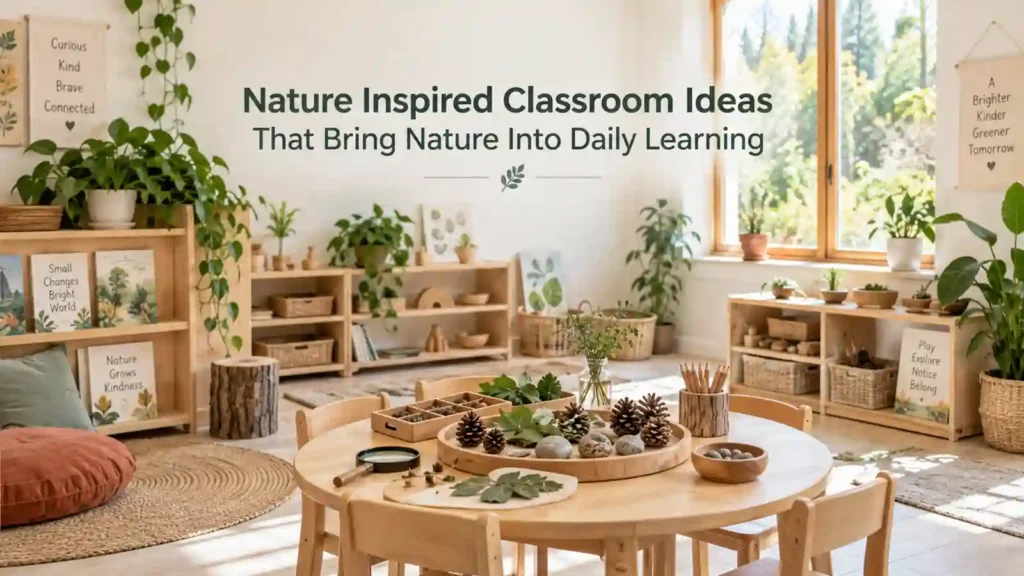
If your room only looks natural, children may notice it once and then ignore it. A useful nature inspired classroom gives you places for light, real materials, plants and close observation that fit the way the day already works.
You can add this feeling to a new room or to a classroom you already use. The important part is not buying more decoration. It is choosing a few natural elements that children can use, and that you can keep safe and clean.

What A Nature Inspired Classroom Is
You do not need to copy a forest school or make every surface green. You need to let children meet nature through the room, the materials and the activities you offer.
Move Past The Green And Wood Look
You can use timber, cork, woven baskets and soft colours to make the room feel warm. That is only the background. The stronger idea is to give children something that changes, has a texture, needs care or raises a question.
A leaf that children can compare, draw and sort is more useful than a leaf printed on a wall. The same is true of a plant children can check or a piece of bark they can study. You want the room to offer real contact, not just a theme.
Give Children Something Real To Notice
You can use natural light, outdoor views, plants, water, soil, stones, leaves, seed pods, clay and safe pieces of wood. You do not need to put everything out at once. A small collection is easier to use and easier to look after.
When you read the research on nature-based early childhood education, you get a balanced picture. Some studies found positive links with play, social and emotional development, but the review also rated the evidence as very low certainty. You should use nature to give children better experiences, not promise one fixed result.
If you are checking how this idea could fit into a real room, you can compare sample classroom spaces before you decide what to add. Look at the relationship between windows, storage, activity areas and outdoor access, not just at the colour of the furniture.
Start With Light And Materials
Once you know what you want children to notice, look at the parts of the room that can make that possible. Light and materials usually change the feel of the room more than extra signs or wall art.
Use The Best Light You Have
If you have a useful window, keep part of the view open. Trees, clouds, rain, shadows and seasonal changes can give children something to watch. You can place a small table nearby, but do not block the window or put children in direct glare.
Check heat and reflection before you place a table, mirror or quiet seat. If a window is too bright or too hot at part of the day, use blinds or move the activity instead of forcing the area to work.
Choose Materials For A Reason
You can add natural texture through timber, cork, wool, cotton, clay, smooth stones and large seed pods that suit the age group. Choose each material for a reason. You may want children to compare weight, shape, texture, sound or change over time.
Before you buy, check whether the surface can be wiped, whether it handles moisture and whether it can splinter or break. If you are replacing shelves, tables or storage, compare the exact board, finish and size through the meble klasowe options. “Natural” is a colour description, not a safety or cleaning standard.
Add Plants Carefully
You can add a few known plants to a low shelf, a window area or a small growing station. Keep them where children can see and care for them without putting pots in a busy path.
Check local rules, allergy information and the needs of the children in the room. The Royal Horticultural Society also recommends placing growing areas where children can reach them without putting them in the way of running traffic. You can use the same idea indoors: keep the plant useful, visible and out of the way.

Let Nature Lead To Real Activities
Natural elements become worthwhile when children do something with them. You can keep the activities simple and let the same materials stay available for several days.
Bring Outdoor Questions Inside
If children notice a wet leaf outside, you can compare it with a dry leaf indoors. If they watch a shadow move, you can mark it at different times. If they plant a seed, you can record what changes.
This gives you a clear link between the room and the outdoor area. UK early years guidance encourages first-hand experiences such as nature walks, growing plants and water play, and it connects these experiences with children’s observations, talk and comparisons.
Give One Wall A Real Job
You can use one low wall area for leaf rubbings, children’s drawings, weather marks, plant growth or photos from an outdoor walk. A wipeable board, clip rail, shallow shelf or simple mirror can support the activity when you know what children will do there.
Keep the wall easy to change. Let children see the real object beside the drawing or record. A fixed nature picture may fill a blank wall, but it will not give you the same chance to talk about change, detail and evidence.
Let Children Care For Something
You can give children small jobs such as checking a plant, returning objects to a tray, wiping a table or adding a drawing to the display. Match the task to the age group and keep it short enough to continue.
You do not need another large chart for adults to manage. You want children to see that living things, shared materials and the room itself need care.
Make The Idea Fit Your Room
You can create a nature inspired feeling without replacing everything. Start with one useful area, then check how it works during arrival, meals, rest, group time and free play.
Begin With One Useful Area
You can start near a window, an outdoor door, a creative table or a quiet corner. Give the area one clear job, such as observing plants, sorting natural materials, recording weather or making nature-based art.
Keep the first change small enough for you to review after a normal week. You can then see which materials children use, which items need adult help and whether the location works at busy times.
Keep The View Open
You should be able to see children using the nature area without losing sight of the rest of the room. Keep storage low and stable, leave a clear path around tables, and keep plants, baskets and displays away from doors, heaters and emergency routes.
If you add a mirror or wall activity, check what it reflects and where children may stand. A nature feature should support play without creating a blind spot, a trip hazard or a difficult cleaning area.
Try One Room Before You Repeat It
If you have several rooms, try the idea in one room first. Review how children use the area, how much cleaning it needs and whether the materials suit that age group before you use the same idea elsewhere.
When you ask for a room-based suggestion, send the floor plan, room photos, age group, number of children, daily routines and furniture that must stay. You get a better answer when you show where the doors, windows, sinks, fixed storage and outdoor route are. If you need to look at the wider process, you can read the rozwiązania dla klas page.

Check The Details Before You Buy
A natural look does not remove the need for careful product checks. You still need to match the materials with age, supervision, cleaning and local rules.
Match The Choice To The Age Group
You need tighter control over loose natural objects in a baby or young toddler room than in a room for older preschool children. Check size, edges, weight, breakage and the amount of adult help each item needs.
For tables, shelves and seats, check the child size and working height. The natural finish should make the activity pleasant without making it harder for children to reach, carry or return materials.
Plan For Cleaning And Wear
You should know how to clean timber, woven materials, plant pots, trays and any surface used with soil or water. If an item absorbs moisture, holds dirt or needs special care, decide whether it belongs in daily use or only in a planned activity.
Material choices also affect cost. Decide whether you need solid wood, plywood, another board, paint or a different finish before you compare prices. Ask for the exact material instead of approving a general word such as “wood.”
Check Fixing And Local Rules
You need to know how shelves, mirrors and wall play materials will be fixed. Keep heavy items secure, avoid sharp corners, and make sure the installation does not affect exits, fire equipment or access for children with mobility needs.
If you bring natural objects indoors, check their condition and cleanliness each time you use them. Follow the childcare, building, fire and product safety rules that apply in your location.
Sources
You can use these sources to read more about nature-based learning, gardening, first-hand experiences and the connection between indoor and outdoor spaces.
- Nature-Based Early Childhood Education and Children’s Social, Emotional and Cognitive Development
- Department for Education guidance on the Natural World
- Essex County Council guidance on effective outdoor environments
- Royal Horticultural Society guidance for early years settings
- Head Start guidance on nature-based learning and development
Często zadawane pytania
- Is a nature inspired classroom the same as Forest School? No. Forest School usually makes regular outdoor learning the main setting. You can use nature inspired ideas indoors while keeping your existing programme and outdoor routines.
- Can you use bright colours in a nature inspired classroom? Yes. You can keep bright colours in children’s artwork, signs and materials. Use calmer colours for the background so the room does not compete with the things you want children to notice.
- What can you do if a child does not want to touch natural textures? You can offer a choice of looking, drawing, using tools or handling a material through a tray. You do not need to make every child touch every object.
- How can you explain the style to families? Show the real activity behind the room. Share what children observed, made, grew or cared for, instead of presenting the space as a colour or furniture theme.
Wniosek
You can create a nature inspired classroom by giving nature a useful place in the day. Start with what children can see and touch, then connect those materials with outdoor questions, simple care routines and real work on the wall.
Keep the first change small and check whether it still works when the room is busy. If you need help turning the idea into suitable storage, wall features or classroom pieces, you can talk with Xiair Word about the room you have and the way you want to use it.