 English
  Arabic
  French
  Italian
  German
  Spanish (Spain)
  Thai
Thai  Japanese
  Turkish
  Indonesian
  Vietnamese
  Polish
  Portuguese
  Malay
Malay  Swedish
  Spanish (Mexico)
To set up an effective preschool block center, start by creating a clearly defined construction area with enough open floor space, child-accessible storage, and developmentally appropriate blocks that match your children’s age and abilities. The space should be located away from quiet learning zones, organized with simple visual boundaries, and equipped with sturdy shelves and supportive materials so children can build safely, stay focused longer, and engage in purposeful construction.
Ultimately, a preschool block center is about creating a space where thinking, planning, testing, and collaboration happen naturally through hands-on exploration. As Maria Montessori famously said, “Play is the work of the child.” When the block area is intentionally prepared, it becomes a place where children begin to understand how ideas turn into structures, and where early confidence in problem-solving quietly starts to grow.
Determine the Size and Location of Your Block Center
A block center works best in an open area with enough floor space for children to spread out materials, build larger structures, and move around safely. Construction play naturally expands beyond a small table, so limiting the area too much often leads to frustration, conflicts, and frequent cleanup interruptions. Even in smaller classrooms, it is better to dedicate a clearly defined floor zone rather than trying to squeeze block play into leftover space.
How Much Space Does a Block Center Need?
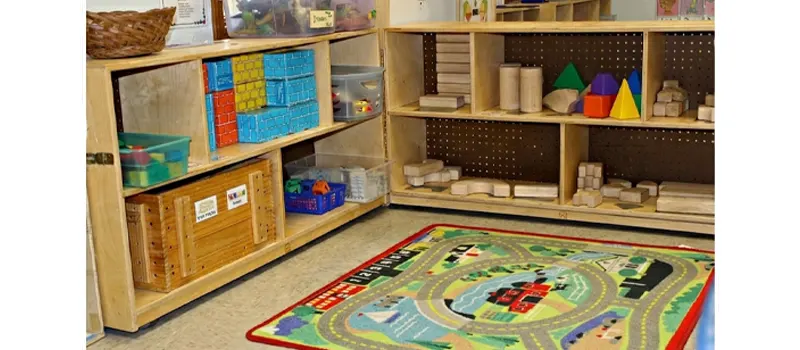
The ideal size depends on classroom capacity, but the area should be large enough to support group construction rather than single-child play. In most classrooms, the block area is designed for 2 to 4 children working together.
As a simple rule, the block center should be large enough that children can sit, reach for materials, and extend their building without crossing into walkways or disturbing nearby learning areas. Even in compact classrooms, it is better to create a clearly defined floor zone with adequate building space than to limit block play to a small tabletop.
As a practical guideline:
- Small classrooms:
Plan approximately 35–50 sq ft (3.2–4.6 m²) for a block area that supports 2–3 children building at the same time. - Medium classrooms:
Allocate about 60–80 sq ft (5.5–7.5 m²) so 4–6 children can construct larger structures and move around them comfortably. - Large classrooms or centers:
A dedicated construction zone of 100–150 sq ft (9–14 m²) allows for collaborative projects, wider layouts, and structures that can remain in place for multiple days.
If the area is too small, children tend to stack vertically instead of building complex layouts, and conflicts increase because there is no room to work side by side.
Where Should the Block Center Be Placed?
The preschool block center should be located in a part of the classroom that allows active construction without disturbing quieter learning areas. In most classrooms, the ideal location is along a wall with open floor space in front of it. Placing the block center against a wall provides a natural boundary, prevents structures from being knocked over from multiple directions, and gives children a stable surface to build larger layouts.
The block area should be positioned:
- Away from quiet zones, such as the reading corner or writing table, to reduce noise conflicts
- Outside main walkways, so children’s buildings are not accidentally stepped on
- Near other active learning zones, such as dramatic play or gross motor materials
- Within the teacher’s direct line of sight, allowing easy supervision without constant intervention
- Close to its storage shelves, so children can independently select and return materials
Build Your Perfect
Block Center
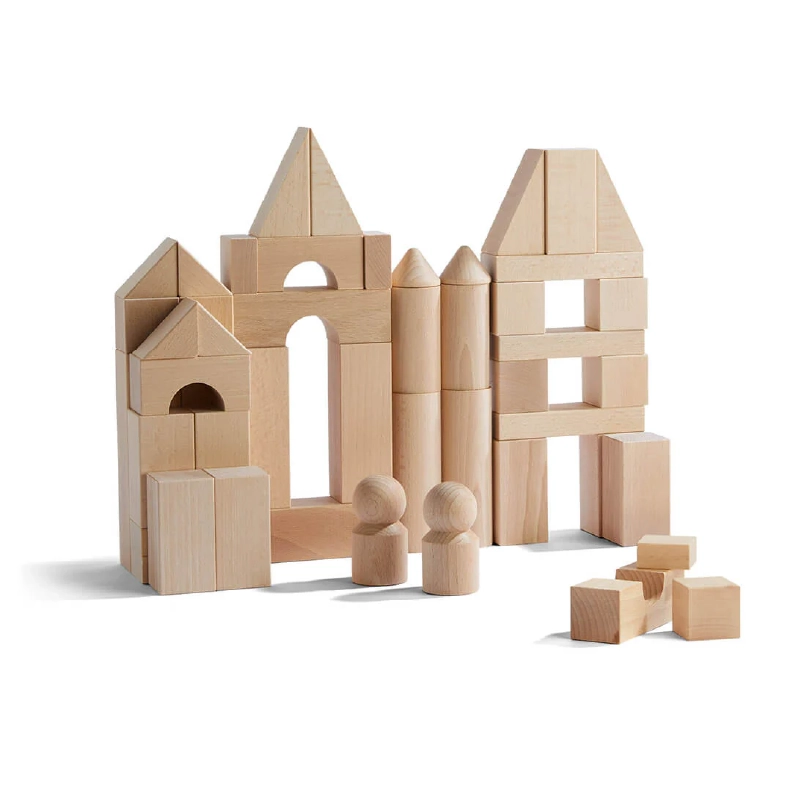
Premium Block Sets
Crafted from high-quality wood, safe for little hands, and designed for endless creativity.
One-Stop Setup Service
Let our experts design the perfect layout for your space, ensuring maximum engagement and organization.
Plan the Layout of Your Preschool Block Center
A well-planned layout helps children find materials easily, build without interruption, and clean up with minimal assistance from adults. The goal is to create a space that supports independent construction while maintaining safe and predictable movement.
A practical layout usually follows a simple structure: storage beside the children, open building space in front, and clear boundaries around the area. This arrangement allows children to select blocks, carry them a short distance, and return materials without crossing other learning zones.
Effective ways to define the zone include:
- Placing low shelves to form a soft boundary
- Using a large rug or floor mat to signal the work area
- Positioning storage along the edge rather than the center
- Keeping the middle space open for construction
- Leave clear paths around, not through, the building zone
Essential Furniture for a Preschool Block Center
The effectiveness of a preschool block center depends not only on the blocks themselves but also on the furniture that supports how children select, build, and return materials. The right furniture keeps the area organized, reduces accidents, and allows children to work independently without constant adult intervention.
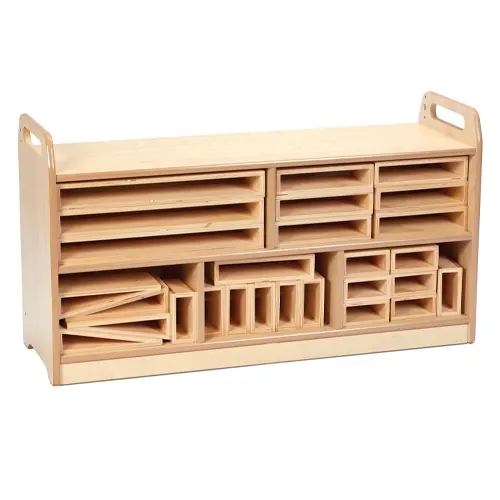

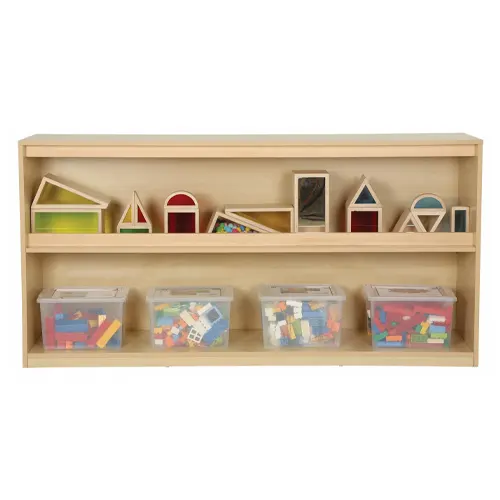
Low Open Storage Shelves
Low, open shelves are the most important furniture in a block center. They allow children to clearly see available block types, choose materials intentionally, and return them to the correct place after use. When shelves are within easy reach, children do not need to carry heavy blocks across the room, which reduces noise and prevents collisions. Open shelving also helps teachers monitor material usage at a glance and quickly notice when pieces are missing or mixed.
Block Storage Unit
Storage units that separate blocks by size and shape support more intentional construction. When long, short, curved, and specialty pieces are organized, children begin to plan before they build instead of randomly stacking whatever they find. Divided storage also shortens cleanup time and helps children understand classification and order, which are key cognitive skills in early childhood.
Large Area Rugs or Floor Mats
A defined floor surface signals where the building happens. Large rugs or durable mats reduce noise, prevent blocks from sliding, and help protect structures from being stepped on. More importantly, the visual boundary helps children recognize the block center as a dedicated construction zone rather than an extension of general play space.
Clear Storage Containers and Bins
Clear storage containers and bins help children quickly identify available materials without needing to open or search through multiple boxes. When children can see what is inside, they make faster decisions, spend more time building, and rely less on adult assistance. Transparent bins are often used to separate specialty pieces such as wheels, figures, connectors, or architectural accessories. This prevents small items from getting mixed into larger block sets and makes cleanup more efficient.
Blocks, Building Materials, and Accessories in Block Center
Different types of building materials and accessories expand how children construct, imagine, and solve problems. When the selection is balanced, children can move from simple stacking to more complex structures, storytelling, and collaborative projects. Instead of providing too many materials at once, the goal is to offer a thoughtful combination that supports different levels of skill, interest, and play styles.
Wooden Unit Blocks
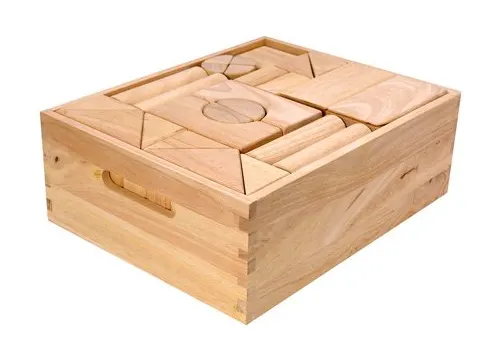
Wooden unit blocks remain the industry standard in many preschool classrooms because their consistent proportions allow children to explore balance, symmetry, and structural relationships. The uniform sizing helps children predict how pieces will fit together, which supports early math and spatial reasoning. Solid wood blocks also provide enough weight and stability for building larger structures without easily collapsing, encouraging children to attempt more complex designs over longer play periods.
Preschool Hollow Blocks
Hollow blocks are larger in size but lighter in weight, allowing children to move and position them without strain. Their wide surfaces make them suitable for building walls, enclosures, and large-scale layouts. The size also makes structures more visible across the classroom, which supports group participation. Rounded edges and lightweight construction improve safety while still maintaining enough rigidity for stable stacking.
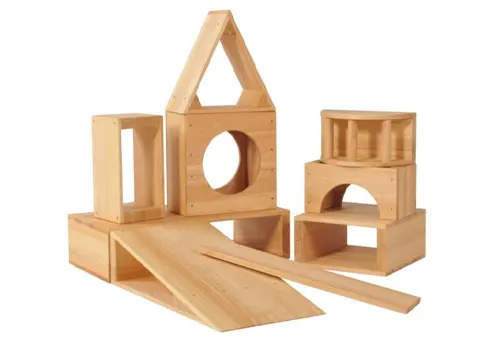
Foam or Soft Blocks
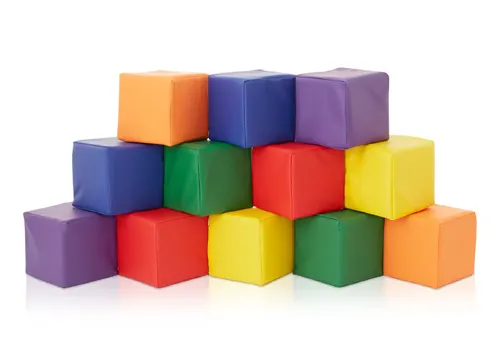
Soft blocks are useful for younger children or mixed-age classrooms. They reduce noise, lower the risk of injury, and allow children to experiment with stacking and knocking down structures without frustration. These materials are often introduced when children are still developing basic control and coordination.
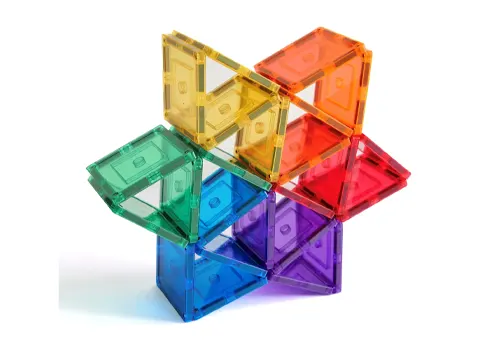
Magnetic Tiles or Interlocking Blocks
Magnetic or connecting materials support more precise construction and encourage children to explore shapes, patterns, and simple engineering concepts. These materials are often used on a table or defined surface where children can focus on smaller-scale designs. They also extend the block center beyond traditional stacking into design and problem-solving activities.
Loose Parts and Natural Materials
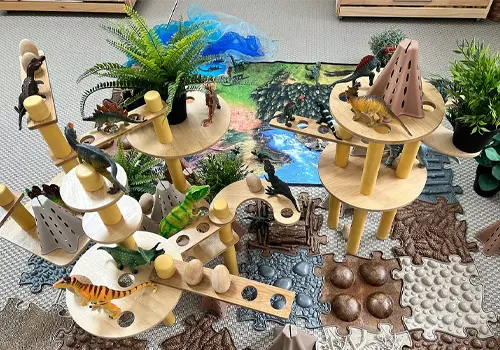
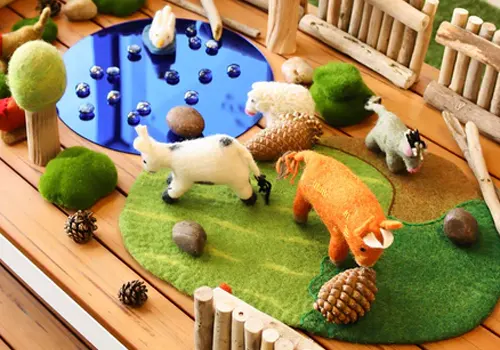
Loose parts such as wooden discs, small logs, fabric pieces, or stones add open-ended possibilities to construction play. Children use them as roads, roofs, decorations, or storytelling elements. These materials encourage creativity and help transform simple structures into meaningful scenes. Rotating loose parts periodically keeps the block center fresh without requiring major changes.
Accessories for Dramatic and Imaginative Play
Small figures, vehicles, animals, or simple props help children connect construction with storytelling. When children add characters or objects, their buildings become part of a larger narrative, which increases engagement and cooperative play. Accessories should be introduced gradually so the area does not become cluttered or overly dependent on themed play.
How to Organize the Block Center for Daily Use?
To organize a preschool block center for daily use, materials should be sorted by type, stored on clearly labeled low shelves, and limited to a manageable number that children can select and return independently. A defined building area, consistent cleanup routine, and easy access to frequently used blocks help keep the space orderly throughout the day without constant teacher intervention.
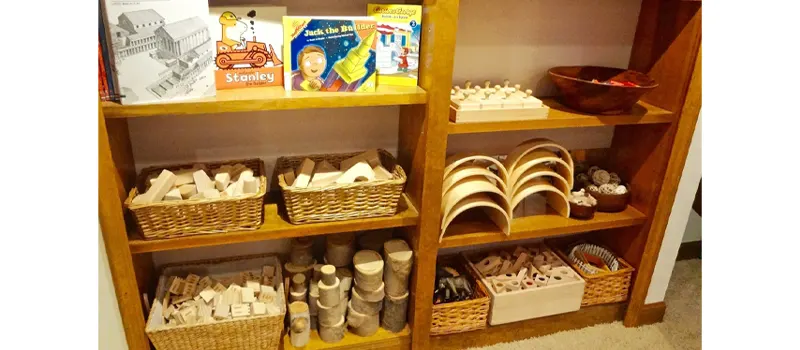
Sort Blocks by Shape and Size
Blocks should be grouped by type rather than mixed together. Long pieces, short units, arches, and specialty shapes should each have their own designated space. When blocks are sorted consistently, children can quickly locate what they need and begin building without dumping materials onto the floor.
Use Visual Labels for Storage Areas
Picture or shape labels on shelves and containers help children return blocks correctly, even if they cannot read yet. Simple visual cues reduce cleanup time and make the organization system easy to maintain throughout the day. Labels also prevent different block systems from being mixed, which keeps sets complete and usable.
Limit the Number of Materials Available at One Time
Providing every block type at once often leads to clutter and scattered pieces. Keeping a core set available while rotating specialty materials helps maintain focus and keeps the area manageable. When fewer options are visible, children tend to build more intentionally and use materials more carefully. Rotation also keeps the block center interesting without requiring new purchases.
Establish a Clear Reset Routine
Children should know exactly what happens when block play ends. A consistent routine, such as sorting blocks back to labeled spaces, checking the floor for small pieces, and returning containers to shelves, helps keep the area ready for the next group. When the reset process is predictable, children need fewer reminders and begin to manage the space independently.
Keep Frequently Used Materials Within Easy Reach
The most commonly used blocks should be stored on the lowest shelves so children do not need to carry heavy pieces across the room. Less frequently used accessories can be placed slightly higher or in secondary storage to prevent overcrowding in the main building zone.
How Teachers Can Support Learning in the Block Area?
Teachers can support learning in the block area by observing children’s building processes, asking open-ended questions, introducing new challenges at the right moment, and helping children reflect on what they created. The goal is not to direct the construction, but to extend thinking, language, and problem-solving while children remain in control of their ideas.
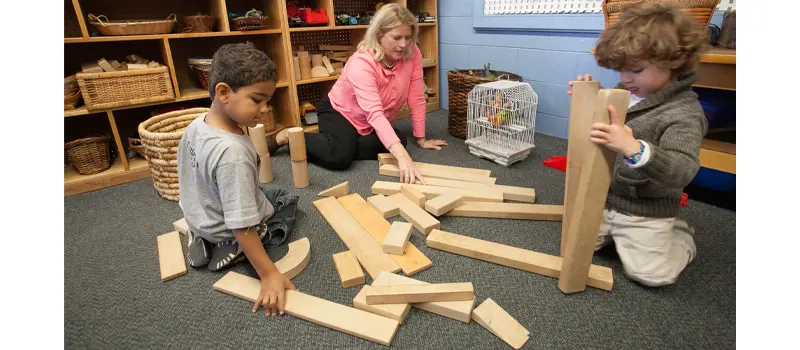
Observe Before Intervening
Before offering suggestions, teachers should watch how children select materials, plan structures, and respond to difficulties. Careful observation helps identify whether a child is experimenting, repeating a known pattern, or trying to solve a new problem. Intervening too early can interrupt concentration, while waiting allows children to test their own ideas and build confidence.
Use Open-Ended Questions
Simple open questions encourage children to explain their thinking and make decisions independently. Instead of telling children what to build, teachers can ask:
- What are you planning to make?
- How will you make it stand stronger?
- What could you add next?
These prompts support language development and help children connect actions with outcomes.
Introduce Gentle Challenges
When children become comfortable with basic stacking, teachers can introduce small challenges such as building higher, creating bridges, or connecting two structures. These suggestions should feel like invitations rather than instructions, allowing children to adapt ideas in their own way. Gradual challenges extend attention span and encourage problem-solving without turning the activity into a task.
Encourage Collaboration
Block centers naturally invite group work. Teachers can help children share space, combine structures, or plan together by guiding simple communication, such as asking one child to explain their idea to another. Supporting cooperation reduces conflicts and helps children experience joint problem-solving.
Support Reflection After Building
At the end of the activity, short conversations about what the children built help reinforce learning. Teachers can invite children to describe their structure, explain how they solved a problem, or talk about what they might try next time. Reflection strengthens memory, vocabulary, and planning skills for future construction.
FAQs
What is a block area in preschool?
A block area in preschool is a designated classroom space where children use blocks and related building materials to construct structures, explore design, and engage in imaginative play. It is typically set up with open floor space, accessible storage, and a defined building zone so children can build safely, work independently, and collaborate with others.
What age is appropriate for a block center in preschool?
Block play can begin as early as 2 to 3 years old with larger or softer blocks. As children grow, more precise materials such as wooden unit blocks or connecting blocks can be introduced. Mixed-age classrooms often include both larger and smaller block types to match different skill levels.
Why is block building important in preschool?
Block building is important in preschool because it helps children develop spatial awareness, problem-solving skills, and early logical thinking through hands-on construction. As children stack, balance, and test structures, they learn cause and effect while also practicing cooperation, communication, and persistence during shared building activities.
How many blocks are needed for one classroom?
The quantity depends on how many children will use the block center at the same time, but a practical approach is to provide enough pieces for at least two small groups to build simultaneously. A balanced set with varied shapes and sizes is more important than simply having a large number of identical blocks, as variety supports more complex construction and longer engagement.
Can materials be matched to our budget range?
Yes. Block centers can be configured at different investment levels by adjusting material types, quantities, and storage solutions. For example, a core set of durable unit blocks can be combined with a smaller selection of specialty materials, allowing the space to function well while staying within budget. The key is prioritizing the pieces that are used most frequently.
What information do you need to design a preschool block center for us?
To plan an effective block center, the most useful details include the classroom size, children’s age range, expected group size, preferred teaching approach, and whether the space is part of a new setup or an upgrade. Photos or a simple floor plan also help determine where the block area should be placed and what type of furniture configuration will work best.
Conclusion
A well-planned layout, balanced selection of building materials, and thoughtful teacher support allow children to move from simple stacking to more intentional construction and problem-solving. Even small adjustments, such as improving storage or defining the building area, can significantly reduce noise, clutter, and conflicts during daily use.
At Xiair, our focus is to help early childhood programs design practical, child-centered learning spaces by matching furniture, materials, and layout strategies to each classroom’s size, budget, and teaching philosophy.