
 Polish
  English
  Arabic
  French
  Italian
  German
  Spanish (Spain)
  Thai
Thai  Japanese
  Turkish
  Indonesian
  Vietnamese
  Portuguese
  Malay
Malay  Swedish
  Spanish (Mexico)
Kindergarten graduation is a proud moment for children, families, and the school. The right message can make the ceremony feel warm without taking attention away from the children. It also gives families a closer look at the classroom environment and daily life at the school.
This guide includes 30 graduation messages for different moments in the ceremony. It also covers the full event plan, from timing and setup to classroom checks before the next group arrives.

30 Kindergarten Graduation Quotes for Early Learning Centers
Short Graduation Quotes
These short quotes work well on certificates, graduation cards, stage signs, photo backdrops, and classroom displays.
- „Mała czapeczka, wielkie marzenia.”
- „Mały absolwent, wielki skok”.
- „Małe rączki, wielkie kamienie milowe”.
- „Następny przystanek: pierwsza klasa.”
- „Miej wielkie marzenia, maluchu.”
- „Przedszkole zdobyte”.
- „Czapki z głów do przedszkola!”
- „Od malowania palcami do pierwszej klasy”.
- „Małe buty, wielkie kroki naprzód”.
- „Małe ręce, odważne serca, świetlana przyszłość”.
Graduation Quotes from Teachers
These messages help teachers recognize children’s progress, confidence, curiosity, and kindness. They can be used in speeches, student portfolios, graduation cards, or end-of-year reports.
- „Nauczyłeś mnie tyle samo radości, ile ja nauczyłem ciebie.”
- „W klasie było jaśniej, bo ty w niej byłeś.”
- „Każde zadane pytanie otwierało nowe drzwi”.
- „Twoja ciekawość to twój największy dar – nigdy go nie trać”.
- „Historia twojej nauki dopiero się rozpoczęła”.
- „Twoja życzliwość była dla mnie tak samo ważna jak alfabet”.
- „Każde Twoje zaangażowanie było dla mnie powodem do uśmiechu”.
- „Nie przestawaj świecić, nie przestawaj się uczyć, nie przestawaj się zastanawiać.”
- „Wzrosłeś nie tylko w wiedzy, ale i w dobroci.”
- „Uczyłem cię liter, ale ty nauczyłeś mnie radości.”
Graduation Quotes for the Whole Class
These quotes are suitable for a director’s speech, class yearbook, ceremony program, graduation banner, or group photo display.
- „Każdy z was pozostawia ślad w moim sercu na zawsze”.
- „Od wspólnego spędzania czasu po czas na opowieści – dzięki Tobie każdy dzień był magiczny”.
- „Udowodniłeś, że mali uczniowie mogą mieć wielkie marzenia”.
- „Opuszczasz ten pokój, gotowy na spotkanie z całym światem”.
- „Dzieliliśmy się lekcjami, ale dzieliliście się magią”.
- „Czapki na głowach, gwiazdy w zasięgu wzroku.”
- „Przyjechaliśmy. Pomalowaliśmy. Ukończyliśmy studia.”
- „Uważaj świecie, nadchodzimy”.
- „Klasa śmiechu i kredek.”
- „Mali absolwenci, wielka przyszłość”.
How to Use Graduation Quotes in Your Center
For a small hall, choose one short message for both the graduation certificates and the main stage.
Messages for teachers are usually better shared in private. A teacher can also include one in a speech while recalling a class memory.
Messages for the whole class work well in program booklets or under a group photo. They help the ceremony feel more personal and connected.
You can also choose one main message for the day. Repeat it in a few key places to keep the ceremony consistent.
How to Plan the Graduation Space
1. Confirm Attendance Based on the Available Space
Do not estimate capacity by room size alone. Check how many chairs fit without blocking exits or walkways.
- Count the graduating children.
- Set a guest limit for each family.
- Arrange the chairs to confirm the room’s actual capacity.
- Leave enough space for adults to sit and move comfortably.
- Keep all emergency exits clear.
- Limit each child to two guests when a classroom is smaller than 60 m².
- Set aside space for strollers and parents’ bags.
- Confirm adults’ attendance before completing the seating plan.

2. Divide the Venue Into Clear Areas
Do not treat the classroom as an open space. Separate each activity so staff can manage the ceremony more easily.
Children’s Waiting Area
Place this area close to the teachers. Children can wait here before walking to the presentation area.
Family Seating Area
Keep the main aisles open. Every seat should have a clear view of the stage.
Certificate Presentation Area
Leave enough space for children to walk forward, receive certificates, and return safely.
Photo and Check-In Area
Place this area away from the main entrance. Families taking photos should not block arriving guests. Use rugs or low cabinets to show where each area begins. Clear boundaries also help children remember where to wait.
3. Plan How People Will Move
Walk through the venue before the ceremony. Follow the same route that children and families will use.
- Remove bags and loose items from all walkways.
- Secure power cords with tape or cable covers.
- Make each aisle wide enough for children and adults.
- Keep the children’s route separate from the parents’ route.
- Use floor tape when the walking direction is unclear.
A simple route:
Waiting Area → Certificate Area → Photo Area → Return to Seat
Ask staff to practise the route before families arrive. This helps identify narrow areas or unclear staff positions.
Teachers should stay close to the children they supervise. They should not need to cross the whole room during the ceremony.
4. Manage the Entrance and Exit
A single entrance can become crowded quickly. Do not place the photo area beside it.
Assign one staff member to manage arriving families. Another staff member can guide guests leaving the room.
Keep the doorway clear throughout the ceremony. This is especially important during arrivals, certificate presentations, and group photos.
5. Prepare All Materials in Advance
Complete all material preparation before the first family arrives. Teachers can focus on the children.
- Arrange certificates in the exact presentation order.
- Keep them on a table within easy reach.
- Prepare spare certificates and pens nearby.
- Place gifts and class photo books at a separate collection point.
- Give each child a marked space for personal belongings.
- Ask families to collect gifts after the ceremony.
Do not hand out gifts during the certificate presentation. It can slow the ceremony and distract the children.
6. Finish the Venue Setup Early
Complete the main setup at least one hour before the ceremony.
- Position all tables and chairs.
- Secure display stands and backdrops.
- Check that furniture does not block walkways.
- Test any speakers, screens, or microphones.
- Complete one final staff rehearsal.
Avoid moving furniture once the ceremony begins. Last-minute changes can confuse children and interrupt the event.
Safety and smooth movement should guide every layout decision. Decorations should only be added after the space works properly.

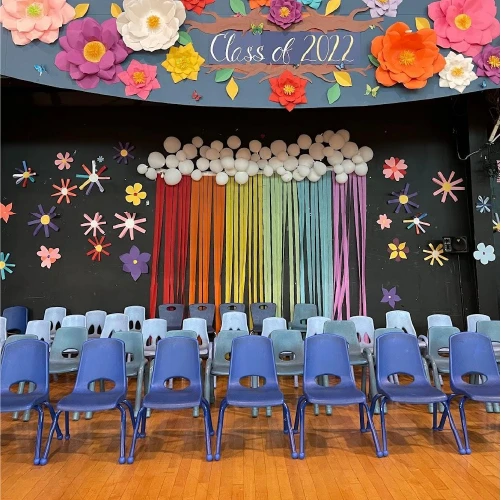
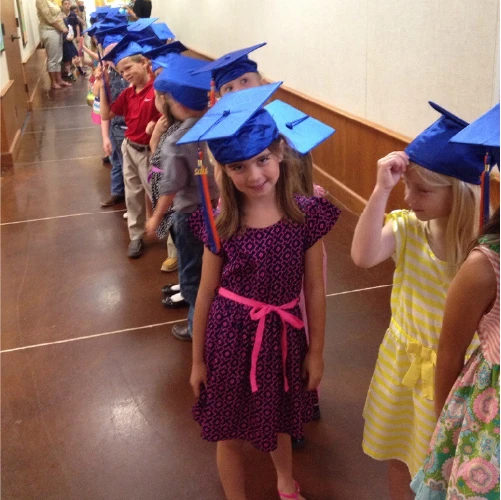
Use the Graduation Ceremony to Review and Improve Your Classroom
A graduation ceremony brings far more adults into the classroom than a normal school day. This extra traffic can reveal layout problems that staff may miss during daily use.
Use the event to review movement, activity zones, and furniture placement. The findings can guide classroom changes before the next school year.
1. Record Problems During the Ceremony
Do not judge the room by appearance alone. Watch how children, families, and staff move through the space.
Pay attention to:
- Entrances where people gather or wait
- Shelves or tables that narrow the main walkway
- Furniture that blocks a teacher’s view
- Corners where children or parents become confused
- Photo areas that interrupt the flow of people
These issues come from the layout, not the decorations. Record them soon after the ceremony, while the details are still clear.
Many problems happen because several areas compete for the same space. A shelf may fit well but still block an important walkway.
Review the classroom by function. Check the entrance, learning areas, storage space, and staff access.
When these areas overlap, the classroom may feel crowded even when it looks tidy.
2. Plan for the Incoming Class
Do not rebuild the classroom around the graduating children. Plan for the children who will use the room next.
Start by:
- The age range of the new class
- The expected number of children
- How often activities will move between areas
- Whether children need more floor space or table space
Younger children need wider walkways and lower storage they can reach safely. A larger class needs better space planning, not simply more furniture.
Without this review, some areas may become crowded while other parts of the classroom remain unused.
3. Decide Which Furniture to Keep
Return the classroom to its normal setup before reviewing the furniture. This gives you a clearer picture of daily use.
Sort each item into one of three groups:
- Keep: It fits the children, serves a clear purpose, and does not block movement.
- Repair: The structure remains stable, and minor damage can be fixed safely.
- Replace: It wobbles, blocks a walkway, limits visibility, or no longer suits the age group.
Remove furniture and materials that no longer support the classroom. More open space can improve safety and make the room easier to adjust.
4. Plan the Layout Before Buying Furniture
Plan the space before ordering new furniture. Measure the room first, then choose pieces that fit the layout.
- Mark doors, windows, sinks, and fixed cabinets.
- Keep all exit routes clear.
- Draw the main walking paths.
- Set the size of each activity area.
- Match furniture sizes to the available space.
- Test several layouts before placing an order.
Furniture often looks smaller online than it feels inside a real classroom. A layout plan helps prevent blocked paths and unsuitable purchases.
It also turns ceremony-day observations into practical improvements for the next school year.
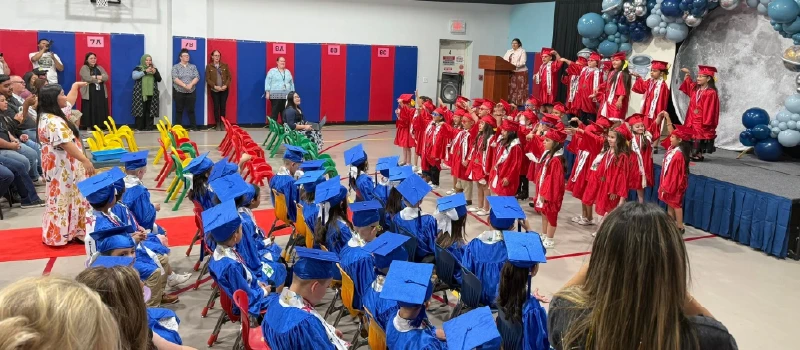
Plan Your Next Classroom
The end of the school year is a good time to review the classroom and plan for the next class. Before buying furniture, confirm the children’s age group and expected class size. Then use the floor plan to decide how the room should work.
Draw a simple layout and show where each item will go. Check that children can move between areas without narrow paths or blocked corners. This gives you a clear view of how the classroom will work each day.
After the layout is set, prepare the furniture list and check every size carefully. Standard furniture does not fit every classroom. Choose another model or request a custom size when needed.
Good planning helps you avoid furniture that wastes space or creates daily problems. It also creates a safer classroom that better supports the new class.
Często zadawane pytania
- What can you say to kindergarten graduates?
Praise their growth and effort. End with a short wish for their next step. - What should teachers say at a graduation ceremony?
Thank the children for a wonderful year. Share one class memory and finish with a warm message. - What songs work well for a kindergarten graduation?
Choose familiar songs with simple words and a gentle rhythm. One or two songs are usually enough. - What should a graduation certificate include?
Include the child’s name, class, school name, and graduation date. You can add a short message at the bottom. - What should a graduation invitation include?
Include the date, time, venue, arrival time, and guest limit. Add contact details and any important instructions. - How long should a kindergarten graduation ceremony be?
Keep the ceremony between 30 and 45 minutes. Plan extra time for family photos afterward. - What is the best time for a graduation ceremony?
Morning usually works best. Children are often calmer, more alert, and closer to their normal routine. - How many guests should each child invite?
Set the limit based on room size and safety. Small venues often allow two guests per child. - How can staff keep the ceremony organized?
Give each staff member a clear role. Prepare all materials early and complete one full rehearsal.
Wniosek
A kindergarten graduation should feel warm, relaxed, and joyful. Children should leave with happy memories, while the school sees how the classroom works under pressure.
Crowding, blocked paths, or hard-to-manage areas can changes before the next school year. Xiair World can help you plan the layout and choose furniture that fits your space and daily needs.